









































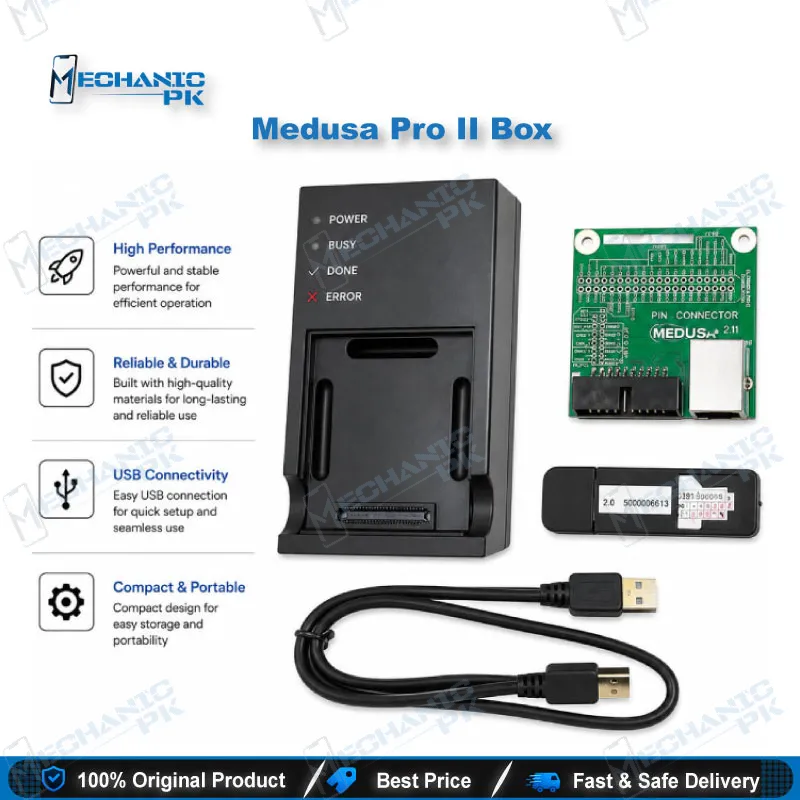
Medusa Pro II Box UFS eMMC JTAG Programmer
₨ 129,999
UFS, eMMC and JTAG Programming
Medusa Pro II Box covers UFS and eMMC read, write and flash work over USB 3.0, with JTAG support for ARMv5, ARMv6 and ARMv7 processors. The package includes UFS95, UFS153 and eMMC socket adapters, which give your bench the right interface for standard memory footprints. It suits technicians handling dead boot recovery and memory-level repair who already run a programmer workflow and need a spec-verified option. Pair it with your existing eMMC programmers and UFS adapters for a complete multi-format setup.
In stock
Medusa Pro II Box for UFS, eMMC and JTAG Repair
The Medusa Pro II Box gives your bench one platform for UFS and eMMC memory, plus JTAG-based boot repair. When a dead phone arrives, the first question is which memory and which interface the board uses. This box answers that question across several families, connecting over USB 3.0 for read, write, boot and flash work. If you run a service center or a busy repair counter, consolidating these jobs onto one programmer saves bench space and cuts setup time between jobs. The sections below cover verified specifications, socket adapters, and where the box fits in your repair workflow.
Key Technical Highlights
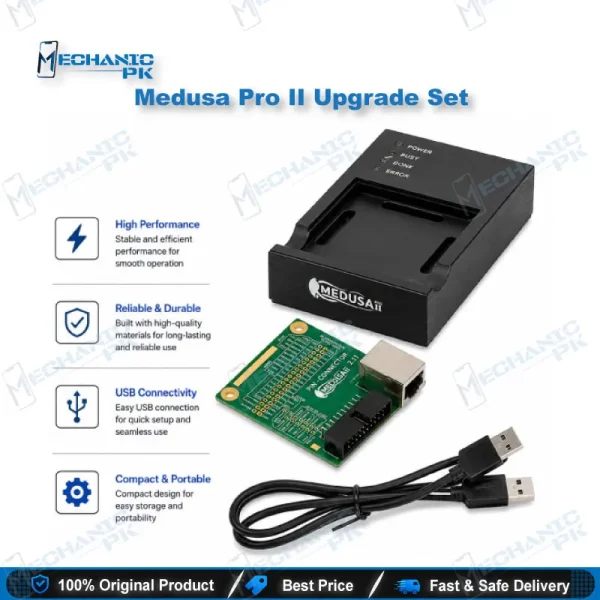
The hardware uses a USB 3.0 interface and supports UFS+ and eMMC memory, which covers the storage types found in many current Android handsets. JTAG support is listed for ARMv5, ARMv6 and ARMv7 processor families, so you can match the box to older and mid-generation boot architectures. The Pro II revision steps up from earlier Medusa boxes, and an upgrade set exists for owners of those units. The software lets you add device profiles to the supported list, which helps when new models reach the market before a formal update. Check firmware release notes before each job, because device support changes between updates and your results depend on the current version.
Socket Adapters and Memory Support
The package includes UFS95, UFS153 and eMMC socket adapters in a single 4-in-1 set. Sockets are the practical route when a chip has been removed from the board, since they let you read and write the memory without a permanent connection. Pick the adapter that matches the chip footprint on the bench, because a mismatched socket produces unreliable reads and wastes a job. UFS and eMMC jobs share the same adapter set, so you avoid buying separate sockets for each memory type. Pair the set with a reballing kit and a PCB holder when a chip needs fresh balls before it goes into the socket.
Where It Fits in Your Repair Workflow
A typical job starts with identifying the memory type on the board. Once you confirm UFS or eMMC, select the correct interface and adapter, then read the memory before changing anything. A dead phone or boot loop issue often traces back to corrupted boot partitions, and a full read gives you a backup to work from. After the read, flash or repair the required images and verify the result. Hot air stations and soldering stations handle chip removal, while a microscope confirms pad condition before reflow. For boards that need direct line access, check ISP pinout tools, and use test boxes and multimeters to confirm power rails before you power the board.
Who Gets the Most Value From This Box
Repair shops, service centers and technical training institutes benefit most from a multi-format programmer. Consolidating UFS, eMMC and JTAG work onto one box means fewer tools competing for bench space and fewer setup changes between jobs. Technicians who already own eMMC programmers can use this box as a second route when one interface has limits on a given device. Buyers should match their device mix to the verified support list before purchase, especially for brands and processor families outside the listed scope. If your workload is mostly UFS-based handsets, the included UFS sockets make this a direct fit.
Safe Job Practice on Your Bench
Before every job, confirm the board’s memory type and voltage with a multimeter, since mismatched rails can damage memory. Keep a complete read backup before any write or flash command, because a failed write is much harder to recover from than a failed read. Label each socket and adapter after use so the next technician does not pick the wrong footprint. Organize the cables and check connections for wear before each session. A consistent checklist keeps output steady across a busy shift and reduces avoidable rework.
| Weight | 0.35 kg |
|---|
Key Features
- USB 3.0 interface for UFS and eMMC work
- UFS95 and UFS153 socket adapters included
- eMMC adapter in the same 4-in-1 socket set
- JTAG support for ARMv5, ARMv6 and ARMv7 processors
- Read, write, boot and flash operations
- Device profile addition through the software
- Multi-format memory coverage on one platform
- Suited to dead boot and memory-level repair workflows
Specifications
| Brand | Medusa |
|---|---|
| Model | Medusa PRO II Box |
| Category | Mobile Repair Programmers (UFS, eMMC, JTAG) |
| Compatibility | UFS95, UFS153 and eMMC memory interfaces; JTAG for ARMv5 to ARMv7 processors |
| Supported Devices | Samsung, Huawei, LG, Lenovo, Motorola, Oppo, Sony, Xiaomi |
| Technology | USB 3.0, UFS+, eMMC, JTAG |
Common Repair Uses
- Memory-level and boot-level repair on UFS and eMMC devices
- Dead boot recovery on listed devices
- UFS read, write and repair
- eMMC read, write and flash operations
- JTAG boot repair on ARMv5 to ARMv7 processors
- Firmware flashing after memory-level failure
- Socketed chip work after reballing
Compatible Devices
- Brand-level scope across the listed memory and JTAG interfaces
- Samsung
- Huawei
- LG
- Lenovo
- Motorola
- Oppo
- Sony
- Xiaomi
FAQ
What is the product name?
What is the brand of this product?
What is the model of this product?
What is this product used for?
Which devices are compatible with this product?
Who should use this product?
Which UFS sockets come with the Medusa Pro II Box?
Does this box support JTAG on modern phones?
Related products


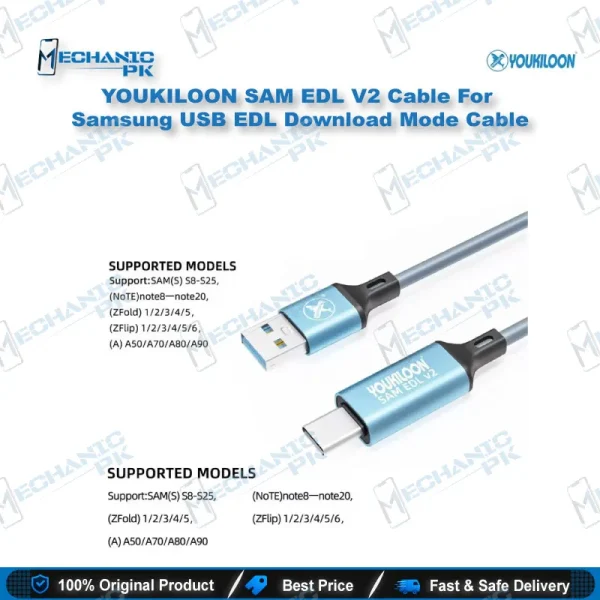
YOUKILOON SAM EDL V2 Cable For Samsung USB EDL Download Mode Cable
In stock