



















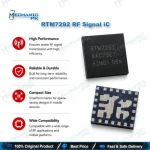
RTM7292 RF Signal iC Murata Network IC Pakistan
₨ 200
RF Signal iC for Network Section Repair
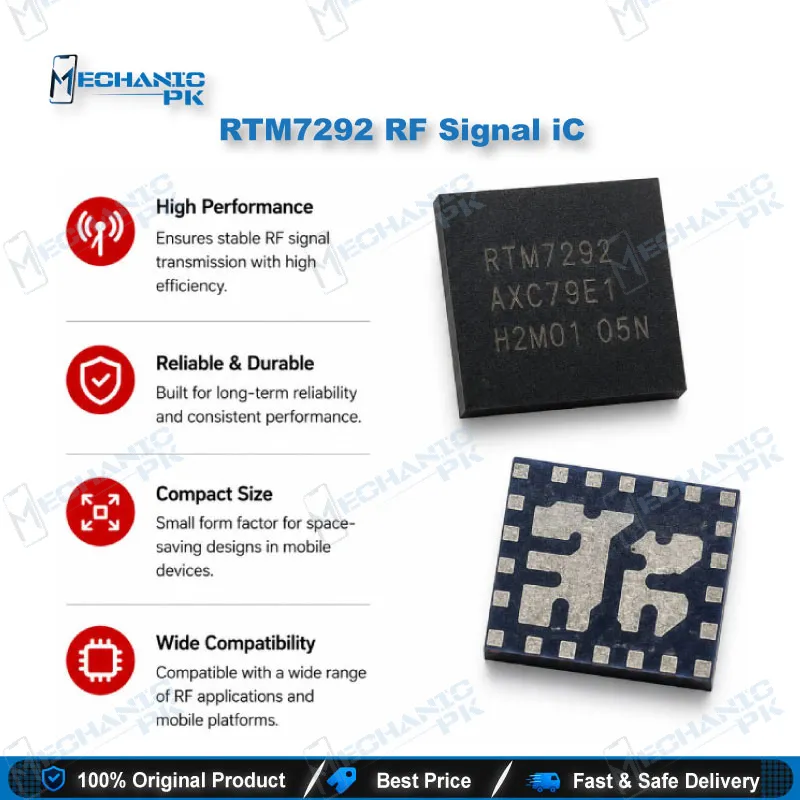
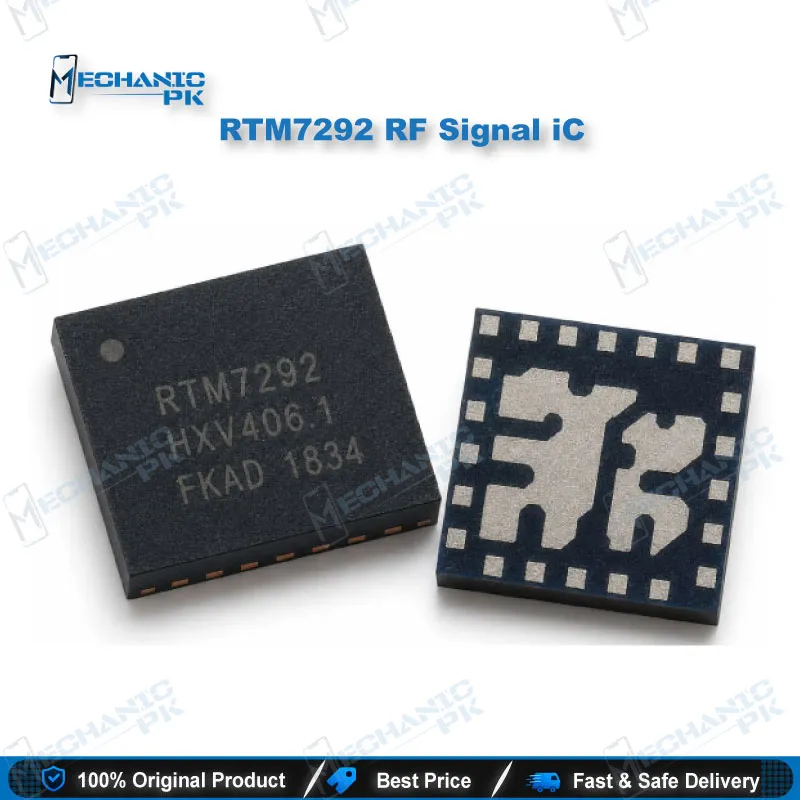
RTM7292 RF Signal iC is a Murata QFN-packaged RF signal IC built for board-level replacement in the network section of Android smartphones. It suits technicians working on no-service, weak-signal, and call-failure faults that persist after a software reset, once the RF path has been isolated. Because the part is a small-pitch QFN, successful use depends on controlled hot air rework, flux, and microscope inspection before power-up. Supplied as a standalone component for professional repair benches, it is intended for repair shops, service centers, and hardware engineers working at component level. Confirm donor-board footprint and pinout before placement.
RTM7292 RF Signal iC is a Murata QFN-packaged RF signal IC for the network section of Android smartphone boards, and it belongs to the group of board-level parts you reach after software diagnosis has ruled out a firmware cause. In practice, the part handles the radio signal path, so a fault here appears as a network problem rather than a display, charging, or audio problem. Technicians usually encounter it when a handset reports no service, drops signal during normal use, or fails to sustain a call after liquid exposure, a drop, or a reflow error from an earlier repair. Before you commit to replacement, verify the rest of the RF chain: check the antenna switch, the surrounding passives, and the relevant supply rails with a multimeter in diode or voltage mode. Measure against a known-good donor board wherever possible, because a healthy reference reading makes the difference obvious. Where the donor board’s original part marking is readable, record it as well, so you order the matching variant. Once the surrounding path checks out, the IC becomes the leading suspect, and a clean replacement is the decisive test. Because the package is QFN, the pads sit beneath the body rather than along exposed leads, which leaves no visible edge to probe and no room for error on placement. Set your hot air profile for the body size and the board’s thermal mass, use a nozzle that covers the package without overhanging neighboring components, and apply flux before you lift or place the part. Overheating is the most frequent cause of a failed rework on this kind of network section, since surrounding parts can lift or shift before the target pads reflow. Inspection carries as much weight as the heat itself. Use a microscope to examine each pad for lifting, cold joints, and bridging, and run continuity checks on the adjacent traces before you power the board. Record the reflow temperature, time, and nozzle size on every job, since repeatable settings make it far easier to trace a comeback. After placement, confirm network registration, call setup, and signal stability on a test SIM before returning the handset. If the fault survives a clean replacement, go back to the RF path rather than assuming the new part is at fault. The RTM7292 suits repair shops handling a steady volume of network tickets, service centers that need a reliable component on the shelf, and hardware engineers performing board-level fault isolation on Android devices. Because it ships as a single component rather than a tool or kit, it assumes an established BGA or QFN bench, a calibrated hot air station, flux, and a microscope for verification. Treat the replacement as one stage in a sequence: diagnose the RF section, isolate the fault to this IC with continuity and bench testing, rework the joint, then verify network behavior end to end before the device leaves your bench.
| Weight | 0.1 kg |
|---|
Key Features
- Murata-sourced RF signal IC for the network section of Android boards
- QFN package for direct board-level replacement
- RoHS-compliant construction
- Targets RX/TX signal path faults between the antenna side and baseband
- Suited to hot air rework with a fine nozzle and microscope verification
- Helps separate hardware network faults from software causes
- Supplied as a single component, not a bundled kit
- Built for professional repair benches
Specifications
| Brand Entity | Murata |
|---|---|
| Product Entity | RTM7292 RF Signal iC |
| Technology Entity | RF signal processing, QFN packaging |
| Compatible Device Entities | Android smartphone network section (board-level, universal) |
| Repair Process Entity | RF IC rework, network fault isolation |
| Industry Entity | Mobile phone repair, PCB-level component repair |
Common Repair Uses
- Universal, board-level part; not device-specific
- Fit depends on the donor board’s RF IC footprint and pinout
- Confirm the original part marking before ordering
Compatible Devices
- No-service and no-network faults on Android handsets
- Weak or fluctuating signal after liquid or drop damage
- Call-failed or call-end errors that survive a software reset
- Board-level network section rework after static or reflow damage
FAQ
What is the product name?
What is the brand of this product?
What is the model of this product?
What is this product used for?
Which devices are compatible with this product?
Who should use this product?
Does replacing this IC fix a network fault that survives a software reset?
Which tools are needed to rework this IC?
Related products