
















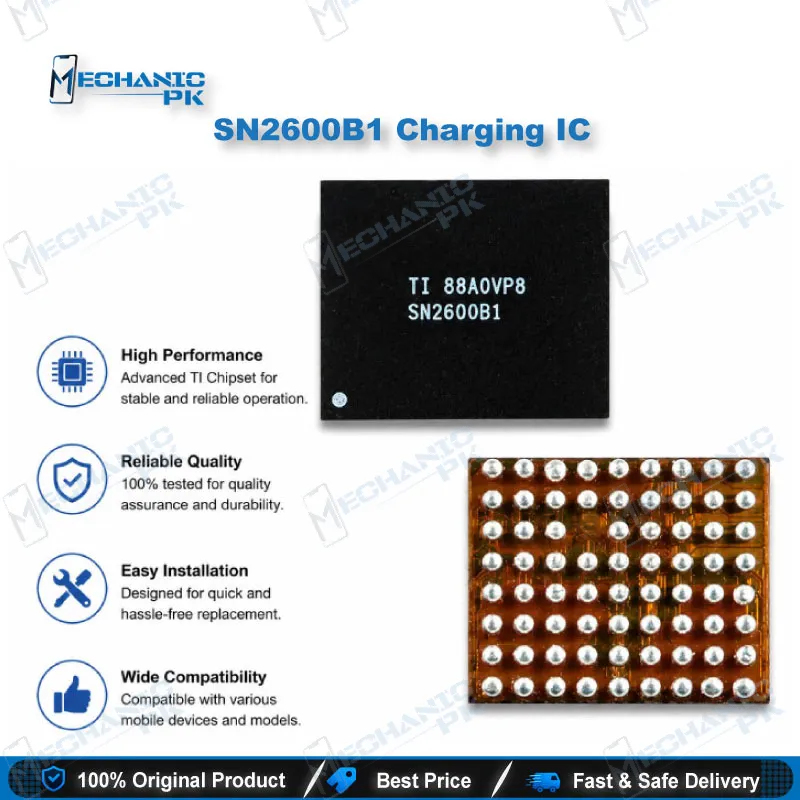
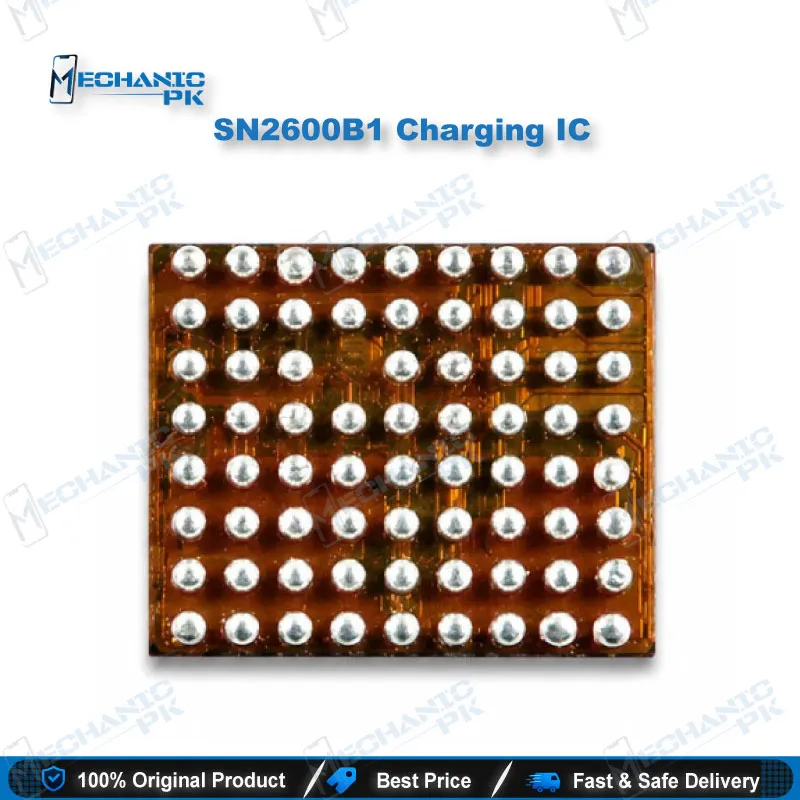
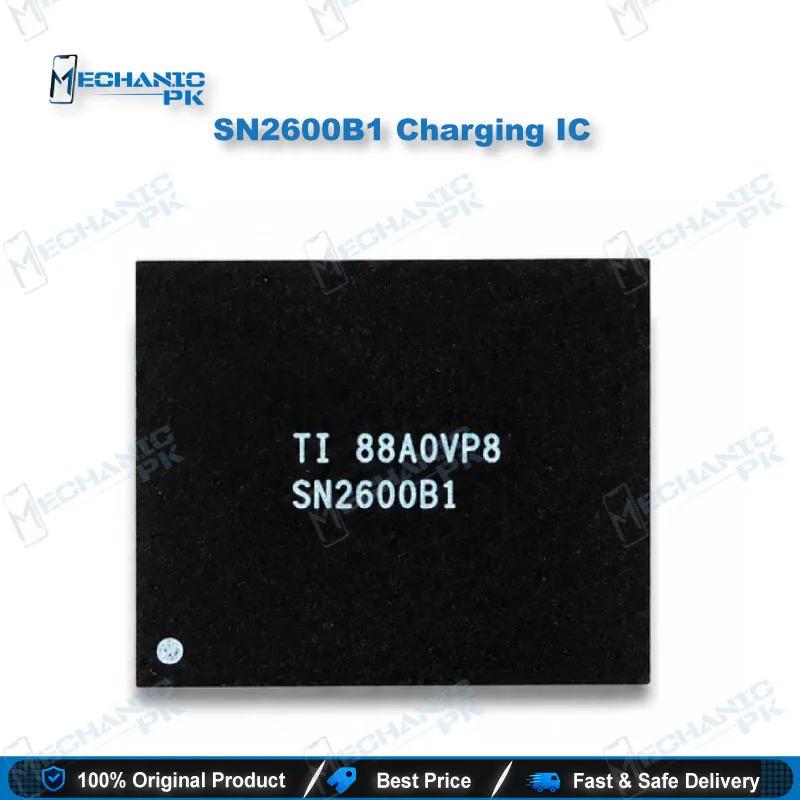
SN2600B1 Charging IC for iPhone XS, XS Max & XR
₨ 200
SN2600B1 Charging IC for iPhone XS, XS Max and XR
The SN2600B1 charging IC is a Li-Ion battery management chip in the charging section of iPhone XS, XS Max, and XR logic boards. It suits technicians who have already confirmed a charging fault through the port, cable, and power rails. TechInsights classifies this part as a Li-Ion management device, and the supplier lists it as a replacement for these three models. Use it on your bench for board-level charging repair, paired with a hot air station, a microscope, and fresh flux. Confirm the board position before you order.
SN2600B1 Charging IC for iPhone XS, XS Max and XR Repair
The SN2600B1 charging IC is a Li-Ion battery management chip that controls how power reaches the battery on the logic board. When it fails, the phone may refuse to charge even with a working cable and port, so the fault often presents as a charging problem first. For technicians handling iPhone XS, XS Max, and XR boards, this IC is a targeted replacement point in the power workflow. Knowing where it sits and how to confirm the fault saves time before you lift any component.
Where the SN2600B1 Sits in the Charging Path
Power from the charging port travels through the charging section before it reaches the battery. TechInsights classifies the SN2600B1 as a Li-Ion management IC and analyzes it as a battery charger circuit, which places it in the battery management stage rather than at the port itself. Start your diagnosis at the port and cable, then move to the charging section once those are cleared. Trace the power path with your multimeter so you know exactly where the supply stops.
A charging fault rarely has one cause, so separate the port, the cable, and the charging section before you commit to the IC. Inspect the port connector for bent pins and debris, then test with a known-good cable and adapter. If the phone still refuses to charge, the charging IC becomes the next suspect, especially after a short or heat exposure on the logic board. Compare the input and output rails against a working board of the same model before you decide on replacement.
Replacement Scope for iPhone XS Charging IC Work
The supplier listing identifies the SN2600B1 as a replacement chip for iPhone XS, XS Max, and XR, and references it under the board designator U3300. Confirm that designator against your board schematic before you order or lift a component, because component placement can vary between models and board revisions. Matching the part to the verified device list keeps your repair decisions grounded in the actual hardware. Treat any other iPhone model as outside this scope until you confirm the part on that board.
Document the device model and board number in your repair log each time you use this IC. A clear record helps you match the right chip faster the next time a similar fault arrives at your bench. It also gives your customer a traceable account of the work performed. Keep stock labeled by model so you never fit a chip to a board it was not verified for.
Bench Workflow for Board-Level Replacement
Begin with a visual check under a microscope for lifted pins, cracked solder joints, and burn marks around the charging section. Apply controlled heat with a hot air station and keep your nozzle size matched to the package so neighboring components stay protected. Once the old chip is removed, clean the pads and clear all old flux before you place the replacement. Apply fresh flux, align the chip carefully, and reflow with steady heat.
After the swap, test the board with a regulated DC supply and watch the current draw to confirm it takes power normally. Check the nearby capacitors for heat damage, since a faulty charging section often stresses components beside it. Log the readings and compare them against the original fault so you can confirm the repair actually resolved the problem. A documented test result protects both your workmanship and your customer.
| Weight | 0.1 kg |
|---|
Key Features
- Li-Ion battery management function in the charging path
- Charging section component for logic board repair
- Verified replacement scope for iPhone XS, XS Max, and XR
- Board reference U3300 listed by the supplier
- Suited to board-level rework with hot air and microscope
Specifications
| Brand | Texas Instruments |
|---|---|
| Model | SN2600B1 |
| Category | Charging IC |
| Compatibility | iPhone XS, iPhone XS Max, iPhone XR |
| Supported Devices | iPhone XS, iPhone XS Max, iPhone XR |
| Technology | Li-Ion battery management IC |
Common Repair Uses
- Verified workflows follow from the IC’s position in the charging path.
- Restoring charging on a logic board when the port and cable are confirmed working
- Replacing the charging IC after a fault in the charging section is traced to this part
- Board-level repair of charging-path damage caused by heat or a short on the logic board
- Rework of charging-section components during power diagnostics on supported models
Compatible Devices
- Verified scope is device-specific: iPhone XS, XS Max, and XR logic boards.
- iPhone XS
- iPhone XS Max
- iPhone XR
FAQ
What is the product name?
What is the brand of this product?
What is the model of this product?
What is this product used for?
Which devices are compatible with this product?
Who should use this product?
Where is the SN2600B1 located on the iPhone XS board?
Does a dead phone always mean a faulty SN2600B1?
Related products