

















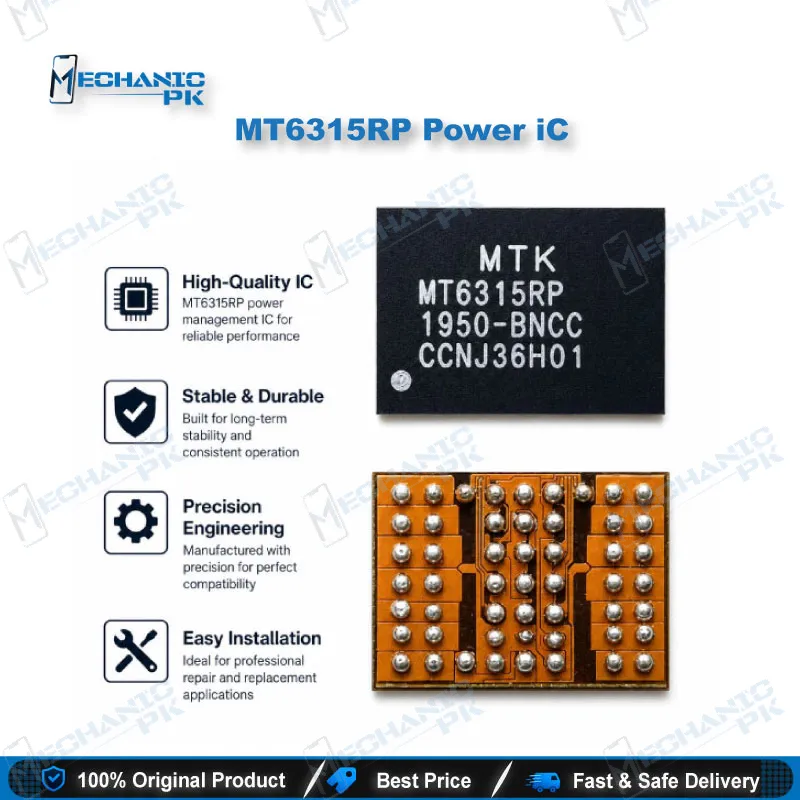
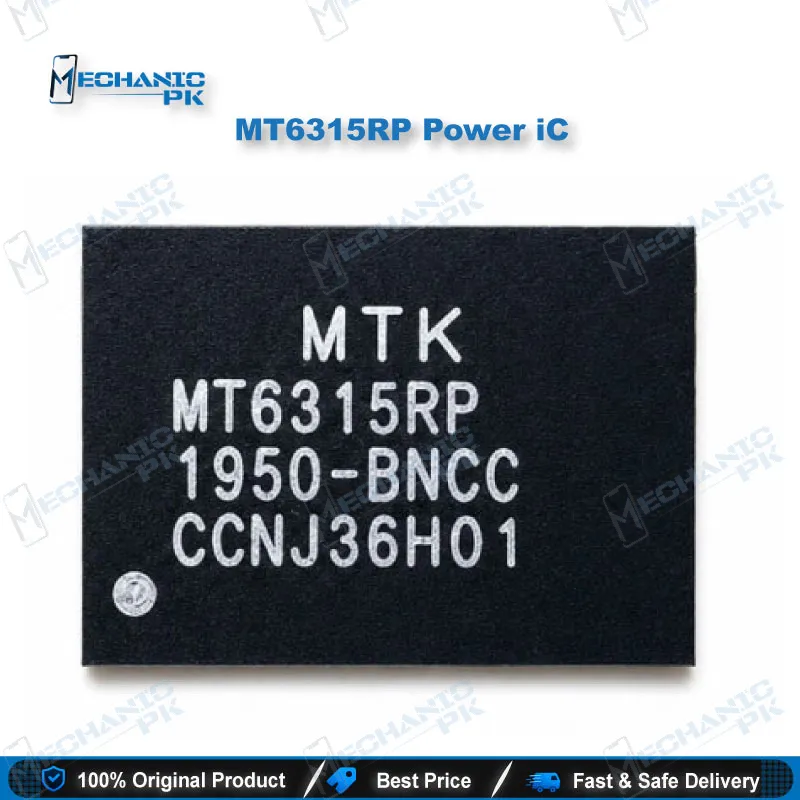
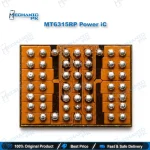
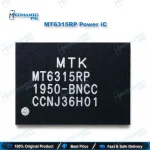
MT6315 Power IC – MediaTek 4-Phase Buck PMIC
₨ 400
H2: MT6315 Power IC Built for Board-Level Power Diagnosis
The MT6315 is a MediaTek power management IC built around four step-down buck regulators. It takes a supply of up to 6 V and produces programmable outputs from 0.4 V to about 1.19 V. You control it over the SPMI bus, so a fault can look like a dead board even when the regulators are fine. This listing covers the 45-ball WLCSP package, the verified scope of the device, and the measurements that help you isolate a fault before you order a replacement.
H2: MT6315 Power IC Overview for Board-Level Repair
The MT6315 power IC is a four-channel step-down regulator from MediaTek. Each channel converts an input of up to 6 V into a programmable output between 0.4 V and about 1.19 V, and distributor data lists a rating of 5 A. The chip operates from -30°C to 85°C and comes in a 45-ball WLCSP package that measures 2.35 x 3.44 mm. Its role is to feed core and peripheral rails on the board, so a failing channel often shows up as a unit that will not power on or stalls partway through boot. Technicians meet this part when tracing power faults on MediaTek boards, and it rewards careful measurement before any replacement.
H3: Electrical Profile and Output Range
Check the operating window before you pull a board or order a part. The 6 V input limit sets the upper bound for the supply feeding the chip. Output voltages can be set anywhere from 0.4 V up to roughly 1.19 V, so the reading you take from a live board tells you which domain a channel feeds. A rail that reads low or flat under load points to either a failing channel or a short downstream. The -30°C to 85°C rating covers typical service environments. Compare each channel against its expected range first, because a shorted downstream load can look exactly like a dead regulator.
H3: Control Over the SPMI Bus
The Linux regulator driver for the MT6315 connects to the SoC through the SPMI bus, which makes the chip a slave device that the processor controls. This matters on the bench, because a PMIC that stops responding on its bus can look like a dead board even when its regulators are healthy. Check the bus lines and the supply feeding the chip before you condemn the device. The driver also shows that the part is selected through efuse settings, with separate identifiers for different configurations. Confirm which variant the board expects before ordering a replacement, and note the result in your repair log.
H3: Package Handling and Rework Notes
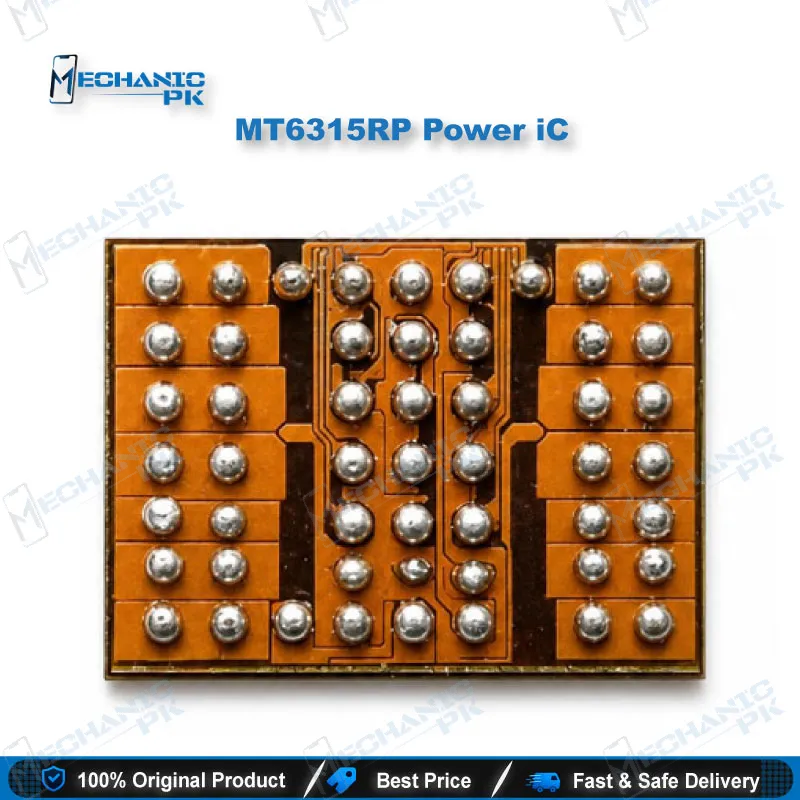
The 45-ball WLCSP package has no leads, so every joint sits under the body of the chip. That makes it a rework task for a station with accurate temperature control and a good microscope. Preheat the board evenly to protect neighboring components, and lift the chip only after the solder has fully melted. Clean the pads before placing the replacement, and use flux sparingly to avoid bridging between closely spaced balls. Inspect each joint under magnification after reflow. Many technicians call this IC change karna, and it rewards patience. If the pads are damaged, a reballing step may be needed before the new chip goes on.
| Weight | 0.1 kg |
|---|
Key Features
- Four step-down buck outputs in one device
- Input rated up to 6 V
- Programmable outputs from 0.4 V to 1.19375 V
- Distributor-rated output current of 5 A
- Operating range of -30°C to 85°C
- 45-ball WLCSP package, 2.35 x 3.44 mm
- Controlled over the SPMI bus
- Surface-mount assembly
Specifications
| Brand | MediaTek |
|---|---|
| Model | MT6315 |
| Category | Power Management IC (step-down buck regulator) |
| Compatibility | SPMI-connected MediaTek platforms |
| Supported Devices | MT8192-based boards (per Linux kernel driver reference) |
| Technology | Four-channel step-down (buck) switching regulator |
| Input Voltage | Up to 6 V |
| Output Voltage | 0.4 V to 1.19375 V |
| Dimensions | 45-WLCSP package, 2.35 x 3.44 mm |
Common Repair Uses
- Diagnosing a dead board by measuring each buck output against its expected setpoint
- Isolating a shorted downstream load from a failed regulator channel
- Board-level replacement of the MT6315 after a channel is confirmed faulty
- Checking the SPMI bus lines and supply rails when the PMIC stops responding
- Reballing and reflowing the 45-ball WLCSP pads during rework
Compatible Devices
- Verified scope: SPMI-connected MediaTek platforms, per the Linux kernel driver binding.
- MT6315 variant identified as mt6315_3
- MT6315 variant identified as mt6315_6
- MT6315 variant identified as mt6315_7
- Boards based on the MediaTek MT8192 platform
- Universal for SPMI-connected MediaTek designs, not device-specific
FAQ
What is the product name?
What is the brand of this product?
What is the model of this product?
What is this product used for?
Which devices are compatible with this product?
Who should use this product?
Does the MT6315 use SPMI for control?
What output voltage range does the MT6315 provide?
Related products