

















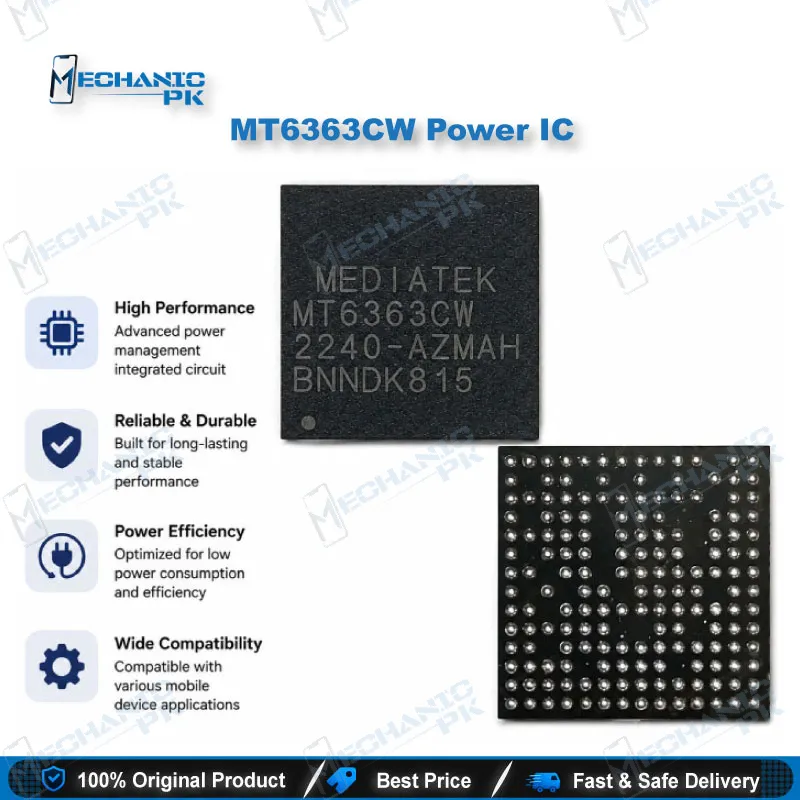
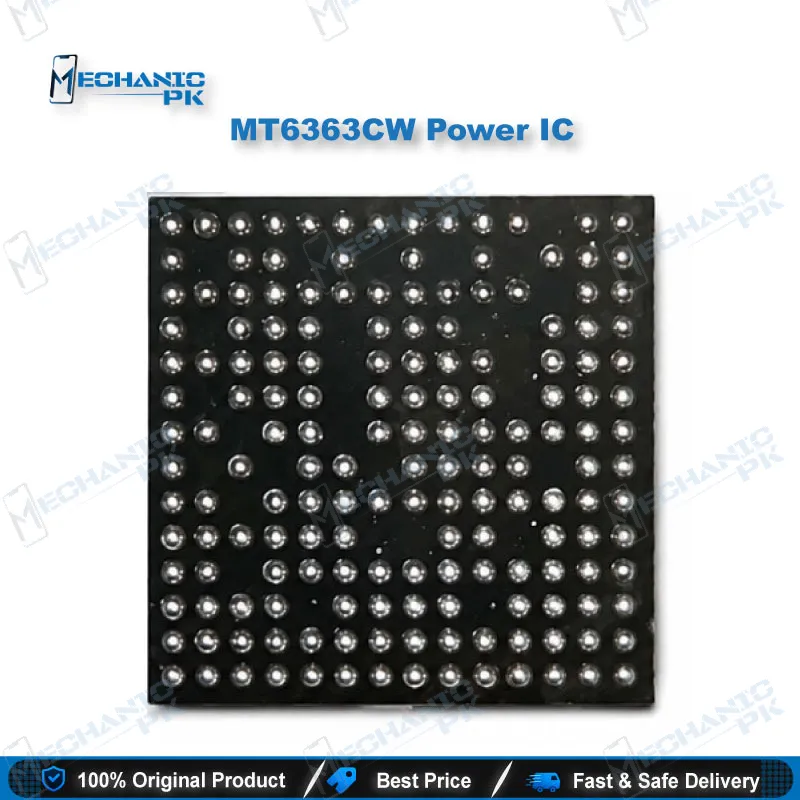
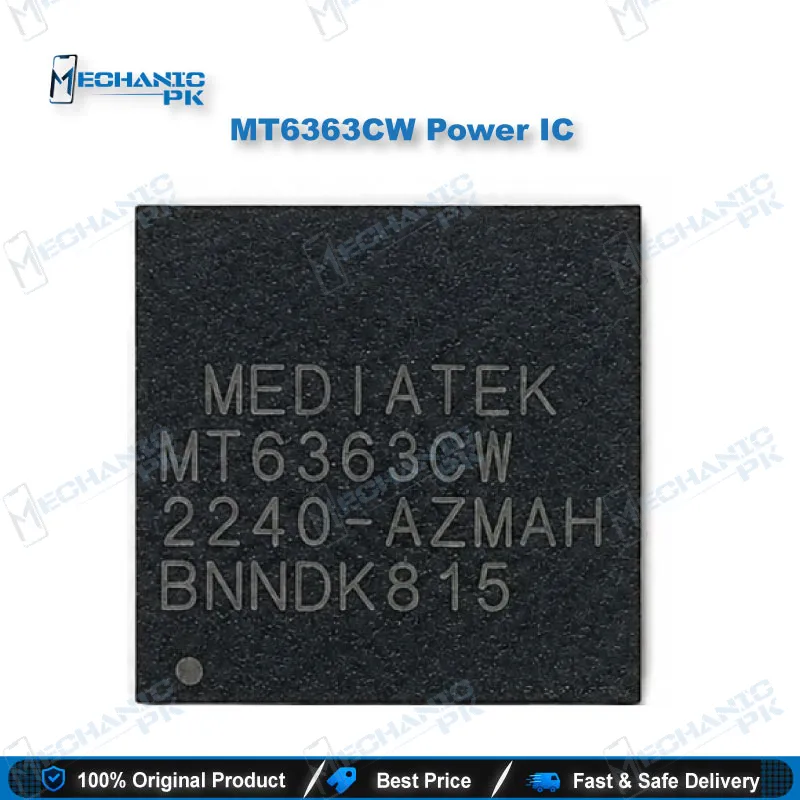
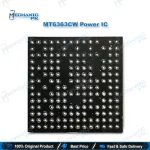
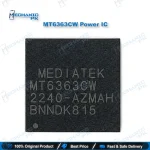
MT6363CW PMIC Power IC | MediaTek Mobile Repair
₨ 550
MT6363CW PMIC for Dimensity 9400 and MT8196 Power Rail Repair
The MT6363CW is a MediaTek power management IC from the MT6363 series, a family that connects to the SoC over the SPMI bus. Board designs built around the Dimensity 9400 (MT6991) and the MT8196 Kompanio platform rely on this family to generate and sequence core, memory, and peripheral rails. When a flagship-class board shows no power-on, unstable rails, or a failure after a board-level swap, this IC belongs at the top of your power-tree check. This page lists only verified scope, so every compatibility entry reflects documented board designs.
Out of stock
MT6363CW PMIC: Power Rail Role in Flagship Boards
The MT6363CW PMIC belongs to MediaTek’s MT6363 power management series. On a smartphone board, a PMIC like this converts the battery and charger input into the regulated rails that the SoC, memory, and peripherals depend on. The MT6363 series connects over SPMI, so the SoC enables rails, adjusts voltage, and controls sequencing through a serial bus instead of dedicated discrete lines. That structure changes how you approach the repair. Start from the power tree and confirm which rail fails before you treat the IC as the fault.
How the Series Organizes Its Regulators
The MT6363 series integrates a large set of buck converters and LDO regulators. Buck regulators handle higher-current loads such as core supplies, while LDOs feed quieter analog and peripheral rails. Kernel device-tree bindings published for the family document these regulators by name, which gives you a reference for expected rail behavior. The same family also carries an auxiliary ADC for power measurements and power-key support, both of which appear in the binding documentation. Regulator counts differ between revisions of those documents, so confirm the exact count against the datasheet for your suffix before you cite it in a repair note.
Where the MediaTek MT6363 Power IC Appears in Boards
Board designs built around the Dimensity 9400 (MT6991) use the MT6363 family for power management. The MT8196 Kompanio platform for Chromebooks uses it as well. A teardown analysis of the vivo X90 (model V2241A) also identifies an MT6363-series PMIC on the main board, although that report names the MT6363FW variant. That difference in suffix matters. Match the marking on your board to the exact part before you order a replacement or reference a schematic. Treat every compatibility claim as scoped to the board design, not to the chip alone.
Diagnosing Power Faults Before You Replace
Start with the symptoms the board shows. A dead phone that charges but never reaches boot often points to a rail that never enables. A boot loop may point to a rail that drops under load. Measure the input supplies to the PMIC first, then check the enable and output rails against the schematic. Confirm each rail with a multimeter, and use an oscilloscope when a rail looks unstable under load. If the inputs are present and the outputs are missing or wrong, the PMIC becomes a strong suspect. If the outputs are correct but a downstream load fails, examine that load before you touch the PMIC. This sequence prevents unnecessary IC swaps in smartphone PMIC repair.
Rework and Verification Checklist
Replacing a PMIC is board-level work. Use a controlled hot air station with the correct nozzle, flux, and preheating, and keep heat away from nearby connectors and passives. Confirm the package and pinout from the datasheet for your exact suffix before you lift the part. After reballing or replacing the MT6363CW PMIC, test power-on, rail output, and charging before you reassemble the phone. Record the rail readings you took before and after the repair. The next technician on the bench can then trace the fault quickly.
| Weight | 0.1 kg |
|---|
Key Features
- SPMI-connected power management design
- Multiple buck and LDO regulators per the MT6363 series bindings
- Auxiliary ADC support in the series documentation
- Power-key support in the series documentation
- Used in Dimensity 9400 and MT8196 board designs
Specifications
| Brand | MediaTek |
|---|---|
| Model | MT6363CW |
| Category | Power Management IC (PMIC) |
| Technology | SPMI-connected multi-function PMIC, MT6363 series |
| Compatibility | Dimensity 9400 (MT6991) and MT8196 Kompanio board designs |
Common Repair Uses
- Diagnosis and replacement workflows on boards that use the MT6363 series.
- Diagnosing dead-after-charge boards where the PMIC output rails do not come up
- Checking power-on sequencing faults on Dimensity 9400-class boards
- Verifying regulator output before replacing downstream loads
- Board-level rework after a schematic-confirmed PMIC fault
- Reading rail status with a multimeter and oscilloscope against the board schematic
Compatible Devices
- Board-design scope only. Device-specific use depends on the board schematic.
- MediaTek Dimensity 9400 (MT6991) smartphone board designs
- MediaTek MT8196 Kompanio Chromebook board designs
- vivo X90 (model V2241A) main board, per teardown analysis
FAQ
What is the product name?
What is the brand of this product?
What is the model of this product?
What is this product used for?
Which devices are compatible with this product?
Who should use this product?
Which SoC platforms use the MT6363 series?
How does the MT6363 series communicate with the SoC?
Related products