



















MT6260DA Baseband IC – GSM/GPRS/EDGE SoC
₨ 500
MT6260DA Baseband IC for GSM Feature Phone Boards
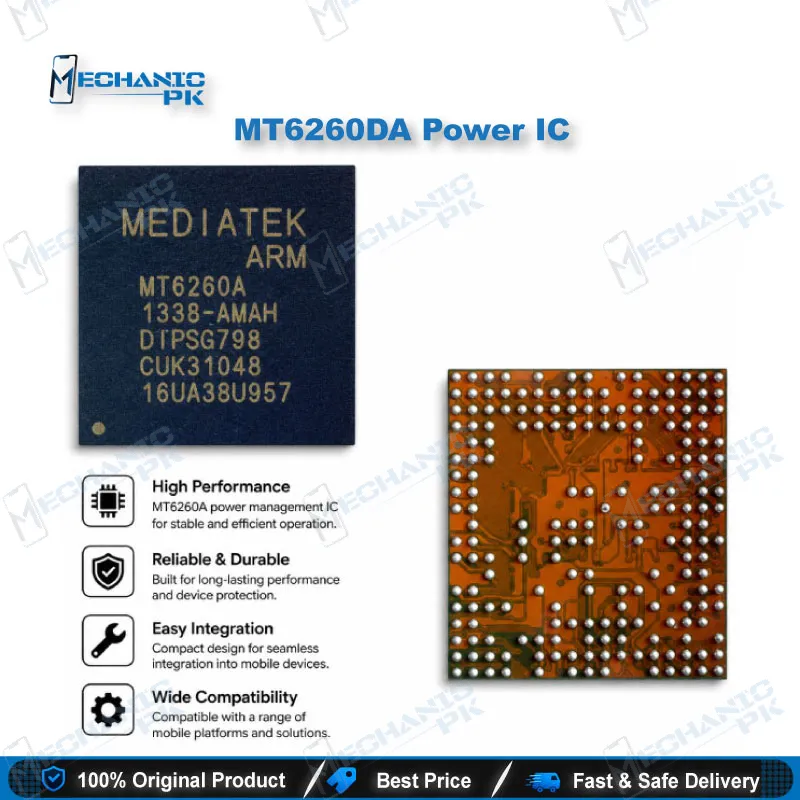
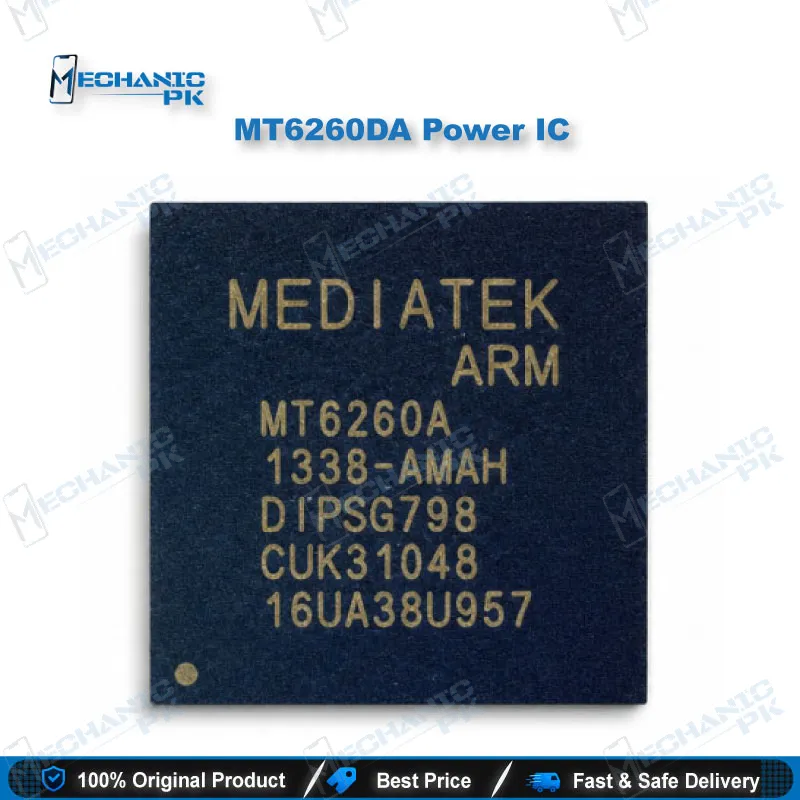
The MT6260DA baseband IC is a single-chip GSM/GPRS/EDGE-Rx processor for MT6260-platform feature phones. It integrates an ARM7EJ-S core, a DSP subsystem, Bluetooth baseband control, analog baseband circuitry, and a power management unit in one 199-ball TFBGA package. Repair technicians use it for dead phone diagnosis, power-on sequence faults, and board-level IC replacement. Its 0.5 mm ball pitch calls for controlled rework with a calibrated hot air or infrared station. Check the part marking and board compatibility before you order.
MT6260DA Baseband IC for GSM Feature Phone Repair
The MT6260DA baseband IC is MediaTek’s single-chip GSM/GPRS/EDGE-Rx processor for feature phone boards. It combines the protocol stack processor, a modem DSP, Bluetooth baseband control, analog baseband circuitry, and an integrated power management unit in one TFBGA package. You meet this chip when a phone fails to power on, drops network, or stalls at the logo. Knowing how its blocks interact helps you separate a true baseband fault from a power or charging problem upstream. This guide covers the architecture, the rework requirements for its 199-ball footprint, and where it fits in your diagnostic workflow.
Internal Architecture of the MT6260DA
The MT6260DA pairs an ARM7EJ-S RISC processor with a dedicated DSP subsystem. The MCU core runs the high-level GSM/EDGE-Rx protocol software alongside basic multimedia tasks. The DSP handles low-level modem processing and advanced audio functions, so call quality depends on the DSP path. A separate embedded processor runs the Bluetooth baseband and link control protocol, while Bluetooth radio control sits on the same die. The chip also integrates the analog baseband, radio circuitry, and power management unit on a low-power CMOS process. This layout suits compact feature phone boards, where one package covers multiple functions. Because these blocks share one die, a fault in one area can disturb network registration, audio, and connectivity at the same time. Keep that linked behavior in mind before you decide the IC is at fault.
Package and Rework Requirements
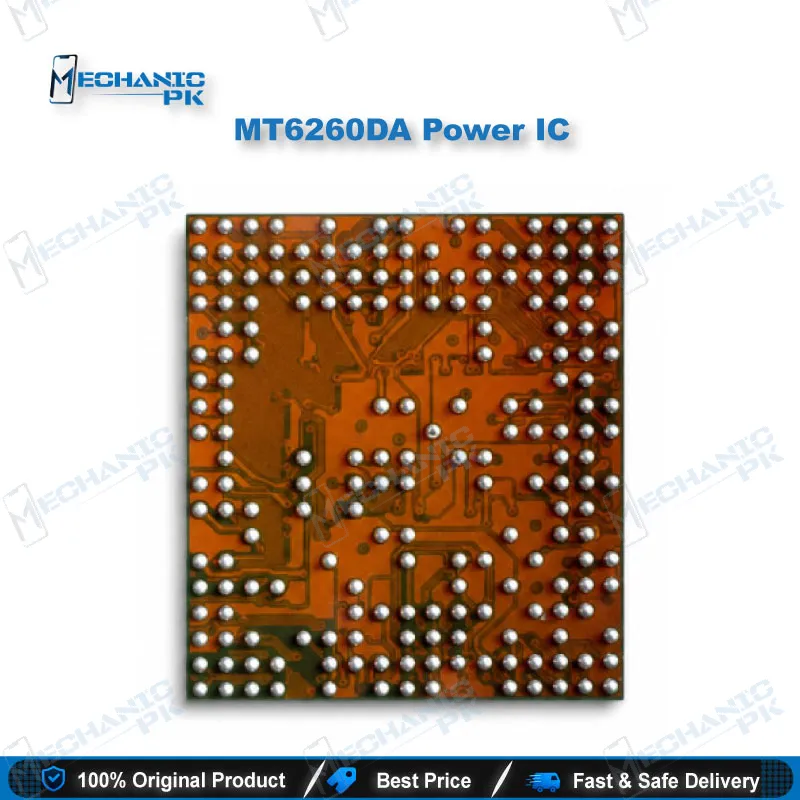
The MT6260DA ships in a TFBGA package measuring 8.6 mm by 9.6 mm, with 199 balls on a 0.5 mm pitch. A pitch that fine leaves little room for error during removal and placement. Set your hot air or infrared station with a controlled preheat profile before you lift the part, and keep the board supported to limit flex. Preheat gradually and watch the board temperature near the connectors to avoid warping. Apply flux to the pads and inspect the ball array under magnification after reflow to catch bridging. Lifted pads cause more failed repairs than bad ICs on fine-pitch parts, so reduce heat cycles and avoid repeated attempts. If you reball, use a stencil matched to the 0.5 mm pitch and clean the pads thoroughly before placement.
Where This IC Fits in Your Diagnostic Workflow
Start with the power rail before you condemn the baseband. Check the battery connector voltage, then trace the power-on sequence outputs around the package. A cracked solder joint under the chip can cause a dead phone while the die itself is intact, so reflow and inspection often come before an IC change. Charging faults and drop damage often show similar symptoms, so isolate the charging path first. Boot loop and hang-on-logo symptoms need both a firmware check and a board-level check. When you confirm a baseband failure, replace the IC and verify continuity on the surrounding rails before reassembly. A structured continuity routine prevents repeat returns from the same board.
| Weight | 0.1 kg |
|---|
Key Features
- Single-chip GSM/GPRS/EDGE-Rx baseband processor
- ARM7EJ-S core paired with a dedicated DSP subsystem
- Integrated power management unit for power-on sequencing
- Embedded Bluetooth baseband and link control on the same die
- TFBGA 199-ball package, 0.5 mm pitch, suited to precision reballing
- Targets dead phone, boot loop, and hang-on-logo repair cases
- Suited to feature phone board-level repair benches
- Low-power CMOS process for compact feature phone boards
Specifications
| Brand | MediaTek |
|---|---|
| Model | MT6260DA |
| Category | Mobile Phone ICs |
| Compatibility | MT6260 chipset family |
| Supported Devices | GSM/GPRS/EDGE feature phones and embedded GSM devices on the MT6260 platform |
| Technology | GSM/GPRS/EDGE-Rx baseband SoC with integrated power management unit; TFBGA 199-ball, 8.6 × 9.6 mm, 0.5 mm pitch |
Common Repair Uses
- Dead phone diagnosis on MT6260-platform boards after power rail checks
- Reflow or reballing of the baseband IC when a cracked joint causes power-on failure
- Boot loop and hang-on-logo cases where a board-level baseband fault is suspected
- Network registration failures traced to the baseband
- Bluetooth faults traced to the baseband
- Board-level replacement after moisture or charging-line damage
- IC change karna on a confirmed baseband failure, followed by rail continuity checks
- Jumper lagana and continuity testing around the package before reassembly
Compatible Devices
- Scoped to the MT6260 chipset family. Device-level compatibility depends on the board design.
- Feature phones built on the MediaTek MT6260 chipset family
- Embedded GSM devices using an MT6260-series baseband
- Boards listing MT6260 or MT6260DA as the baseband part number
- GSM/GPRS/EDGE-Rx feature phone boards
- Bluetooth-equipped feature phone boards using the MT6260 integrated Bluetooth baseband
- Boards with a matching 199-ball TFBGA, 0.5 mm pitch footprint (confirm the footprint before fitting)
- Universal within the chipset family, not device-specific (verify your board’s part marking)
- Check the chipset family on the board before ordering
FAQ
What is the product name?
What is the brand of this product?
What is the model of this product?
What is this product used for?
Which devices are compatible with this product?
Who should use this product?
Which MT6260 part numbers does this IC cover?
Is the MT6260DA a baseband processor or a standalone power IC?
Related products