














Light Coil Small – Backlight Boost Inductor Mobile Repair
₨ 40
Backlight Boost Inductor for Board Repair
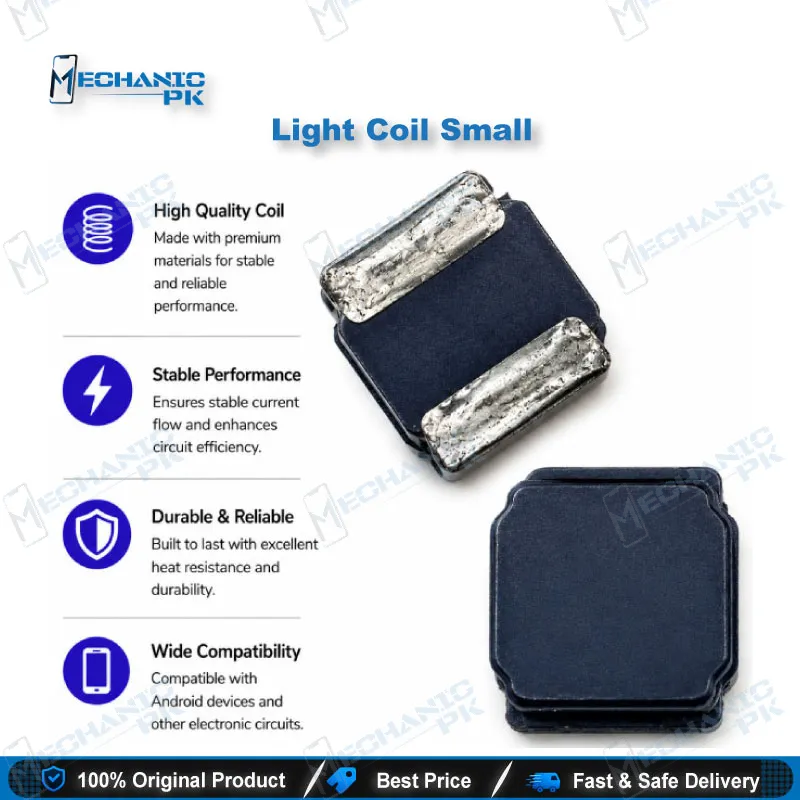
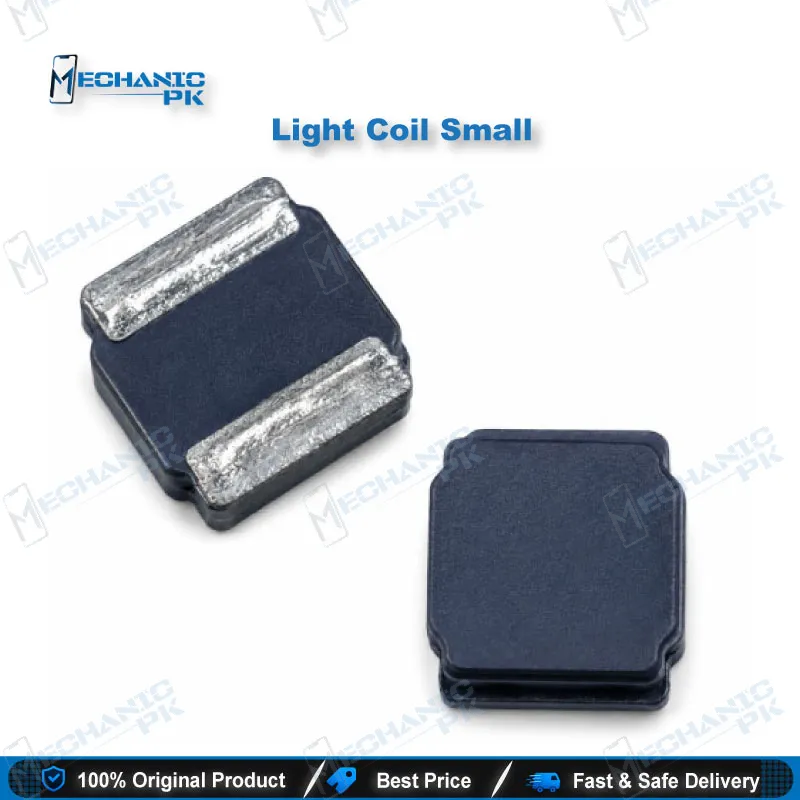
Light Coil Small is a compact boost inductor used in the backlight circuit of Android phone boards. When a display shows no light, dims, or stays dark after the image appears, the boost stage is one of the first points to check on the board. Technicians replace this coil when the backlight fault traces back to the boost section rather than the display or the light IC itself. The part is passive and has no polarity, so placement depends on pad alignment and correct reflow. Listed under SKU MST-IC-372 at 0.01 kg, it suits workshops handling light section rework, PCB diagnostics, and component-level backlight repair.
Light Coil Small is a compact boost inductor for the backlight circuit on Android phone boards, and it belongs in any workshop that handles light section faults. In a boost stage, the coil stores energy during each switching cycle and releases it at a higher level, which is how the backlight driver feeds the LED strip. When a fault sits in this part of the circuit, the display may show an image yet stay dim, flicker, or remain dark, and that pattern points technicians toward the boost section before the panel itself. A reliable diagnosis starts with the power rail feeding the light section, followed by the light IC, the diode, and the output capacitor, so you test the coil in context rather than replacing it on guesswork. Before desoldering, a multimeter continuity check can reveal an open or shorted coil, although in-circuit readings may mislead because nearby components share the same nets, so compare against a known good board where possible. Once the surrounding parts check out and the coil reads faulty, replacement becomes the logical step. Because the part is passive and has no polarity, orientation does not change its function, but correct pad alignment still matters for solder joints and circuit continuity. Rework begins with isolating the light section on the board and confirming the component location against a schematic or reference board. A hot air station set to a controlled temperature, paired with flux, removes the old coil without lifting the copper pads, and a fine-tip flux pen and clean solder wick keep the pads flat before the new part goes on. Place the coil squarely, reflow the joints evenly, and inspect them under a microscope for bridging or cold joints before powering the board. Heat is the main risk in this job, since excessive temperature or long dwell times can damage neighboring SMD parts and the thin traces around the coil, so short, controlled passes produce the best result. Customers in Pakistan often present dead backlight, dim screen, and hang on logo complaints that trace back to this section after liquid exposure, a hard drop, or repeated charging stress on budget Android handsets. Stocking this part alongside light ICs and diodes lets a shop finish the full light section repair from one shelf and avoid delays while waiting for a supplier. Store spare coils in a dry, labelled drawer, because humidity is a common cause of hidden failures in passive components and a labelled stock keeps the right part at hand. The coil also serves as a practical training piece for students learning power circuit diagnostics, because it shows how a passive inductor fits into a boost converter and how a single failed component can mimic a larger IC fault. For workshops that rely on consistent repair turnaround, a verified spare on the shelf means fewer open jobs on the bench and faster customer handover. Keep a record of the fault symptoms and the replacement result so repeat failures on the same model can be traced to board design or heat exposure rather than the coil alone. The item is tracked under SKU MST-IC-372 at a listed weight of 0.01 kg, which keeps stock counting simple for high-volume repair operations.
| Weight | 0.1 kg |
|---|
Key Features
- Compact boost inductor for the backlight circuit
- Passive component with no polarity
- Suited to hot air rework and SMD soldering
- Used to diagnose dead backlight and dim screen faults
- Universal, not tied to a specific device model
- Useful for PCB power circuit training
- Tracked under SKU MST-IC-372
- Listed weight of 0.01 kg
Specifications
| Category | Mobile Phone ICs & Chips |
|---|---|
| Compatibility | Universal, not device-specific |
| Technology | Boost inductor (switching circuit) |
| Weight | 0.01 kg |
Common Repair Uses
- Dead backlight with the image still visible
- Dim or flickering display
- Hang on logo with no backlight
- Light section rework alongside light IC and diode checks
- Component-level PCB repair training
Compatible Devices
- Universal; not tied to a specific brand or model
- Android phone backlight boost circuits (board-level scope)
- Match the footprint to the original coil before fitting
FAQ
What is the product name?
What is the brand of this product?
What is the model of this product?
What is this product used for?
Which devices are compatible with this product?
Who should use this product?
Does this coil have polarity?
Should the coil be checked before replacement?
Related products