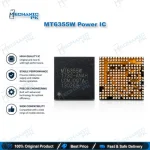
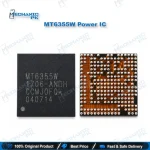
MT6355W Power IC – MediaTek PMIC for Helio P30 Boards
₨ 250
MT6355W Power IC – MediaTek Power Management Chip
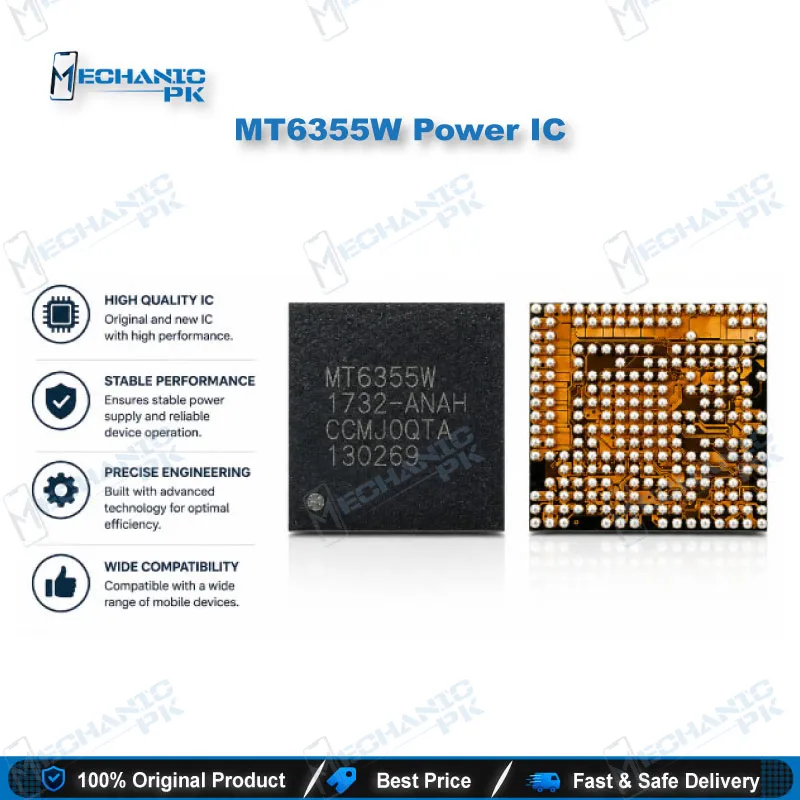
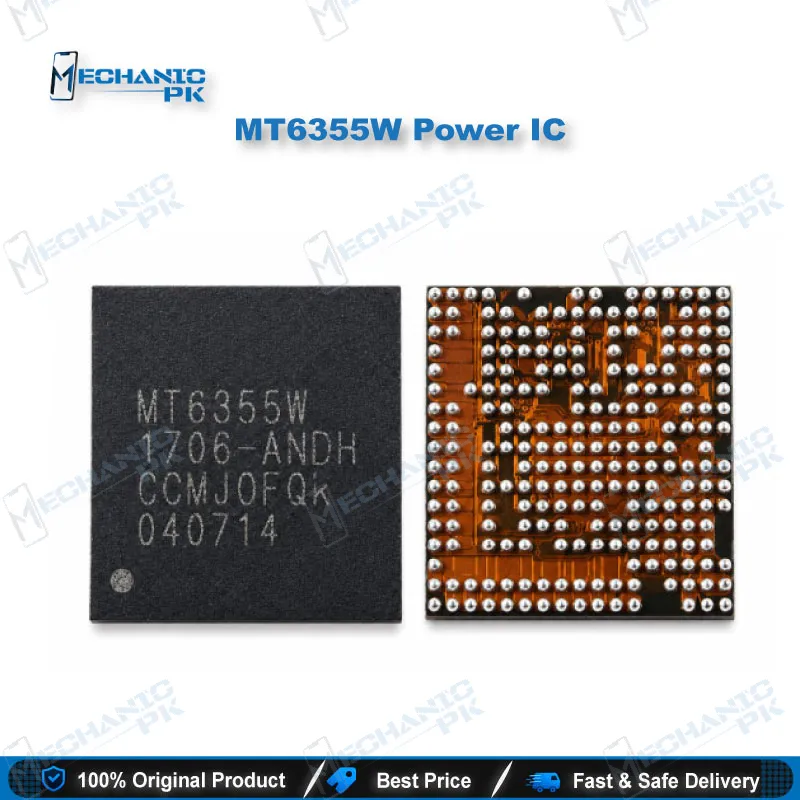
The MT6355W Power IC is a MediaTek power management IC (PMIC) from the MT6355 family. It generates and sequences the core supply rails a MediaTek application processor needs to boot. MediaTek built the MT6355 power design around the Helio P30 (MT6758) platform. That makes this chip a precise IC-level replacement for boards running that design. It comes in a 226-ball FOCSP package measuring 6.8 × 6.8 mm, so it suits technicians with proper BGA rework capability. Use it to restore a dead phone, a board stuck on hang on logo, or a unit with power-section faults after you confirm the PMIC failure on the bench.
MT6355W Power IC: MediaTek PMIC for Board-Level Power Repair
The MT6355W Power IC is MediaTek’s power management IC from the MT6355 series. It sits at the head of a smartphone’s power tree, converting battery voltage into the regulated rails that feed the processor, memory, RF section, and peripherals. MediaTek’s own power design notice for the MT6355 targets the Helio P30 (MT6758) platform. That gives this MT6355W power IC a clear technical identity: a replacement PMIC for boards built on that reference design. When your diagnosis confirms a PMIC fault, this is the component that brings the power tree back online.
What the MT6355 PMIC Controls
A modern PMIC handles far more than power-on. The MT6355 integrates multiple buck converters and LDO regulators for the main system rails. It also carries an audio codec block, an AUXADC for battery voltage and temperature sensing, and under-voltage lockout (UVLO) that blocks start-up when battery voltage drops too low. Its thermal protection raises an interrupt as junction temperature climbs and forces a hardware shutdown at its upper limit. The power-key logic supports long-press forced shutdown and a smart reset mode that pulses RESETB to the application processor. Because one chip owns all these functions, a single failed MT6355W can produce symptoms that look unrelated: dead phone, hang on logo, random restarts, or missing audio.
MT6355W Power IC Package and Handling Specifications
The MT6355 uses a FOCSP package with 226 balls on a 6.8 × 6.8 mm body. That ball density places it firmly in fine-pitch BGA territory. You need a controlled hot air station, a stencil that matches this ball layout, quality flux, and a stable PCB holder that keeps the board flat during heating. A stereo microscope lets you inspect pad condition, ball uniformity, and bridging far more reliably than working by eye.
Confirm the Fault Before You Replace
Experienced technicians verify a PMIC failure before lifting the chip. Put the board on a DC power supply and watch current behavior at power-key press. A short or abnormal current draw points toward the power section, but a shorted capacitor on one output rail can imitate a dead PMIC. Use a multimeter in diode mode to compare rail readings against a known-good board, and locate shorts with rosin smoke or a thermal camera. Replace the MT6355W only after you rule out shorted rail capacitors, damaged inductors near the PMIC, and battery connector faults.
Replacement Workflow on the Repair Bench
Remove shielding and protect nearby plastic connectors with heat-resistant tape. Preheat the board evenly, then apply hot air in a steady pattern until the solder fully reflows, and lift the old IC without force so you protect the pads. Clean the pads with solder wick and flux, reball or fit the new chip with a matched stencil, and align it carefully under magnification before final reflow. After cooling, measure the rails again before you connect a battery.
Where This IC Fits in Your Diagnostic Path
Not every dead after flash unit carries a hardware fault. If a phone stopped booting after a software operation, rule out firmware first with your test boxes, ISP pinout tools, or eMMC programmers before you touch the power section. If the storage reads correctly but the board still shows power-rail faults, the hardware path through the MediaTek MT6355W PMIC becomes the logical next step. Matching the original marking on the board remains essential, since MediaTek pairs different PMICs with different platforms.
Built for Professional Repair Benches in Pakistan
Mechanicpk supplies the MT6355W Power IC alongside the rework equipment this job demands, including hot air stations, soldering stations, reballing kits, microscopes, and multimeters. Service centers and board-level technicians get the IC and the supporting tools from one distributor, which keeps your power-section repairs consistent from diagnosis to final test.
| Weight | 0.1 kg |
|---|
Key Features
- Genuine MT6355-family MediaTek power management IC
- Matches MediaTek's power design reference for the Helio P30 (MT6758) platform
- Integrated buck converters and LDO regulators for the main system rails
- Built-in audio codec block for voice and audio paths
- AUXADC for battery voltage and temperature monitoring
- Under-voltage lockout that blocks start-up on low battery
- Thermal interrupt and hardware shutdown protection
- Compact 226-ball FOCSP package, 6.8 × 6.8 mm, for BGA rework
Specifications
| Brand | MediaTek |
|---|---|
| Model | MT6355W |
| Category | Power Management IC (PMIC) |
| Compatibility | MediaTek Helio P30 (MT6758) platform designs |
| Technology | Integrated PMIC with buck converters, LDO regulators, audio codec, AUXADC, UVLO, and thermal protection |
| Dimensions | 6.8 × 6.8 mm (FOCSP, 226 balls) |
Common Repair Uses
- Dead phone repair after confirmed PMIC failure
- No power or abnormal current draw at power-key press
- Hang on logo and boot loop caused by unstable supply rails
- Random restarts linked to PMIC power sequencing faults
- Water-damaged board restoration in the power section
- Replacing a PMIC damaged by an overvoltage or shorted charger input
- Audio faults traced to the PMIC's integrated codec block
- BGA reballing and reflow of a cracked or lifted PMIC
Compatible Devices
- MediaTek-platform boards whose original PMIC carries the MT6355W marking; MediaTek's power design notice ties the MT6355 to the Helio P30 (MT6758) platform. Always match the marking on the original chip before replacement.
- Smartphone boards built on MediaTek Helio P30 (MT6758)
- MediaTek boards with an original MT6355W marked PMIC
- Boards using the MT6355 + MT6758 reference power design
- Boards using the MT6355 + MT6758 audio and speech reference design
- Donor-board PMIC transfers between identical MT6355W board revisions
- Training and practice boards for MT6355-family PMIC rework
- Service-center board stock requiring MT6355W replacement
- Refurbishment of MT6355W-equipped MediaTek mainboards
FAQ
What is the product name?
What is the brand of this product?
What is the model of this product?
What is this product used for?
Which devices are compatible with this product?
Who should use this product?
What package does the MT6355W power IC use, and what tools do I need to replace it?
Does a dead MediaTek phone always need a new MT6355W PMIC?
Related products