



















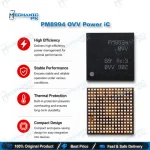
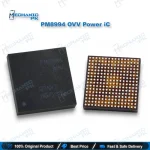
PM8994 PMIC Power IC for Mobile Board Repair
₨ 350
PM8994 PMIC Pakistan for Qualcomm Board Repair
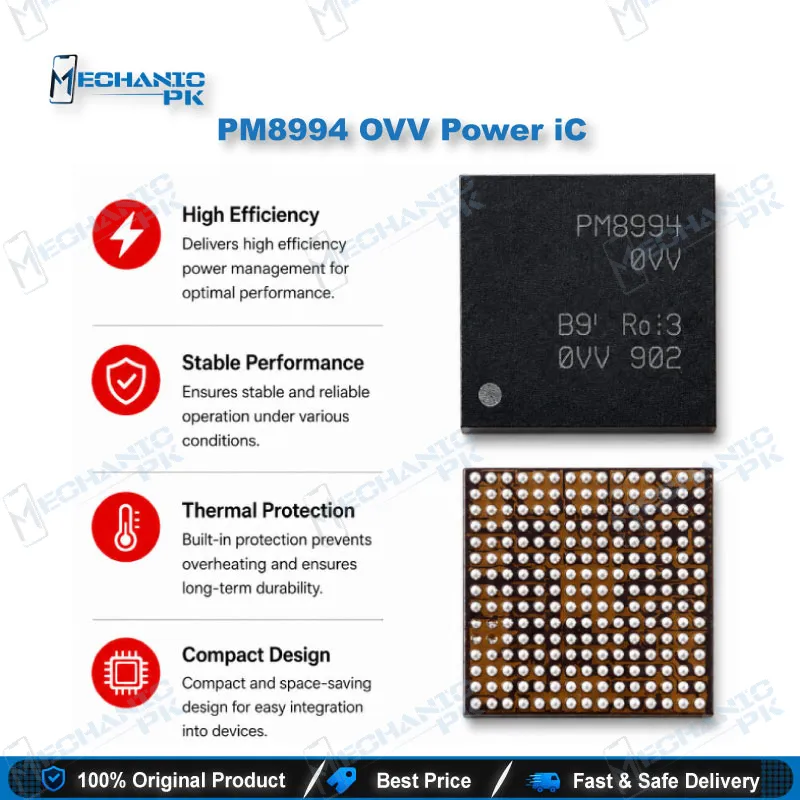
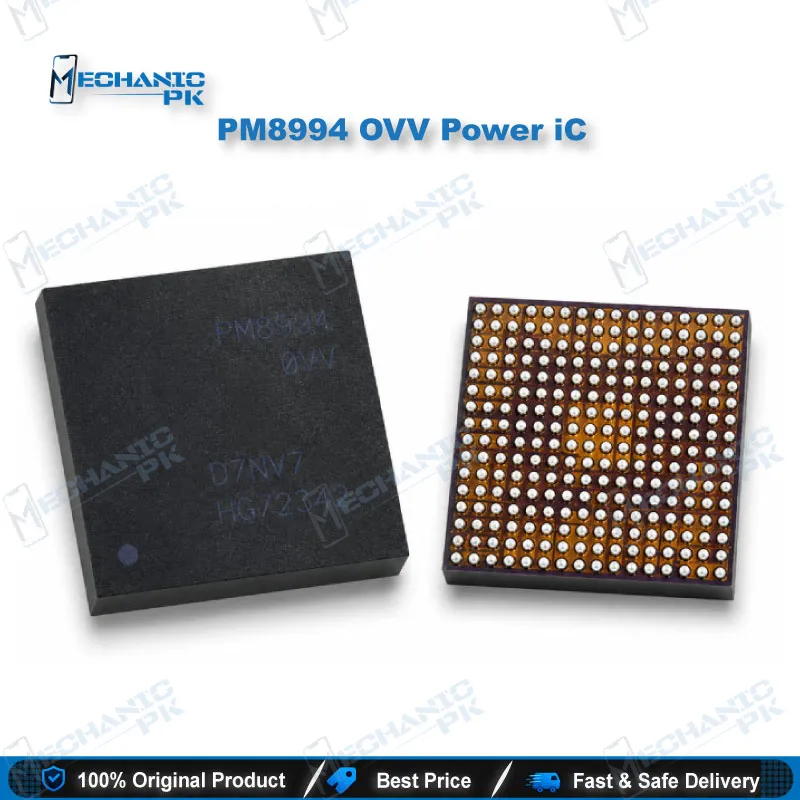
The PM8994 is a Qualcomm SPMI power management IC that regulates the voltage rails feeding a mobile processor. When a board shows no power-on, abnormal current draw, or a dead short on a power rail, this chip is one of the first components to test. Technicians use it as a board-level replacement during hot air rework, paired with a matching reballing stencil and a controlled thermal profile. Check the top marking under magnification before ordering, because similar-looking Qualcomm PMICs serve different platforms.
PM8994 PMIC Pakistan: Power Rail Replacement for Board Repair
PM8994 PMIC Pakistan listings cover a Qualcomm power management IC built for SPMI-controlled designs. Qualcomm PMIC repair work centers on regulated outputs for switching and linear rails, so one faulty rail can stop the entire board from starting. Linux kernel drivers document PM8994 regulators with separate supply inputs for each rail group, which confirms the chip works as a multi-rail regulator rather than a single-output part. Repair technicians treat this IC as a prime suspect whenever a board shows no power-on, abnormal current draw, or a rail stuck near zero volts. Most cases of this type need hardware rework rather than software recovery, because the damage sits in the silicon or the solder joints under the package. Your bench setup for this job centers on a controlled hot air station, a matching reballing stencil, flux, and a microscope to confirm ball placement.
Confirming the PM8994 Rail Fault Before Replacement
Begin with a current-limited bench supply so you can read how the board draws power at startup. A steady short on one rail points toward a damaged regulator stage, while a board that draws normal current yet stays dark suggests the fault sits in a different power path or in the processor power sequencing. Use a thermal camera or a fine probe to locate the hottest component before you lift anything from the board. Check the capacitors and the power amplifier section around the IC as well, since a short there can imitate a PMIC failure very convincingly. Measure the rail voltages against the board’s reference values from a service manual or a known-good board, since guessing wastes time and invites unnecessary replacements. Replace the PM8994 only after the fault traces directly to its footprint, because unnecessary IC changes add risk and cost to every job.
Reballing and Replacing the PM8994 Safely
PM8994 IC replacement starts with preheating the board evenly, letting the hot air profile spread across the footprint rather than focusing on one spot, which avoids warping the surrounding PCB. Lift the old IC without dragging the pads, then clean the footprint with flux and solder braid until every land sits flat and free of residue. Apply fresh balls through a matching stencil and check alignment under a microscope before reflow, because a single offset ball can leave a dry joint hidden under the package. Keep ball height consistent across the whole array, since uneven balls on a power IC often cause intermittent charging faults that return once the board warms up. Reflow with even heat from all sides and let the board cool slowly so the new joints set without stress. Handle the chip with anti-static protection from the box to the board, since electrostatic damage can make a fresh swap look successful until the board runs under load.
Verifying the Board After the Swap
Power the board on a current-limited supply and watch the current draw for a stable pattern that matches the device’s normal startup behavior. Measure each rail with your multimeter and compare the readings against the reference values, because a small offset on one output can hide a faulty joint. If the phone hangs on the logo after warming up, reflow the joints around the IC again and recheck the ball contact before blaming software. Test the charging path and the display power separately, since both depend on rails this chip feeds and each can fail on its own schedule. Run the board through a full warm-up cycle to catch thermal faults that only appear once the components reach their normal working temperature. Record every reading on the job card so the next technician on the bench can compare results quickly and trace any repeat fault.
| Weight | 0.1 kg |
|---|
Key Features
- Qualcomm SPMI-interfaced power management IC
- Multi-rail regulator with separate supply inputs per rail group
- Suited to a standard hot air rework workflow
- Suits IC reballing with a matching stencil
- Pairs with a current-limited bench supply for diagnosis
- Documented as a distinct PMIC from PMI8994
- Board-level replacement part, not a flashing tool
- Requires anti-static handling and microscope inspection
Specifications
| Brand | Qualcomm |
|---|---|
| Model | PM8994 |
| Category | Power Management IC (PMIC) |
| Technology | SPMI-interfaced power management IC |
Common Repair Uses
- Dead board diagnosis and power rail repair workflows.
- Dead board diagnosis with no power-on symptoms
- Power rail short isolation during board repair
- Replacement after confirmed PMIC failure
- Reballing and IC change on a lifted power IC
- Charging path fault diagnosis tied to the rail
- Hang-on-logo cases traced to unstable rail output
- Board recovery after liquid damage with PMIC corrosion
- Post-replacement rail verification on a test setup
Compatible Devices
- Board-level replacement for PM8994 footprints. Confirm the original top marking before fitting.
- Boards carrying a PM8994 PMIC in the original footprint
- Qualcomm SPMI-based designs using the PM8994 regulator set
- Power rail replacement on PM8994 board layouts
- Dead board recovery where the PMIC is confirmed faulty
- Verification by top marking before installation
- Listed separately from PMI8994 in kernel regulator drivers
- Board revision check against the original part
- Scope is part-based, not device-specific
FAQ
What is the product name?
What is the brand of this product?
What is the model of this product?
What is this product used for?
Which devices are compatible with this product?
Who should use this product?
Is the PM8994 the same as the PMI8994?
How do I confirm the original PMIC before ordering?
Related products