
















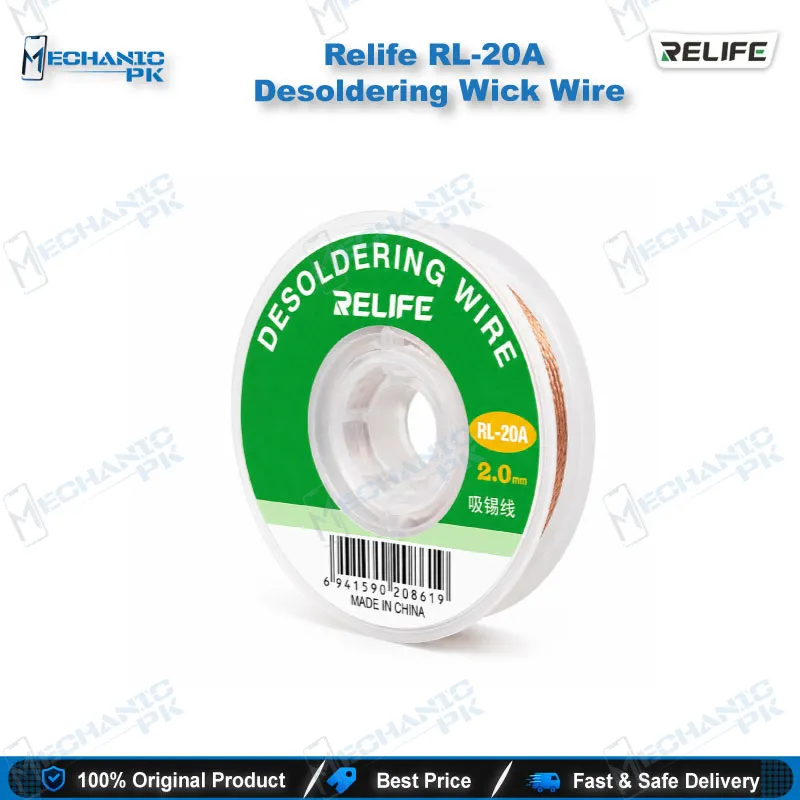
Relife RL-20A 2mm Desoldering Wick Braid 0.8m
₨ 180
Relife RL-20A 2mm Copper Solder Wick
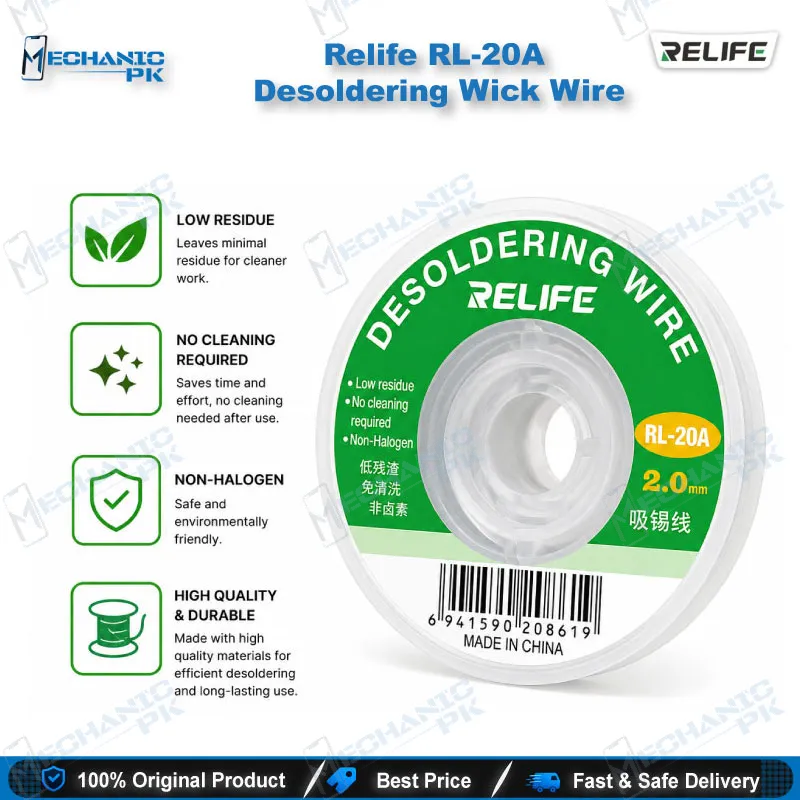
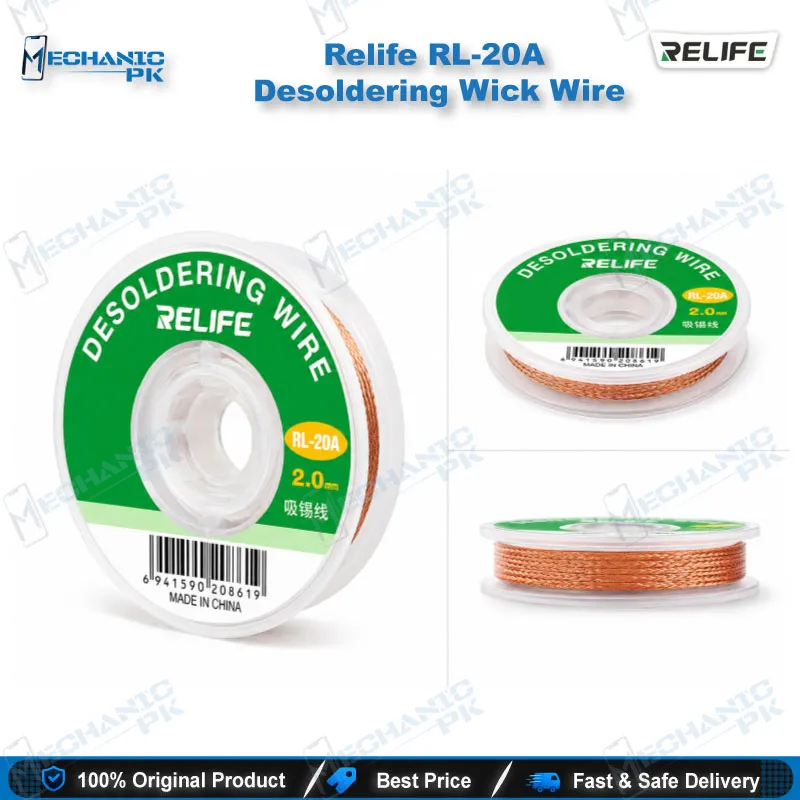
The Relife RL-20A desoldering wick gives your bench a 2.0mm pure copper braid that pulls molten solder off phone motherboard pads fast. The fine plain weave draws solder in through capillary action, and the low residue design leaves pads clean for fresh paste or reballing. You get 0.8m of oxidation-resistant braid per piece, enough for repeated pad restoration after IC removal. Mechanicpk supplies this wick to Pakistani repair shops that handle BGA rework, charging port repair, and bridge removal every day. Pair it with your soldering station and hot air station for a complete pad-preparation setup.
In stock
Relife RL-20A Desoldering Wick for Clean BGA and Pad Preparation
The Relife RL-20A desoldering wick puts a 2.0mm pure copper braid on your bench that lifts molten solder off phone board pads in seconds. Each piece measures 0.8m, which covers a long run of pad cleaning before you need a replacement. Technicians who look for a dependable Relife RL-20A desoldering wick want one result: flat, bridge-free pads after a component comes off. The braid delivers that result because it pulls solder up through its woven strands the moment your iron heats it against the pad. Mechanicpk stocks the RL-20A for repair shops that run reballing, pad restoration, and component replacement jobs on mobile motherboards every day.
How the Braid Pulls Solder Off the Pad
The RL-20A uses a fine copper braid with a plain weave. That weave leaves tight gaps between the strands, and those gaps draw molten solder inward through capillary action. The pure copper construction conducts heat quickly, so the solder liquefies under the braid almost as soon as the iron touches it and flows straight into the weave. Relife designs this wick with a low residue profile, so the pad surface comes away cleaner and you lower the chance of stray solder bridging neighbouring pins. The copper also resists oxidation and corrosion, so the unused length keeps its absorbing ability while it waits on your bench. You lay the braid over the unwanted solder, press the hot iron tip on top, and pull the braid away the moment it fills. Cut off the used section and move to a fresh length for the next pad.
Where It Fits in Your Board-Level Repair Workflow
On a mobile motherboard, the RL-20A takes over right after your hot air station lifts a component. When you finish an IC change karna job on an eMMC, a PMIC, or a charging IC, the pads underneath hold uneven blobs of old solder. Run the braid across those pads with your soldering station, and the surface levels out ready for fresh paste or a reballing stencil. The same step prepares the board before you fit a new BGA chip with a reballing kit. You also use the wick to clear solder bridges between fine pins on connectors, FPC pads, and charging ports, and to clean jumper points before jumper lagana on a dead phone board. Hold the board steady in a PCB holder, work under a microscope, and check continuity with a multimeter after cleaning so you catch any remaining short before reassembly. This sequence fits charging issue and dead phone repairs where a hardware fault traces back to a damaged or bridged pad.
Why 2.0mm Suits Most Phone Board Work
A 2.0mm braid sits in the middle of the width range. It covers a typical BGA pad row or connector pad cluster in one pass, yet stays narrow enough to avoid touching surrounding components on a crowded board. Wider braids suit large ground planes and shield areas, while narrower braids suit very tight pitches, so the 2.0mm width gives you a dependable general-purpose choice for everyday bench work.
Good technique extends the life of every piece. Keep the braid dry and clean, and store the spare length in its packaging so dust and moisture stay out. Press lightly and let the heat do the work, because dragging a loaded braid across a pad without letting the solder release can lift the pad from the board. Always cut away the used section instead of reusing it, since saturated braid stops absorbing and only adds heat to the board.
At 0.8m per piece, the RL-20A keeps your cost per job low when your shop cleans dozens of boards a week. Combine it with quality flux, a temperature-controlled soldering station, and a hot air station, and you build a complete pad-preparation routine around one consumable that you reach for on almost every board-level repair.
| Weight | 0.2 kg |
|---|
Key Features
- 2.0mm wide pure copper braid for general-purpose pad cleaning
- 0.8m length per piece for repeated use across many boards
- Plain weave with capillary action that draws molten solder inward
- Fast heat conduction from the copper strands
- Low residue design that leaves clean pad surfaces
- Oxidation and corrosion resistance for stable storage on the bench
- Suitable for BGA pad cleaning on phone motherboards
- Works with a standard soldering iron or soldering station
Specifications
| Brand | Relife |
|---|---|
| Model | RL-20A |
| Category | Desoldering Wick / Solder Braid |
| Compatibility | Universal — PCB and mobile motherboard pad cleaning, not device-specific |
| Technology | Braided copper wick with capillary solder absorption |
| Material | Pure copper |
| Dimensions | Width 2.0mm × Length 0.8m |
Common Repair Uses
- Board-level solder removal and pad cleaning in mobile phone and PCB repair workflows
- Cleaning pads after IC change karna
- Levelling BGA pads before reballing
- Removing solder bridges between fine pins
- Restoring pads before fresh solder paste application
- Clearing excess solder from charging port pads
- Cleaning connector and FPC pads
- Preparing jumper points before jumper lagana
- Removing excess tin after component replacement
Compatible Devices
- Universal — works on any PCB or mobile motherboard where you need to remove solder from pads, not limited to specific phone models
- Android phone motherboards (Samsung, Oppo, Vivo, Infinix, Tecno and other brands)
- iPhone logic board pads
- BGA chip pad rows after IC removal
- eMMC and UFS pad areas on dead phone boards
- Charging port and connector pads
- FPC connector pad clusters
- SMD component pads on general PCBs
- Tablet and other small electronics boards
FAQ
What is the product name?
What is the brand of this product?
What is the model of this product?
What is this product used for?
Which devices are compatible with this product?
Who should use this product?
Can the Relife RL-20A clean BGA pads after IC removal?
What width and length does the RL-20A have, and how do I use it?
Related products