

















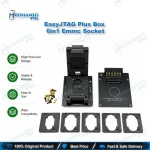
EMMC/eMCP Socket BGA221 / BGA254 Programmer Adapter
₨ 13,500
BGA221 BGA254 eMMC Programming Socket
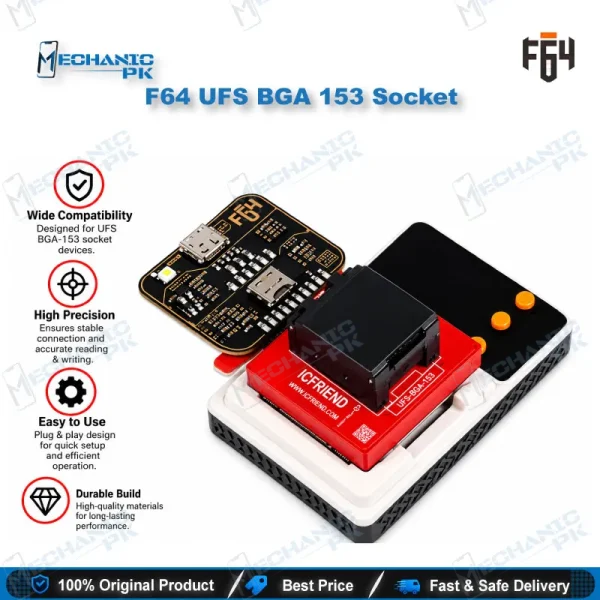
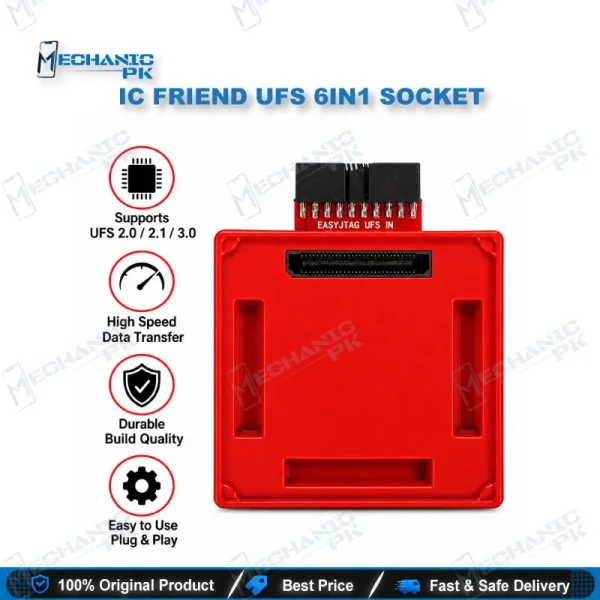
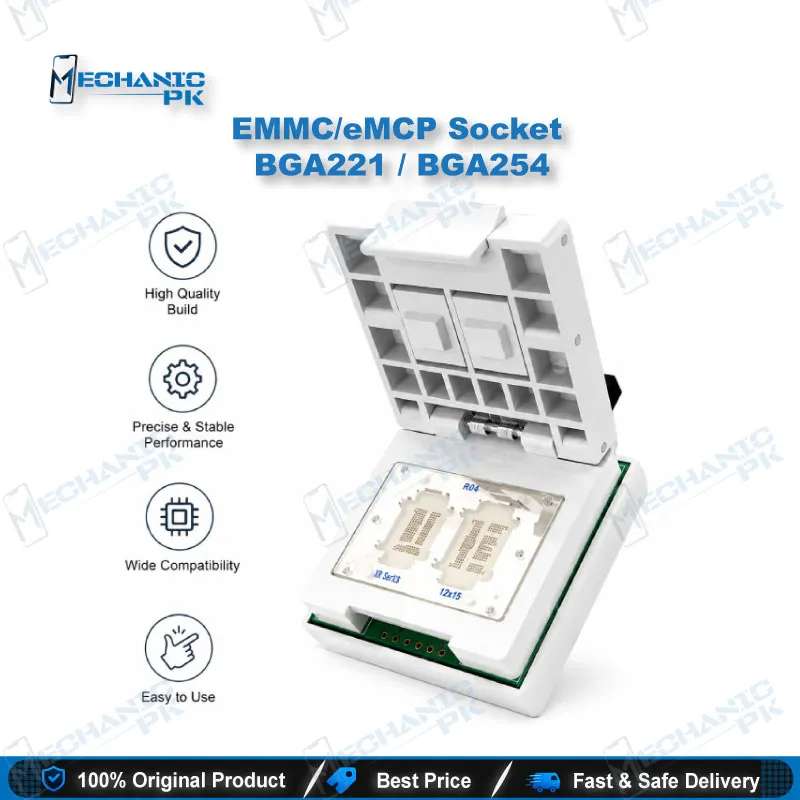
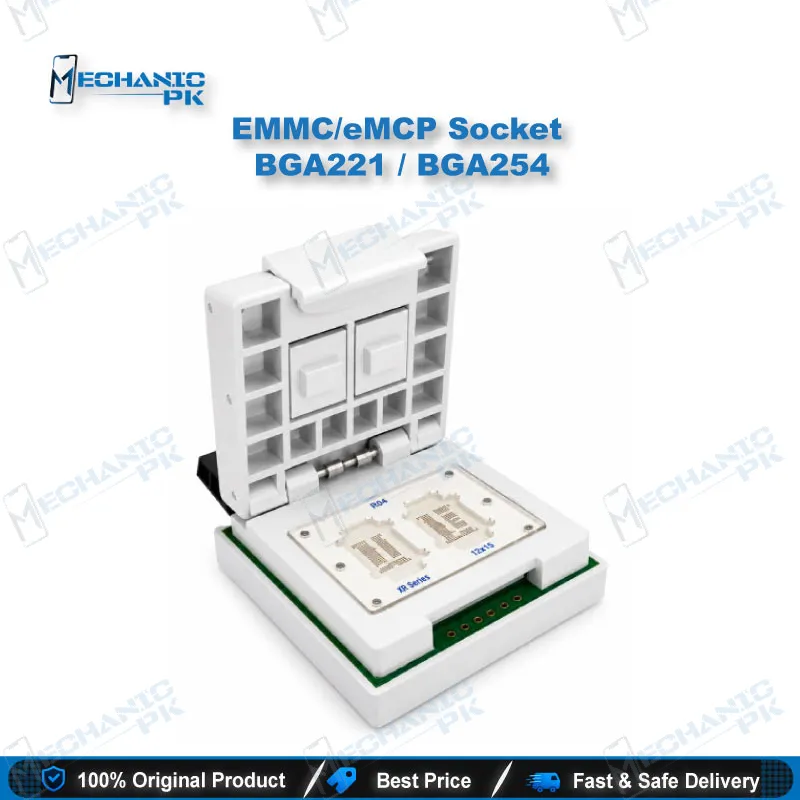
EMMC/eMCP Socket BGA221 / BGA254 is a programming socket for eMMC and UFS storage chips in two common ball footprints. It seats BGA221 eMMC packages and the BGA254 footprint used for eMMC and UFS work, so you can read, write, and back up memory without desoldering when the chip sits in the socket. It suits technicians running the Z3X Easy-JTAG Plus platform who need a clean, repeatable connection to storage on handsets that will not boot. Confirm your chip’s package code before ordering. Clean contacts and a fully closed cover keep reads stable from the first job to the last.
In stock
EMMC/eMCP Socket BGA221 / BGA254 gives your bench a dedicated BGA221 BGA254 eMMC socket for the two footprints you meet most often when storage faults stop a handset from booting. When a phone shows no display or loops on the logo, the memory chip frequently holds the answer, and reading that chip directly tells you more than guesswork at the processor. This socket seats the BGA221 eMMC package and the BGA254 footprint, which covers eMMC and UFS storage in one position. Mechanicpk offers it for technicians who already run the Z3X Easy-JTAG Plus platform and want a repeatable path into the memory. Think of the socket as the physical interface between your box and the chip, so the quality of the seat decides whether your reads come back clean. Start each job by reading the package code printed on the chip, then match that code to the correct footprint before you apply any power. Confirm the ball layout and body thickness as well, because packages that look alike can differ in both. For eMMC work, place the chip in the socket, close the cover fully, and run a direct-mode read to capture the complete user area. That full read gives you a backup before any write, and it protects data you may need to restore later. Repair shops rely on this habit when they clone partitions onto a donor chip or rebuild a corrupted boot area. After a read, compare the file size and check the header against the expected memory size before you trust the backup. A read that stops early or returns repeated blocks points to seating or contact problems rather than a dead chip, so reseat and retry before you condemn the storage. Pakistani technicians often treat a dead phone with no display and no charging response as a storage question first, and the read result frequently shows whether the fault lies in the chip or on the board. The BGA254 position also supports the ISP route through the adapter output, which lets you work on a chip that stays soldered to the phone. Choose that route only after you check the test point pinout for your handset, and never assume the pinout matches another model. If you reball a chip before seating it, use a stencil that matches the footprint, since a mismatch leaves contacts without solder and produces the same false results. Before every session, make sure the chip sits flat across all contacts, because a tilted seat produces failed reads that mimic faulty storage. Clean the contacts with isopropyl alcohol and a soft brush, and keep bare fingers away from the pads. Store the socket in its case when idle, and inspect the pins every few weeks for bends, lifted contacts, or flux residue. Track insertions on each job, since the mechanical life of these sockets is finite and a worn seat causes intermittent results. Keep a log of each chip you read, including the package code, the software version, and the result, because that record speeds up future jobs on the same model. Software support changes over time, so check your programmer version against the current support list before each new batch. Benches that handle high volume benefit from keeping one socket per footprint, so switching between BGA221 and BGA254 jobs never stops the line. With a verified footprint, a disciplined seating routine, and a full backup before every write, this socket becomes a dependable part of your eMMC and UFS workflow.
| Weight | 0.9 kg |
|---|
Key Features
- Seats BGA221 eMMC packages in a dedicated socket position
- Provides a BGA254 footprint for eMMC and UFS storage work
- Built for the Z3X Easy-JTAG Plus box platform
- Supports direct-mode read and write when the chip sits in the socket
- Offers an ISP-route option on the BGA254 position for chips still soldered to the board
- Keeps contact alignment repeatable across insertions when the cover closes fully
- Lets you back up the full user area before any write operation
- Suits repair benches that run both eMMC and UFS jobs on one platform
Specifications
| Brand Entity | Mechanicpk |
|---|---|
| Product Entity | EMMC/eMCP Socket BGA221 / BGA254 programming socket |
| Technology Entity | eMMC, UFS, BGA packaging |
| Compatible Device Entities | Z3X Easy-JTAG Plus box; BGA221 and BGA254 chip packages |
| Repair Process Entity | direct-mode chip read and write, partition backup, ISP recovery |
| Industry Entity | mobile phone repair, GSM programming, board-level storage repair |
Common Repair Uses
- Reading the full eMMC user area before any write, as a backup
- Cloning partitions onto a donor chip during board-level recovery
- Reflashing firmware on a dead phone that no longer boots
- Recovering a boot loop caused by corrupted storage
- Verifying a replacement chip after IC change karna work
- Reading and writing UFS storage on BGA254 footprint handsets
- ISP access on phones where the chip remains soldered to the board
Compatible Devices
- Z3X Easy-JTAG Plus box platform
- eMMC chips in the BGA221 package
- eMMC chips in the BGA254 package
- UFS chips in the BGA254 package
- Chip-level scope, not device-specific: match the chip part number before purchase
- Package code and ball layout must match the socket footprint
FAQ
What is the product name?
What is this product used for?
Which devices are compatible with this product?
Who should use this product?
Does the BGA254 socket support ISP repair on a chip that stays soldered?
Can this socket handle both eMMC and UFS chips?
Related products