














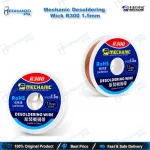
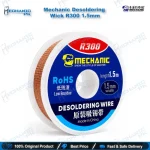
Mechanic R300 1.5mm Desoldering Wick – 1.5m Copper
₨ 280
Mechanic R300 1.5mm Desoldering Wick for PCB Repair
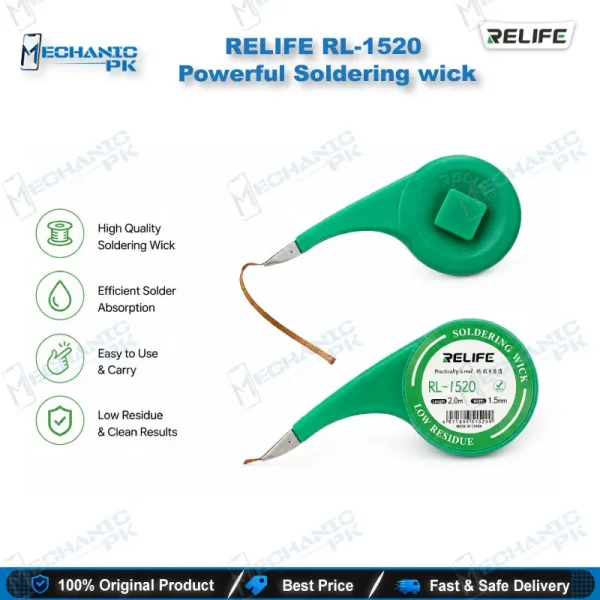
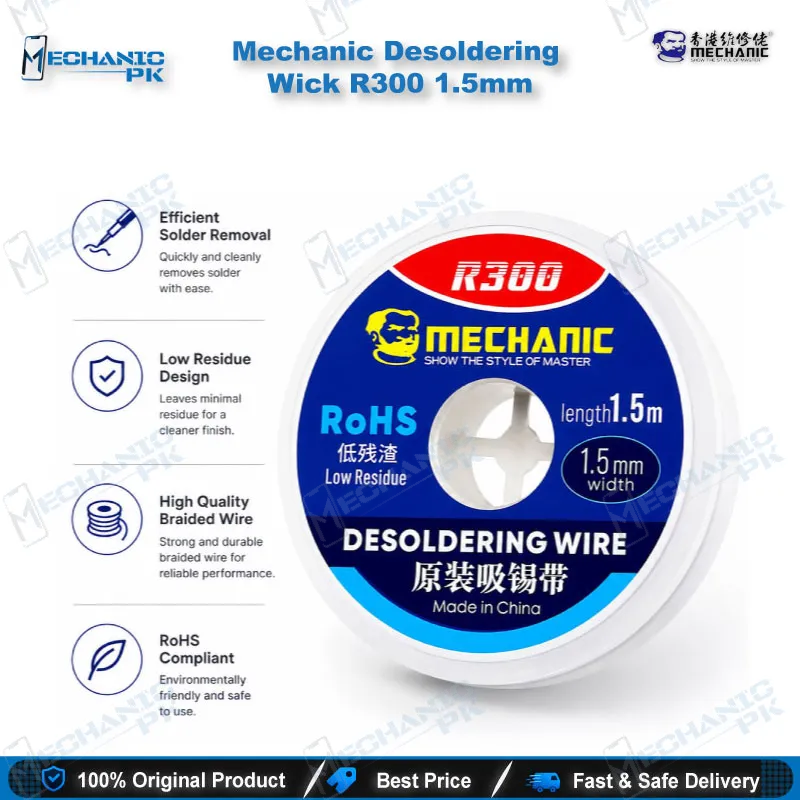
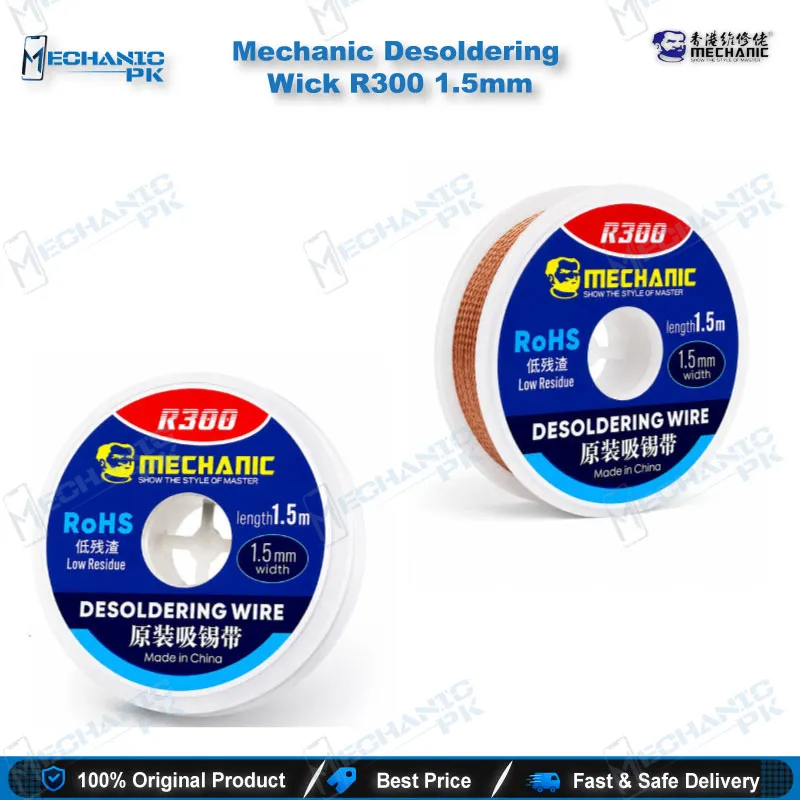
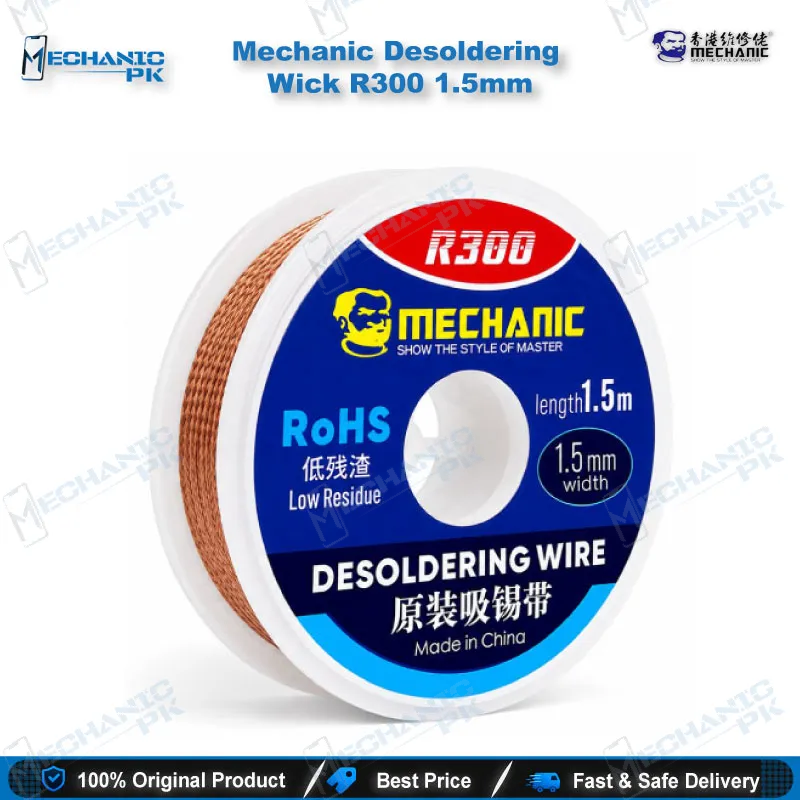
The Mechanic R300 1.5mm desoldering wick gives you a 1.5-meter copper braid for pulling excess solder off pads, pins, and bridges. Its narrow width suits tight pin spacing on mobile phone boards and fine-pitch ICs. The braid is rated anti-oxidation and anti-corrosion, so it keeps its condition on your bench. It works with both leaded and lead-free solder. After each pass, cut off the used section and start with fresh wick. Heat the braid for no more than five seconds to protect nearby components and the board.
In stock
1.5mm Desoldering Wick for Precise Solder Removal on Mobile Boards
A 1.5mm desoldering wick sits at the right point between fine control and enough absorption for mobile phone boards. Those boards rarely leave room for a wide band of solder, so the width of your braid matters as much as its quality. The R300 gives you a 1.5-meter roll of copper braid at 1.5mm width, which suits the tight pitch of many ICs and connector pads. Reach for it when you need to clear a solder bridge between two pins, flatten excess tin on a pad, or prepare a surface before fitting a new component. In a typical repair workflow, this R300 solder wick belongs at the cleanup stage, after you remove the old part and before you reflow a replacement. Match the wick width to the pad in front of you, because a braid that is too wide will pull more tin than the joint needs.
How a Copper Desoldering Braid Pulls Solder Off Your Pads
Copper braid draws molten solder into its woven strands through capillary action once you press a heated iron against it. A 1.5mm desoldering wick works best when you place it over the joint first, so the braid sits directly on the solder you want to remove. Press the iron tip onto the wick rather than onto the pad, because this keeps the heat focused exactly where the tin needs to flow. When the solder moves into the braid, lift the wick and the iron away from the board together to avoid dragging tin across the surface. Cut off the saturated section with nippers before your next pass, since a loaded braid cannot absorb any more tin. Work in short passes, and reposition a fresh section of wick whenever the first attempt leaves residue behind.
Heat Control and Safe Handling on the Bench
Heat control matters more than applied force when you work with this wick. The product guidance says not to heat the braid for more than five seconds, because extended heat can damage nearby components and the PCB beneath them. Keep your iron tip clean and freshly tinned, so heat transfers cleanly into the braid instead of smearing solder across the pad. Handle the wick only by its grip or packaging, and keep your fingers away from the heated section at all times. Never use a soldering iron or wick near combustible material or in an explosive environment, since a cluttered workspace turns a small heat source into a fire risk. Do not press the iron hard against the braid, because pressure can damage both the pad and the board underneath.
Lead-Free Joints and Pad Cleanup Before Reflow
Lead-free solder typically needs more heat than leaded alloys, and it tends to resist flow once it cools on a pad. This wick works with both leaded and lead-free solder, so you can keep one roll on the bench for mixed-board repairs. After desoldering, inspect each pad under a microscope and check for remaining tin before you place a new part. If residue remains, clean the area with flux and isopropyl alcohol, then inspect the pad again. Keep a second roll ready for larger pads that need more absorption, because one width rarely fits every joint on a board. A clean, flat pad gives the replacement component the best chance of forming a reliable joint.
| Weight | 0.1 kg |
|---|
Key Features
- Braided copper construction for efficient solder absorption
- Anti-oxidation and anti-corrosion rating
- 1.5mm width for tight pin spacing and fine-pitch joints
- 1.5-meter length for multiple passes per roll
- Works with leaded and lead-free solder
- Low residue finish for cleaner pad recovery
- Cut-off design lets you reuse a fresh section each pass
- Lightweight package at about 8 g
Specifications
| Brand | Mechanic |
|---|---|
| Model | R300 |
| Category | Desoldering Wick (Solder Wick Remover) |
| Compatibility | Universal, not device-specific |
| Supported Devices | General PCB and mobile phone board repair, leaded and lead-free solder |
| Technology | Braided copper solder wick |
| Material | Copper |
| Dimensions | Width 1.5mm, length 1.5m |
| Weight | About 8 g (package) |
Common Repair Uses
- Removing excess solder from component pads before a replacement
- Clearing solder bridges between closely spaced IC pins
- Flattening tin on pads after a board-level rework
- Cleaning pads before reflowing a new BGA or surface-mount part
- Removing solder from through-hole pins during component removal
- Restoring a flat pad surface after a heavy soldering pass
- Preparing a board for reballing or re-tinning steps
- Clearing mistaken solder from connector pins
Compatible Devices
- Universal scope, not device-specific. Verified for general PCB rework and mobile board repair.
- Mobile phone PCBs with BGA and fine-pitch ICs
- Leaded solder joints on general electronics boards
- Lead-free solder joints
- Surface-mount component pads
- Through-hole component pins
- Solder bridges between closely spaced pins
- General electronics repair and assembly work
- Professional repair benches handling mixed-board jobs
FAQ
What is the product name?
What is the brand of this product?
What is the model of this product?
What is this product used for?
Which devices are compatible with this product?
Who should use this product?
Does this 1.5mm wick work with lead-free solder?
How long should I heat the wick during desoldering?
Related products