



















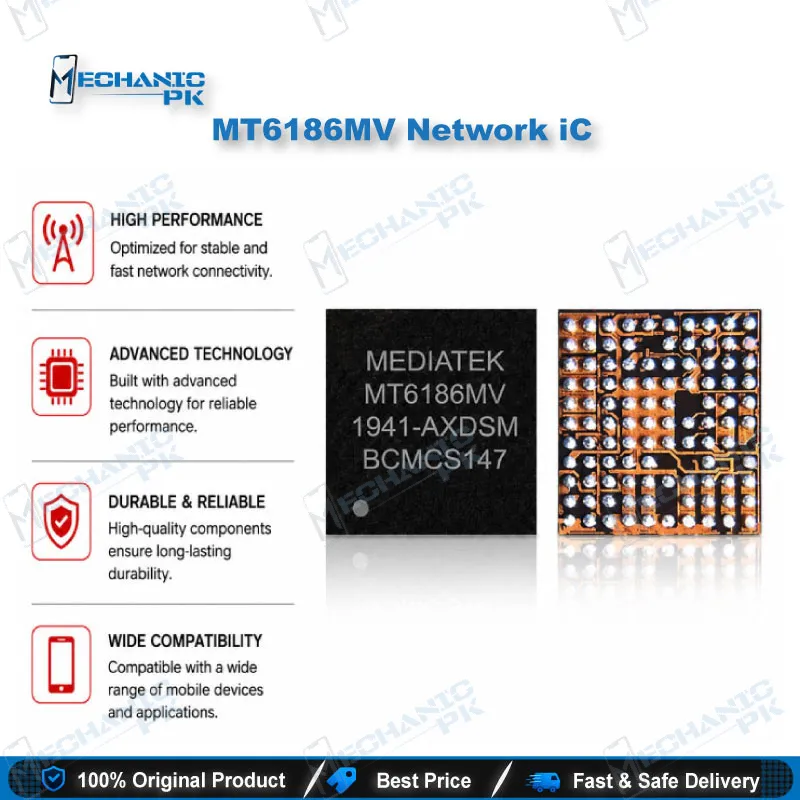
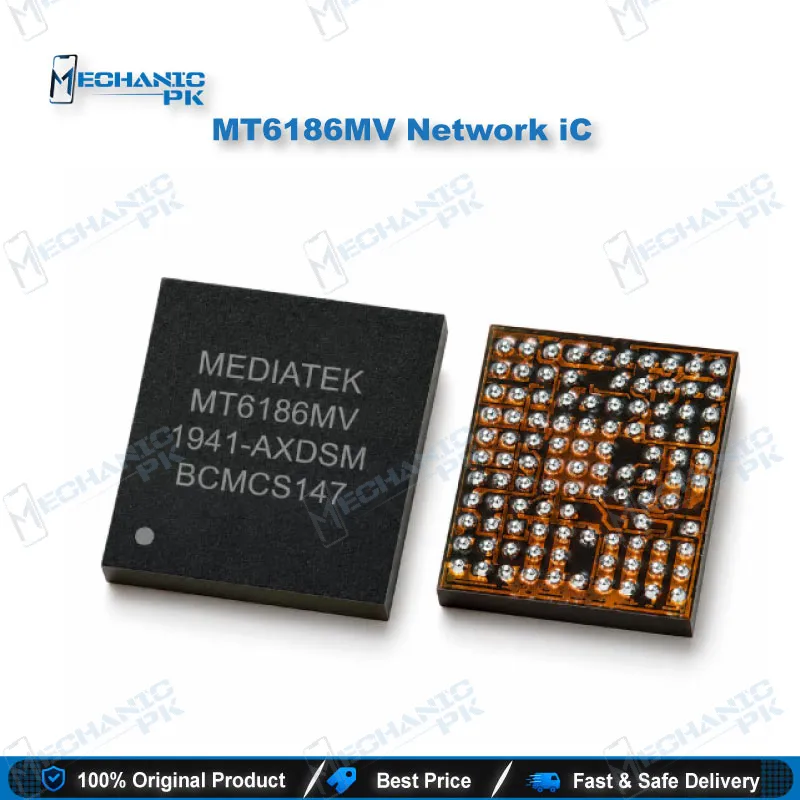
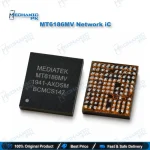
MT6186MV Network IC – MediaTek RF Transceiver IC
₨ 250
MT6186MV Network IC for MediaTek RF Repair
The MT6186MV network IC is MediaTek’s RF transceiver for Helio G90T boards, including the Xiaomi Redmi Note 8 Pro. It converts baseband data into radio signals and decodes incoming signals for the modem, so a fault here typically causes no service, an empty signal bar, or emergency calls only while the IMEI stays intact. Mechanicpk supplies this part for technicians who handle board-level network repairs on MediaTek phones. Pair it with a controlled hot air station, quality flux, and a microscope for a clean replacement and stable signal after reflow.
Out of stock
MT6186MV Network IC: MediaTek RF Transceiver for Board-Level Network Repair
The MT6186MV network IC is the MediaTek RF transceiver that links the baseband modem to the radio front end on Helio G90T boards. TechInsights confirmed its role when it extracted the MT6186MV, built on the AXD10787B1 die, from a Xiaomi Redmi Note 8 Pro during a teardown study. Inside the phone, this chip converts outgoing digital baseband data into radio signals and brings incoming signals back down for the modem to decode. A failed transceiver leaves the handset booting, charging, and displaying normally while the network side goes completely silent. For technicians who handle MediaTek mid-range boards, the MT6186MV ranks among the most requested parts on the network repair bench.
How the MT6186MV Fits Into the Cellular Signal Chain
The receive path on a MediaTek board runs from the antenna through switches, filters, and the power amplifier section into the transceiver, then into the modem inside the SoC. The MT6186MV handles frequency conversion in both directions, so damage here usually takes down 2G, 3G, and 4G service together instead of a single band. On the bench, you see a permanently empty signal bar, a no service status, or emergency calls only while the IMEI still reads correctly in the dialer. That last detail carries weight. The phone keeps its IMEI and RF calibration data in flash storage, not inside the transceiver, so a valid IMEI paired with zero signal points your diagnosis toward the RF hardware rather than toward software.
Diagnosing a Redmi Note 8 Pro Network IC Fault
Rule out the simple causes before you commit to an IC change. Check the SIM tray, antenna contacts, and coaxial lines first, then open engineer mode to see whether the modem attempts registration at all. Next, remove the RF shield and inspect the area for liquid residue, corrosion, or cracked components around the transceiver. Use a multimeter in diode mode across the supply capacitors near the MT6186MV to catch a short to ground, and confirm that every rail and the reference clock reach the chip with the board powered. A drop impact often cracks the solder joints under RF ICs, and a controlled reflow sometimes restores signal without any replacement. When rails, clock, and front-end parts all test good and the fault remains, a new MT6186MV network IC becomes the logical next step.
Replacing the MT6186MV Network IC on the Repair Bench
Lock the board in a PCB holder, lift the shield, and mask neighboring components with heat-resistant tape. Preheat the board so the multilayer PCB heats evenly, then apply hot air in steady circular passes until the transceiver releases cleanly. If the factory applied underfill, soften it and scrape it away gradually so you avoid lifting pads. Clean the land with flux and desoldering wick, then check every pad under a microscope before you place the new part. Align the IC with its pin-one marker, add a thin layer of flux, and reflow until the chip self-centers on its pads. Let the board cool naturally, inspect the joints again, then test calls, mobile data, and signal strength on every SIM slot.
Tools That Complete This Repair
A clean transceiver replacement depends on stable heat and good visibility. A temperature-controlled hot air station handles removal and reflow, and a stereo microscope lets you confirm pad condition and alignment. A reballing kit with the correct stencil helps when you need to restore solder balls on a salvaged part, while a reliable multimeter covers the rail and short checks that come before any rework. Shops that handle network faults in volume often move up to an IR preheater or BGA rework station, which keeps board temperature consistent across repeated transceiver jobs.
| Weight | 0.1 kg |
|---|
Key Features
- MT6186MV part marking for direct replacement of the original MediaTek transceiver
- Bridges the SoC modem and the RF front end as the phone’s main cellular transceiver
- Built on the AXD10787B1 die, identified in TechInsights teardown analysis
- Verified fitment in the Xiaomi Redmi Note 8 Pro on the Helio G90T platform
- Handles signal conversion for the phone’s 2G, 3G, and 4G network modes
- Board-mounted package suited to hot air removal and reflow
- Restores network when rails, clock, and front-end parts test good
- Practical stock item for shops handling MediaTek network faults
Specifications
| Brand | MediaTek |
|---|---|
| Model | MT6186MV |
| Category | Mobile Phone ICs > Network / RF ICs |
| Compatibility | MediaTek Helio G90T (MT6785) platform boards that use the MT6186MV transceiver |
| Supported Devices | Xiaomi Redmi Note 8 Pro |
| Technology | Cellular RF transceiver (AXD10787B1 die) |
Common Repair Uses
- No service or no signal with a valid IMEI
- Emergency calls only on all SIM slots
- Network loss after liquid damage around the RF section
- Signal failure after a drop that cracked transceiver solder joints
- Replacing a transceiver damaged during nearby hot air rework
- Unstable or weak signal traced to the transceiver after front-end checks pass
- Network section repairs on MediaTek boards in service centers
- Spare stock for board-level network repair benches
Compatible Devices
- Verified at device level for the Redmi Note 8 Pro; for any other board, match the marking on the original transceiver.
- Xiaomi Redmi Note 8 Pro (Helio G90T / MT6785)
- MediaTek Helio G90T boards fitted with an MT6186MV transceiver
- Any MediaTek board whose original RF transceiver carries the MT6186MV marking
- Not a universal substitute for other MT61xx transceivers; confirm the part number on the board before ordering
FAQ
What is the product name?
What is the brand of this product?
What is the model of this product?
What is this product used for?
Which devices are compatible with this product?
Who should use this product?
Does replacing the MT6186MV change or erase the IMEI?
How do I confirm the MT6186MV is the cause of a no service fault?
Related products