

















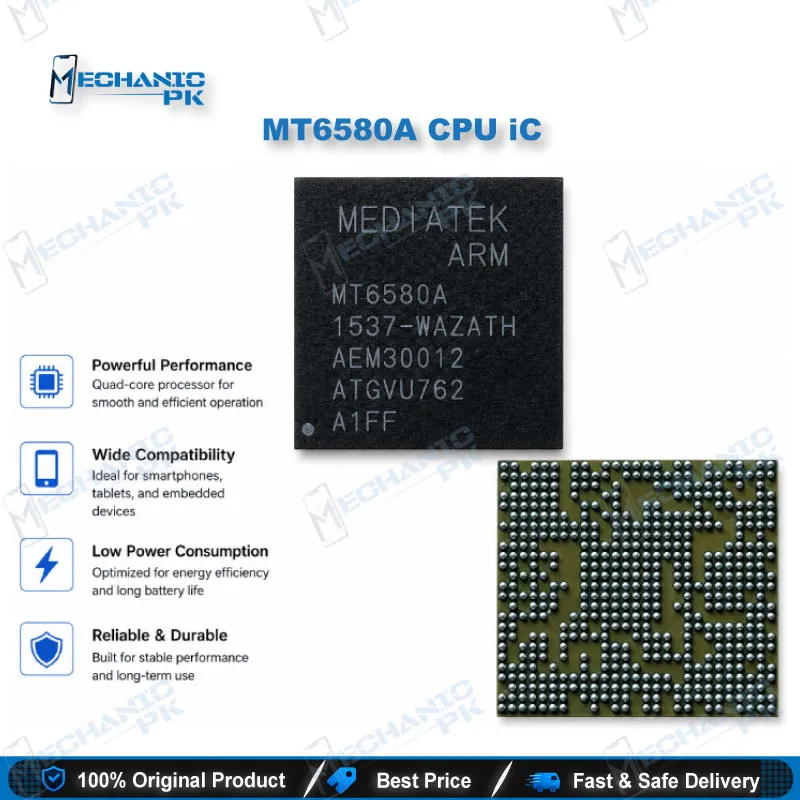
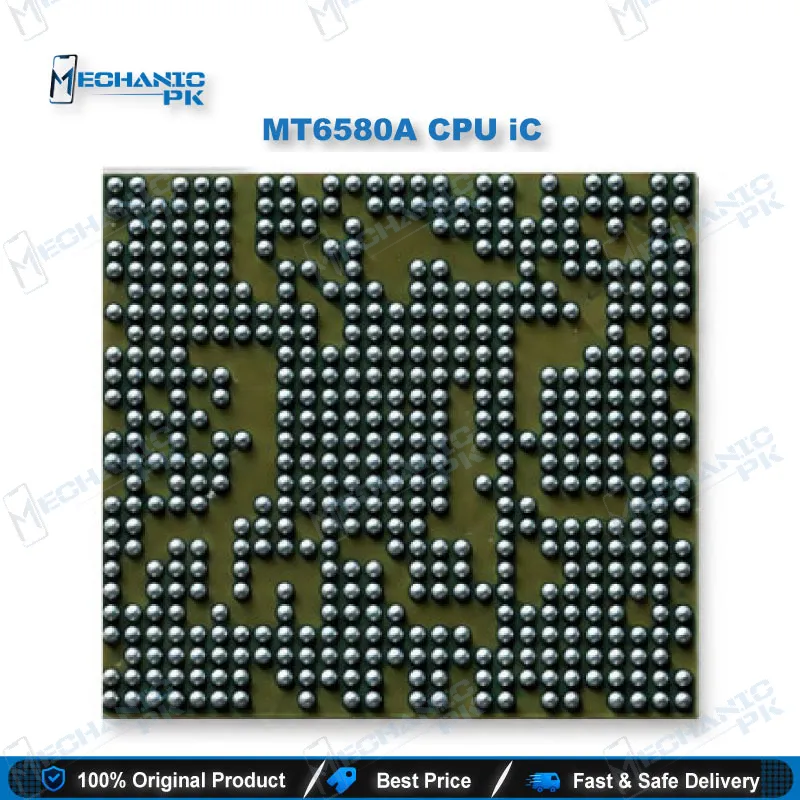
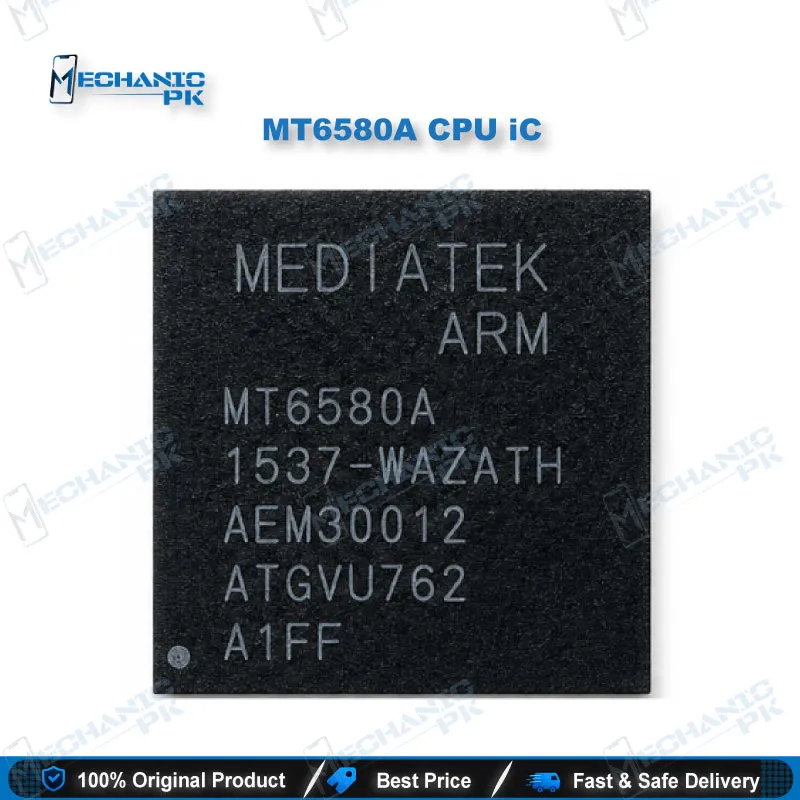
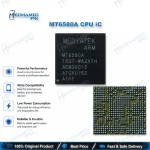
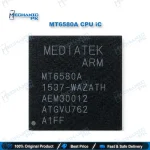
MediaTek MT6580A CPU IC for Mobile Repair
₨ 950
MT6580A CPU IC: Quad-Core Cortex-A7 for Mobile Repair
The MediaTek MT6580A is an application processor with four Cortex-A7 cores clocked at 1.3 GHz, built on the 32-bit ARMv7 instruction set. It pairs with an ARM Mali-400 graphics unit and supports cameras up to 13 MP, which makes it a practical reference for entry-level smartphone boards. Technicians replacing a damaged CPU IC on a Blackview A60 need exact part identification before rework begins. Start by matching the chip marking and confirming the board revision, then plan a controlled BGA lift with a stable hot air station. This listing gives you the verified specifications and the repair scope for that job.
MT6580A CPU IC for Mobile Repair Workflows
The MT6580A CPU IC for mobile repair is a replacement application processor for entry-level MediaTek phones, so it belongs on your bench whenever a board shows processor-level failure. Technicians usually reach for this chip after a dead phone stays unresponsive through power checks, or after a boot loop issue returns even after a clean software reflash. Those symptoms also overlap with power management, memory, and eMMC faults, so diagnosis must come first. Each replacement carries a cost in time, board integrity, and customer trust, so precision at this stage pays back quickly. This page covers where the chip fits in the repair sequence, what the verified architecture means for your work, and how to plan a controlled replacement.
Where This Chip Fits in Your Repair Workflow
Your diagnostic sequence should confirm the processor is the real fault before any lifting begins. Start with the power rails and current draw, then check whether the handset shows any recognizable boot state or charging response. If the board stays silent, inspect the processor area under a microscope for lifted balls, cracked joints, or heat damage around the package. Only after those checks does a CPU replacement make sense for the job. Keep a repair log that records the symptoms, measured voltages, and each test result, because that record shortens the next diagnosis on similar boards. Once you seat the new chip, rewrite the firmware, confirm the eMMC responds, and test memory communication, since a fresh processor cannot repair a faulty storage device. Technicians often underestimate how many failures look identical at the screen level, so the measurements matter more than the symptom.
Verified Architecture and Graphics Scope
The MT6580A uses four Cortex-A7 cores running at up to 1.3 GHz, built on the 32-bit ARMv7 instruction set. Cortex-A7 cores prioritize efficiency over peak speed, which suits budget handsets that run light multitasking and standard Android workloads. A listing shows the integrated ARM Mali-400 GPU at 500 MHz, and it handles everyday graphics on entry-level devices without the demands of modern gaming. Camera support reaches up to 13 megapixels, and the chip supports Bluetooth 4.0 and GPS connectivity. Always match the exact chip marking on the board to the MT6580A designation before ordering, since similar MT6580 family markings should be checked first. Understanding these limits lets you set realistic expectations when a customer asks why a heavy application runs slowly after repair.
Replacement and Rework Considerations
CPU IC replacement is a BGA job, so your rework station and technique matter as much as the part itself. Preheat the board evenly, protect nearby components with heat-resistant tape, and lift the processor only once the solder joints reach full reflow. Your technique also depends on the board’s thermal mass, so start at a moderate temperature and adjust gradually instead of pushing heat into one spot. A slow, even approach protects the surrounding ICs and reduces the chance of pad lift. Clean the pads with flux and solder wick without scratching the solder mask. Apply fresh solder paste or reballed balls through a stencil, align the new IC under the microscope, and reflow with a controlled profile. Lead-free solder requires higher temperatures, so log your profile for each board. After reflow, verify current draw, boot behavior, and eMMC detection before you close the handset.
| Weight | 0.1 kg |
|---|
Key Features
- Quad-core ARM Cortex-A7 processor clocked at 1.3 GHz
- 32-bit ARMv7 instruction set architecture
- Integrated ARM Mali-400 GPU listed at 500 MHz
- Camera support up to 13 MP
- Bluetooth 4.0 connectivity
- GPS support
- Replacement CPU IC for entry-level MediaTek phone boards
Specifications
| Brand | MediaTek |
|---|---|
| Model | MT6580A |
| Category | Mobile Phone ICs |
| Compatibility | MediaTek MT6580A application processor boards |
| Supported Devices | Blackview A60 |
| Technology | Quad-core ARM Cortex-A7, 32-bit ARMv7 architecture |
Common Repair Uses
- CPU IC replacement on Blackview A60 boards with a non-responsive processor
- Boot loop issue diagnosis after power-rail checks confirm a processor fault
- Hang on logo repair following chip-level reballing and reflow
- Eight-point verification of eMMC and memory communication after processor replacement
- BGA rework practice on entry-level MediaTek boards
Compatible Devices
- Blackview A60 (MediaTek MT6580A)
- Blackview A60 Dual SIM (MediaTek MT6580A)
FAQ
What is the product name?
What is the brand of this product?
What is the model of this product?
What is this product used for?
Which devices are compatible with this product?
Who should use this product?
What GPU does the MT6580A use?
Is the MT6580A a quad-core processor?
Related products