















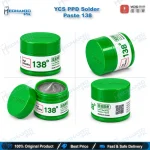
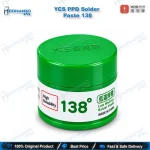
YCS PPD Solder Paste 138 Low-Temp BGA Paste
₨ 1,300
138°C Low-Temp Paste for PCB Rework
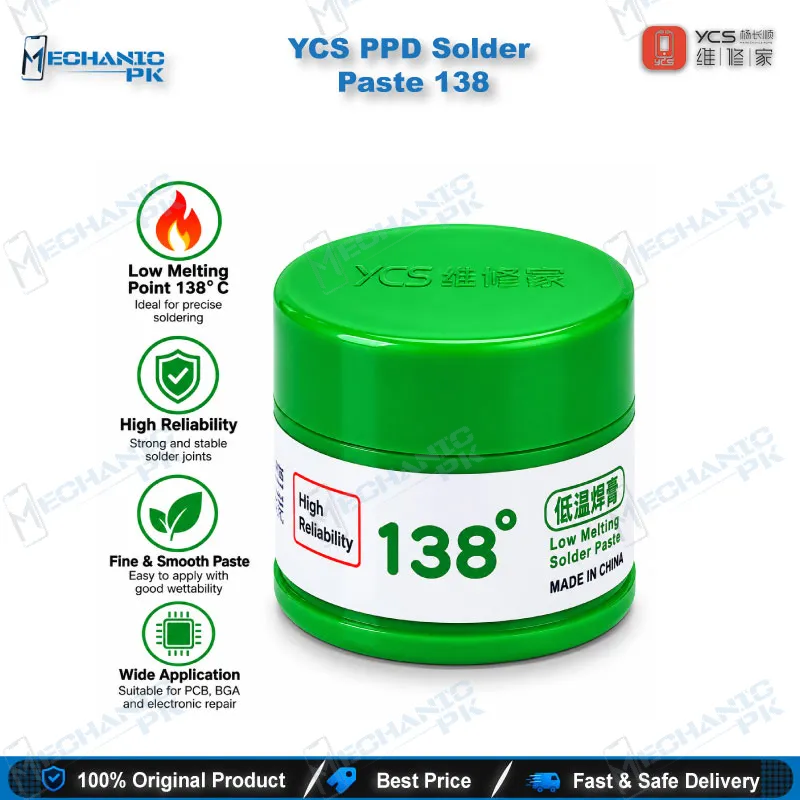
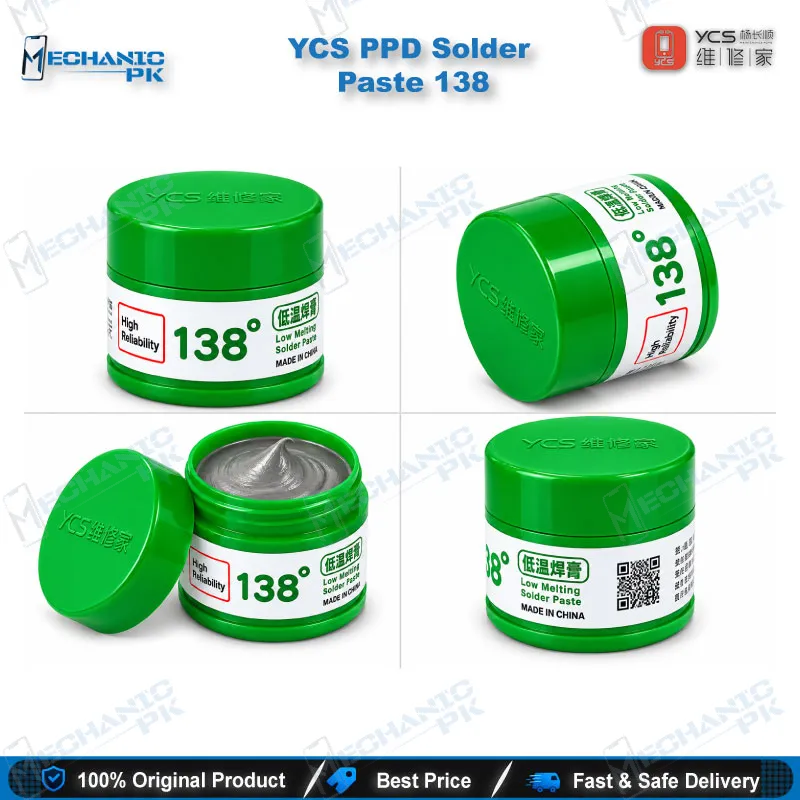
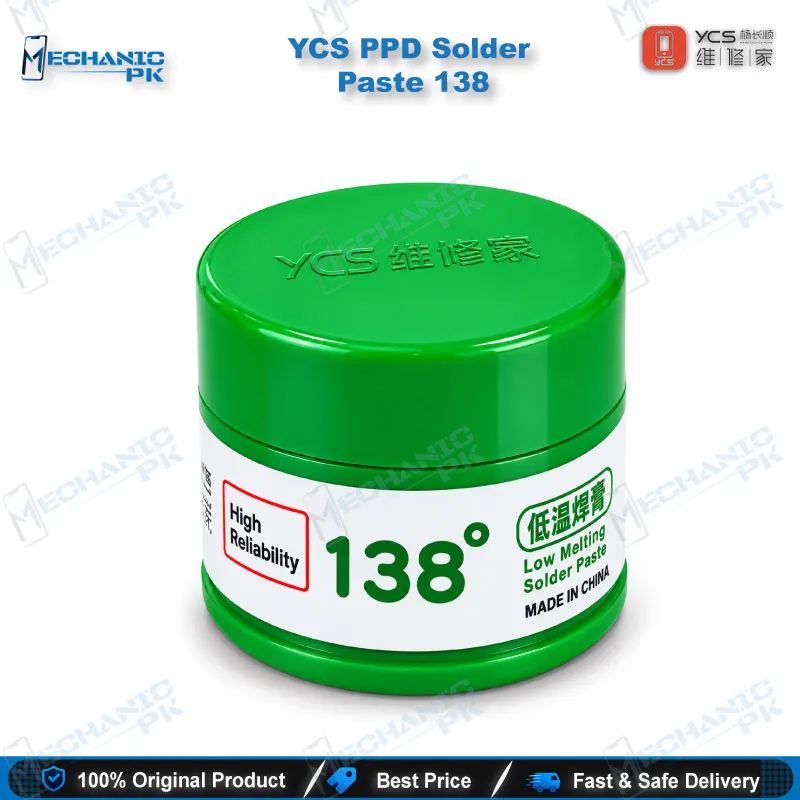
YCS PPD Solder Paste 138 is a 138°C low-temperature solder paste that you apply to mobile phone PCB pads during BGA, IC and CPU rework. The lower melting point keeps heat away from neighbouring components, so your hot air station runs cooler on boards with sensitive parts. A 50g pack covers repeated reballing, tinning and chip re-seating jobs on your repair bench. Mechanicpk supplies it to technicians, repair shops and service centers across Pakistan who want a controlled, predictable low-temp joint instead of guessing with wire solder.
In stock
YCS PPD Solder Paste 138 for Low-Temperature Mobile PCB Rework
YCS PPD Solder Paste 138 gives technicians a 138°C low-temperature paste for BGA, IC and CPU work on mobile phone motherboards. Heat is the main enemy on a dense phone PCB. Every extra degree stresses nearby capacitors, flex connectors and joints from earlier reworks. A low-melting paste lets you re-seat a chip, tin a pad or rebuild a ball with less thermal load than a standard-temperature alloy puts on the board. Mechanicpk supplies this 138 grade to workshops across Pakistan that handle hardware fault repair every day, from charging issue boards to dead phone cases that need a CPU or memory chip reflowed.
Why the 138°C Melting Point Matters on Phone Boards
The 138 in the product name marks the melting point: 138°C. Common lead-free SAC pastes melt near 217°C, so they force you to push your hot air station much higher and widen the heat zone around the target chip. A 138°C paste lets you work at a lower reflow temperature, which reduces the risk of lifting neighbouring pads, browning the PCB or warping plastic connectors and display sockets. On a board that already went through one or two IC changes, that margin often decides whether the chip seats cleanly or the pad lifts. YCS describes the paste as balanced between fluidity and stability, so it flows into the joint without slumping or pushing small chips out of position. You still set hot air temperature and airflow for the specific board, so test your profile on a scrap PCB before you commit a live motherboard.
For a repair shop, the practical win is fewer failed jobs. Pakistani workshops handle high volumes of boot loop issue and network issue boards, and one extra heat cycle can turn a repairable phone into a write-off. A paste that melts at 138°C gives you a lower-risk first attempt, and a lower-risk first attempt protects your margin and your customer’s trust.
Where It Fits on Your Repair Bench
You use this paste at the reflow stage of PCB and IC repair. Start with a clean board: lift old solder with your soldering station, wash the pads and inspect them under a microscope. Hold the board steady in a PCB holder, then apply a thin, even layer of paste to the pads, or to the stencil opening when you reball a BGA with a reballing kit. Heat the part with your hot air station, watch the paste melt and the chip settle, then let the board cool without moving it. A multimeter check for shorts and continuity before power-up catches bridges early. The same paste handles smaller jobs too: tinning points for jumper lagana, repairing a cold joint behind a charging issue, or reflowing a CPU on a hang on logo board. When a job needs a hotter joint, YCS also makes 150, 183, 199 and 215°C grades, so you can move up the range without changing brands.
Handling, Application and Storage
Low-temperature paste rewards clean technique. Apply less than you think you need, because excess paste bridges fine-pitch pads and balls when it melts. Use a clean tool for every application so old flux and dust stay out of the pack. Check the paste before each session, and stop if it looks dried out or clumpy. Close the pack tightly after use and store it in a cool place away from heat and direct sunlight, because warmth dries paste and shortens its working life. Work in a ventilated area, since flux fumes irritate eyes and lungs, and wipe flux residue from the board once it cools so you can inspect the joints.
Keep a stencil set for the chip family you rework most, and match your ball size to the pad before you print. When a dead phone needs data-level work as well as board-level rework, browse Mechanicpk’s ISP pinout tools, eMMC programmers and UFS adapters to cover the full workflow from one supplier.
| Weight | 0.50 kg |
|---|
Key Features
- 138°C low-temperature melting point for heat-sensitive phone boards
- Suited to BGA, IC, CPU and PCB precision soldering repair
- Balanced fluidity and stability for controlled paste flow
- Supplier-described resistance to collapse and chip offset during reflow
- 50g pack for repeated workshop use
- Part of a YCS range that also includes 150, 183, 199 and 215°C grades
- Works with hot air station reflow on mobile phone motherboards
- Suits both beginner and professional technicians
Specifications
| Brand | YCS |
|---|---|
| Model | PPD Solder Paste 138 |
| Category | Solder Paste / Soldering Consumables |
| Compatibility | Mobile phone PCB, BGA, IC and CPU soldering repair |
| Technology | 138°C low-temperature solder paste |
| Weight | 50g |
Common Repair Uses
- Low-temperature reflow, tinning and reballing support on mobile phone PCBs.
- BGA reballing alongside a stencil and reballing kit
- CPU re-seating on hang on logo and dead phone boards
- Memory chip reflow on boards with data or boot faults
- IC change karna on heat-sensitive areas of the board
- Tinning pads and jumper points before jumper lagana
- Repairing cold joints behind charging issue faults
- SMD component replacement with hot air
- Rebuilding pad coverage before chip placement
Compatible Devices
- Universal solder paste for mobile phone motherboards and BGA/IC/CPU rework. Not device-specific.
- Mobile phone PCBs of any brand (universal, not model-specific)
- BGA chips on phone motherboards
- CPU packages on phone boards
- Memory (eMMC/UFS) BGA packages on phone boards
- Small SMD ICs and components
- Heat-sensitive boards with plastic connectors or display sockets
- Boards that already had earlier rework
- Hot air station reflow workflows
FAQ
What is the product name?
What is the brand of this product?
What is the model of this product?
What is this product used for?
Which devices are compatible with this product?
Who should use this product?
What is the melting point of YCS PPD Solder Paste 138?
Can I use YCS PPD Solder Paste 138 for BGA and CPU reballing on mobile phone boards?
Related products