


















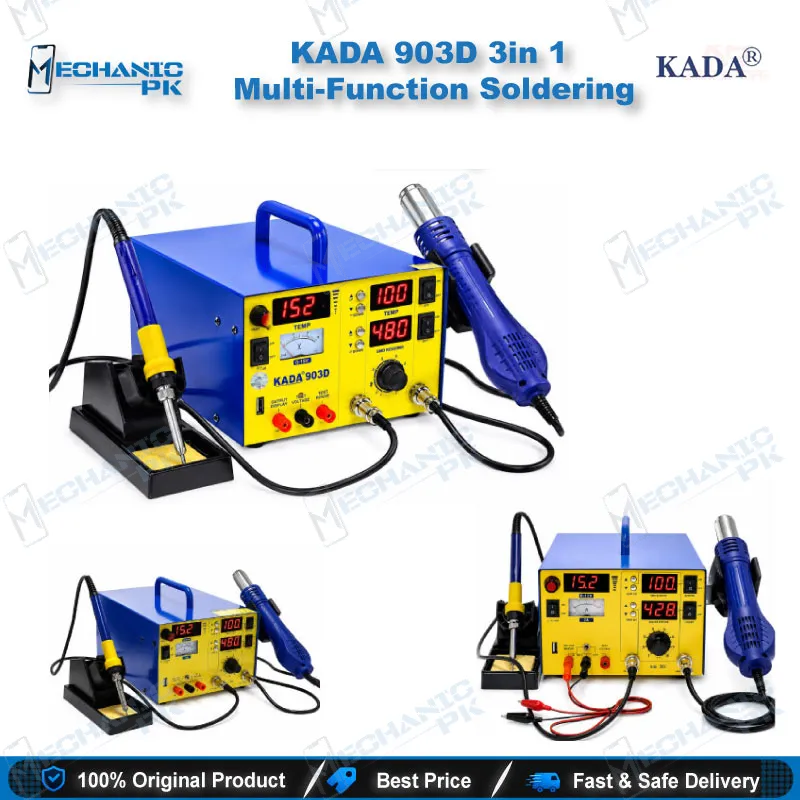
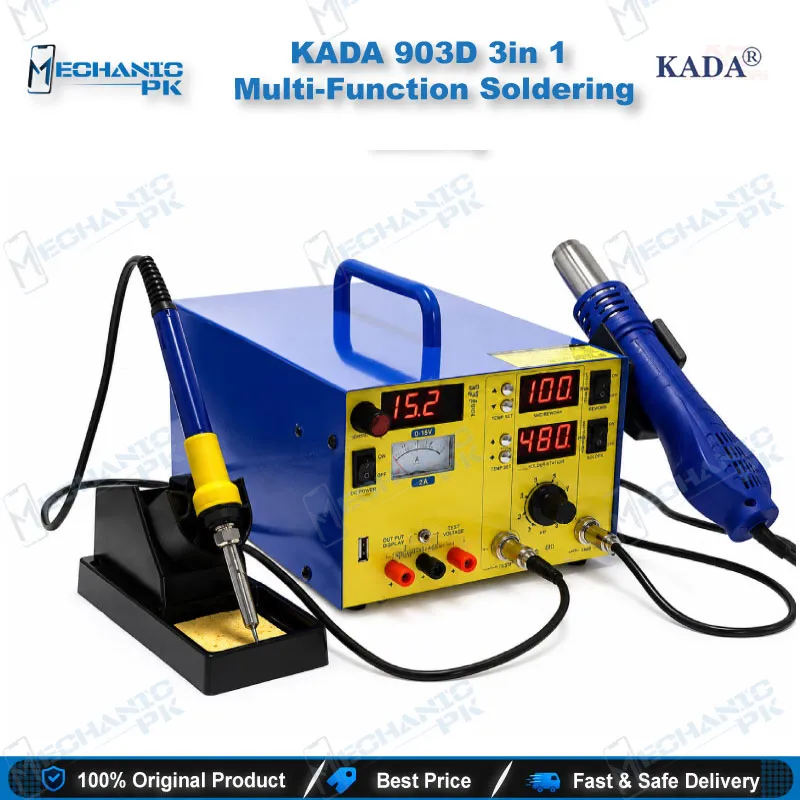
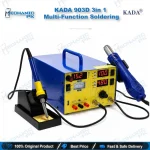
KADA 903D 3-in-1 Hot Air, Soldering & DC Power Supply
₨ 12,999
KADA 903D 3-in-1 Rework Station with DC Power Supply
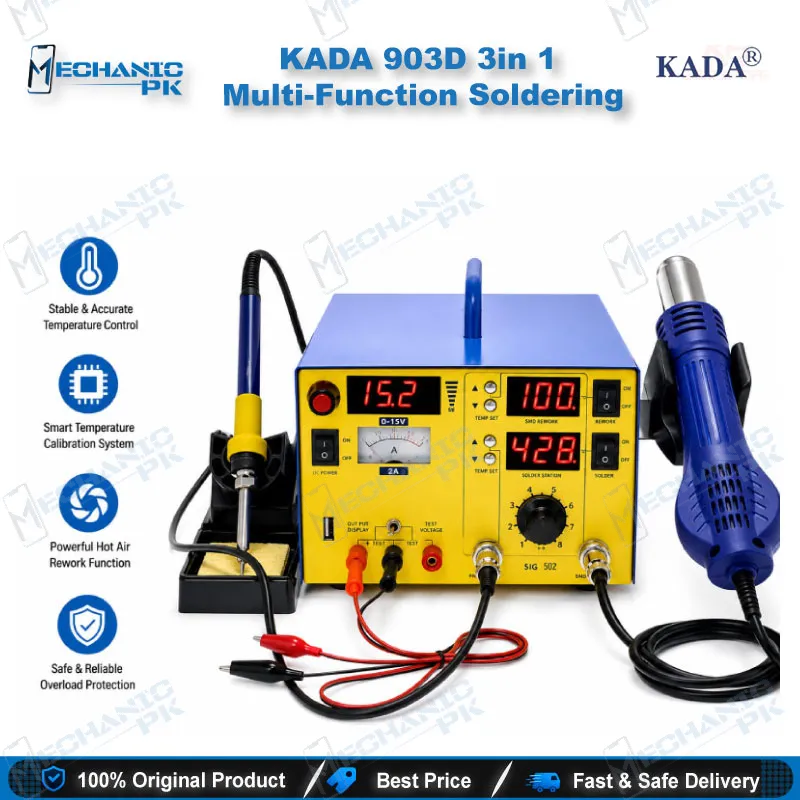
The KADA 903D brings hot air rework, a soldering iron and a regulated 0–15V DC power supply into one bench unit. The hot air gun runs from 100°C to 480°C with ±1°C stability, while the iron covers 200°C to 480°C with ±2°C stability. You can desolder SOIC, QFP, PLCC and BGA packages, lift flex cable connectors, and power a dead board from the same station. A digital display, automatic fault detection and last-used temperature memory keep the bench running through daily repair work.
In stock
KADA 903D 3-in-1 Rework Station for Board-Level Repair
The KADA 903D 3-in-1 rework station gives a board-level technician hot air, a soldering iron and a regulated DC power supply in one chassis. A repair bench usually needs all three within arm’s reach, so combining them saves space and cuts the time spent switching between separate machines. The chassis measures 250 x 185 x 175 mm, which leaves room for the board you are working on. The hot air gun and soldering iron each carry their own temperature range, so each tool gets the setting its job needs. The sections below cover each function, the safety features, and where the unit fits in a typical repair sequence.
Hot Air Control for BGA and QFP Removal
The hot air gun runs from 100°C to 480°C and holds a stability rating of ±1°C. That tight band matters when you lift a BGA chip or reflow a charging port connector, because temperature swings can crack nearby components or lift adjacent pads. A brushless fan drives the airflow, which is rated up to 120 L/min, and the motor design avoids the carbon-brush wear that reduces airflow consistency in older stations. Keep the nozzle size matched to the component so the airflow covers the package without spilling onto nearby parts. Test the setting on a scrap board before you work on a customer phone, because reflow timing depends on component size. A digital display shows the working temperature in real time, and the unit recalls the last setting you used when you power it on. Once the air drops below 70°C, the airflow stops automatically, so the handle cools without blowing across the board between jobs. For a shop running several boards a day, that consistency makes each lift more predictable and easier to repeat.
Soldering Iron Control for Jumper Work and Fine Rework
The soldering iron covers 200°C to 480°C with ±2°C stability. That range handles fine jumper work on a motherboard trace and reattaching a flex connector without overheating the surrounding pads. The unit lists a ground voltage below 2 mV and a grounding resistance under 2 ohms. Low ground voltage matters because stray potential through the tip can damage sensitive ICs and CPUs while the board stays powered or connected to test equipment. A steady tip temperature also gives more consistent solder flow on small pads, which reduces the chance of bridging between traces. Pair the iron with a fresh tip for better heat transfer, and replace worn tips before they start to pit. Keep the tip clean and the ground path intact, and you protect the chips you are trying to save. Use the iron for finishing and fine rework after the hot air has done the heavy lifting.
Regulated 0–15V DC Power Supply for Board Diagnostics
The built-in supply delivers 0V to 15V DC, so you can power a board directly from the station. Adjustable protection current from 1A to 3A lets you cap the current when a board shows a suspected short, which limits damage while you trace the fault. The unit lists ripple under 1 mV rms and a temperature coefficient below 300 ppm/°C, which keeps the output steady as the bench warms up. Those figures suit checking current draw on a dead phone or tracing a short with a stable supply. Set the current limit low before you connect a board, then raise it only when the board draws the normal current you expect. Compare the reading against a known good board if you have one, because a healthy board sets a useful reference point. That habit turns the power supply into a diagnostic tool rather than a guess.
Where the 903D Fits in a Dead Phone Repair
A typical sequence starts with the power supply. Feed the suspect board, watch the current draw, and locate the short before you touch the hot air. Next, use hot air to lift the faulty IC or connector, preheating the board evenly to limit thermal stress. Then move to the soldering iron for jumper wire placement or component reattachment. Finish with another power test to confirm the repair before you reassemble the phone. Keep a log of the current reading at each step so you can compare results after the repair. A technician who writes down each reading can spot a pattern across boards, such as the same IC failing repeatedly. Because all three stages sit on one unit, you skip the switching between separate tools that slows a repair bench. This sequence applies equally to a dead phone or a board stuck at the hang on logo.
Safety Features and Workshop Operating Range
The unit includes an intelligent alarm and automatic fault detection, so it flags abnormal conditions instead of stopping silently in the middle of a job. Its listed operating range covers 0°C to 50°C, which suits typical bench conditions in most Pakistani workshops. Storage is rated from -20°C to 80°C at 35% to 45% humidity, so keep the unit in a dry cabinet between jobs. The hot air handle fits comfortable extended handheld use, which helps during long desoldering sessions. Clean the nozzle and keep the handle free of dust, which keeps airflow steady over time. Check the display and alarm state at the start of each shift, and you catch problems before they cost you a board. Good habits like these extend the working life of any rework station, and board-level work rewards a station that holds its settings and reports faults clearly.
| Weight | 2.0 kg |
|---|
Key Features
- Hot air, soldering iron and DC power supply in one station
- Hot air range of 100°C to 480°C with ±1°C stability
- Brushless fan with airflow up to 120 L/min
- Soldering iron range of 200°C to 480°C with ±2°C stability
- 0V to 15V DC supply with adjustable 1A to 3A protection current
- Ground voltage below 2 mV and grounding resistance under 2 ohms
- Digital display with last-used temperature memory
- Automatic fault detection and intelligent alarm
Specifications
| Brand | KADA |
|---|---|
| Model | 903D |
| Category | Soldering Rework Stations |
| Compatibility | Universal, not device-specific |
| Supported Devices | SOIC, QFP, PLCC, BGA and SMD packages |
| Technology | Hot air rework, soldering iron, regulated DC power supply, brushless fan |
| Hot Air Temperature | 100°C to 480°C |
| Soldering Iron Temperature | 200°C to 480°C |
| Output Voltage | 0V to 15V DC |
| Protection Current | 1A to 3A adjustable |
| Airflow | Up to 120 L/min |
| Dimensions | 250 x 185 x 175 mm |
Common Repair Uses
- IC removal and reflow
- BGA and QFP desoldering
- Flex cable and connector desoldering
- Jumper wire installation
- Board-level power testing and short-circuit diagnosis
- Preheating components before reflow
Compatible Devices
- SOIC packages
- QFP packages
- PLCC packages
- BGA and SMD components on mobile phone motherboards
FAQ
What is the product name?
What is the brand of this product?
What is the model of this product?
What is this product used for?
Which devices are compatible with this product?
Who should use this product?
What is the protection current range of the built-in power supply?
What temperature stability does the hot air gun hold for BGA rework?
Related products





Sunshine M1 Pro Intelligent Height Adjustable Repair Table (72cm to 117cm)
In stock