














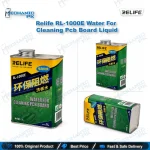
Relife RL-1000E Ultrasonic PCB Cleaning Liquid 1L
₨ 1
Relife RL-1000E Ultrasonic PCB Cleaning Liquid for Motherboards
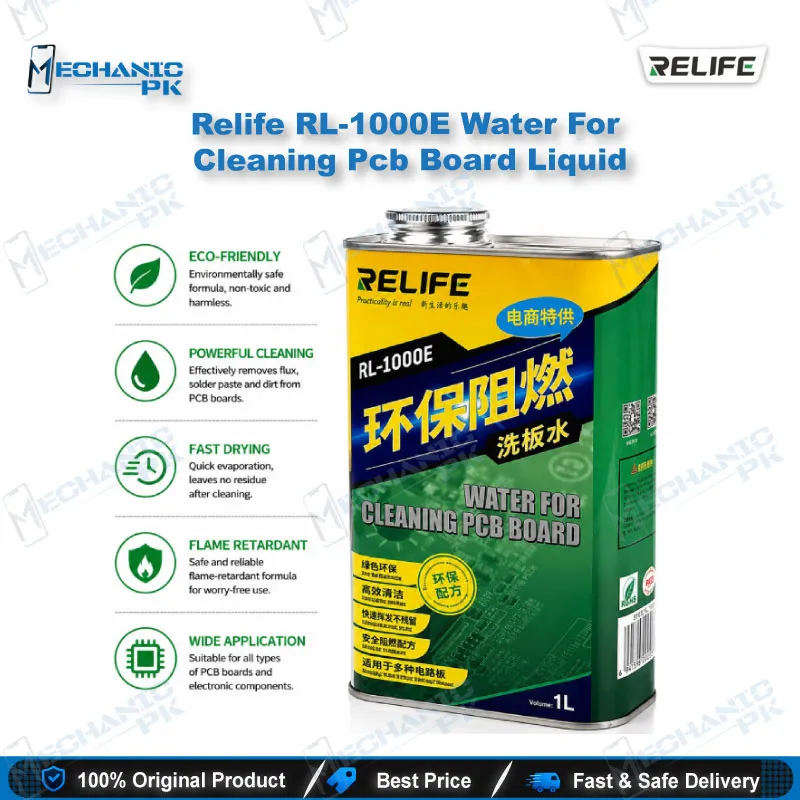
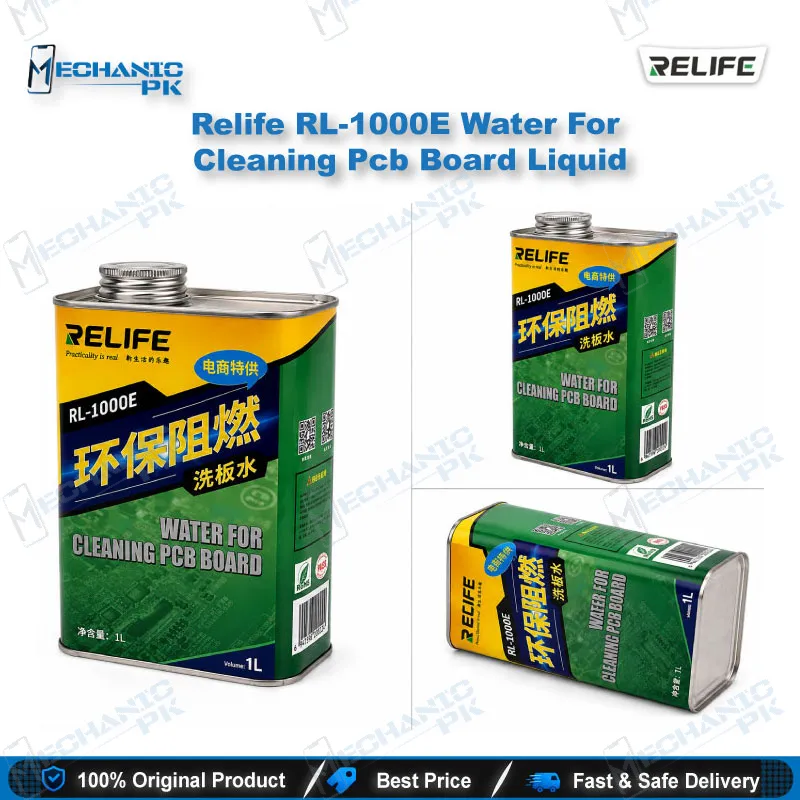
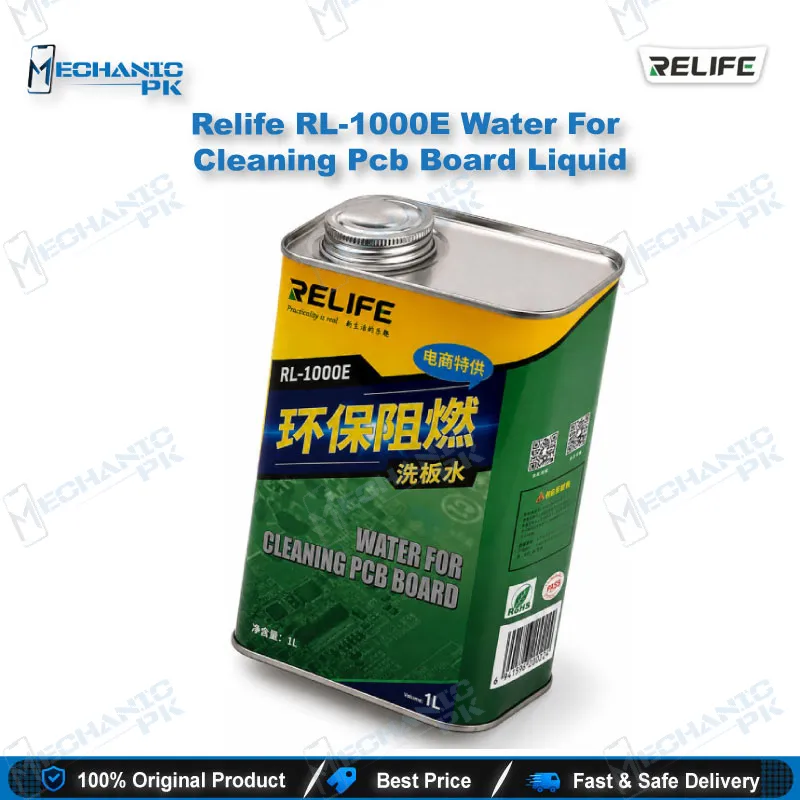
The Relife RL-1000E is a 1000 ml ultrasonic cleaning liquid built for motherboard work in repair labs. You pour it into your ultrasonic bath, and cavitation carries it under BGA and SMD components, where it loosens solder paste, flux residue, and grease. Use it to clean boards after soldering, remove oxidation, or strip the mineral salts left behind by liquid damage on phone and tablet motherboards. The manufacturer describes the formula as non-corrosive and leaving no oily residue after drying, so your pads and traces stay intact and ready for reassembly.
Ultrasonic PCB Cleaning Liquid for Water-Damaged and Post-Soldering Boards
Every board that comes off your bench carries something. It might be flux from a BGA reflow, solder paste under a shield, or oxide from a phone that took water. An ultrasonic PCB cleaning liquid handles all three in one step, and the RL-1000E is designed for exactly that job. Its formula works inside an ultrasonic bath, where cavitation pushes the liquid into tight spaces that a brush never reaches. A clean board also gives you a truer reading on the multimeter and a clearer view under the microscope, so cleaning belongs early in your workflow, right after diagnostics.
Where the Liquid Fits in Your Repair Workflow
Cleaning sits between diagnostics and the next repair stage. Once you finish a rework, the board goes into the bath before inspection. Pair the RL-1000E with a Hot Air Station for component work and a Microscope for final checks. If you run a reballing process, clean the board before applying new solder balls so that old flux does not affect adhesion. Your bench stays organized when the cleaning step happens in the same place every time.
Cleaning Power Under BGA and SMD Components
Brush cleaning misses the gaps under BGA packages and between tight SMD rows. An ultrasonic bath with this liquid reaches those areas, because the cavitation action agitates the fluid right where the residue sits. Solder paste and grease lift off faster than they do with a manual wipe. Place the board flat in the basket, check that the components are fully submerged, and run the cycle in short intervals so you can inspect progress. Stop as soon as the flux is gone, because extended cycles waste time and do not improve the result.
Recovering Boards After Liquid Damage
Water leaves mineral salts and oxidation on contacts, and those deposits can cause shorts and intermittent faults. The RL-1000E targets exactly these deposits, which gives you a cleaner starting point for diagnosis. Clean the board first, dry it fully, and then test the power rails and charging circuit again. Cleaning does not guarantee a revived device, since corrosion inside components may still need separate repair. Treat the bath as one stage in the recovery process, not the entire fix.
Residue Behaviour and Drying Routine
The manufacturer states that the liquid leaves no oily film after treatment and drying. That claim matters when you move the board straight to reassembly or a final test. Lift the board out, let excess liquid drip off, and allow it to air dry completely before you apply power. You can speed up drying with a clean air blower, aiming it away from the connectors. Check the board under light for any remaining whitish film before you continue.
Safe Handling and Bath Setup
Keep the bottle sealed when you are not using it, and store it away from heat and direct sunlight. Work in a ventilated area, and wear gloves to protect your skin during long sessions. Read the supplier’s safety data sheet before first use, since chemical details vary between batches and suppliers. Replace the liquid when it turns cloudy or carries visible debris from earlier boards. Good handling keeps your bath consistent and your results predictable.
| Weight | 1.0 kg |
|---|
Key Features
- Formulated for use in ultrasonic baths
- Designed to reach under BGA and SMD components through cavitation
- Targets oxidation and mineral salts from liquid damage
- Manufacturer states the formula is non-corrosive to pads, traces, and components
- Manufacturer states it leaves no oily residue after drying
- 1000 ml volume for repeated bench sessions
Specifications
| Brand | Relife |
|---|---|
| Model | RL-1000E |
| Category | Ultrasonic cleaning liquid, 1000 ml |
| Compatibility | Ultrasonic cleaning baths |
| Technology | Ultrasonic cavitation cleaning |
Common Repair Uses
- Verified workflows where the liquid is applied in an ultrasonic bath.
- Removing oxidation and mineral salts after water damage
- Cleaning flux residue after BGA reflow and component replacement
- Removing solder paste and grease from motherboards before inspection
- Preparing boards for reballing or reassembly
- Deep cleaning of PCBs after soldering work
Compatible Devices
- Verified scope is ultrasonic cleaning baths and PCB-level motherboard work, not device-specific.
- Ultrasonic cleaning baths for repair labs
- Smartphone motherboards
- Tablet motherboards
- Printed circuit boards after soldering or rework
- BGA and SMD component areas
FAQ
What is the product name?
What is the brand of this product?
What is the model of this product?
What is this product used for?
Which devices are compatible with this product?
Who should use this product?
Can this liquid be used in an ultrasonic bath for motherboards?
Is the RL-1000E safe for BGA and SMD components?
Related products