















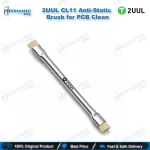
2UUL CL11 Anti-Static Brush for PCB Cleaning
₨ 700
2UUL CL11 Double-Ended ESD Brush
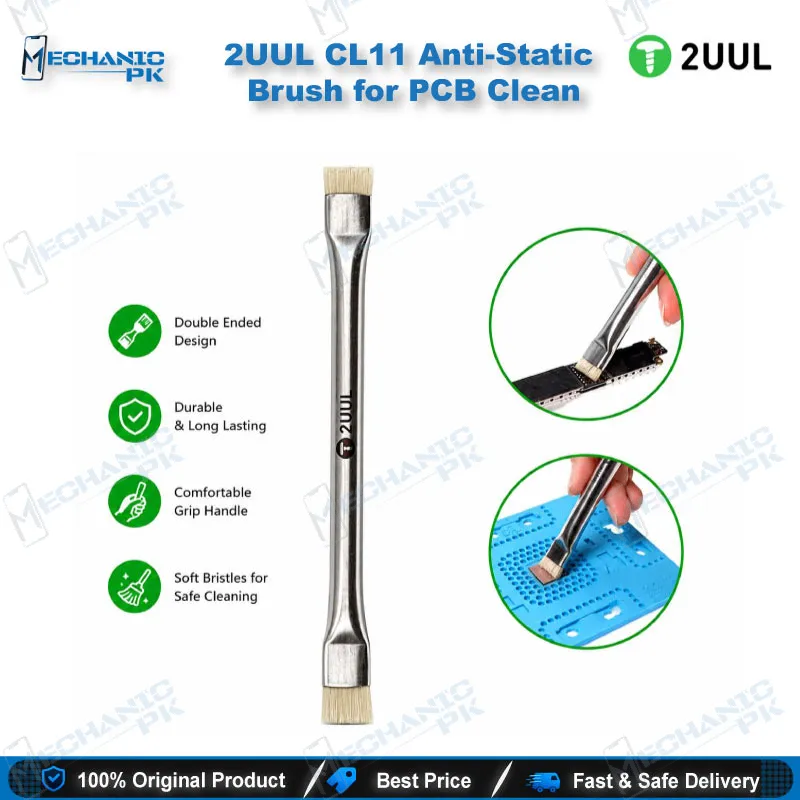
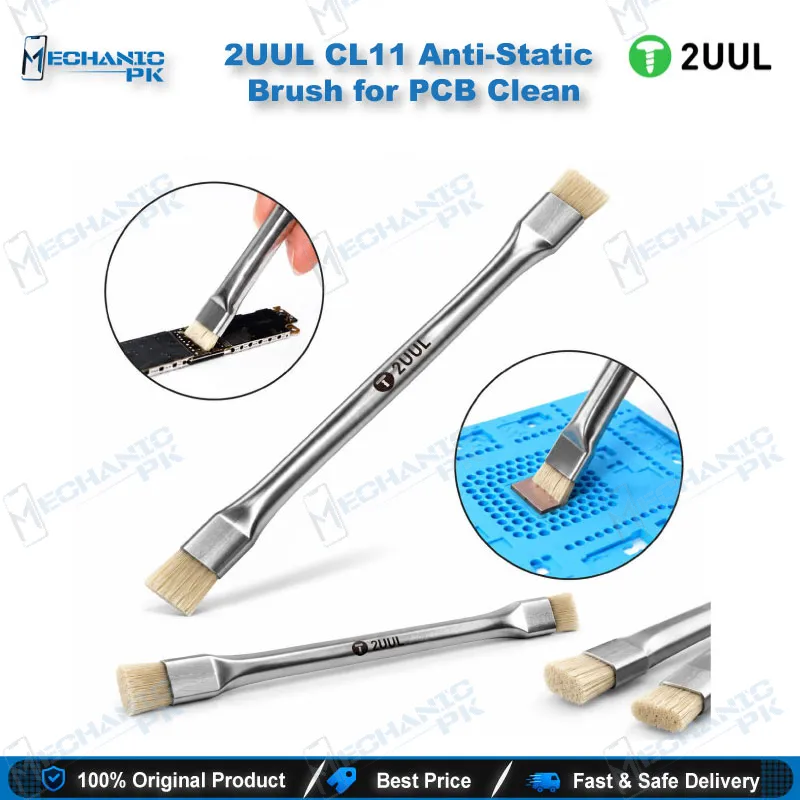
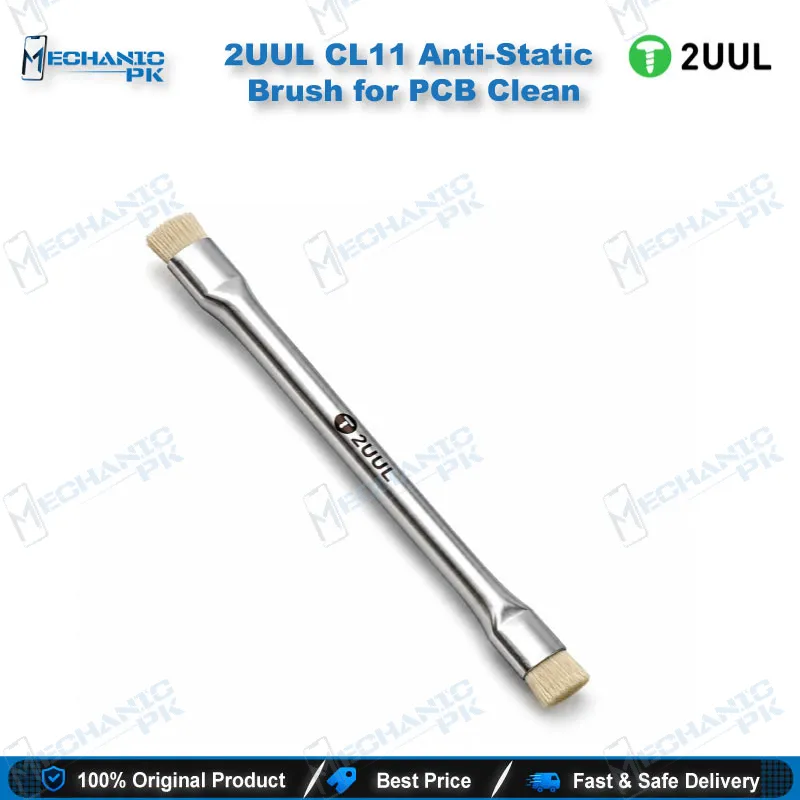
The 2UUL CL11 anti-static brush cleans logic boards, connector slots, CPU pads and oxide residue. It combines a double-ended design with anti-static fibers on a metal handle. Technicians reach for it after IC changes, reballing and hot air rework to clear flux residue and dust before inspection. Mechanicpk supplies the CL11 to Pakistani repair shops, service centers and training institutes that want an ESD-safe brush at the bench for dead phone, liquid damage and hardware fault jobs. Pair it with your microscope, PCB holder and board-cleaning solvent, and every board leaves your bench inspection-ready.
In stock
2UUL CL11 Anti-Static Brush: ESD-Safe Cleaning for Logic Boards
The 2UUL CL11 anti-static brush gives board-level technicians a double-ended cleaning tool built from anti-static fibers and a metal handle. Mobile boards collect flux residue, oxide, dust and pocket lint, and each contaminant interferes with clean soldering, accurate inspection and reliable contact. The CL11 handles that cleanup stage. It lifts loose debris from logic boards, connector slots and CPU pads while the anti-static fiber construction keeps your cleaning stroke safe around sensitive ICs. Mechanicpk stocks it for shops that want a dedicated ESD brush on the bench instead of an old toothbrush.
Construction and Anti-Static Design
2UUL builds the CL11 as a double-ended brush, so one tool carries two cleaning surfaces. Supplier listings describe a tapered end and a flat end. You use the narrow end to reach gaps between components and around IC edges, and the wider end to sweep larger board areas. The bristles are firm, which gives you enough stiffness to break loose dried flux and oxide instead of just pushing dust around.
The material combination is metal and anti-static fibers. The fibers reduce static build-up during brushing, a real concern when you work on boards that carry CPU, PMIC, eMMC and charging ICs. Listings also describe the CL11 as a no-hair-loss design, and that matters on a board. A stray bristle trapped under an IC or inside a connector creates a new fault while you chase the old one. Fibers that stay in the brush keep your board cleaner after the job than before it.
Where the CL11 Fits in the Repair Workflow
Board cleaning sits between nearly every major repair step, and the CL11 covers several of them. After an IC change or reballing job, you brush away flux residue around the new chip before you inspect the joints under the microscope. During BGA work, you clean pads so fresh solder balls sit on a clear surface. On liquid-damaged phones that arrive as a dead phone, you scrub oxide off connector slots and CPU pads before you test continuity with your multimeter.
The same brush supports routine hardware fault diagnosis. A display problem or charging issue sometimes traces back to dirty contacts around a connector, and a quick pass with the CL11 clears that contamination before you commit to part replacement. Technicians who also work on tablets and laptop boards use the same brush, because the cleaning task stays the same across board types.
You work faster when the brush sits next to your tools. Keep it beside your hot air station, soldering station and PCB holder, and reach for it right after rework while the board is still on the fixture. Use it with the flux remover or board-cleaning solvent your bench already runs, and check the finished board under magnification.
Buying Notes for Repair Shops
The CL11 is an inexpensive consumable-class tool, and busy shops often buy several so each technician has a personal brush. Pair it with a reballing kit, a PCB holder and a microscope to build a complete cleaning-and-inspection station. Mechanicpk ships to repair markets across Pakistan, so service centers and training institutes can stock matching brushes for every bench.
| Weight | 0.1 kg |
|---|
Key Features
- Double-ended design with two cleaning surfaces in one tool
- Anti-static fibers for ESD-conscious board cleaning
- Metal handle for a firm, controlled grip
- Firm bristles that break loose dried flux and oxide
- Listed as a no-hair-loss design that keeps fibers off the board
- Reaches connector slots, CPU pads and BGA pad areas
- Compact size that sits easily on a repair bench
- Suits mobile, tablet and laptop board cleaning
Specifications
| Brand | 2UUL |
|---|---|
| Model | CL11 |
| Category | Mobile Repair Tools – PCB Cleaning Brushes (ESD) |
| Compatibility | Universal – not device-specific |
| Technology | Anti-static (ESD-safe) fibers, double-ended brush design |
| Material | Metal and anti-static fibers |
Common Repair Uses
- Flux, dust and oxide cleaning at board level during mobile repair
- Flux residue removal after IC replacement
- BGA pad cleaning before reballing
- CPU pad cleaning
- Connector slot cleaning
- Oxide residue removal on liquid-damaged boards
- Dust removal before microscope inspection
- Cleaning around ICs after hot air rework
- Board preparation before continuity testing
Compatible Devices
- Universal board-cleaning tool – not device-specific; suitable for any logic board that needs surface cleaning
- Android smartphone motherboards
- iPhone logic boards
- Tablet motherboards
- Laptop motherboards
- Display and battery connector slots
- CPU and BGA pad areas
- Charging and flex connector areas
- General PCBs and electronic assemblies
FAQ
What is the product name?
What is the brand of this product?
What is the model of this product?
What is this product used for?
Which devices are compatible with this product?
Who should use this product?
Which parts of a motherboard can I clean with the 2UUL CL11?
Does the 2UUL CL11 shed bristles on the board?
Related products