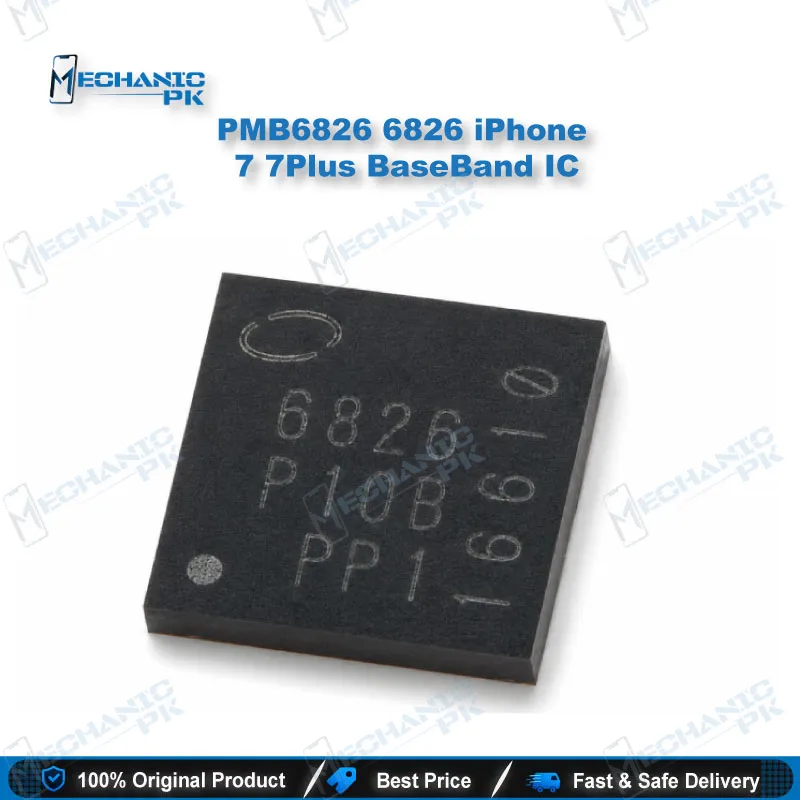
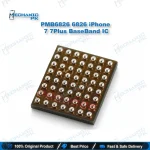

PMB6826 6826 iPhone 7 7Plus BaseBand IC – Intel BBPMU_RF
₨ 600
Intel PMB6826 Baseband PMU for Intel iPhone 7 Boards
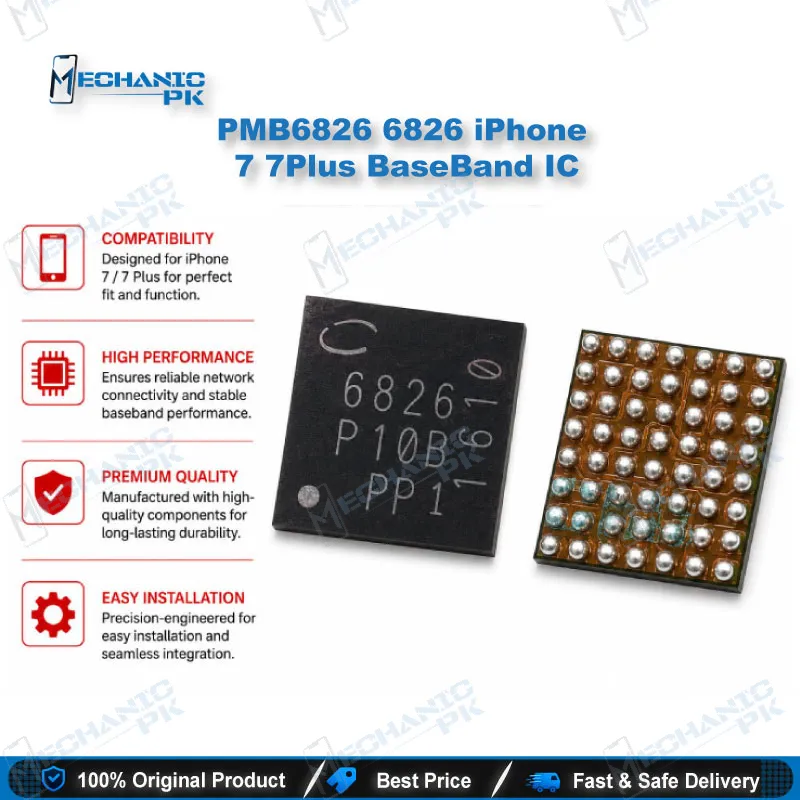
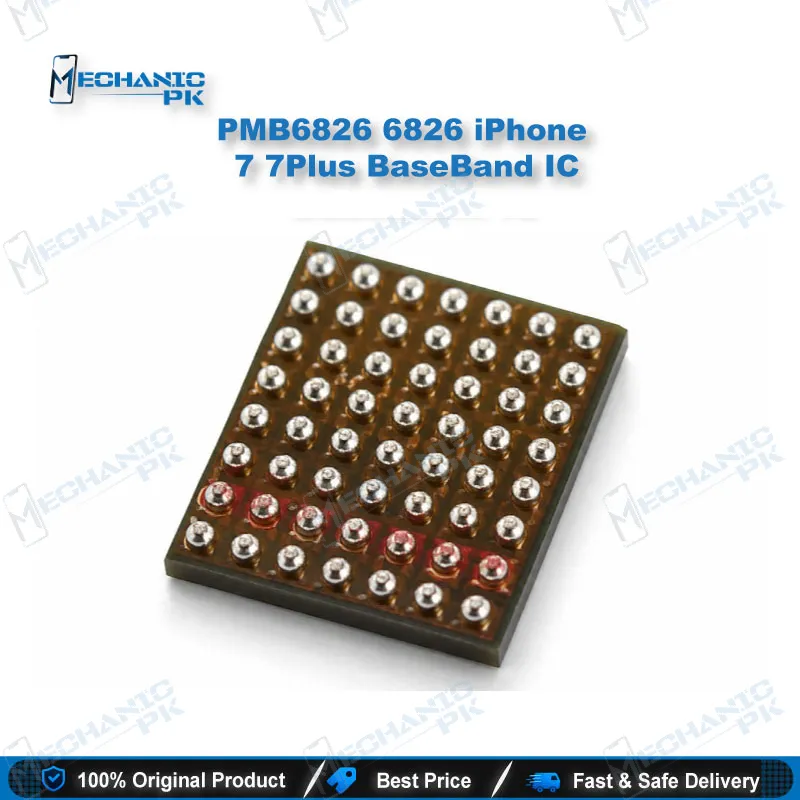
The PMB6826 6826 iPhone 7 7Plus BaseBand IC is Intel’s baseband power management unit, marked on the logic board as BBPMU_RF and identified in teardown analysis as the X-PMU 736. This PMB6826 baseband IC belongs to the Intel XMM 7360 modem platform and supplies the regulated rails that the baseband processor and RF transceivers need to run. When it fails, the modem section loses power and the phone shows no service, a blank modem firmware field, or a short on the baseband supply. Mechanicpk supplies this chip for board-level technicians servicing Intel-modem iPhone 7 (A1778) and iPhone 7 Plus (A1784) logic boards.
PMB6826 Baseband IC: Power Control for the Intel XMM 7360 Modem
Every Intel-modem iPhone 7 logic board relies on one dedicated chip to feed its cellular section, and the PMB6826 6826 iPhone 7 7Plus BaseBand IC fills that role. Intel built this PMB6826 baseband IC, which teardown analysts call the X-PMU 736, as the power management unit of its XMM 7360 platform. It works alongside the PMB9943 baseband processor and the SMARTi 5 RF transceivers, and Apple’s board layout labels its position BBPMU_RF. When this chip fails, the modem stays unpowered while the rest of the phone keeps running normally.
What the BBPMU_RF Chip Does on the Logic Board
The main PMU handles the application processor, memory, and display rails. The cellular side runs on its own supply tree, and the iPhone 7 baseband PMU converts battery voltage into the rails that the baseband processor and its RF chain draw from. That separation explains a classic symptom pattern: the phone boots, the display and touch respond, Wi-Fi connects, yet the status bar shows No Service or Searching and the modem firmware field under Settings stays empty. A technician who sees this pattern on an A1778 or A1784 board should check the baseband power rails before suspecting the baseband CPU itself.
Diagnosing a Faulty PMB6826 Before IC Change
Confirm the fault before you lift anything. Measure the baseband rails around the BBPMU_RF area with a digital multimeter in diode mode and compare the readings against a known-good Intel board. A rail that reads near zero points to a shorted capacitor or a shorted PMU, and a thin layer of rosin or freeze spray shows you which component heats first under injected voltage. If the rails read normal but stay dead once the phone powers on, the PMU may not receive its enable signal, which shifts suspicion toward the baseband CPU or the lines between the two chips. Board-view software and an iPhone 7 schematic make this tracing far faster and keep you from replacing a healthy part.
Replacement Workflow for Board-Level Technicians
The PMB6826 comes in a fine-pitch BGA package, so the job calls for controlled hot air, quality flux, and proper magnification. Mount the logic board in a PCB holder, shield neighboring components with heat-resistant tape, and preheat the board to reduce thermal stress. Lift the old chip with your hot air station, then clean the pads with solder wick and a soldering station at a moderate tip temperature. Inspect every pad under a stereo microscope for lifted or torn pads before you continue. Apply fresh flux, align the new IC by its pin-1 marker, and reflow until it self-centers on the pads. If you salvage a chip from a donor board, reball it first with the correct stencil from a BGA reballing kit. Keep the heat concentrated and the dwell time short, since the baseband processor sits on the reverse side of the board and excess heat can disturb it.
No Programming Required After Replacement
Unlike the baseband processor, the PMU stores no encrypted pairing data. You solder it in, and the board accepts it without any box work, flashing, or data transfer. That makes the PMB6826 one of the more practical repairs in the iPhone 7 baseband section, provided the baseband CPU itself remains healthy. After reflow, power the board on your DC supply, watch the current draw, and confirm that the modem firmware field populates and the phone registers on the network.
Intel vs Qualcomm Boards: Check the Model First
Apple shipped the iPhone 7 series with two different modem platforms. The A1778 iPhone 7 and A1784 iPhone 7 Plus use the Intel XMM 7360 modem, and this is where the PMB6826 belongs. The A1660 and A1661 units run a Qualcomm MDM9645M modem with a different power design, so this chip does not fit them. Read the model number on the back housing, or identify the baseband chips on the board, before you order the part.
Why Source the PMB6826 Baseband IC from Mechanicpk
A clean baseband PMU replacement depends on the bench setup around it as much as on the chip itself. Mechanicpk stocks the complete toolchain this repair needs, from hot air stations and soldering stations to stereo microscopes, reballing kits, PCB holders, and multimeters. You can source the PMB6826 baseband IC alongside the tools that make the job repeatable, which matters when your shop handles iPhone 7 no service IC faults on a regular basis.
| Weight | 0.1 kg |
|---|
Key Features
- Intel PMB6826 baseband PMU, also identified as the X-PMU 736
- Matches the BBPMU_RF position on Intel-modem iPhone 7 and 7 Plus logic boards
- Part of the Intel XMM 7360 platform alongside the PMB9943 modem and SMARTi 5 transceivers
- Powers the baseband processor and RF chain from battery voltage
- Direct solder-in replacement with no programming, flashing, or box work
- Fine-pitch BGA package suited to hot air and reball workflows
- Targets no service, searching, and baseband rail short faults
- Fits A1778 iPhone 7 and A1784 iPhone 7 Plus boards
Specifications
| Brand | Intel |
|---|---|
| Model | PMB6826 (X-PMU 736) |
| Category | Baseband Power Management IC |
| Compatibility | Intel-modem iPhone 7 and iPhone 7 Plus logic boards |
| Supported Devices | iPhone 7 (A1778), iPhone 7 Plus (A1784) |
| Technology | Intel XMM 7360 platform baseband PMU, board designation BBPMU_RF |
Common Repair Uses
- No Service or Searching fault caused by a dead baseband power supply
- Blank modem firmware field where diagnosis traces the fault to the BBPMU_RF stage
- Short on a baseband supply rail traced to the PMU itself
- Network issue after a drop where the PMU shows cracked balls or lifted pads
- Liquid-damaged boards with corrosion under or around the baseband PMU
- Replacement after a failed rework attempt in the baseband section
- Donor-board salvage and reball for workshop stock
- Board-level baseband section restoration during logic board refurbishment
Compatible Devices
- Intel-modem iPhone 7 series only (XMM 7360 platform)
- iPhone 7 model A1778 (Intel modem)
- iPhone 7 Plus model A1784 (Intel modem)
- European and Canadian iPhone 7 / 7 Plus units, which ship with the Intel modem
- AT&T and T-Mobile iPhone 7 / 7 Plus units (GSM-only Intel version)
- Any iPhone 7 / 7 Plus board fitted with the Intel PMB9943 baseband processor
- Not compatible with Qualcomm-modem units A1660 and A1661
FAQ
What is the product name?
What is the brand of this product?
What is the model of this product?
What is this product used for?
Which devices are compatible with this product?
Who should use this product?
Does the PMB6826 work on Qualcomm iPhone 7 models A1660 and A1661?
Does the iPhone 7 need programming after replacing the PMB6826 baseband PMU?
Related products