














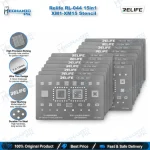
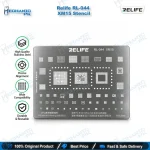
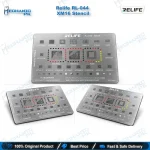
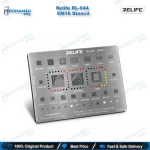
Relife RL-044 XM16 Stencil for Dimensity 8100/9000
₨ 599
Dimensity 8100 and 9000 Reballing Stencil
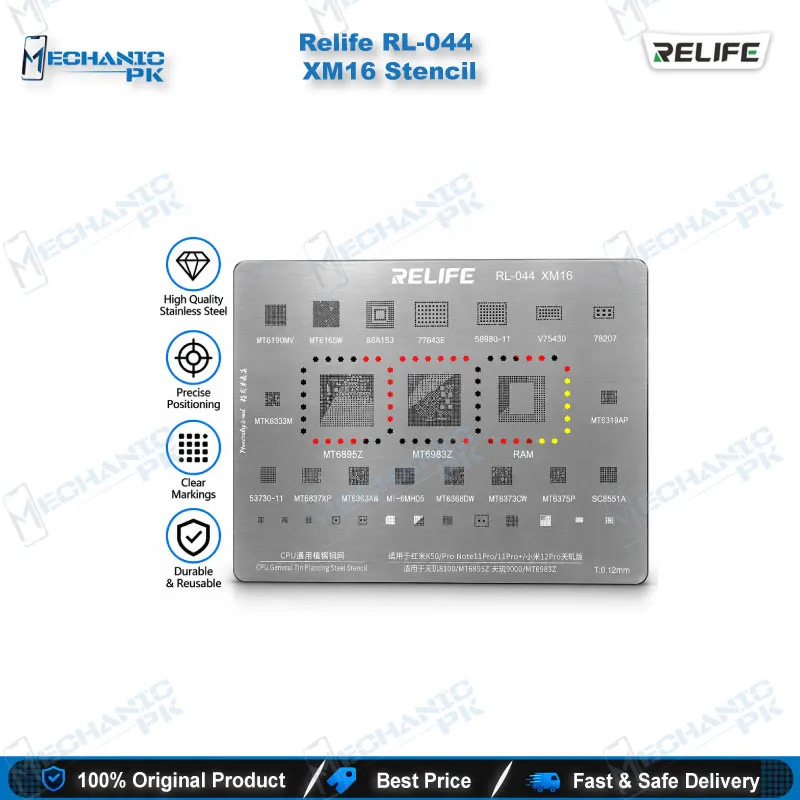
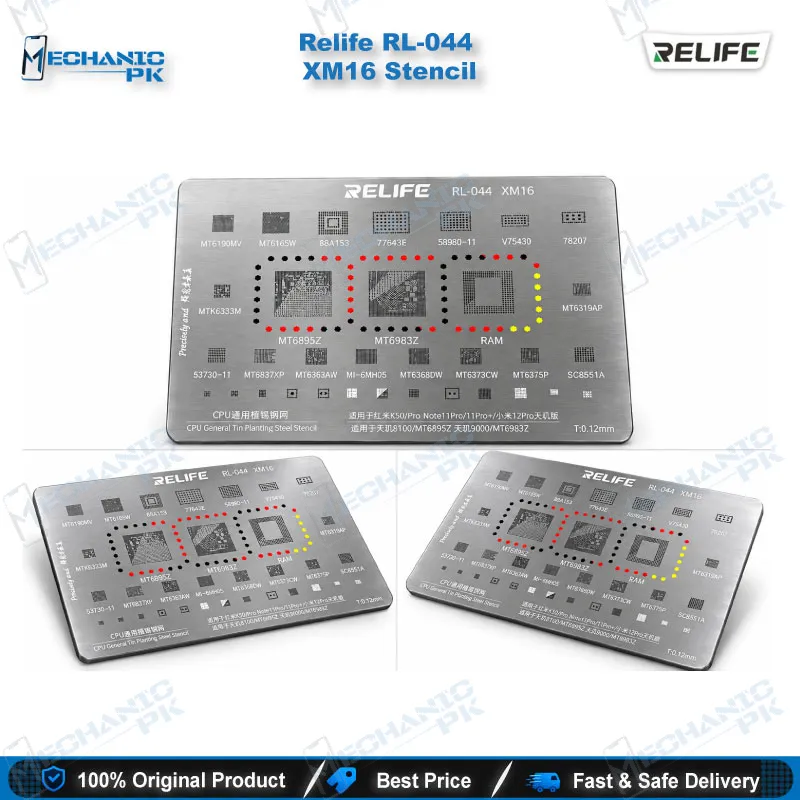
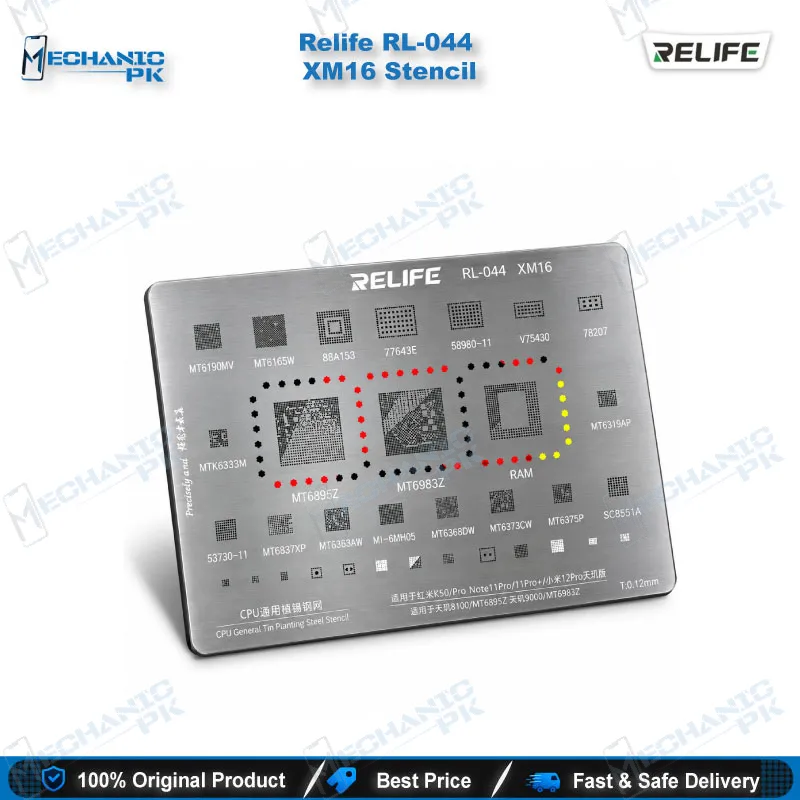
The Relife RL-044 XM16 Stencil is a 0.12mm steel plate cut for reballing MediaTek Dimensity 8100 (MT6895Z) and Dimensity 9000 (MT6983Z) CPUs. You use it on Redmi K50, K50 Pro, Redmi Note 11 Pro, Note 11 Pro+ and Xiaomi 12 Pro Tianji Edition boards when a dead phone, hang on logo, or boot loop issue traces back to a failed CPU joint. Round and square apertures and a footprint-matched layout let you place solder balls on the correct pad pattern. Pair it with your hot air station, microscope, and reballing kit for a complete CPU rework setup. Each pack contains one stencil.
In stock
Relife RL-044 XM16 Stencil for Dimensity 8100 and 9000 CPU Reballing
The Relife RL-044 XM16 stencil gives you a dedicated 0.12mm steel plate for reballing MediaTek Dimensity 8100 (MT6895Z) and Dimensity 9000 (MT6983Z) processors. Relife numbers it as plate 16 in the RL-044 Xiaomi series, and the plate targets Redmi K50, Redmi K50 Pro, Redmi Note 11 Pro, Redmi Note 11 Pro+ and Xiaomi 12 Pro Tianji Edition boards. If your workshop in Pakistan handles MediaTek-powered Xiaomi and Redmi boards, this plate hands you a footprint-matched template instead of a universal one. Dimensity 8100 and 9000 boards carry a high-value SoC, so a failed reball costs you the board and the customer’s trust. A matched plate cuts that risk before you apply any heat.
Dimensity 9000 BGA Reballing Stencil Design and Build
The plate measures 0.12mm thick and uses steel that resists heat deformation, so it stays flat under hot air and does not curl while you work. Relife cuts round and square apertures into the plate, and the RL-044 series pairs half-cut and through-cut patterns to suit different chip pad layouts. You clean the lifted CPU, align the apertures with the pads under a microscope, load the solder, and reflow until the balls form. A flat, rigid plate keeps every ball on its pad, which matters on dense Dimensity packages where one bridged joint turns into a hardware fault on the bench. Steel also gives you a thin, rigid template that lifts off cleanly once the balls solidify, which protects the freshly formed balls from smearing. The 0.12mm thickness limits how much solder fills each opening, so ball height stays even across the package.
Where XM16 Fits in Your Rework Workflow
Dimensity boards come in with familiar complaints: a dead phone after a drop, a hang on logo, or a boot loop issue that traces back to cracked joints under the SoC. Once you confirm the fault, you lift the CPU with a hot air station, clear the old solder from the board and the chip with a soldering station and flux, and then reball the chip. XM16 covers that reballing step for MT6895Z and MT6983Z packages. A microscope and a PCB holder keep the alignment steady, and a reballing kit supplies the paste or balls you load through the apertures. After the CPU goes back on, check the supply rails with a multimeter, then move to the test box, ISP pinout tool or eMMC programmer to confirm storage and boot behavior. Technicians who already own the basic XM plates for older Snapdragon boards treat XM16 as the upgrade step for current MediaTek Redmi and Xiaomi models. Skipping the reball and refitting a used chip with tired balls often brings the same dead phone back a week later, so a stencil-based reball pays for itself in avoided comebacks. Run flux, preheat, and a controlled hot air profile on every board, and keep the heat low enough that nearby shields and connectors survive.
Matching XM16 to the Right Board Before You Start
Relife numbers its Xiaomi plates from XM1 to XM17, and each plate fits a specific CPU footprint. Read the CPU marking and confirm the SoC before you pick a plate. XM16 covers Dimensity 8100 (MT6895Z) and Dimensity 9000 (MT6983Z), so a Qualcomm Redmi board needs a different plate from the series. One stencil ships in each pack, which lets you buy only the plate for the CPU family you repair most. Keep it flat in a stencil holder between jobs, and clean the apertures after each reball so residue never narrows the openings. A clean plate gives you consistent ball size from the first repair to the fiftieth. Repair shops and service centers that stock several Xiaomi plates cut down on wrong-plate mistakes when they label each plate by chipset instead of device name, because one Redmi model name can ship with more than one SoC.
| Weight | 0.1 kg |
|---|
Key Features
- Dedicated XM16 plate for Dimensity 8100 (MT6895Z) and Dimensity 9000 (MT6983Z)
- 0.12mm plate thickness for even ball height
- Steel construction that resists heat deformation
- Round and square apertures for clean ball formation
- Half-cut and through-cut design approach used across the RL-044 series
- Footprint-matched layout for Redmi K50, Note 11 Pro and Xiaomi 12 Pro Tianji Edition boards
- Part of the Relife RL-044 Xiaomi series (XM1 to XM17)
- Single stencil per pack
Specifications
| Brand | Relife |
|---|---|
| Model | RL-044 XM16 |
| Category | BGA Reballing Stencil (MTK / MediaTek) |
| Compatibility | MediaTek Dimensity 8100 (MT6895Z), Dimensity 9000 (MT6983Z) |
| Supported Devices | Redmi K50, Redmi K50 Pro, Redmi Note 11 Pro, Redmi Note 11 Pro+, Xiaomi 12 Pro Tianji Edition |
| Technology | Stencil-based BGA reballing, 0.12mm plate thickness, round and square apertures |
| Material | Steel |
Common Repair Uses
- CPU-level reballing on MediaTek Xiaomi and Redmi boards
- Reballing a Dimensity 8100 (MT6895Z) CPU after removal
- Reballing a Dimensity 9000 (MT6983Z) CPU after removal
- Reviving a dead phone caused by cracked CPU solder joints after a drop
- Fixing hang on logo and boot loop issue faults tied to the SoC joints
- Refitting a cleaned CPU with fresh solder balls during board-level rework
- Re-tinning CPU pads after cleaning residue and old solder
- Replacing a failed CPU on a damaged Redmi or Xiaomi motherboard
- Hands-on BGA reballing practice in repair training
Compatible Devices
- MediaTek Dimensity 8100 and Dimensity 9000 based Xiaomi and Redmi boards
- Redmi K50
- Redmi K50 Pro
- Redmi Note 11 Pro
- Redmi Note 11 Pro+
- Xiaomi 12 Pro Tianji Edition
- Dimensity 8100 (MT6895Z) CPU
- Dimensity 9000 (MT6983Z) CPU
FAQ
What is the product name?
What is the brand of this product?
What is the model of this product?
What is this product used for?
Which devices are compatible with this product?
Who should use this product?
Which CPU chipsets does the Relife RL-044 XM16 stencil support?
How thick is the XM16 stencil and what hole design does it use?
Related products