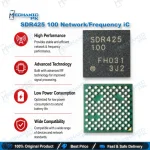
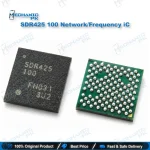
SDR425 100 Network/Frequency iC – Qualcomm RF Transceiver
₨ 200
SDR425 100 Network/Frequency iC – Qualcomm SM4250 RF Transceiver
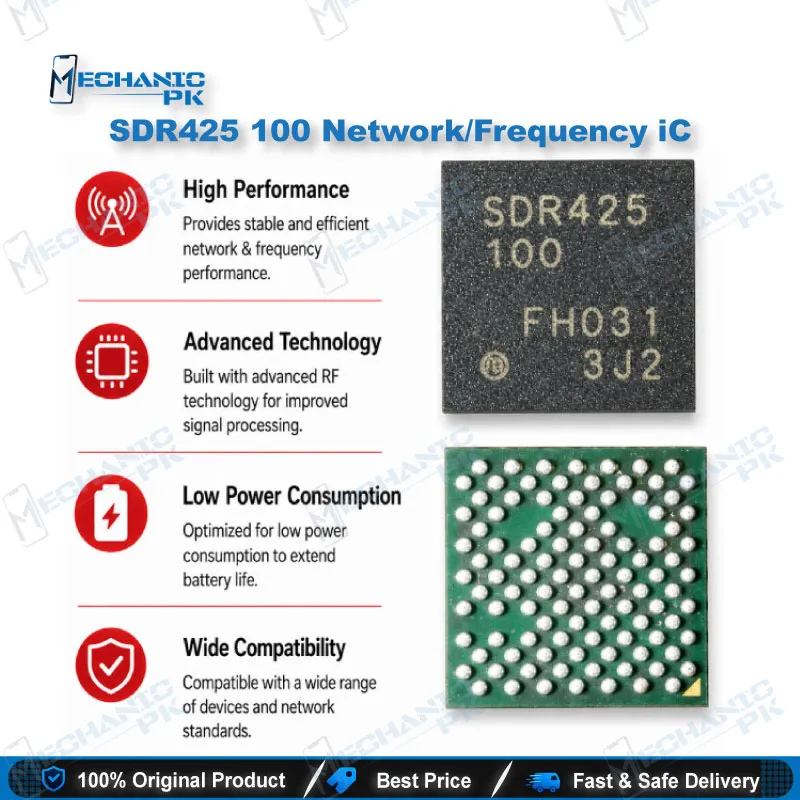
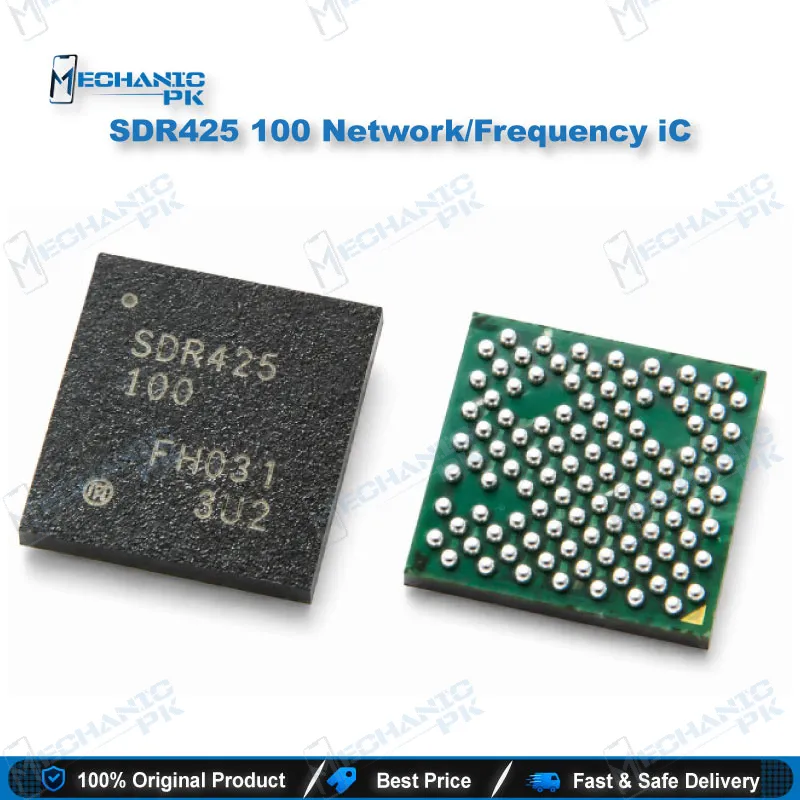
The SDR425 100 Network/Frequency iC is the Qualcomm SDR425 RF transceiver that pairs with the Snapdragon 460 (SM4250) platform. It handles cellular frequency conversion and GPS reception on one chip. Teardown data confirms it on the Vivo Y20 (V2029), and parts distributors list it for the Vivo Y20i and Oppo A53 (2020). Replace it when a phone shows no service, no signal or random network drops that survive a clean QCN restore, especially when GPS fails at the same time. It suits board-level technicians who handle hot air rework, reballing and RF fault tracing on Snapdragon 460 boards.
SDR425 100 Network/Frequency iC: Qualcomm RF Transceiver for Snapdragon 460 Boards
The SDR425 100 Network/Frequency iC is the Qualcomm SDR425 RF transceiver IC that handles cellular radio conversion on Snapdragon 460 (SM4250) smartphone platforms. A published teardown of the Vivo Y20 (V2029) identifies the SDR425 as the RF transceiver and GPS receiver working alongside the SM4250 application and baseband processor. In practical terms, this chip sits between the modem inside the SoC and the RF front end, and it converts baseband data into radio signals and back again. When it fails, the phone loses its cellular link no matter what the software side reports.
Where the SDR425 RF Transceiver IC Sits in the Network Path
On SM4250 boards, the signal chain runs from the SoC modem to the SDR425, then out through the power amplifier modules, antenna switches and antenna feed. The SDR425 performs frequency up-conversion for transmit and down-conversion for receive, which explains why technicians in Pakistan call it the network or frequency IC. The same package also carries the GPS receiver function, so a damaged unit often produces two symptoms together: no service on the SIM and no location fix in maps. That combined pattern helps you separate a transceiver fault from a single PA module or antenna fault, which typically leaves GPS working.
Verified Board Compatibility
Teardown data confirms the SDR425 on the Vivo Y20 V2029, which is the Qualcomm SM4250 variant of that phone. Repair-parts distributors list the same IC for the Vivo Y20i and the Oppo A53 (2020), and both phones use the Snapdragon 460. Check the chip marking on the board before you order, since Vivo also built Y20-series models on MediaTek platforms with a completely different RF section. A MediaTek board will not take this part.
Diagnosing a Network Issue Before an IC Change
Rule out the cheap causes first. Inspect the antenna connectors, coaxial cable and spring contacts, then confirm the IMEI and QCN data through your test box or QPST. If a clean QCN restore still leaves the phone on no service, measure the supply rails around the transceiver with a multimeter and check for corrosion under a microscope. Liquid damage and drop impacts often crack the solder joints beneath the chip. If a phone loses network when you flex the board, try a reflow or reball before a full replacement.
Removal and Installation Workflow
Mount the board in a PCB holder and shield nearby components with heat-resistant tape. Apply quality flux and lift the old chip with a hot air station on controlled airflow, since dense passives surround the package on SM4250 boards. Clean the pads with your soldering station and desoldering wick until every pad sits flat and bright. Prepare the new SDR425 with a matching stencil from your reballing kit, align it against the board markings, and reflow with even heat. Let the board cool naturally before reassembly.
Post-Repair Verification
Insert a live SIM and confirm network registration, signal bars and a stable call. Test mobile data, then open a GPS test app and confirm satellite lock, since the SDR425 drives both functions. A clean result on all three checks confirms correct placement and a healthy RF path. Testing on the bench catches a weak joint before the customer leaves your counter, so you avoid a comeback.
Why Workshops Stock the SDR425
Snapdragon 460 handsets from Vivo and Oppo still reach repair benches across Lahore, Karachi and Islamabad with network faults after liquid damage and drops. If you keep the SDR425 RF transceiver IC in stock beside your hot air station, reballing kit and microscope, a no service job can run from diagnosis to handover without supplier delays. Many shops already handle QCN and IMEI work through test boxes, and this part completes the hardware half of that same network repair workflow. It also gives you a clear path from software-only network repair into board-level RF work.
| Weight | 0.1 kg |
|---|
Key Features
- Qualcomm SDR425 RF transceiver built for the Snapdragon 460 (SM4250) platform
- Handles transmit up-conversion and receive down-conversion between the modem and the RF front end
- Carries the GPS receiver function on the same package, as identified in teardown analysis
- Teardown confirms it on the Vivo Y20 V2029, and distributors list it for the Vivo Y20i and Oppo A53 (2020)
- Restores cellular registration on boards where the original transceiver has failed
- Fits a standard rework bench workflow: hot air removal, pad cleaning and reballing
- Completes the hardware side of a network repair once QCN and IMEI checks pass
- SDR425-100 marking makes it straightforward to identify on the board before ordering
Specifications
| Brand | Qualcomm |
|---|---|
| Model | SDR425-100 |
| Category | Mobile Phone IC – RF Transceiver (Network/Frequency IC) |
| Compatibility | Qualcomm Snapdragon 460 (SM4250) platform |
| Supported Devices | Vivo Y20 (V2029), Vivo Y20i, Oppo A53 (2020) |
| Technology | Cellular RF transceiver with integrated GPS receiver |
Common Repair Uses
- No service fault after a QCN/IMEI restore fails to bring the network back
- No signal or zero bars with intact antenna connectors and cables
- Random network drops caused by cracked solder joints after a drop
- Network loss after liquid damage around the RF section
- Combined no service and no GPS lock symptoms on the same board
- Reflow or reballing of the original transceiver when the joints are lifted
- Full transceiver replacement during board-level RF repair
- Salvaging donor boards for Snapdragon 460 network repair jobs
Compatible Devices
- Qualcomm Snapdragon 460 (SM4250) boards only. Not compatible with MediaTek-based variants.
- Vivo Y20 (V2029 / PD2034F, Qualcomm SM4250 variant)
- Vivo Y20i
- Oppo A53 (2020)
- Other Snapdragon 460 boards carrying the SDR425 marking (confirm the chip marking on the board before ordering)
FAQ
What is the product name?
What is the brand of this product?
What is the model of this product?
What is this product used for?
Which devices are compatible with this product?
Who should use this product?
Does the SDR425 fit the MediaTek version of the Vivo Y20?
Can a faulty SDR425 cause GPS problems along with no service?
Related products