














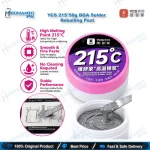
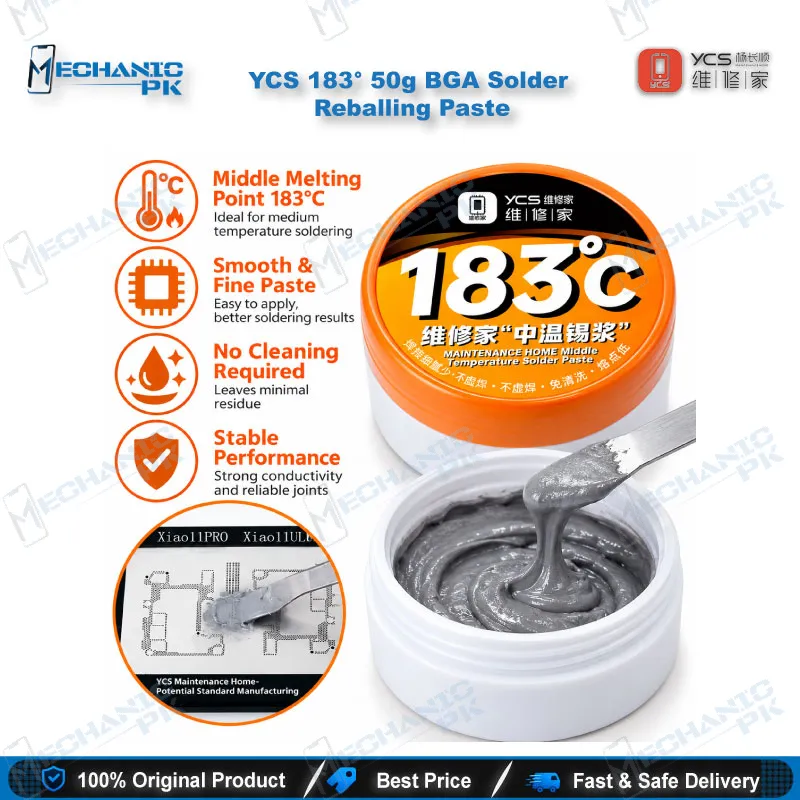
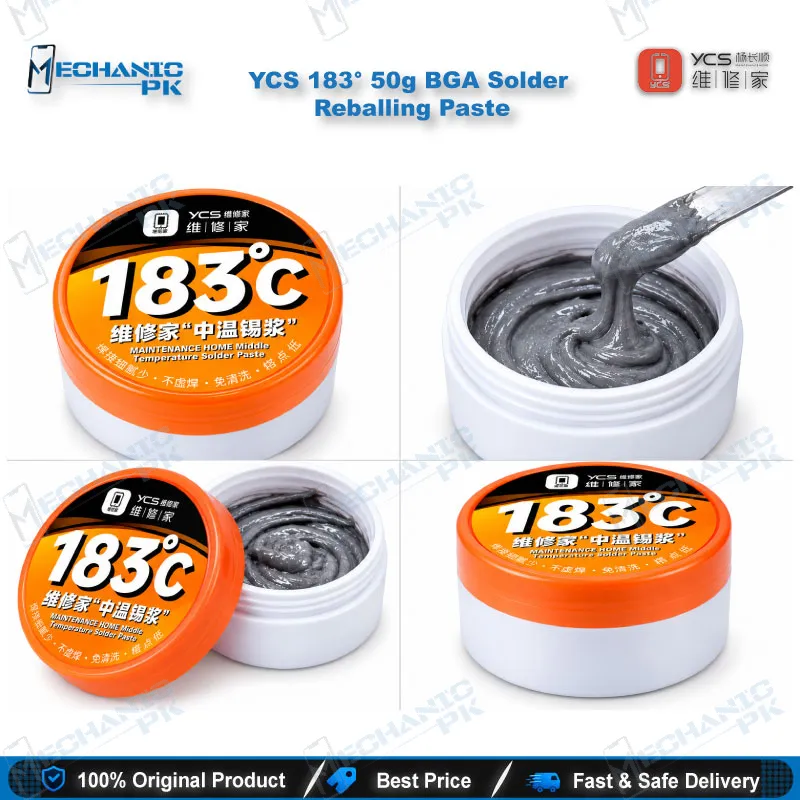
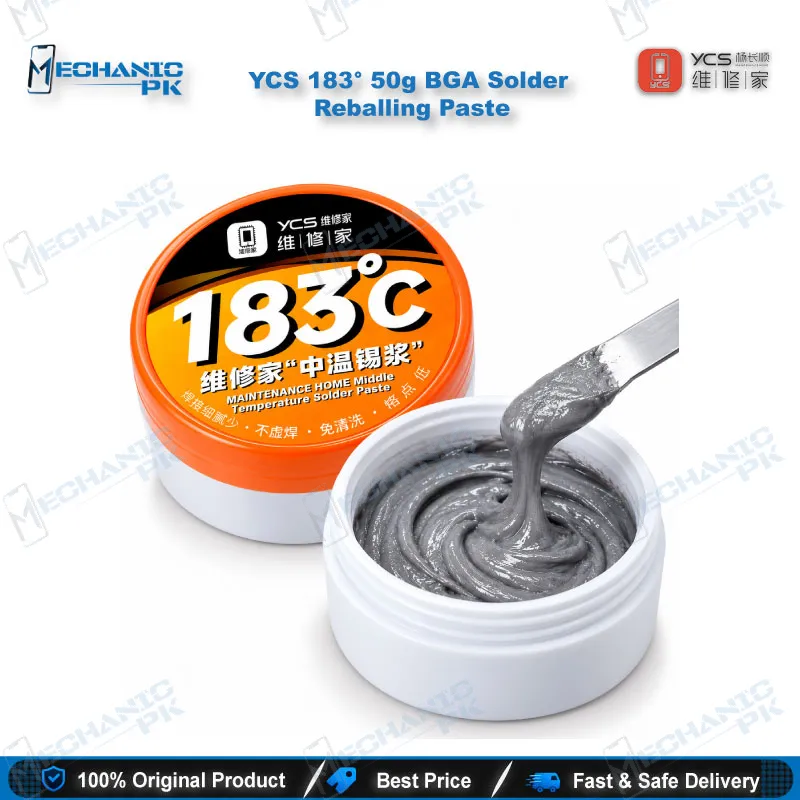
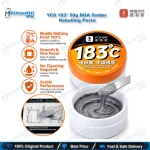
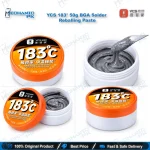
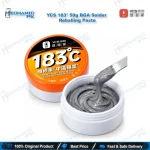
YCS 183° 50g BGA Solder Reballing Paste
₨ 1,250
BGA Solder Reballing Paste for Mobile Repair
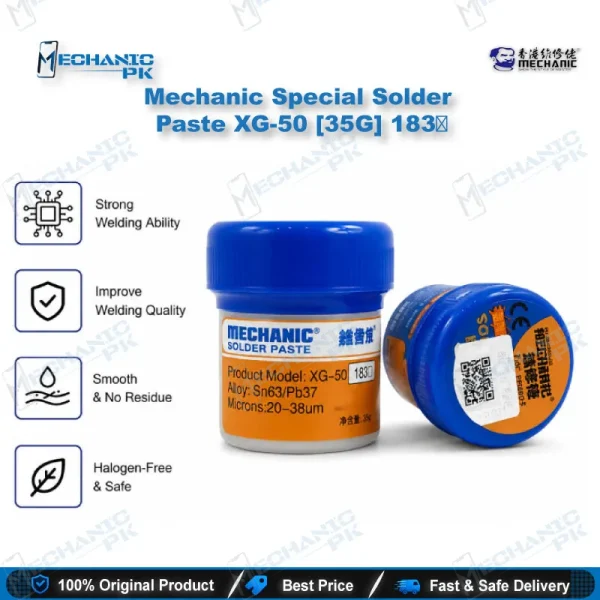
YCS 183° 50g BGA Solder Reballing Paste is a middle-temperature solder paste with a 183°C melting point, and it ships in a 50g container for daily bench use. You apply it for IC reballing, pad repair, component installation and multilayer board work on mobile phone logic boards. The low-residue formula suits fine-pitch components, so your joints stay clean after hot air rework. Mechanicpk supplies this BGA solder reballing paste to Pakistani repair shops, service centers and technicians who want predictable reflow behaviour from a single jar. Pair it with a hot air station, a stencil and quality flux for repeatable results.
In stock
BGA Solder Reballing Paste with a 183°C Melting Point
YCS 183° 50g BGA Solder Reballing Paste gives your bench a middle-temperature option for chip-level work. The paste melts at 183°C and ships in a 50g container sized for steady daily use. You reach for this BGA solder reballing paste when you rebuild solder joints under CPUs, memory chips and power ICs, and when a board needs more thermal margin than a 138°C low-temperature paste offers. Mechanicpk stocks it for Pakistani repair shops and service centers that want one dependable paste for reballing, pad repair and component installation.
Why the 183°C Melting Point Shapes Your Reflow Plan
A melting point sets the target for your whole reflow plan. At 183°C, this middle-temperature paste flows at a heat level that standard hot air stations reach with ease, so you build your profile around one known number instead of guessing. You set your station above 183°C, give the paste time to wet the pads and balls, then let the board cool before you touch it. Preheating the board from underneath keeps the temperature gradient gentle across a multilayer mobile PCB. The low-residue formula leaves little behind around fine-pitch components, which saves cleaning time and keeps your joints easy to inspect under the microscope.
183°C Solder Paste for Mobile Repair: Workflow Fit
In a typical chip-level job, you remove the failed IC, clean the pads with flux and solder wick, and check the pad surface under magnification. This paste then handles the rebuild. You apply it through a stencil onto the chip’s pads, reflow with hot air to form the balls, and inspect them before you place the chip back on the board. The same paste covers pad repair on damaged lands and small component placement on multilayer boards, so one jar serves several steps of your rework process.
This fits the jobs Pakistani technicians see every day: the dead phone that traces back to a failed CPU or memory joint, the boot loop issue after a drop, the hang on logo case that points to a hardware fault on the board, and the charging issue that ends with a PMIC replacement. In each case, clean reballing decides whether the repaired chip holds up after the customer picks up the phone.
Where It Sits on a Complete Repair Bench
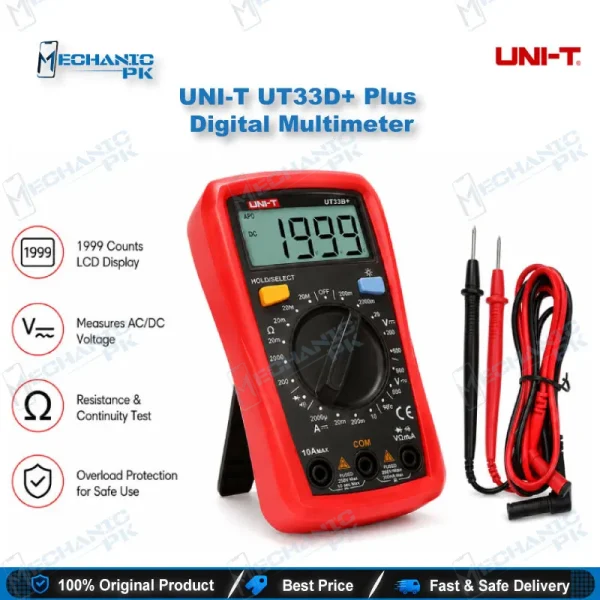
Paste performance depends on the tools around it. You get the best results when you pair this paste with a hot air station for controlled heat, a soldering station for pad cleanup, a microscope for pad inspection, a reballing kit with the right stencils, and a PCB holder that keeps the board steady during reflow. A multimeter confirms continuity once the chip is back on, and a test box or ISP pinout tool lets you verify the repair on a dead phone before you close it up. If your workflow runs through eMMC programmers or UFS adapters, a clean reballing job comes first, because a programmer can only read what the board connects properly. Mechanicpk carries each of these categories, so you can build the full bench from one supplier.
YCS sells its paste in several melting points, including 138°C, 150°C, 183°C, 199°C and 215°C. The 183°C grade sits in the middle of that range, which makes it a practical default when you want one jar on the bench for general reballing. Reach for a lower grade when a board carries heat-sensitive parts, and a higher grade when you need a more heat-tolerant joint. Buyers comparing options check three things: melting point, container size and residue behaviour. This paste answers all three with a 183°C melting point, a 50g jar and a low-residue formula.
| Weight | 0.50 kg |
|---|
Key Features
- 183°C middle-temperature melting point for controlled reflow planning
- 50g container sized for frequent daily use on a repair bench
- Suited to IC reballing on mobile logic boards
- Handles pad repair and component installation
- Low-residue formula for fine-pitch components
- Supports multilayer board work
- Smooth application for strong, reliable solder joints
- Fits alongside hot air stations, stencils and reballing kits
Specifications
| Brand Entity | YCS |
|---|---|
| Product Entity | YCS 183° 50g BGA Solder Reballing Paste |
| Technology Entity | Middle-temperature solder paste, 183°C reflow |
| Compatible Device Entities | Mobile phone logic boards, BGA packages, fine-pitch SMD components, multilayer PCBs |
| Repair Process Entity | BGA reballing, IC rework, pad repair |
| Industry Entity | Mobile phone repair, PCB repair, hot air rework |
Common Repair Uses
- IC reballing after chip removal
- Pad repair on damaged solder lands
- Component installation on logic boards
- Multilayer board rework
- CPU reballing on a dead phone
- eMMC reballing before programmer reads
- PMIC replacement for a charging issue
- Fine-pitch component rework after a hardware fault
Compatible Devices
- Universal, not device-specific. Suited to any mobile phone logic board that carries BGA ICs or SMD components.
- BGA CPU packages on mobile logic boards
- eMMC memory chips in BGA packages
- UFS memory chips in BGA packages
- Power management ICs (PMIC)
- Charging ICs
- Audio codec ICs
- Fine-pitch SMD components
- Multilayer mobile PCBs
FAQ
What is the product name?
What is the brand of this product?
What size is the container?
What is this product used for?
Which devices are compatible with this product?
Who should use this product?
What is the melting point of YCS 183° solder paste?
How does the 183°C paste differ from the YCS 138°C paste?
Related products