










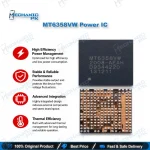
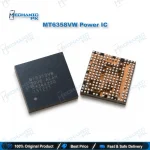
MT6358VW Power IC – MediaTek PMIC, 194-Ball WLCSP
₨ 450
MT6358VW Power IC – MediaTek PMIC Overview
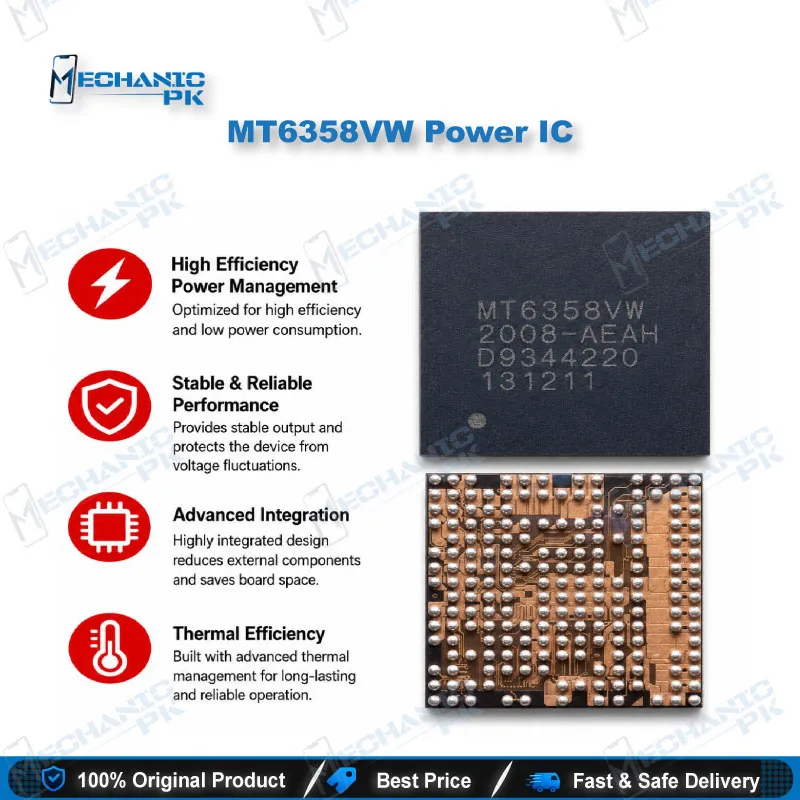
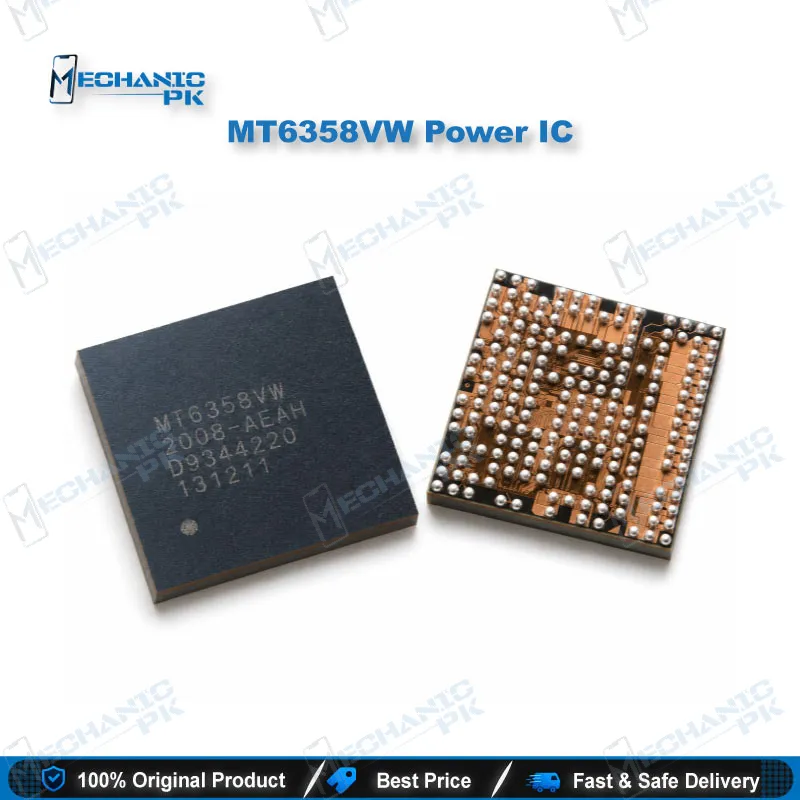
The MT6358VW Power IC is a MediaTek power management chip with nine buck converters and 33 LDO regulators in a 194-pin WLCSP package that measures 6.4 × 6 mm. It supplies power to the processor, GPU, DRAM, modem, RF amplifier, SIM, camera and audio circuits on MediaTek-based mobile boards. It also contains the audio codec, the RTC and the battery fuel gauge. Technicians use it to repair dead phones, charging faults and power-rail shorts at board level. Before you replace the chip, check that the original carries the MT6358VW marking. Install it with a calibrated hot air station and good-quality flux.
Out of stock
MT6358VW Power IC: MediaTek PMIC for Board-Level Power Repair
The MT6358VW Power IC is a MediaTek power management chip that produces almost every supply rail a MediaTek smartphone board needs to boot. When you trace a dead phone to a shorted or burnt PMIC, the MT6358VW power IC is the part that brings the board back. MediaTek’s MT6358 product brief lists nine buck converters, 33 LDO regulators, an integrated audio codec, an RTC block and a fuel gauge, all in a 194-pin WLCSP of 6.4 × 6 mm. Because so much sits in one chip, a single failed PMIC can stop power, charging, audio and network at the same time.
How the MT6358VW Power IC Feeds the Board
The chip takes battery voltage on its VSYS pins and converts it into separate rails:
- VPROC11 and VPROC12 for the CPU clusters
- VGPU for the GPU
- VCORE
- VDRAM for memory
- VMODEM for the modem
- VPA for the RF power amplifier
Its 33 LDOs handle the lower-current loads, such as the SIM slots, camera sensors, memory card, USB, vibrator, eMMC supply and Wi-Fi/Bluetooth connectivity. The SoC controls the PMIC through an SPI interface and two SRCLKEN control pins, so the baseband switches every rail in real time. If any one of those rails is shorted, the phone never finishes powering up.
Protection and Monitoring Built Into the Chip
MediaTek specifies these protection functions:
- Over-current protection of 6–7.5 A on the processor, GPU and core buck converters
- Thermal shutdown at 150°C
- Programmable under-voltage lockout
- A watchdog reset input
- A hardware PMIC reset
The fuel gauge reads battery voltage, current and temperature through dedicated ADC and NTC pins. A charger-detection input tells the system when a charger is connected. For a technician, this means the PMIC can be the cause of charging issues, sudden shutdowns and wrong battery-percentage readings, as well as fully dead phones.
Diagnosing an MT6358VW Fault
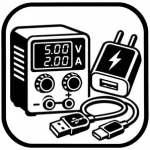
- Connect the board to a DC power supply and watch the current draw when you press the power key. If the board pulls heavy current instantly and does not boot, look for a short on VSYS or on one of the buck outputs.
- Take diode-mode readings with a multimeter on the inductor side of VPROC, VCORE and VGPU. These readings show whether the short is inside the PMIC or on a component further down the rail.
- Use a thermal camera or a rosin smoke test to confirm whether the PMIC is the part heating up.
- Check audio faults as well. The MT6358 contains the handset, earphone, line-out and microphone paths and the accessory detection. After liquid damage, symptoms like no mic, no earpiece sound or headset not detected can come from this chip.
Replacement Workflow on the Repair Bench
The 194-ball WLCSP package needs controlled heat. Your minimum setup is:
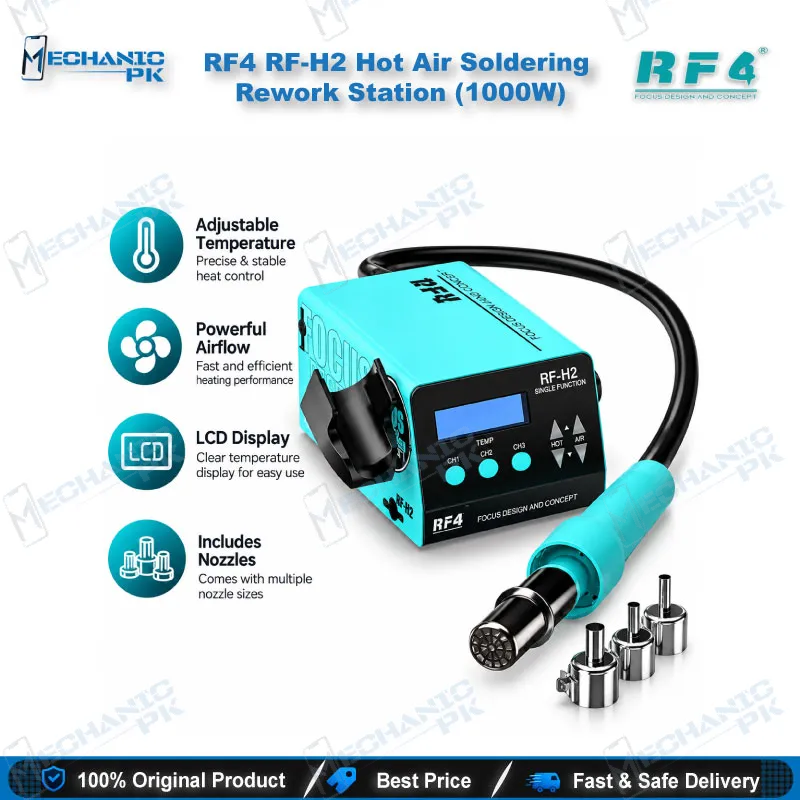
- A calibrated hot air station
- A good soldering station for pad cleaning
- Low-residue flux
- A stable PCB holder
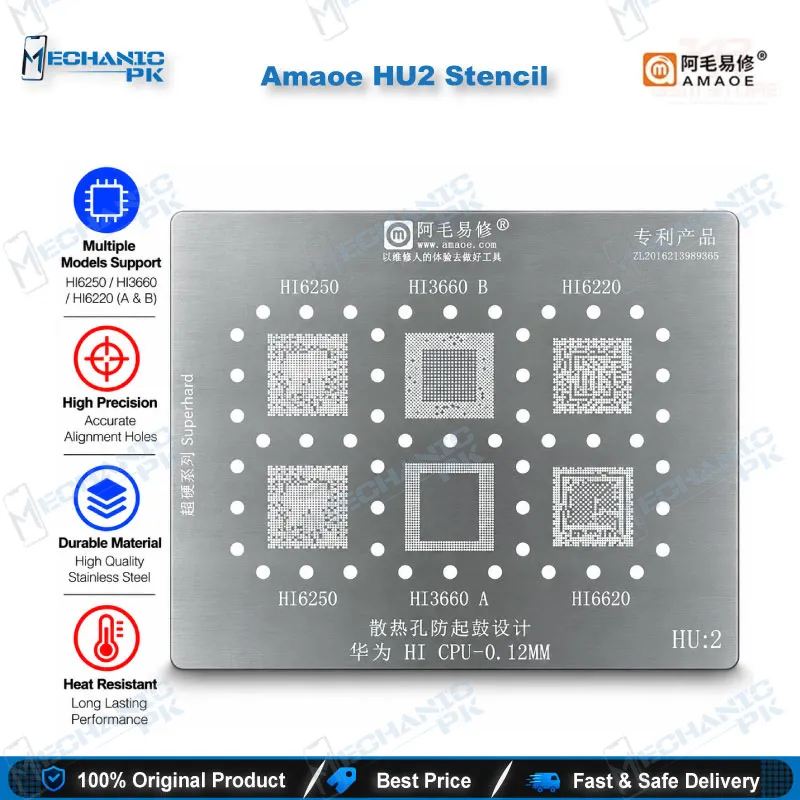
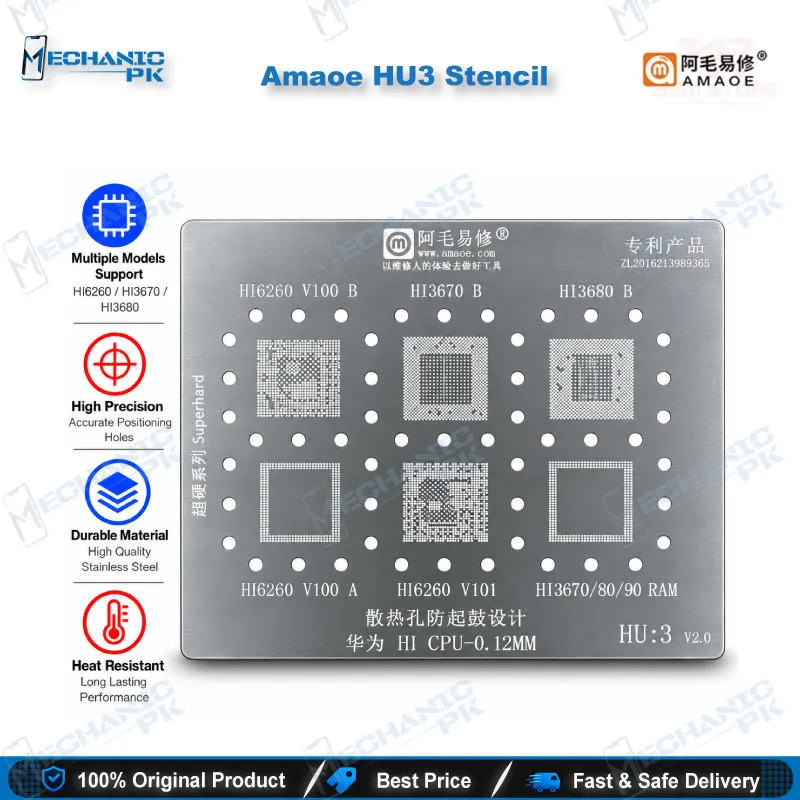
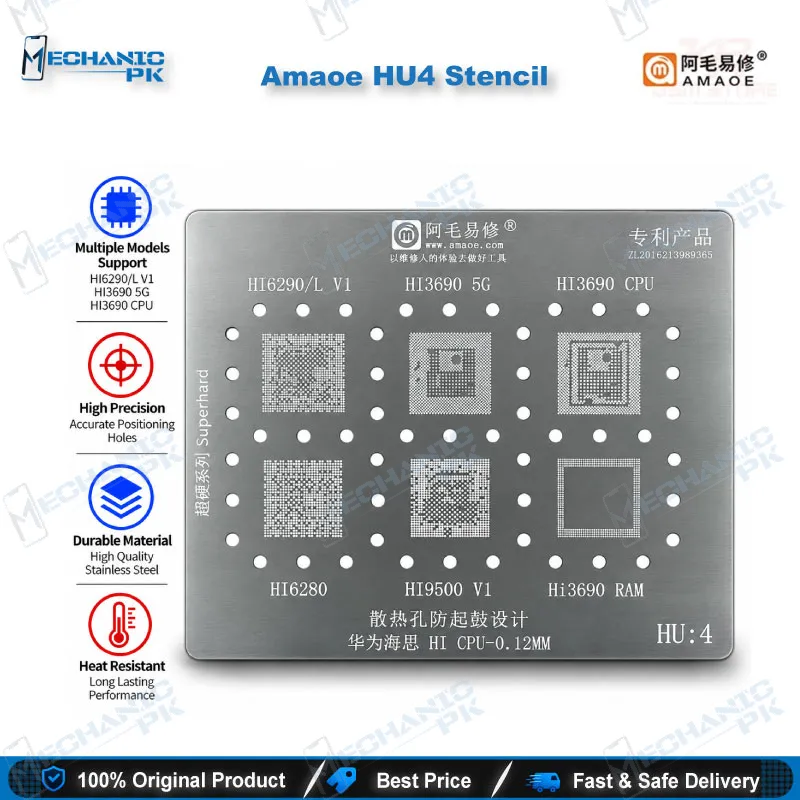
After you remove the old chip, inspect the pads under a stereo microscope. One lifted pad on a buck feedback line or an SPI line is enough to leave the phone dead after replacement. If the board needs reballing, use a matching reballing kit and stencil so the ball height stays even. After installation, power the board from a DC supply and measure the main rail voltages with a multimeter before you connect the battery. Then confirm that the phone boots, charges and plays audio.
Choosing the Right Marking
MediaTek’s PMIC family includes several part numbers and suffix variants. Chips that look the same do not always share the same pinout or firmware support. Always check the marking on the original chip before you order. If the board carried a different suffix, or a different PMIC such as MT6357, MT6359 or MT6366, buy that exact part instead. Fitting the wrong PMIC causes a no-power-on or dead-after-flash result and wastes bench time.
Why Workshops Stock This PMIC
MediaTek-based handsets make up a large share of the Pakistani repair market. PMIC failures from charging-port shorts, low-quality chargers and liquid damage come into every service center. If you keep the MT6358VW power IC in stock next to your hot air station, test boxes and ISP pinout tools, you can finish a board repair in one session instead of waiting for parts. Mechanicpk supplies this PMIC to technicians who work at IC level and need the exact marking the board requires.
| Weight | 0.1 kg |
|---|
Key Features
- Nine buck converters supply the CPU clusters, GPU, core, DRAM, modem and RF amplifier rails
- 33 LDO regulators cover the SIM, camera, memory card, USB, connectivity and audio loads
- The integrated audio codec handles handset, earphone, line-out and three microphone inputs
- Over-current protection of 6–7.5 A on the processor, GPU and core buck converters
- Thermal shutdown at 150°C with automatic release at 110°C
- The precision fuel gauge measures battery voltage, current and temperature
- The 32K crystal-less RTC oscillator keeps system timing with 1.8V and 2.8V clock outputs
- Compact 194-pin MIFO WLCSP package of 6.4 × 6 mm
Specifications
| Brand | MediaTek |
|---|---|
| Model | MT6358VW |
| Category | Mobile Phone Power Management IC (PMIC) |
| Compatibility | MediaTek mobile platforms designed around the MT6358 PMIC family |
| Technology | 9 buck converters, 33 LDOs, SPI control interface, integrated audio codec, RTC, fuel gauge |
| Input Voltage | 2.6V – 5V (3.15V – 5V recommended operating range) |
| Dimensions | 6.4 × 6 mm, 194-pin MIFO WLCSP |
Common Repair Uses
- Dead phone with heavy current draw from a shorted PMIC
- PMIC replacement after liquid damage or a charger surge
- Charging issues linked to charger detection or fuel gauge faults
- No network caused by faults on the VMODEM or VPA rails
- No mic, no earpiece sound or headset not detected (faults in the integrated codec)
- SIM not detected caused by faults on the VSIM1 or VSIM2 LDO rails
- Camera not working because the VCAMA or VCAMD supply is missing
- Rail voltage restoration after a burnt buck converter on the CPU, GPU or core lines
Compatible Devices
- Platform-level scope. The part fits only where the board originally used the MT6358VW.
- Smartphone mainboards that originally carry an MT6358VW-marked PMIC
- MediaTek 2G, 3G and 4G smartphone platforms built around the MT6358 PMIC family
- Boards with the 194-ball, 6.4 × 6 mm MT6358 WLCSP footprint
- MediaTek-based tablets and other portable systems that use the MT6358 family
- MediaTek Genio 500 boards that use MT6358-family power management
- Industrial HMI and desktop POS boards built on MT6358 power management
- Kiosk and digital signage boards that use the MT6358 PMIC
- Not a universal drop-in replacement for MT6357, MT6359 or MT6366 positions
FAQ
What is the product name?
What is the brand of this product?
What is the model of this product?
What is this product used for?
Which devices are compatible with this product?
Who should use this product?
Can I replace MT6358VW with MT6358W, MT6359 or MT6366?
How do I check if the MT6358VW is shorted on a dead phone?
Does the MT6358VW control audio functions?
Related products