
















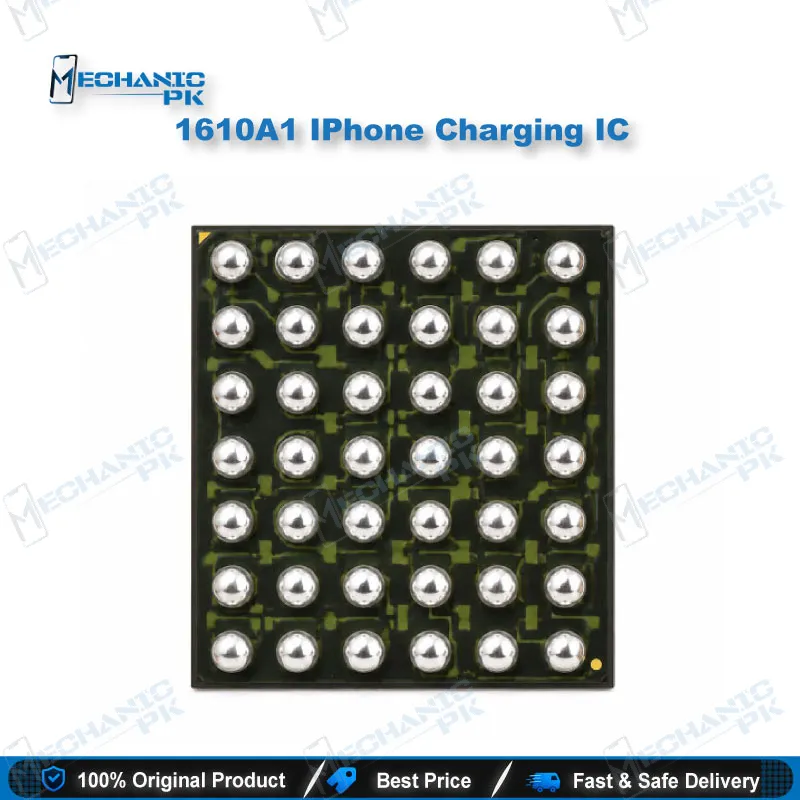
1610A1 IPhone Charging IC – Tristar for iPhone 5S & 5C
₨ 200
Tristar Lightning Port Controller for iPhone 5S and 5C
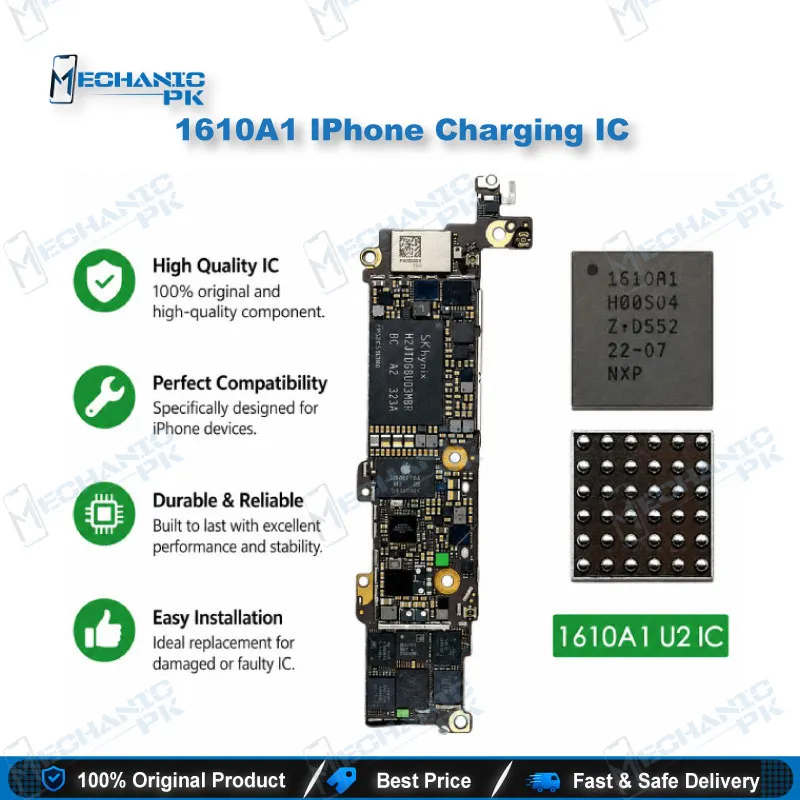
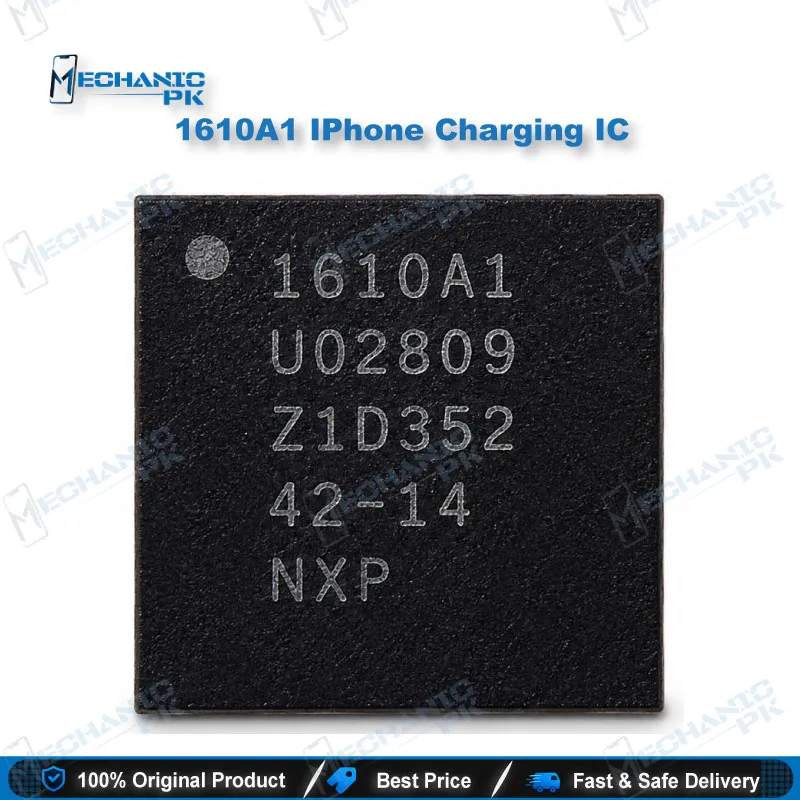
The 1610A1 IPhone Charging IC is the Tristar USB and Lightning port controller on iPhone 5S and iPhone 5C logic boards, and it also appears on the first-generation iPad Air and iPad mini 2. This chip identifies the connected cable or accessory, switches the USB data lines, and opens the charging path. A failed Tristar leaves the device with no charging, false charging, or no computer detection even with a good battery and a new port flex. Technicians use this replacement IC to clear these faults at component level and avoid a full logic board swap.
1610A1 Tristar Charging IC for iPhone 5S, 5C and iPad Board Repair
The 1610A1 IPhone Charging IC is the Tristar controller Apple placed on the iPhone 5S and iPhone 5C logic boards, and the same 1610A1 Tristar charging IC sits on the first-generation iPad Air and iPad mini 2. This chip stands between the Lightning port and the device’s power and data systems. It reads the identity of every cable and accessory you connect, switches the USB data lines, and decides when the device can safely accept charge. When the Tristar fails, the device stops charging, shows a charging icon without gaining battery, or disappears from the computer, even with a healthy battery and a fresh charging port flex. Mechanicpk supplies this part for board-level technicians who repair the charging circuit at component level instead of replacing the entire logic board.
How the Tristar Controls the Lightning Port
Apple designed the Lightning connector around active identification. Every genuine cable and accessory carries an ID chip, and the Tristar reads that ID before it opens either the charging path or the USB data path. The Tristar also handles connector orientation, which lets the Lightning plug work either way up, and it routes the D+ and D- lines to the correct internal bus. The charging circuit waits for the Tristar’s decision before it draws current from the port. This design makes the Tristar the gatekeeper of the whole charging chain. A damaged Tristar breaks that chain at the very first step, which explains why a board can pass every battery and port test and still refuse to charge. Understanding this role helps you separate a true Tristar fault from a simple cable, port, or battery problem before you pick up the hot air.
Fault Symptoms That Point to a Failed 1610A1 Tristar Charging IC
Low-quality fast chargers, unstable car adapters, power surges, and liquid inside the Lightning port cause most Tristar failures on iPhone 5S and 5C boards. Customers usually arrive with a charging issue that a new cable and a new port flex did not fix. Common bench symptoms include no charging at all, a charging icon that appears while the percentage never rises, an “accessory may not be supported” warning on genuine cables, and no detection by iTunes or a computer. Some boards also show abnormal battery drain or a phone that only charges in one cable orientation. Rule out the simple causes first: test with a known-good cable, clean the port, swap the dock flex, and check the battery. If the fault remains, compare diode-mode readings on the Lightning lines against a known-good board with your multimeter. An open or shorted reading on the ID or data lines confirms a hardware fault around the Tristar and justifies the chip replacement.
Replacing the iPhone 5S Charging IC on Your Repair Bench
An iPhone 5S charging IC replacement calls for a temperature-controlled hot air station, quality no-clean flux, a matching BGA reballing stencil, and a stereo microscope. Lock the board in a PCB holder, shield nearby components with heat-resistant tape, and preheat the board evenly so you avoid lifting pads or warping the PCB. Lift the old Tristar once the solder reflows, then clean the pads with flux and solder wick until every pad looks flat and bright under magnification. Reball the new 1610A1 with the correct stencil, or tin the pads and seat the chip directly with careful alignment. Reflow until the chip self-centers on the pads, then let the board cool naturally. Before you close the device, confirm normal charging current with a USB ammeter, check computer detection, and test a genuine accessory. A clean replacement restores charging, data sync, and accessory recognition and turns a near-dead phone back into a working device. Pair this part with tools from our Hot Air Stations, Reballing Kits, Microscopes, Multimeters, and PCB Holders categories for a complete Tristar repair setup, and keep the newer 610A3B Tristar on your shelf as the upgrade-path IC many board technicians stock for later Apple generations.
| Weight | 0.1 kg |
|---|
Key Features
- Tristar Lightning port controller for iPhone 5S and 5C logic boards
- Also fits first-generation iPad Air and iPad mini 2 boards
- Handles accessory and cable ID before enabling charge
- Switches USB data lines for computer sync and detection
- Manages Lightning connector orientation detection
- Restores charging without a full logic board replacement
- Suits hot air removal and BGA reballing workflows
- Built for board-level repair technicians and service centers
Specifications
| Model | 1610A1 |
|---|---|
| Category | iPhone Charging IC (Tristar USB / Lightning Port Controller) |
| Compatibility | iPhone 5S, iPhone 5C, iPad Air (1st generation), iPad mini 2 |
| Technology | Tristar Lightning port identification and USB data switching |
| Supported Devices | Apple Lightning-port logic boards of the iPhone 5S / 5C generation |
Common Repair Uses
- iPhone 5S and 5C not charging after a port flex change
- Fake charging: charging icon shows but battery percentage does not rise
- “Accessory may not be supported” warning on genuine Lightning cables
- Device not detected by iTunes or a computer over USB
- Charging works only in one cable orientation
- Tristar damage after a cheap fast charger or power surge
- Charging and USB faults after liquid entry into the Lightning port
- iPad Air and iPad mini 2 charging circuit board-level repair
Compatible Devices
- Verified device-level compatibility for the 1610A1 Tristar
- iPhone 5S
- iPhone 5C
- iPad Air (1st generation)
- iPad mini 2
- Logic boards that carry the 1610A1 Tristar at the original position
- Not for iPhone 5 (that board uses the 1608A1 Tristar)
FAQ
What is the product name?
What is the brand of this product?
What is the model of this product?
What is this product used for?
Which devices are compatible with this product?
Who should use this product?
Can I use the 1610A2 or 610A3B Tristar in place of the 1610A1 on an iPhone 5S?
How do I confirm a faulty Tristar IC on iPhone 5S before replacing it?
Related products