














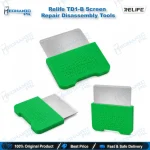
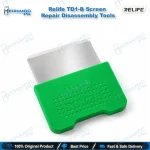
Relife TD1-B Screen Opening Disassembly Blade Tool
₨ 250
Relife TD1-B Screen Opening Blade
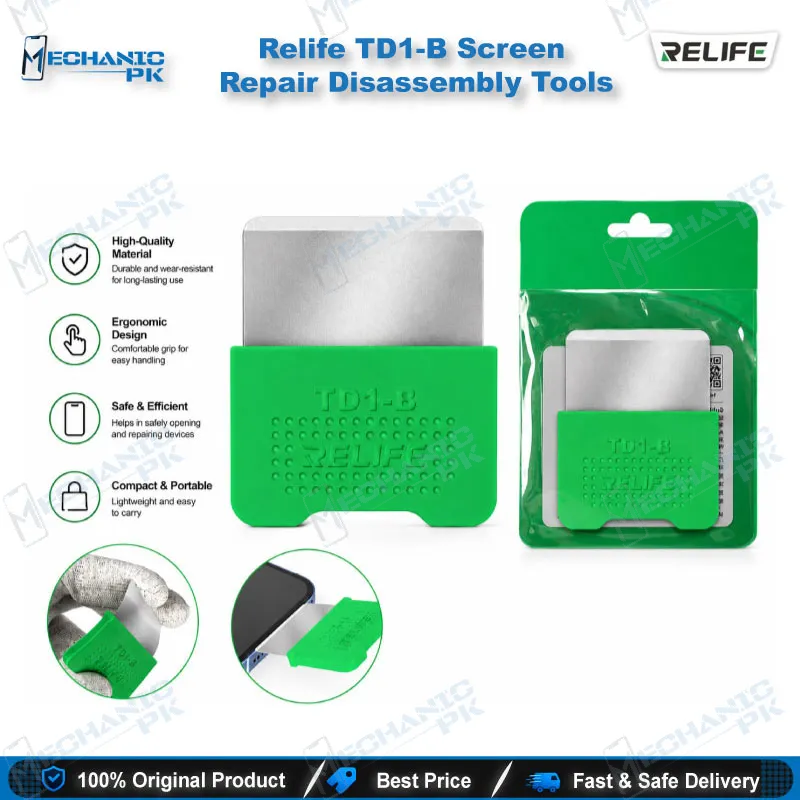
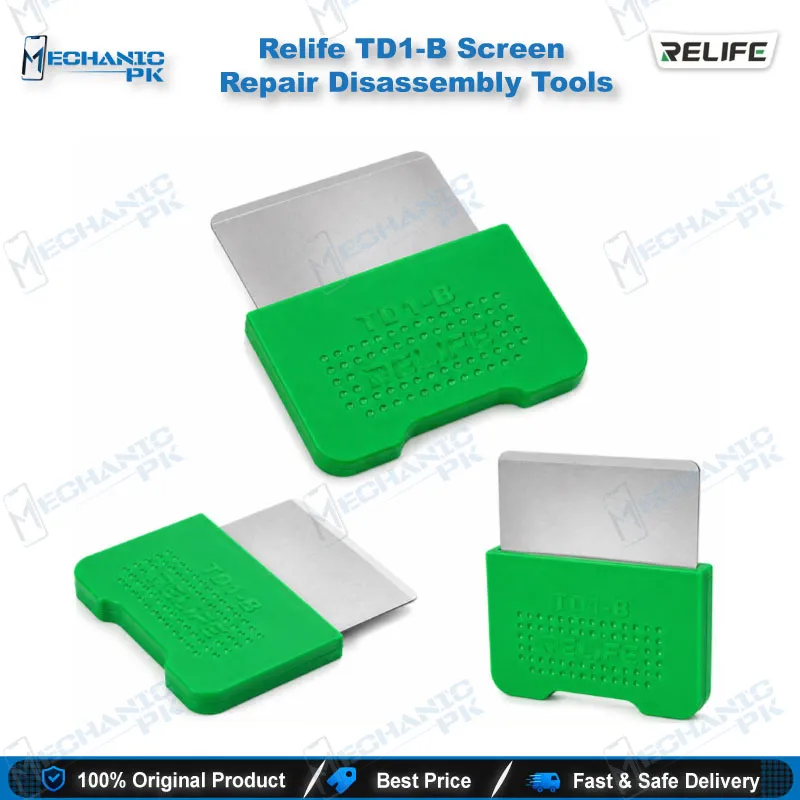
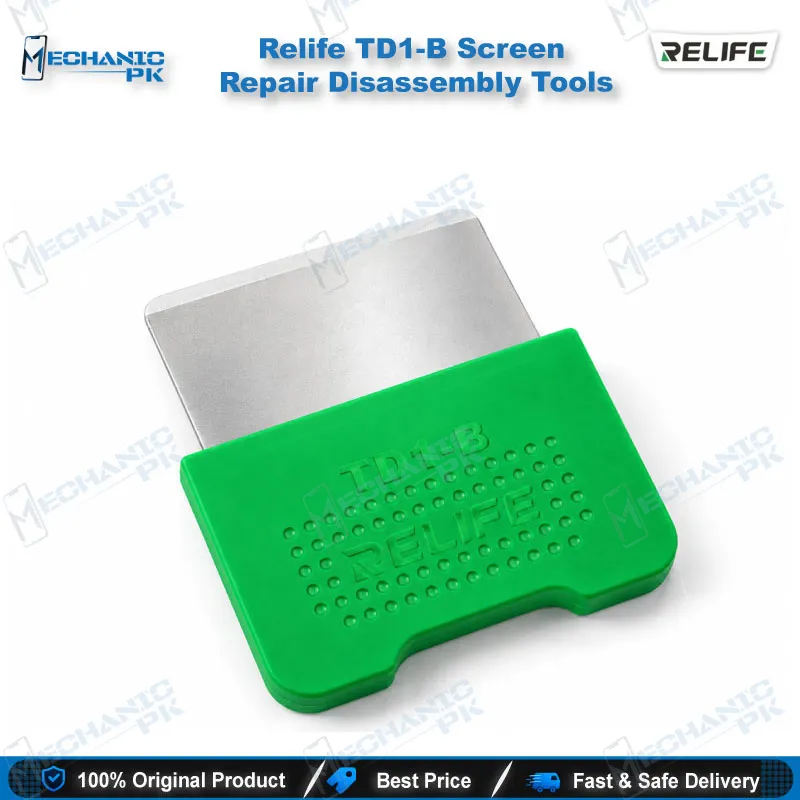
The Relife TD1-B screen opening tool gives your bench a thin steel pry blade with a non-slip silicone grip. Technicians use it to separate screens, back covers, batteries and middle frames on smartphones and tablets without forcing the panel. The 40 × 44.5 × 5.3 mm blade profile slips into tight display seams, and its shape suits multi-angle prying and chip CPU tinning work. Add it to your toolkit if you handle daily screen changes and need a precise opener that keeps glass and flex cables intact.
Out of stock
Relife TD1-B Screen Opening Tool for Precision Disassembly
The Relife TD1-B screen opening tool gives your repair bench a thin, rigid pry blade for jobs where plastic spudgers bend and thick metal picks gouge the frame. Relife builds the TD1-B as a compact steel blade with a non-slip silicone grip. The 40 × 44.5 × 5.3 mm profile slides into display seams, frame gaps and back cover edges without forcing the panel. If you run a workshop in Pakistan and handle screen changes every day, this blade covers the first and most delicate step of the job: opening the device without cracking glass or tearing a flex.
Blade Design and Grip Control
Relife makes the TD1-B from steel with a silicone-covered handle. At roughly 5.9 g net, it weighs almost nothing, so your fingertips feel every change in resistance as the blade travels along an adhesive line. The wide 44.5 mm blade face spreads pressure across the seam instead of concentrating it on one point. That matters on glued glass panels, where a narrow tip can chip an edge or push through to the display layer.
The silicone grip keeps the tool steady when you work with warm hands or after heating a panel. You control the angle with your thumb and forefinger, and the ultra-thin steel edge supports multi-angle entry, so you can approach a corner, a long edge or a curved border from whichever direction the adhesive allows.
Where It Fits in Your Repair Workflow
Every screen replacement starts with separation. You heat the panel, find the seam, and open the assembly before any board-level work begins. The TD1-B handles that opening step on smartphones and tablets, and it also helps when you need to lift a battery, release a back cover or free a middle frame. Pair it with a hot air station to soften adhesive, a PCB holder to keep the board steady, and a microscope to check the flex connectors once the assembly is open.
Relife also lists chip CPU tinning among the supported uses of the TD1-A and TD1-B blades. When you rework a board after a hardware fault, the flat steel face gives you a usable surface for moving solder across a chip, alongside your soldering station and reballing kit. Keep the blade clean and dry between uses so the edge stays smooth.
Why Technicians Pick the TD1-B Over a Generic Opener
Budget openers often flex, rust or leave burrs that scratch frames. The TD1-B keeps a stiff, thin edge that holds its shape under steady pressure, and the silicone cover protects your grip from heat and slip. Many Pakistani repair shops already stock Relife products, so the TD1-B slots into an existing kit without any change to your routine.
The TD1-B belongs to a two-blade TD1 range. Relife also makes the TD1-A, a smaller 22.5 × 54 × 5.3 mm blade at about 3.6 g. The two shapes target different maintenance habits. The TD1-B suits technicians who prefer a broader face for long seams and flat prying, while the TD1-A suits tighter corners. Many technicians buy both and switch depending on the phone model on the bench.
Check the screen type before you start. Curved and edge displays need shallow entry and slow, even pressure, and a quick pass with heat first makes the job easier. You protect the glass, you protect the flex cable, and you finish the screen change without a display problem caused by the opening step.
| Weight | 0.3 kg |
|---|
Key Features
- Thin steel blade for entering display seams and frame gaps
- Non-slip silicone grip for stable control
- Multi-angle prying for corners, long edges and curved borders
- Wide 44.5 mm blade face spreads pressure across the seam
- Lightweight build at about 5.9 g net
- Supports chip CPU tinning during rework
- Works on smartphones and tablets
- Pairs with the TD1-A blade for different disassembly habits
Specifications
| Brand | Relife |
|---|---|
| Model | TD1-B |
| Category | Mobile Repair Disassembly Tools |
| Compatibility | Universal — smartphones and tablets |
| Supported Devices | iPhone, Samsung and various tablets |
| Material | Steel blade with non-slip silicone grip |
| Dimensions | 40 × 44.5 × 5.3 mm |
| Weight | Approx. 5.9 g (net) |
Common Repair Uses
- Opening and separating device assemblies during repair
- Screen removal during display replacement
- Back cover separation
- Battery lifting
- Middle frame removal
- Chip CPU tinning during board rework
Compatible Devices
- Universal blade for smartphone and tablet disassembly; not tied to one chipset or model
- Apple iPhone series
- Samsung smartphones
- Android smartphones with glued display assemblies
- Tablets with glued screens and frames
FAQ
What is the product name?
What is the brand of this product?
What is the model of this product?
What is this product used for?
Which devices are compatible with this product?
Who should use this product?
What is the difference between the Relife TD1-A and TD1-B blades?
Can the Relife TD1-B blade handle CPU tinning on a board?
Related products