
















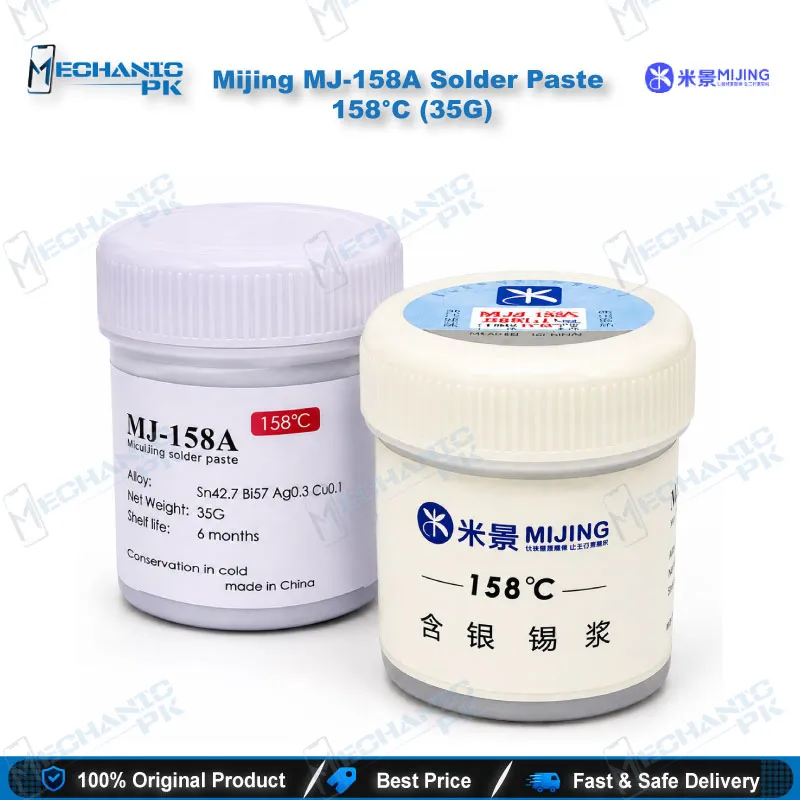
Mijing MJ-158A Solder Paste 158°C 35g
₨ 800
MJ-158A Lead-Free Solder Paste
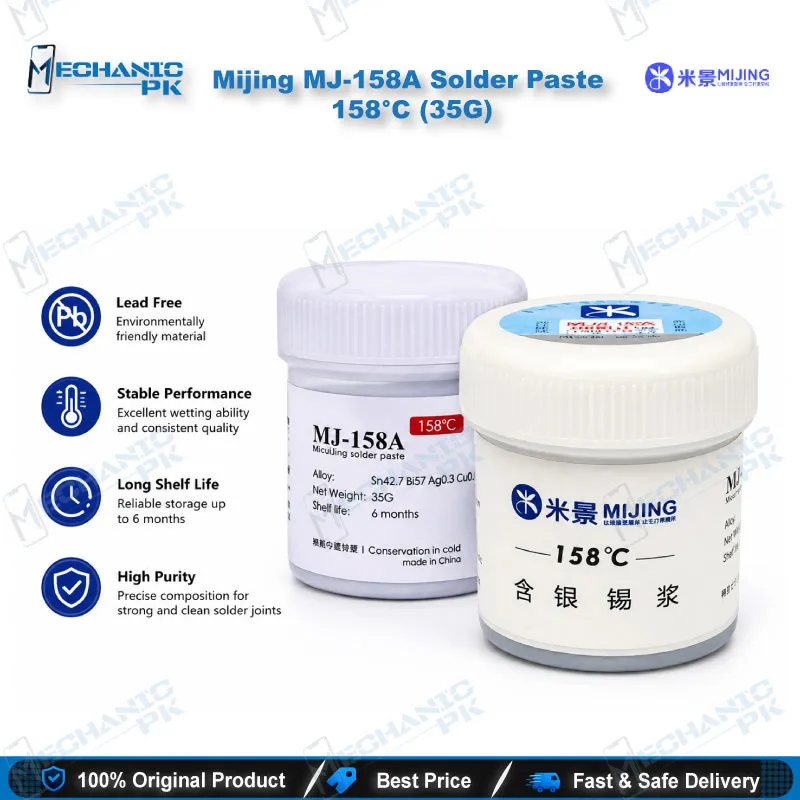
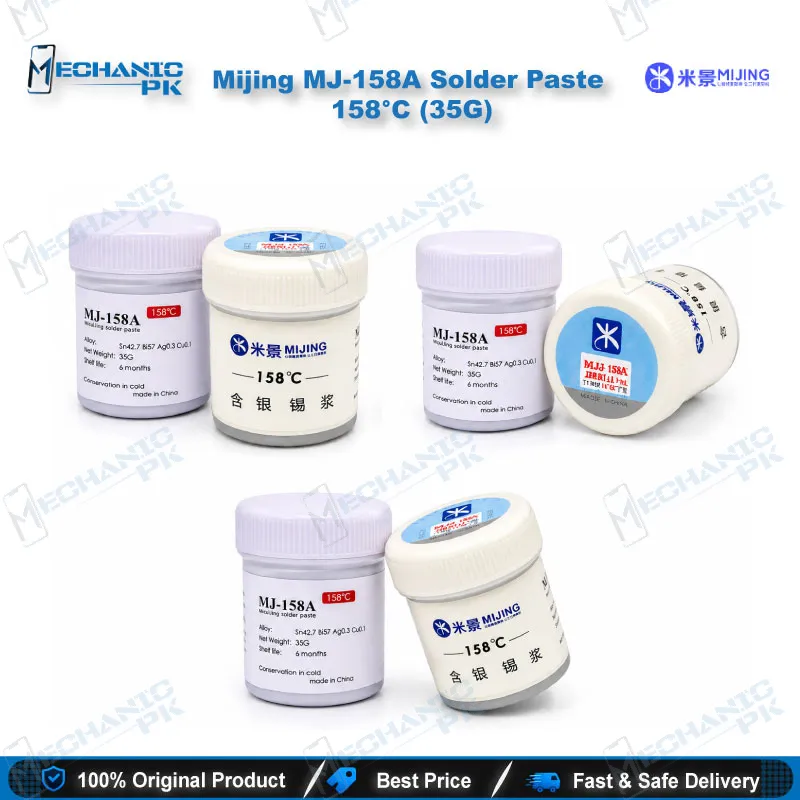
The Mijing MJ-158A solder paste gives you a 158°C melting point in a lead-free, halogen-free formula, supplied in a 35g unit for mobile motherboard rework. Mijing positions it as the medium-temperature grade in its range, and the formula includes silver particles for strong, bright joints. The powder measures 1–10μm, so it spreads evenly across fine BGA, CPU, IC and SMD pads. Technicians use it for reballing, chip refitting and pad rework on smartphone and tablet boards. If you run a repair bench or service center in Pakistan and want a spec-clear 158°C lead-free option, this paste fits straight into your hot air and soldering workflow.
In stock
MJ-158A Solder Paste for Mid-Temperature Board Rework
The Mijing MJ-158A solder paste targets technicians who need a lead-free, halogen-free paste that melts at 158°C. Mijing lists it as the medium-temperature grade in its MJ series, sitting above the 138°C low-temperature paste and below the 190°C and 217°C grades. The formula includes silver, and the powder size runs 1–10μm. Together, those two traits shape how the paste behaves on fine-pitch pads when you reball a CPU, refit a BGA chip or rework an SMD component on a mobile motherboard. The 35g pack suits daily bench use in a repair shop or service center.
Powder and Flux Characteristics
Mijing builds the MJ-158A from high-purity tin paste with added silver particles. The fine 1–10μm powder spreads smoothly across small pads, so you pull uniform solder beads instead of uneven, lumpy deposits. The paste stays fine and viscous, which helps it hold its shape on a pad or stencil opening until you apply heat. Mijing designs the formula to avoid foaming and to resist oxidation, and the reflowed joints come out bright and complete, with good conductivity. Because the paste is lead-free and halogen-free, you work with a cleaner chemistry than a leaded paste gives you, and you keep a single consumable that suits many chip-level jobs on your bench.
Where 158°C Fits in Your Repair Workflow
A 158°C melting point lets you reflow at a lower target than the 190°C and 217°C grades, so you can match the paste to the board and component in front of you. The typical sequence starts with a clean chip and clean board pads. You apply a thin, even layer of paste through the stencil from your reballing kit, seat the chip on the pads, and reflow it with your hot air station at a profile you control. For smaller SMD parts, you tin the pads with your soldering station and refit the component. Charging issue, hang on logo and dead phone repairs often end at this chip-level refit, and a consistent paste layer keeps the result predictable. This is also the point where IC change karna jobs on CPU, power and charging ICs become repeatable instead of hit and miss.
Bench Practice for Cleaner Joints
Clean every pad before you apply paste, because old solder residue stops the new layer from wetting evenly. Keep the layer thin: excess paste bridges fine-pitch pads and forces you to repeat the job. Align each ball with its pad under a microscope before you apply heat, since you cannot correct a misaligned chip after reflow without lifting it again. Hold the board flat on a PCB holder during reflow so the chip stays seated. After the joint cools, inspect the edges for uniform beads, then check continuity and shorts with your multimeter before you power the board. When you rework boards near eMMC, UFS or ISP pinout points, that same discipline protects the pads you still need for programming and testing. Pair the paste with flux and clean tools, and you get joints you can trust on the first attempt.
| Weight | 0.35 kg |
|---|
Key Features
- 158°C medium-temperature melting point
- Lead-free and halogen-free formula
- Silver particles added to the paste
- Fine 1–10μm powder size
- Fine, viscous, high-purity paste texture
- No foaming and resists oxidation
- Uniform solder beads with bright, strong joints
- 35g pack for daily bench use
Specifications
| Brand | MiJing |
|---|---|
| Model | MJ-158A |
| Category | Solder Paste |
| Technology | Lead-free, halogen-free, silver-containing solder paste |
| Melting Point | 158°C |
| Particle Size | 1–10μm |
| Net Weight | 35g |
| Compatibility | Universal — not device-specific; suited to chip-level work on mobile phone motherboards |
Common Repair Uses
- Chip-level soldering on mobile phone motherboards
- BGA reballing
- CPU reflow and refitting
- IC change karna on mobile boards
- SMD component soldering
- Pad tinning and pad rework
- Charging IC replacement
- Dead phone board repair
- General PCB rework
Compatible Devices
- Universal — chip-level solder paste, not limited to specific phone models
- Smartphone motherboards (brand-independent)
- Tablet motherboards
- CPU chips on mobile boards
- BGA ICs on mobile boards
- SMD components on mobile boards
- Power and charging ICs
- Reballing pads on mobile PCBs
- General PCB rework
FAQ
What is the product name?
What is the brand of this product?
What is the model of this product?
What is this product used for?
Which devices are compatible with this product?
Who should use this product?
What is the melting point of Mijing MJ-158A, and is it lead-free?
What particle size does MJ-158A use, and is it suitable for BGA reballing?
Related products