












Amaoe LPDDR1 Stencil – 0.15mm BGA Reballing Stencil
₨ 1
LPDDR1 Memory Reballing Stencil
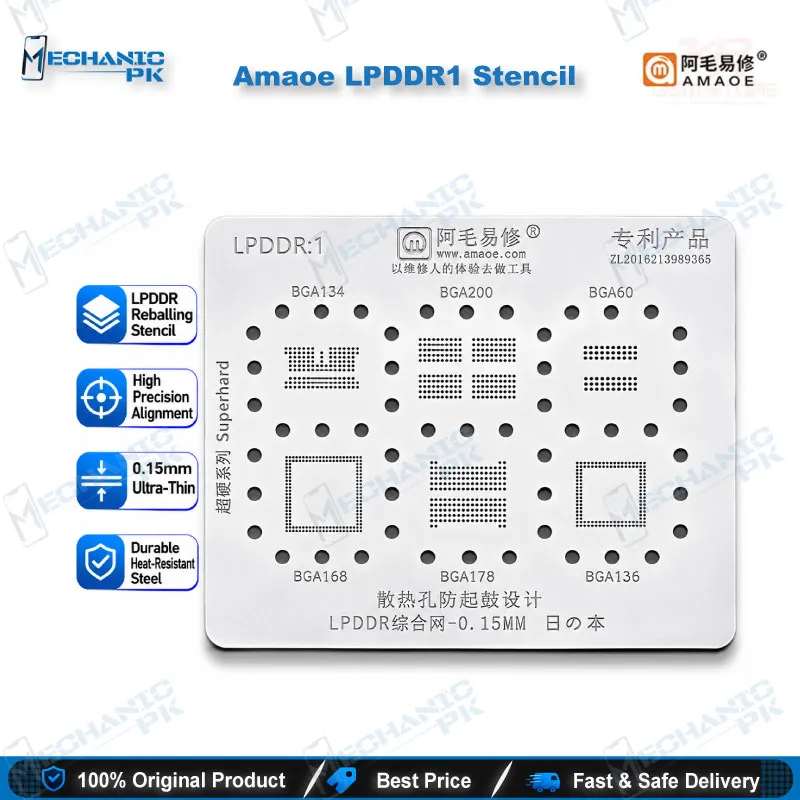
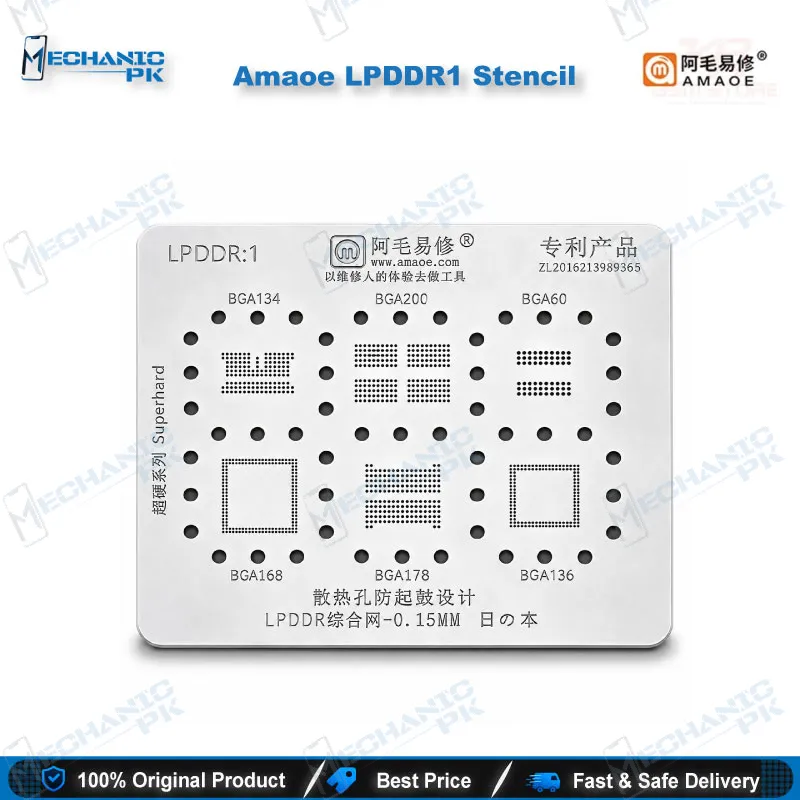
The Amaoe LPDDR1 Stencil is a 0.15mm LPDDR1 BGA reballing stencil built for memory chip rework. One 100mm x 80mm plate covers BGA134, BGA200, BGA60, BGA168, BGA178 and BGA136 packages, so you handle six memory footprints without swapping stencils. You use it after lifting a memory chip to put fresh solder balls back on, whether the phone shows a dead phone, boot loop issue or dead after flash symptom. Suppliers list the plate as nonmagnetic or low-magnetic. Mechanicpk supplies the Amaoe LPDDR1 Stencil to technicians and repair shops across Pakistan who need dependable memory reballing at the bench.
Out of stock
LPDDR1 BGA Reballing Stencil for Memory Chip Rework
The Amaoe LPDDR1 Stencil is a 0.15mm LPDDR1 BGA reballing stencil that covers six memory package layouts on a single plate: BGA134, BGA200, BGA60, BGA168, BGA178 and BGA136. You reach for it when a memory chip comes off the board and needs fresh solder balls before it goes back on. One plate replaces six separate stencils, so your bench stays organized and your memory rework jobs start faster. Mechanicpk supplies it to repair shops across Pakistan that handle LPDDR and eMMC memory work week after week, and it fits the way professional technicians structure a reballing station.
Reballing Job Flow and Package Coverage
The stencil follows a straightforward job flow. You lift the chip with your hot air station, clean the board pads, clean the chip underside, then fix the chip in position and apply paste or balls through the apertures. The 0.15mm thickness sets how much solder each aperture deposits, and the 100mm x 80mm plate size gives you room to hold and align the sheet without crowding the chip. Suppliers list the plate as nonmagnetic or low-magnetic, which matters if you work on a magnetic reballing platform.
Each of the six packages sits on the same sheet, so you match the stencil to the chip before you heat anything. Read the package marking on the chip, compare the ball layout against the matching section of the plate, and confirm the fit under your microscope. A wrong match wastes a chip, so take the extra minute. The plate targets BGA134, BGA200, BGA60, BGA168, BGA178 and BGA136 footprints only. Processor and RF packages need their own dedicated stencils, so keep this one for memory rework and pick CPU-specific plates for those jobs.
Where It Fits in Your Repair Workflow
Memory faults show up as a dead phone, a boot loop issue, a hang on logo, or a dead after flash case where the software side checks out and the hardware fault sits underneath. After you confirm the fault with an eMMC programmer, ISP pinout tool or UFS adapter reading, you pull the memory chip, reball it, and refit it. The stencil handles the reball step in that chain, and a clean reball directly affects whether the chip reads correctly after refit.
Around the stencil you build a small kit. A soldering station handles pad cleanup, a PCB holder keeps the board steady, a reballing kit supplies balls and flux, a multimeter checks continuity after refit, and a test box confirms that the phone boots and flashes cleanly. Treat the stencil as one precise step inside that larger bench setup rather than a standalone fix.
Why Technicians Choose This Stencil for Memory Work
You get broad package coverage from a recognised Amaoe design without carrying a drawer of single-package plates. The six layouts cover the LPDDR and eMMC memory footprints you see most in everyday board repair, which suits shops that run steady memory rework.
Consistency matters more than speed in memory rework. A stencil that matches the package every time lets you repeat the same steps on each board: align, secure, apply, lift, inspect. You then check the balls for even size and spacing before the chip goes back on the board. That inspection habit catches bridged or missing balls early, which saves you from a second heat cycle on a chip that already took one trip through the hot air station. Keep the stencil clean between jobs so residue never clogs the apertures.
Pair this LPDDR1 BGA reballing stencil with a good hot air station and a steady hand under the microscope, and you get a repeatable reballing step you can trust. Buy it alongside your other reballing tools from Mechanicpk and keep every memory rework job on one reliable process.
| Weight | 0.11 kg |
|---|
Key Features
- Single 0.15mm plate covering six memory packages
- Supports BGA134, BGA200, BGA60, BGA168, BGA178 and BGA136 layouts
- 100mm x 80mm plate size for comfortable handling and alignment
- Nonmagnetic or low-magnetic plate per supplier listings
- 0.15mm thickness for controlled solder deposit per aperture
- Suited to LPDDR and eMMC memory reballing work
- Replaces a drawer of single-package stencils on your bench
- Pairs with hot air stations, reballing kits and microscopes
Specifications
| Brand Entity | Amaoe |
|---|---|
| Product Entity | Amaoe LPDDR1 Stencil, 0.15mm BGA reballing stencil |
| Technology Entity | BGA reballing, LPDDR1 memory, eMMC memory, solder ball re-implanting |
| Compatible Device Entities | BGA134, BGA200, BGA60, BGA168, BGA178, BGA136 memory packages |
| Repair Process Entity | Memory chip reballing, PCB rework, hot air rework |
| Industry Entity | Mobile phone repair, GSM repair, Pakistan mobile repair market |
Common Repair Uses
- Reballing a memory chip after hot air removal
- Re-implanting solder balls on LPDDR chips
- Reballing eMMC chips in the supported packages
- Memory rework on a dead phone with a suspected hardware fault
- Memory rework on dead after flash cases with a hardware cause
- Memory chip reball during boot loop or hang on logo troubleshooting
- Refitting a reballed memory chip onto the PCB
- Preparing a memory chip for reuse after cleaning
Compatible Devices
- Not phone-model specific. Compatibility follows the memory chip package type, so it works with any board carrying a chip in one of these packages.
- BGA134 memory chip package
- BGA200 memory chip package
- BGA60 memory chip package
- BGA168 memory chip package
- BGA178 memory chip package
- BGA136 memory chip package
- LPDDR memory chips in the packages above
- eMMC memory chips in the packages above
FAQ
What is the product name?
What is the brand of this product?
What is the model of this product?
What is this product used for?
Which devices are compatible with this product?
Who should use this product?
Which BGA package sizes does the Amaoe LPDDR1 stencil support?
Can the Amaoe LPDDR1 stencil reball eMMC chips?
Related products