


















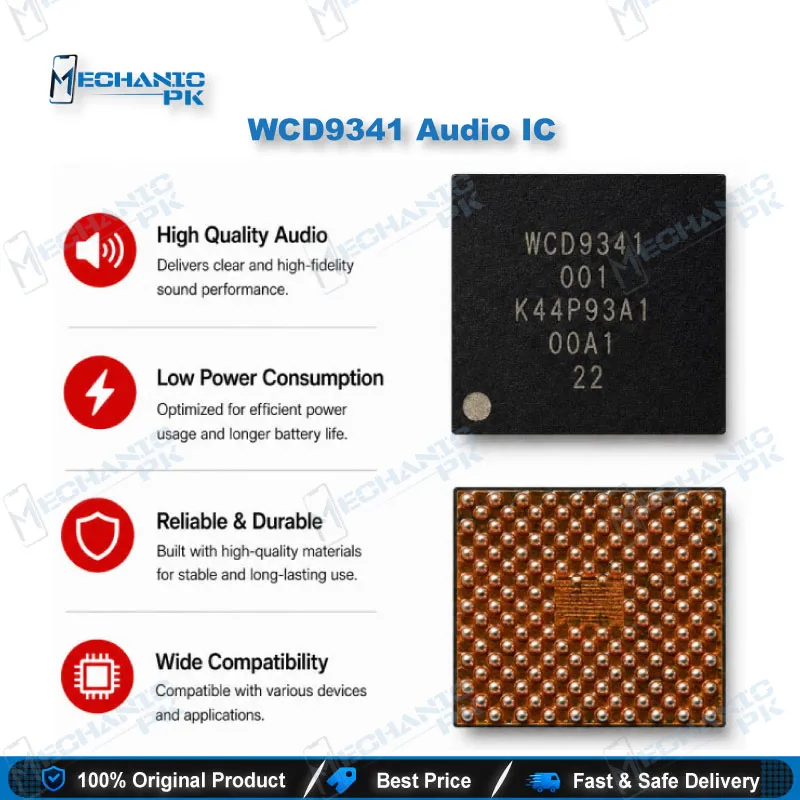
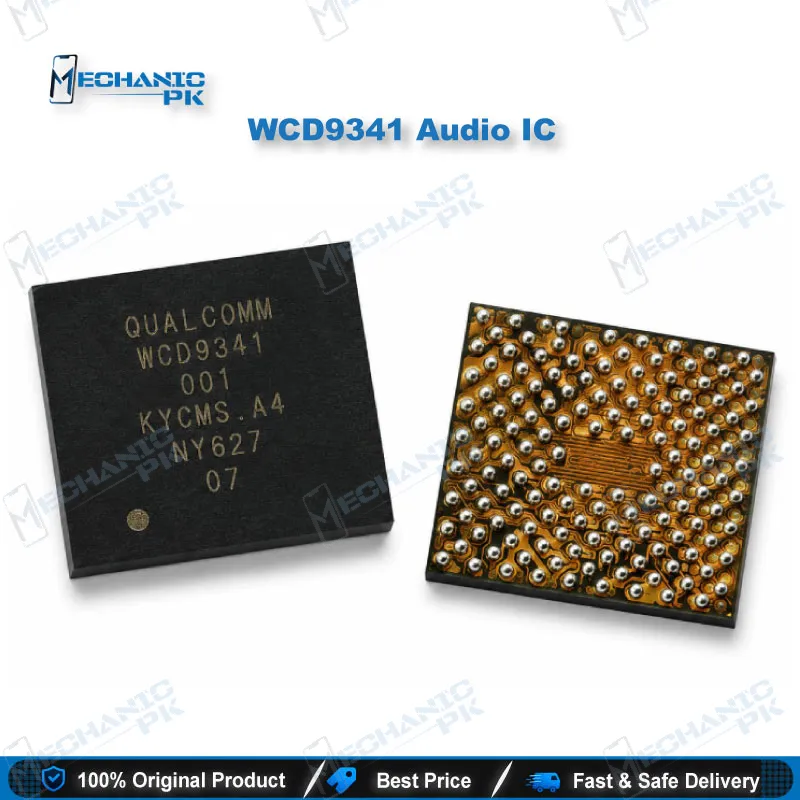
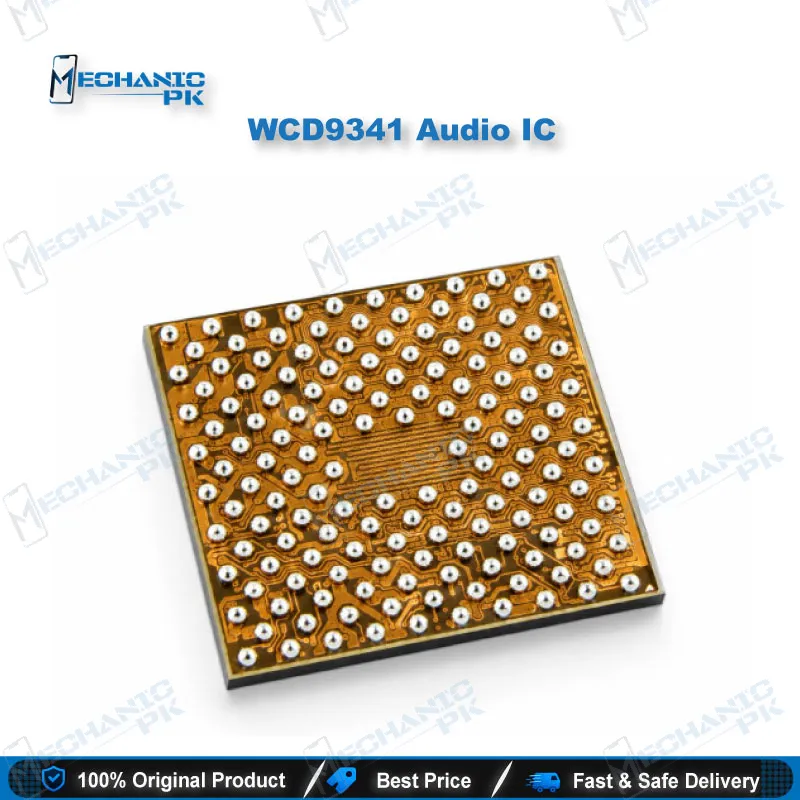
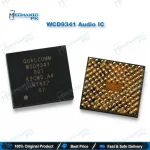
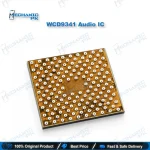
Qualcomm WCD9341 Audio Codec IC for Snapdragon 845/855
₨ 300
Qualcomm WCD9341 Aqstic Audio Codec for Snapdragon Boards
The Qualcomm WCD9341 is the standalone Aqstic Hi-Fi audio codec that runs the earpiece, headphone, microphone and headset-detection paths on Snapdragon 845 and 855 boards, including the Snapdragon versions of the Galaxy S9, Note9 and S10. One failed codec can take out call audio, recording and wired headset detection at the same time, so one replacement clears a whole cluster of audio hardware faults. The chip delivers up to 130 dB playback dynamic range and 24-bit/192 kHz recording, and it connects over SLIMbus, I2S/I2C and SoundWire. Match the marking on your original IC, fit the new one with hot air, then test every audio path.
Qualcomm WCD9341 Audio IC for Snapdragon Board-Level Audio Repair
The WCD9341 audio IC is Qualcomm’s standalone Aqstic Hi-Fi codec, built to pair with Snapdragon 845 and Snapdragon 855 flagship platforms. It sits between the processor and almost every analog audio path on the board: earpiece, headphone output, microphones, headset detection and the smart speaker amplifier link. When this codec fails, the phone rarely shows a single symptom. You see no sound in calls, dead microphones, a headset that never detects, or a voice assistant that stops waking, often all on one board. Mechanicpk supplies the WCD9341 by exact part marking for technicians who diagnose down to IC level and need the correct Qualcomm part, not a close match from the parts drawer.
Inside the WCD9341: Codec Architecture That Matters at the Bench
Knowing what the WCD9341 controls tells you why one failed chip explains so many complaints. The codec carries five DACs and seven dedicated interpolators for playback, plus six audio ADCs and one VBAT ADC for capture and monitoring. It talks to the Snapdragon over SLIMbus with two data lanes, 16 transmit ports and 8 receive ports, and it also supports I2S/I2C. An integrated SoundWire controller drives external smart speaker amplifiers, so a loudspeaker fault can trace back to this IC even when the amplifier itself measures fine. Multi Button Headset Control (MBHC) handles headset insertion, type detection, up to eight headset buttons, over-current detection and impedance measurement. Active noise cancellation, sidetone paths and mic activity detection (MAD) also run inside the codec. On the output side, it drives a Class-H differential earpiece and stereo single-ended headphones. So when a board shows a silent earpiece, a dead mic and an undetected headset together, suspect the codec before you swap three separate parts.
Hi-Fi Playback and Always-On Voice Performance
Qualcomm positions the WCD9341 as its flagship mobile codec, and the published figures back that up. Playback reaches up to 130 dB dynamic range with THD+N below -109 dB, and the integrated DAC handles native DSD formats including DSD64, DSD128, DoP and DXD. Recording runs at 24-bit resolution up to 192 kHz with up to 109 dB dynamic range. A built-in codec DSP keeps voice activation alive at around 0.65 mA and supports two wake-up words at the same time, which is why Google Assistant and similar always-listening features depend on a healthy codec. Low-power playback drops to roughly 6 mW. For your customer, a correct replacement restores the full audio quality the phone shipped with, not just basic call sound. Always read the marking on the original chip before ordering, because Qualcomm’s WCD9340 shares the same driver family and sits on some boards in its place.
Where the WCD9341 Audio IC Fits in Your Repair Workflow
Start with the cheap checks. Confirm the fault across the earpiece, loudspeaker, microphone and headphone paths, and rule out flex cables, mic modules and speakers before you commit to IC change karna. Confirm the board variant next. Samsung shipped Galaxy S9, Note9 and S10 models in both Snapdragon and Exynos versions, and only the Snapdragon boards carry this codec. Remove the EMI shield, inspect the codec area under a microscope for corrosion or cracked joints, and measure its supply rails and bus lines against the schematic with a multimeter. If the hardware fault points to the codec, lift it with a hot air station on a stable PCB holder, clean the pads, and use a reballing kit to prepare fresh solder. Let the board cool on its own after reflow, because forced cooling stresses neighbouring joints around the processor. After you fit the new WCD9341, verify every path: call audio, recording, headset detection, button response and voice wake-up. A stereo microscope is the natural upgrade for this work, since codec joints leave little room for error and a clear view saves you a second reflow.
| Weight | 0.1 kg |
|---|
Key Features
- Five DACs and seven dedicated interpolators for playback
- Six audio ADCs plus one VBAT ADC for capture and monitoring
- SLIMbus interface with two data lanes, 16 TX and 8 RX ports, plus I2S/I2C support
- Integrated SoundWire controller for smart speaker amplifiers
- MBHC with insertion, type detection, up to 8 buttons, over-current and impedance detection
- Up to 130 dB playback dynamic range with THD+N below -109 dB
- Native DSD support: DSD64, DSD128, DoP and DXD
- Always-on codec DSP with dual wake-word support at about 0.65 mA
Specifications
| Brand | Qualcomm |
|---|---|
| Model | WCD9341 |
| Category | Audio Codec IC |
| Compatibility | Snapdragon 845 and Snapdragon 855/855+ platforms |
| Supported Devices | Samsung Galaxy S9, Note9, S10, S10e (Snapdragon variants), Galaxy Note10+ 5G, Galaxy Z Flip |
| Technology | Qualcomm Aqstic Hi-Fi audio codec; SLIMbus, I2S/I2C and SoundWire interfaces |
Common Repair Uses
- No sound from the earpiece during calls
- Microphone not working in calls, voice notes or video recording
- Wired headset not detected or headphone output dead
- Headset buttons not responding
- Loudspeaker silent while the speaker amplifier tests fine (SoundWire path)
- Voice assistant wake-up not responding
- Codec replacement after liquid damage corrodes the audio section
- Codec replacement after a drop cracks or lifts its joints
Compatible Devices
- Verified on Snapdragon 845/855 boards. Exynos variants do not use this IC.
- Samsung Galaxy S9 (Snapdragon 845 variant)
- Samsung Galaxy Note9 (Snapdragon 845 variant)
- Samsung Galaxy S10 (Snapdragon 855 variant)
- Samsung Galaxy S10e (Snapdragon 855 variant)
- Samsung Galaxy Note10+ 5G (Snapdragon variant)
- Samsung Galaxy Z Flip
- Snapdragon 845 reference platforms (DragonBoard 845c, Lenovo Yoga C630)
- Other Snapdragon 845/855 boards. Confirm the WCD9341 marking on the original IC first
FAQ
What is the product name?
What is the brand of this product?
What is the model of this product?
What is this product used for?
Which devices are compatible with this product?
Who should use this product?
Do Exynos Galaxy S9 and S10 phones use the WCD9341 audio IC?
Can a faulty WCD9341 cause both no sound and a dead microphone?
Related products