















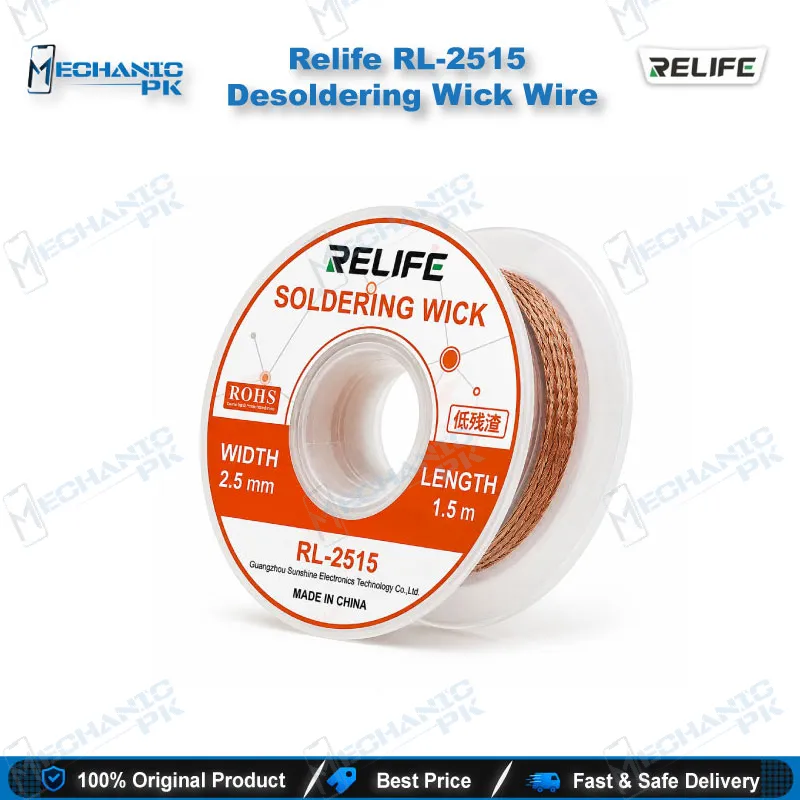
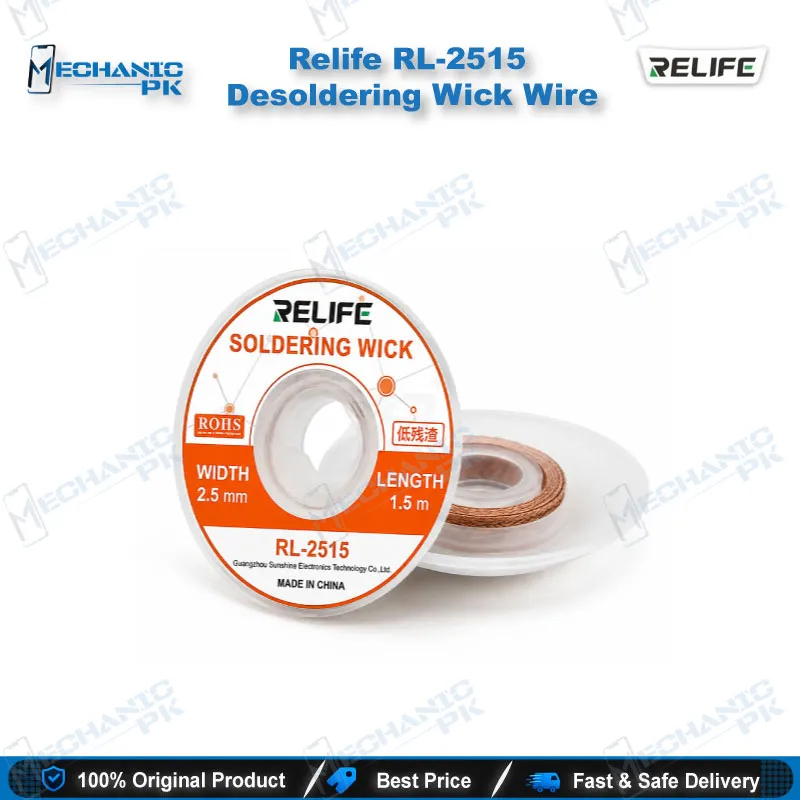
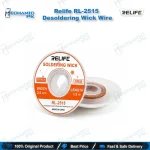
Relife RL-2515 2.5mm No-Clean Desoldering Wick
₨ 300
2.5mm No-Clean Desoldering Wick for SMD and Connector Rework
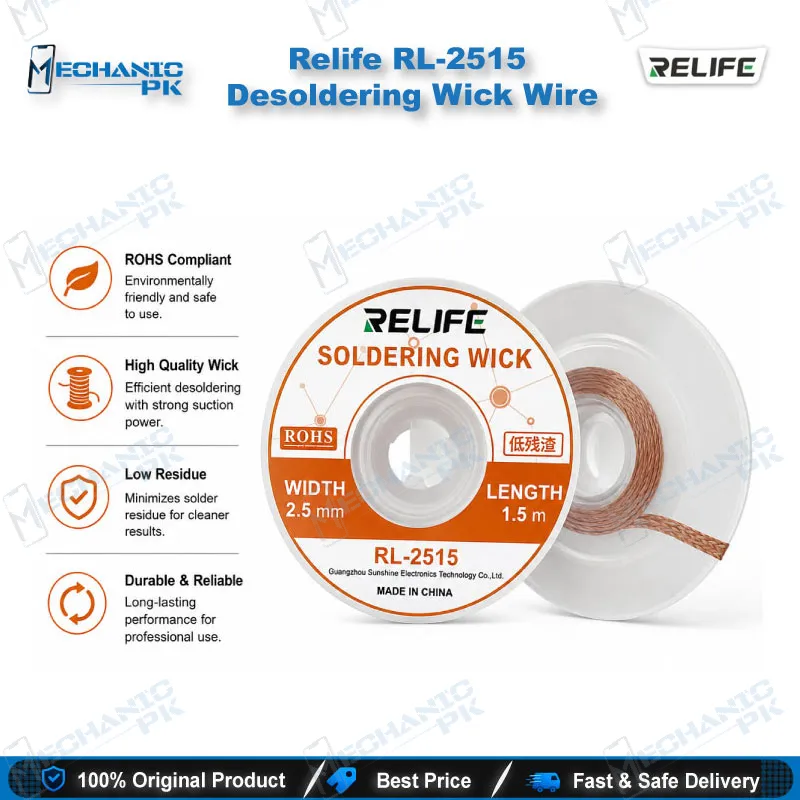
This Relife 2.5mm desoldering wick pulls molten solder off pads, through-hole leads, and shield can edges using a fluxed copper braid. The no-clean formulation leaves halide-free, non-conductive residue, so many boards can skip the cleaning step. The thumb-wheel dispenser keeps the braid under control during longer pulls, and the sealed body protects the wire from moisture between jobs. It fits technicians who rework connectors, IC pins, and mainboard solder joints every day.
Out of stock
Relife 2.5mm No-Clean Desoldering Wick Explained
Every rework bench reaches the point where excess solder has to go before a part can come off cleanly or a new one can sit flat. A 2.5mm no-clean desoldering wick handles that job through capillary action: the copper braid draws molten solder into its weave as you hold it against the joint. This Relife wick suits mid-size pads and connector pins, where a narrower braid saturates too slowly and a wider one can pull more solder than the joint needs. Used with a stable iron and a clean tip, it keeps rework time short and pads intact.
Where the 2.5mm Width Fits Your Repair Workflow
Width matters more than most technicians expect. A 2.5mm braid covers the contact area of many connector legs and small IC terminals, so one pass can clear a row instead of forcing you to work pin by pin. Cut off the used section first, then lay a fresh length over the joint and press it down with the iron tip. Hold until the solder rises into the braid, then lift both together. If the braid saturates before the joint clears, move to a fresh section instead of reheating the same spot, because repeated heating raises the risk of lifting pads on boards that have already been reworked.
Flux Chemistry and Residue Behavior
The braid carries a no-clean flux that activates under heat and helps molten solder flow into the copper weave. Relife describes the residue as halide-free and non-conductive, which is why many technicians leave it on the board after a visual check. Inspect the joint under magnification before you power the board, especially in high-density areas where any leftover film could matter. If your shop follows a strict cleaning or conformal coating standard, follow that process instead of relying on the no-clean label alone. Use the flux result as a guide for the next step, not as a substitute for inspection.
Dispenser Design and Storage
The thumb-wheel dispenser lets you feed braid with one hand while the other hand holds the iron. Its sealed body guards the wire from humidity, so the spool stays in better condition across a long run of jobs. Keep the lid closed between sessions and store the dispenser flat, away from heat sources and direct sunlight. Cut the braid with clean snips rather than the iron tip, which avoids leaving carbon deposits on the cut end. A steady feed also helps you measure the braid length per joint, which keeps material use consistent across a busy repair day.
| Weight | 0.5 kg |
|---|
Key Features
- No-clean flux leaves halide-free, non-conductive residue
- 100% copper braid for steady solder absorption
- 2.5mm width for mid-size pads and connector pins
- Fluxed braid activates under heat for faster wicking
- Thumb-wheel dispenser for one-handed feeding
- Sealed dispenser protects the braid from moisture
- Suited to lead-free solder removal work
- Reduces cleaning steps on many boards
Specifications
| Brand | Relife |
|---|---|
| Category | Desoldering Wick |
| Width | 2.5mm |
| Technology | Fluxed copper braid, no-clean |
| Material | 100% copper |
Common Repair Uses
- Clearing solder bridges between IC pins before reflow
- Removing old solder from a connector row before a new part fits
- Cleaning pads before reattaching a component
- Freeing component leads during through-hole replacement
- Pulling excess solder from shield can edges during mainboard repair
- Preparing pads on a board that failed a previous repair
- Clearing solder from charging port or FPC connector pads
- Tidying joints after an iron tip has overfilled a pad
Compatible Devices
- Universal, not device-specific: general-purpose solder removal on PCBs
- Through-hole component leads on mainboards
- SMD pads and small component terminals
- Board-to-board and FPC connector pins
- Shield can seams on phone mainboards
- Excess solder bridges between adjacent pins
- Lead-free solder joints, per the maker’s intended use
- Charging port and connector solder pads
FAQ
What is the product name?
What is the brand of this product?
What is the model of this product?
What is this product used for?
Which devices are compatible with this product?
Who should use this product?
Does the residue need cleaning after use?
Which width should I choose for SMD pads?
Related products