
















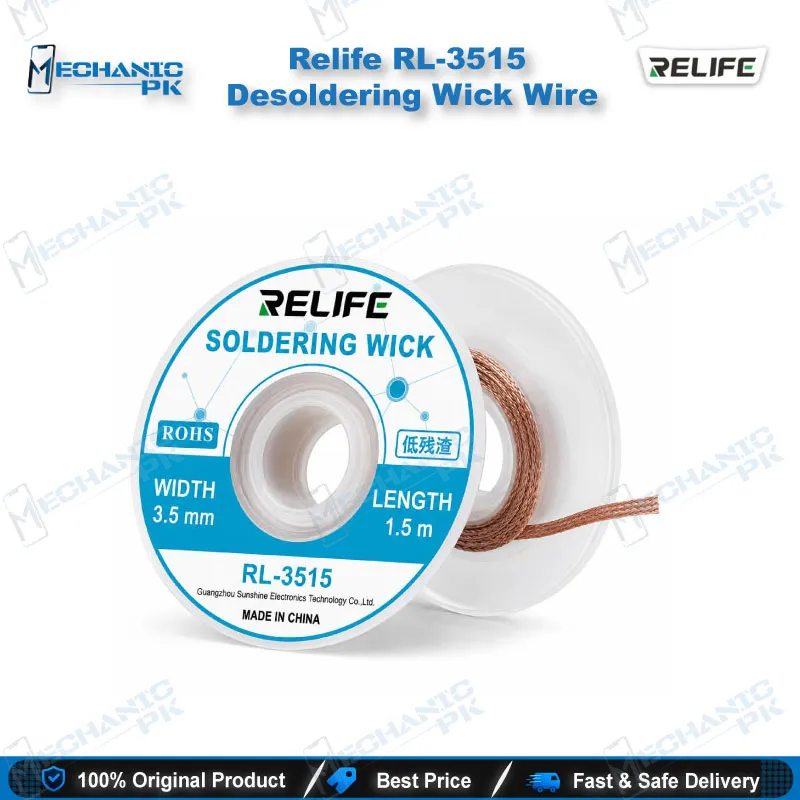
Relife RL-3520 3.5mm No-Clean Desoldering Wick
₨ 1
H2: 3.5mm Desoldering Wick for Larger Pads
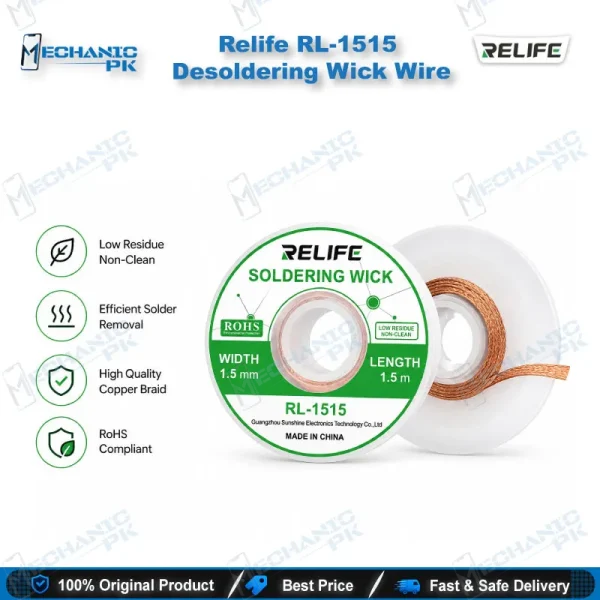
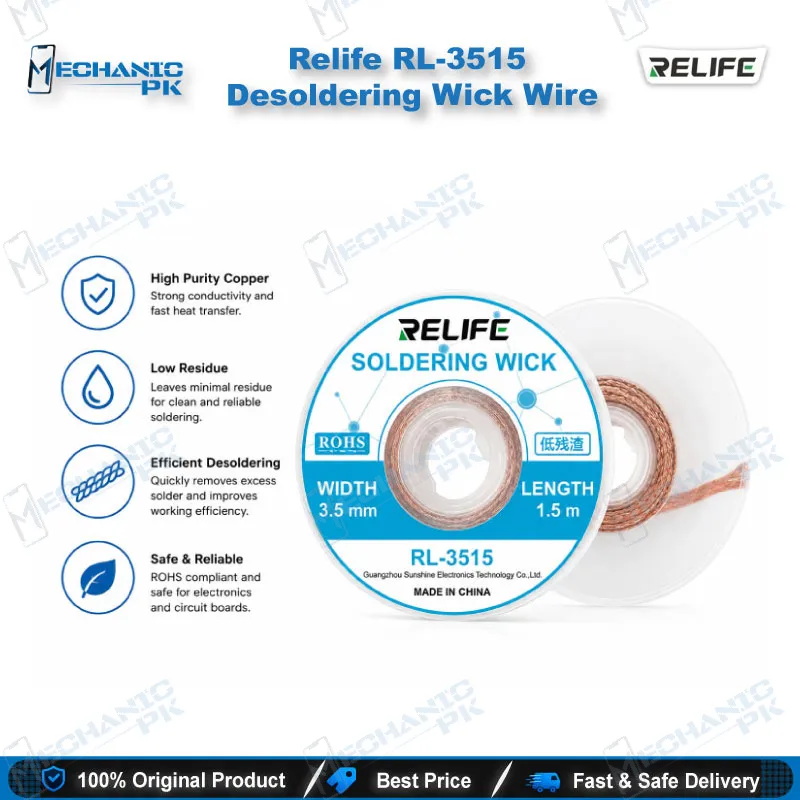
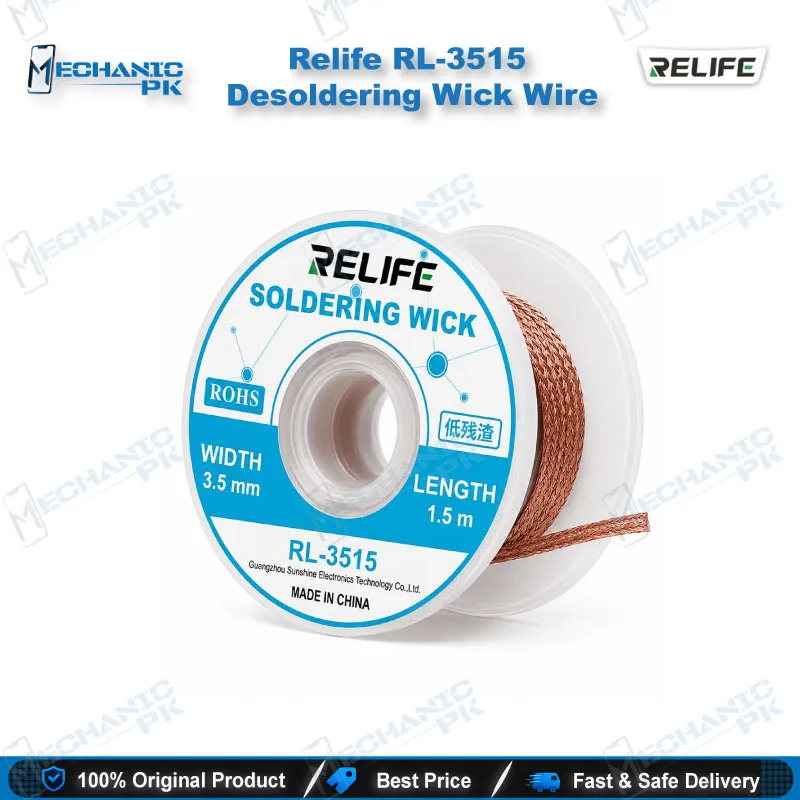
The Relife RL-3520 is a 3.5mm desoldering wick, 2.0 meters long, woven from 100% copper. The wider braid suits larger solder pads and thick joints, where a narrow wick takes too long to clear excess solder. The residue is halide-free and non-conductive, so you can leave the joint as it is after removal. A thumb-wheel dispenser with a sealed housing keeps the braid protected from moisture between jobs. For technicians clearing bridges, pads, and through-hole pins, this wick gives your repair bench a dependable tool for everyday board rework.
Out of stock
H2: 3.5mm Desoldering Wick for Board-Level Rework
A 3.5mm desoldering wick fits repair jobs where wide solder pads, connector pins, and through-hole joints hold more solder than a fine braid can absorb. The Relife RL-3520 gives you a 3.5mm braid on a 2.0 meter length, so one dispenser covers many jobs before you need a refill. Solder wicking works through capillary action. The woven copper draws molten solder into the braid as you heat it, which leaves the pad clean and flat. Your results depend on pairing the right width with the right heat and flux, so this section explains how the RL-3520 fits into a typical repair bench workflow.
H3: Where This Wick Fits in Your Repair Workflow
Most board repairs follow a sequence: inspect the board, identify the excess solder or bridge, clear the joint, then inspect again before you refit or test. The wick belongs at the clearing stage. You use it after a fault points to a joint you need to open, such as a bridge across connector pins or a blob of solder left on a through-hole lead. Your diagnosis should come first, because wicking the wrong joint wastes time and can damage the pad. When you clear a joint properly, the next stage (inspection under magnification and continuity testing) becomes faster and more reliable. Use the wick as one step in that chain rather than as a shortcut past diagnostics.
The wider 3.5mm braid also matters when you compare it with narrower options. A wider braid holds more solder per pass, so you need fewer passes on heavy joints. The trade-off is that a wide braid can pull more heat into a small pad, so you should match the width to the joint rather than choosing the widest wick by default. For fine-pitch SMD work, a narrower wick usually gives you more control. For larger pads and connector pins, the RL-3520 gives you the capacity to finish the job in fewer steps, which reduces the time the board spends under heat.
H3: Working Technique with a Dispenser Wick
Start with a clean tip. Load a small amount of flux onto the joint if the pad looks dull or the solder resists flowing, because flux helps the braid wet and absorb the solder. Place the wick flat over the joint, then press the tip of your iron onto the braid on top of the solder. Hold the heat until the solder melts and climbs into the copper. Lift the wick away from the joint once the braid looks saturated, and do not drag it across the pad. Cut the used section and repeat with fresh braid until the joint looks clean.
The thumb-wheel dispenser controls how much wick you feed out at a time. Feed only the length you need for each joint, so the rest of the spool stays protected. Keep the iron temperature moderate and avoid leaving the tip on one spot for too long, because excess heat can lift a pad or damage the solder mask. Move steadily from one pad to the next, and let the board cool before you inspect the result. A clean joint shows a smooth, even surface with no leftover bridge or hanging solder.
H3: Storage and Long-Term Use
Store the RL-3520 in its sealed dispenser when you are not using it. The seal protects the copper braid from humidity, which can dull the copper and reduce absorption over time. Keep the dispenser away from damp shelves and open solder baths, and close the thumb wheel fully after each job. A clean, dry wick absorbs solder faster and leaves a cleaner joint, which means fewer passes and less stress on the board.
Plan your spool use around your workload. Since the wick is 2.0 meters long, mark the length you use each week so you can see how fast the spool empties. Cut off any section that looks dark, oxidized, or flattened before you start a job, because those sections absorb poorly and can make the joint worse. With consistent storage and a few simple habits, this wick stays ready for the next repair, whether you are clearing a connector on a dead phone board or preparing a pad for a fresh component.
| Weight | 0.5 kg |
|---|
Key Features
- 3.5mm braid width for larger pads and joints
- 2.0 meter length for extended use
- 100% copper construction
- Halide-free, non-conductive residue
- No-clean design, so the board does not need post-removal cleaning
- Thumb-wheel dispenser for controlled feeding
- Sealed dispenser protects the wire from moisture
- Stainless steel mouth on the dispenser
Specifications
| Brand | Relife |
|---|---|
| Model | RL-3520 |
| Category | Desoldering Wick |
| Compatibility | Universal — not device-specific |
| Technology | Halide-free, low-residue, no-clean flux; thumb-wheel dispenser with sealed housing |
| Material | 100% copper |
| Dimensions | 3.5mm width × 2.0m length |
Common Repair Uses
- Clearing solder bridges between connector pins
- Removing excess solder from through-hole leads
- Cleaning wider SMD pads before refitting a component
- Freeing a joint before a board-level component change
- Cleaning solder left on power and ground pads
- Preparing pads for a fresh solder joint
- Removing solder blobs from capacitor and resistor leads
- Clearing excess solder during general PCB rework
Compatible Devices
- Universal, not tied to any device model
- Through-hole pins on PCBs
- Wider chip component solder pads
- Connector pins and solder bridges
- Power and ground pads on board-level repairs
- Capacitor and resistor solder joints
- Wider solder joints during PCB rework
- Excess solder on general electronics boards
FAQ
What is the product name?
What is the brand of this product?
What is the model of this product?
What is this product used for?
Which devices are compatible with this product?
Who should use this product?
Is the RL-3520 a no-clean desoldering wick?
What width suits larger solder pads on a mobile board?
Related products