
















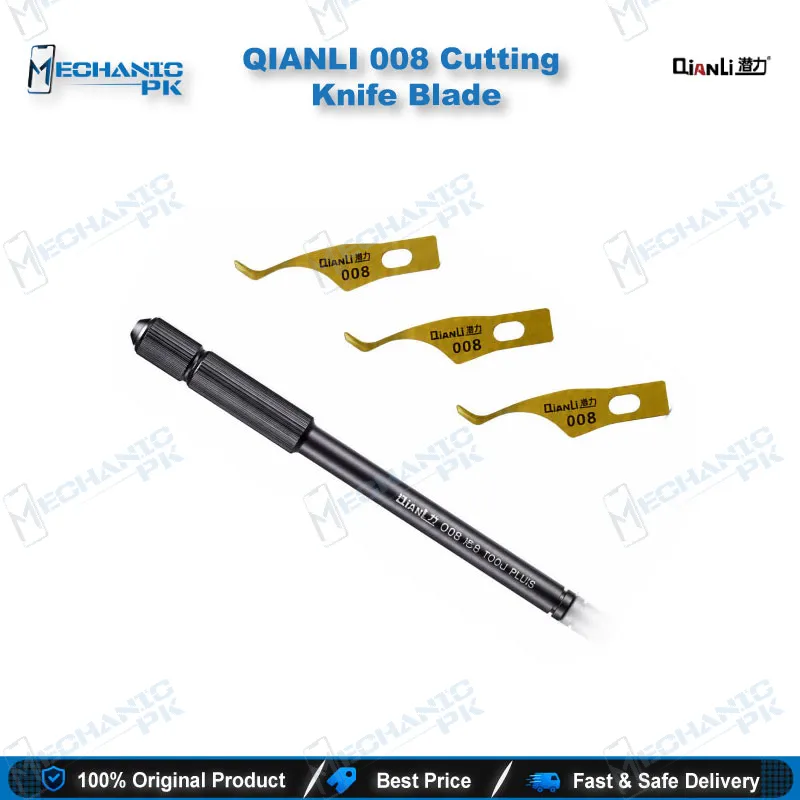
QIANLI 008 Cutting Knife Blade for BGA Underfill Removal
₨ 1
QIANLI 008 Underfill Removal Blade for BGA Glue Cleaning
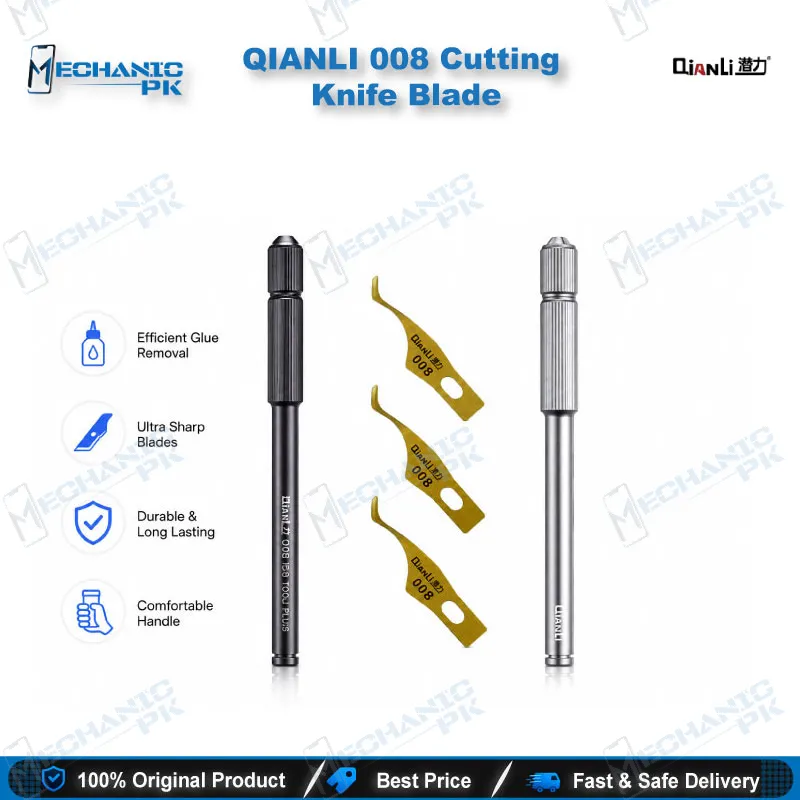
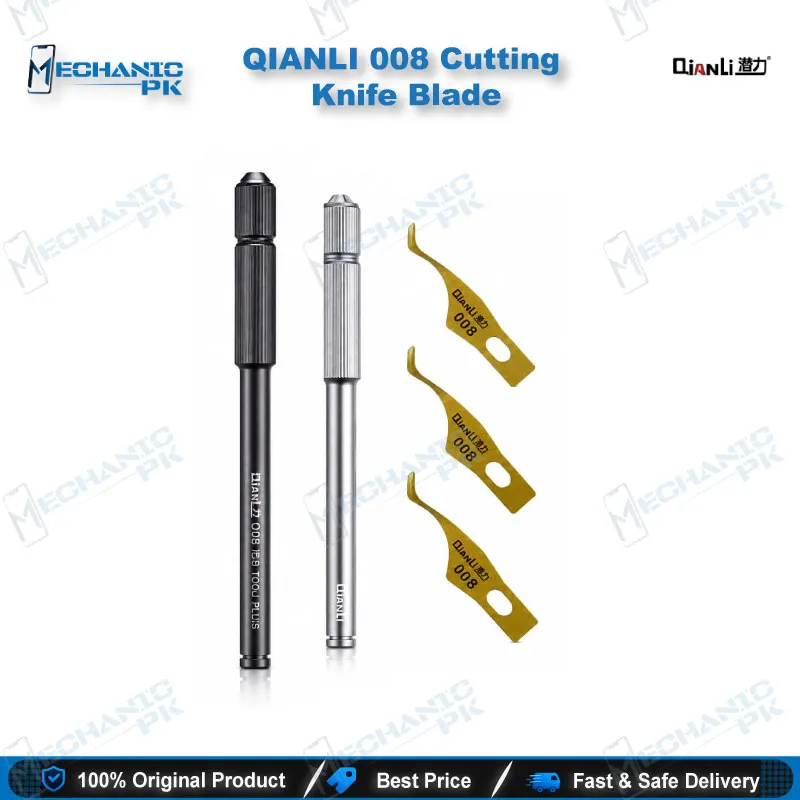
The QIANLI 008 is a hand-sharpened underfill removal blade built for degumming sealed BGA chips on mobile phone motherboards. Its ultra-thin edge slides into the sealant line around CPU, NAND, and baseband packages, and the tough blade body keeps the cut clean without lifting pads. You use it before hot air removal, during pad cleanup, and when you prepare a chip for reballing. Mechanicpk lists the QIANLI 008 for Pakistani repair shops that handle IC change karna work every day and need a precise, universal glue cleaning blade at the bench.
Out of stock
QIANLI 008 Underfill Removal Blade for Precision BGA Degumming
The QIANLI 008 underfill removal blade does one job: it separates sealed BGA chips from the glue that locks them to the board. Qianli positions the 008 as a professional glue remover for safe degumming of BGA sealing chips, and the blade geometry reflects that purpose. A manually sharpened, ultra-thin edge enters the adhesive line without prying against the silicon or the solder balls. If you handle CPU, NAND, or baseband packages on phone logic boards, this blade replaces improvised scrapers, cutter tips, and tweezers that gouge pads. Mechanicpk lists it for repair benches across Pakistan that run chip-off and reballing work every week.
Blade Construction and Edge Behavior
Qianli sharpens the 008 by hand, which gives the edge a smooth, sharp profile instead of the rough bevel that stamped blades carry. The thin blade has high toughness, so it flexes slightly under load but does not snap or fold when you push through cured sealant. That combination matters at micro scale. A blade that bends too easily skips along the glue and slips onto the pad. A blade that is too thick cannot reach the narrow gap between chip edge and board. The QIANLI 008 underfill removal blade fits tightly in that gap and cleans the adhesive in one controlled pass, which leaves less residue to scrape afterwards.
Qianli states that the blade removes glue without damaging the pad. Treat that as a design goal rather than a guarantee, because your angle, pressure, and heat still decide the result. Keep the blade nearly flat to the board, work under a microscope, and use short strokes. You protect the solder mask and the pad copper, and you shorten the cleanup that follows chip removal.
Where the 008 Fits in Your Repair Workflow
Underfill and edge sealant turn a simple IC change into a risky lift. Before you apply hot air, you cut the glue around the chip so the package releases when the solder melts. Qianli’s kit notes also describe inserting the blade at the chip edge once the solder reaches its melting point, so the CPU comes up smoothly. The thin body of this mobile repair glue cleaning blade suits that step because it slips in without forcing the package. After the chip lifts, you clear the remaining sealant from the pads and prepare them for reballing or a fresh part.
The 008 sits beside your hot air station, preheater, microscope, and reballing kit rather than replacing any of them. Pair it with a Hot Air Station for controlled heat, a microscope for edge placement, and a BGA Reballing Kit for the rebuild. If you also strip side glue on iPhone-class boards, the Qianli 007 side glue cleaner covers that task, and the multi-blade Qianli 009 set gives you a wider range of blade shapes as your upgrade path. You build a compact glue removal station around the 008 as the dedicated underfill blade.
Choosing the Right BGA Glue Remover Knife Version
The 008 works as a universal hand tool, so it does not depend on a phone brand, model, or chipset platform. Its scope covers any BGA chip that carries underfill or sealant, including CPU, NAND, and baseband packages. Check the version before you order. Qianli updated the 008 to a V2.0 form, and buyers report that older versions offered two usable sides while the updated one offers a single working side, so you change the blade sooner. Confirm with your supplier which version ships. For dead phone, dead after flash, and hang on logo faults that you trace to a sealed chip, the 008 gives you a clean start for IC change karna and chip-off programming.
| Weight | 0.9 kg |
|---|
Key Features
- Hand-sharpened edge with a sharp, smooth profile
- Ultra-thin blade for tight gaps around BGA chips
- High toughness that resists snapping and bending under load
- Tight fit and clean cutting action on cured sealant
- Designed for safe degumming of BGA sealing chips
- Built to clean glue without damaging the pad
- Universal tool that works across phone brands
- Suits CPU, NAND, and baseband glue removal
Specifications
| Brand | Qianli |
|---|---|
| Model | 008 (V2.0) |
| Category | Glue Removal Blades / BGA Repair Knives |
| Compatibility | Universal, for BGA chips sealed with underfill or edge glue |
| Supported Devices | Universal — not device-specific |
| Technology | Hand-sharpened ultra-thin blade |
Common Repair Uses
- Glue removal and pad preparation around sealed BGA chips.
- Cutting underfill around a CPU before hot air removal
- Clearing sealant from NAND edges before chip-off for replacement or reprogramming
- Inserting the thin blade at solder melting point to lift a CPU cleanly
- Cleaning leftover glue from pads after a chip lifts
- Preparing pads for BGA reballing
- Removing sealant from baseband chips during IC change karna jobs
- Starting a hardware fault repair on a dead phone traced to a glued chip
Compatible Devices
- Universal — not device-specific. The blade works on sealed BGA chip types, not on a fixed device list.
- BGA CPU packages sealed with underfill or edge glue
- NAND flash chips on phone motherboards
- Baseband chips with sealant around the edge
- iPhone-class logic boards where chips carry sealant
- Android phone motherboards with glued BGA packages
- Any BGA chip that needs safe degumming before removal
FAQ
What is the product name?
What is the brand of this product?
What is the model of this product?
What is this product used for?
Which devices are compatible with this product?
Who should use this product?
Can the QIANLI 008 remove underfill around CPU and NAND chips on a dead phone?
How do I avoid pad damage when using the QIANLI 008 for BGA glue removal?
Related products