














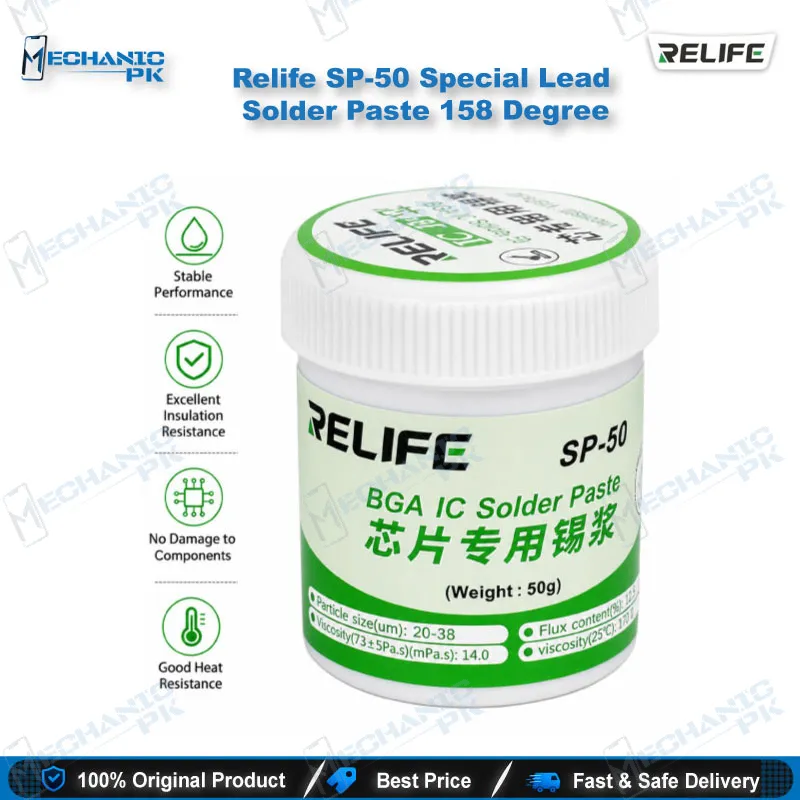
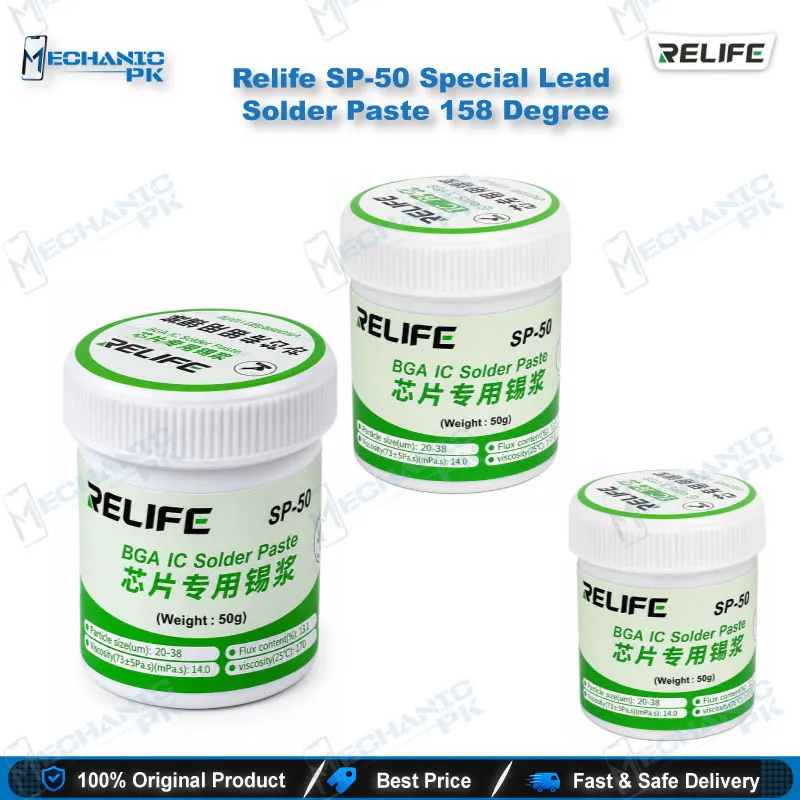
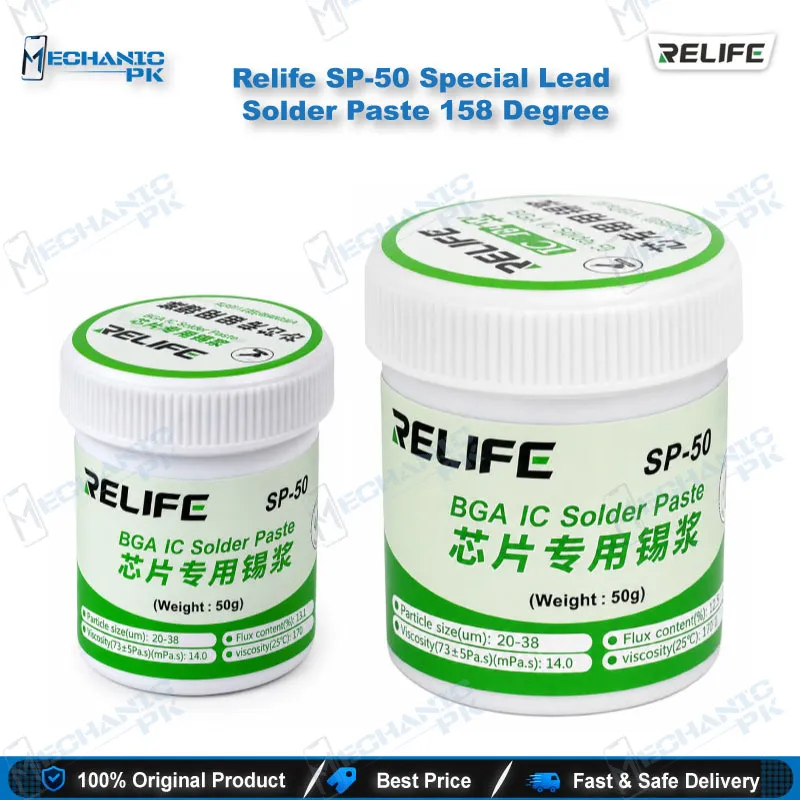
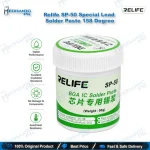
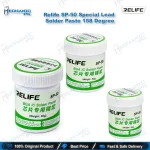
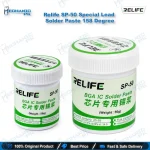
Relife SP-50 158 Degree Low Temp Solder Paste
₨ 1
Relife SP-50 158°C Low Temperature Solder Paste for Precise Rework
Heat-sensitive boards need a paste that melts at the right point and no higher. The Relife SP-50 melts at 158°C, so you can run your hot air or reflow profile well below the range that SAC305 requires. That lower window helps protect nearby plastic connectors, flex sections, and temperature-sensitive ICs during BGA and SMD work. Use it for stencil-based repairs and inner-layer pad fixes on multilayer motherboards. Keep the lid sealed between jobs and check the texture before each session.
Out of stock
Relife SP-50 Solder Paste: A Low-Temperature Rework Workflow
A 158 degree low temp solder paste gives you a lower reflow window than standard lead-free pastes, and that difference matters on boards that cannot take extra heat. The Relife SP-50 melts at 158°C, so you can set your hot air or reflow profile lower and still achieve a full joint. Technicians working on multilayer motherboards, BGA packages, and heat-sensitive modules will find this range practical. It fits repairs where a standard melt would risk lifting pads, softening plastic parts, or stressing nearby components. This page explains where the paste fits in your workflow and how to handle it between jobs.
Where the 158°C Melting Point Fits in Your Workflow
Every reflow decision starts with the melting point, and at 158°C the Relife SP-50 sits well below the temperatures lead-free SAC305 needs. You get a shorter heat cycle, which reduces the time that heat reaches surrounding parts. Connectors, plastic housings, and flex cable sections gain the most from this margin. The paste also suits a reballed chip on an older logic board, where the surrounding parts have a lower temperature tolerance. Your hot air settings stay predictable because the melt point is fixed and known. Test your profile on a scrap board before you touch a customer device, since nozzle size, airflow, and board thickness all change the real temperature at the joint.
Applying the Paste on BGA, SMD, and Stencil Repairs
For BGA and SMD work, the paste goes exactly where your stencil or pad layout demands it. Spread a thin, even layer across the stencil, then wipe the stencil clean between placements so every pad receives the same volume. On reballing jobs, place the component, align it under your microscope, and heat evenly until the paste melts and wets the pads. The product targets stencil repairs and inner-layer pad work on multilayer boards, so it suits repairs where the pad sits beneath the outer layer. Work with a fine tip and small amounts. Excess paste creates bridges that cost you time on the next pass, so start small and add only where the joint needs it.
Handling and Storage Between Jobs
Solder paste loses performance once it dries out, and hobbyist reports describe older tubes leaving unmelted balls around joints. Seal the syringe or container after each session and keep it away from heat and direct sunlight. Check the paste for dryness before each use, and replace it when the texture changes or the flux separates. Do not mix fresh flux into aged paste to rescue it, because that often produces the unmelted balls you want to avoid. Clean your stencil and tools with a suitable flux cleaner after every job so residue does not build up on your bench. Label each container with the date you opened it, so you know when to retire it from active rework.
| Weight | 0.3 kg |
|---|
Key Features
- Melting point of 158°C for low-temperature reflow
- Designed for BGA, SMD, SMT, and stencil repairs
- Special interlayer formulation for inner layers of multilayer motherboards
- Wets pads evenly, according to the vendor
- Low residue after soldering
- Packaged at 50g
Specifications
| Brand | Relife |
|---|---|
| Model | SP-50 |
| Category | Solder Paste |
| Compatibility | Universal, not device-specific |
| Technology | Low-temperature solder paste, 158°C melting point |
| Power Rating | Not applicable (omitted) |
Common Repair Uses
- Low-temperature reballing and component attachment where a lower reflow window protects surrounding parts
- BGA reballing on heat-sensitive chips
- SMD component attachment
- Stencil-based SMT rework
- Inner-layer pad repairs on multilayer motherboards
- Low-temperature rework near plastic connectors
- Reflow of heat-sensitive modules
Compatible Devices
- Universal, not device-specific (verified scope: heat-sensitive BGA and SMD work, multilayer motherboards, stencil-based SMT rework)
- Heat-sensitive BGA and SMD components
- Multilayer motherboards at inner-layer pad level
- Stencil-based SMT rework
- Plastic-housed connectors and modules
FAQ
What is the product name?
What is the brand of this product?
What is the model of this product?
What is this product used for?
Which devices are compatible with this product?
Who should use this product?
What melting point does the Relife SP-50 solder paste have?
Can the Relife SP-50 replace SAC305 on lead-free boards?
Related products