














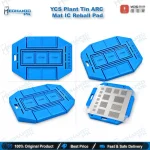
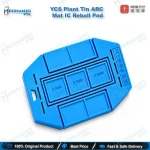
YCS ARC Tin Planting Pad – Magnetic IC Reball Mat
₨ 1,200
YCS ARC Magnetic Tin Planting Pad
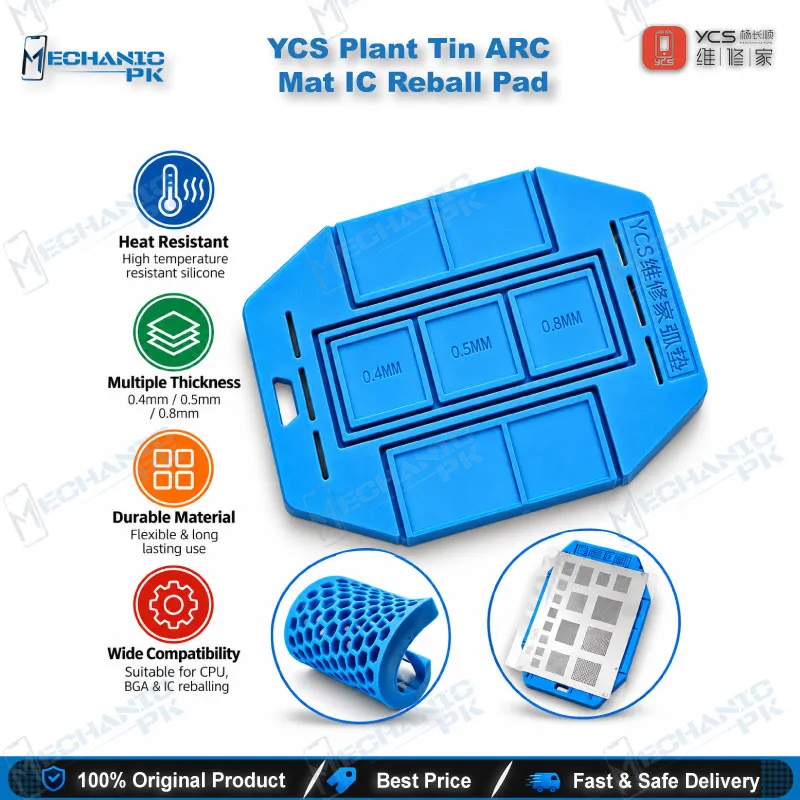
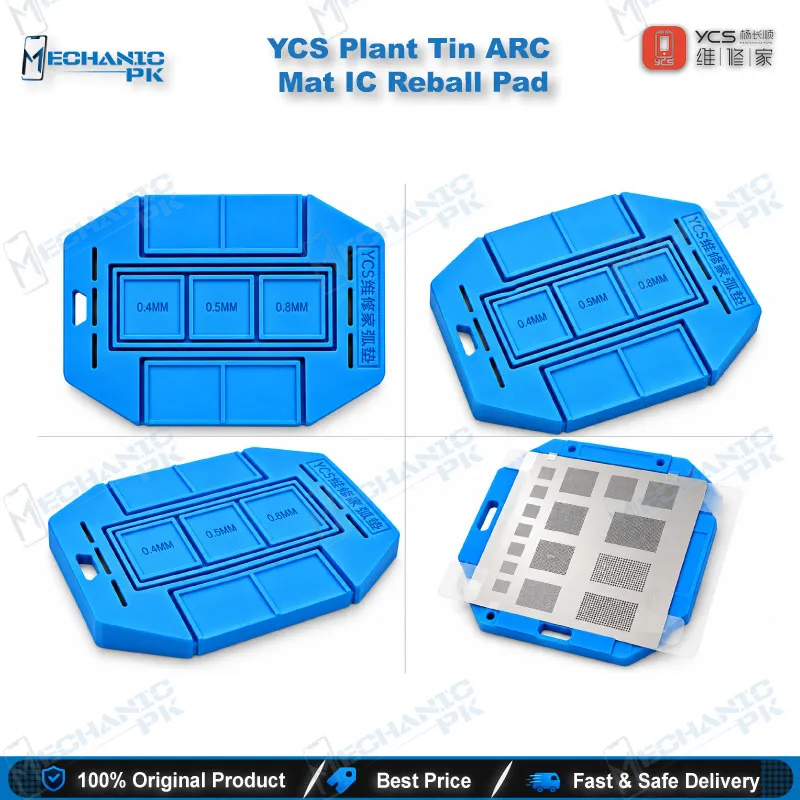
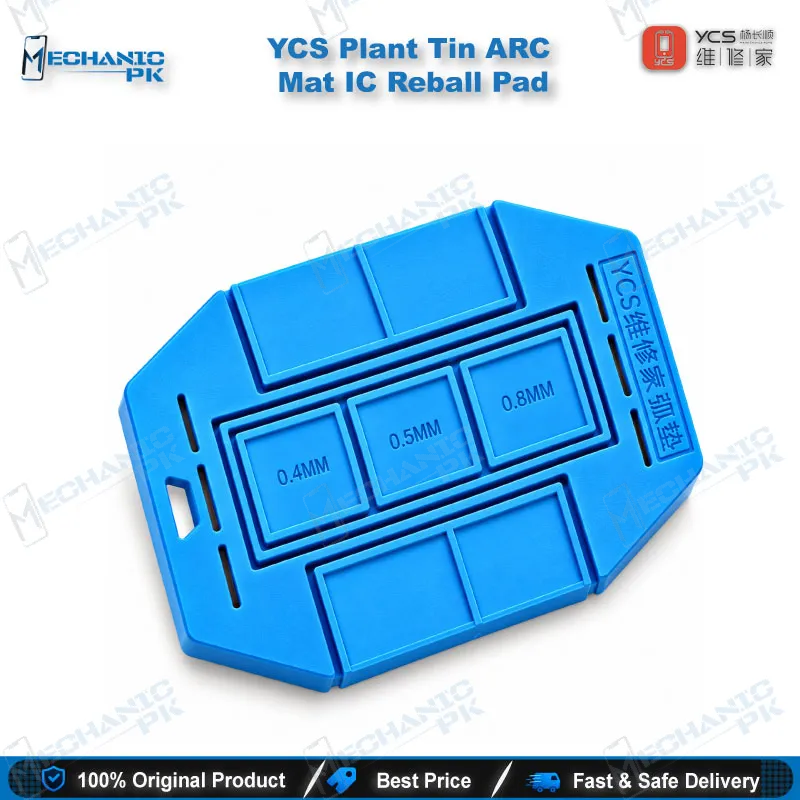
The YCS ARC tin planting pad is a magnetic silicone reballing mat with three chip slots for 0.4 mm, 0.5 mm and 0.8 mm thick ICs. Drop your CPU or NAND chip into the matching slot, lay a steel BGA stencil on top, and the embedded magnets hold the stencil flat while you apply paste or balls. The heat-tolerant silicone resists bubbling under hot air, grips your work surface, and wipes clean of flux after each job. Mechanicpk supplies it in Pakistan for technicians who handle IC change karna and BGA reballing every day and want steady, repeatable tin planting.
In stock
YCS ARC Tin Planting Pad for Controlled BGA Reballing
The YCS ARC tin planting pad gives your reballing bench a magnetic, heat-tolerant silicone base that locks a BGA chip and its steel stencil into one fixed position. YCS cuts three chip slots into the pad for 0.4 mm, 0.5 mm and 0.8 mm thick ICs, so you match the slot to the package and skip the tape and folded paper. Mechanicpk stocks this pad for technicians who reball mobile phone CPU and NAND chips and need repeatable results on every board that reaches the bench.
Slot Depth and Magnetic Stencil Hold
Each slot sits at a different depth. The 0.4 mm slot cradles thin packages, the 0.5 mm slot suits mid-thickness chips, and the 0.8 mm slot takes thicker ones. When the chip sits flush with the pad surface, the stencil lies flat against the ball pads and every aperture fills evenly. Embedded magnets pull the steel mesh stencil down, so it does not lift or slide while you scrape paste or drop balls. A stencil that stays put prevents bridged balls and offset pads, the two faults that send a freshly reballed chip back to the bench. The soft silicone surface also grips your work surface, so the whole assembly stays steady under your hand.
Heat Handling and Repair Workflow Fit
The silicone body tolerates hot air reflow, and the slots do not bubble or warp when you heat the stencil and chip together. Your workflow stays simple. You lift the faulty IC with the hot air station, clean the pads with flux and solder wick, seat the chip in the matching slot, lay the stencil, apply paste or balls, and reflow. This pad covers the reballing step of any IC change karna job, whether you trace a dead phone or a hardware fault to a cracked CPU or NAND joint. After reflow, the non-stick surface wipes clean of flux and solder residue with a damp cloth, so the next chip starts on a clean base.
Where It Fits in Your Reballing Setup
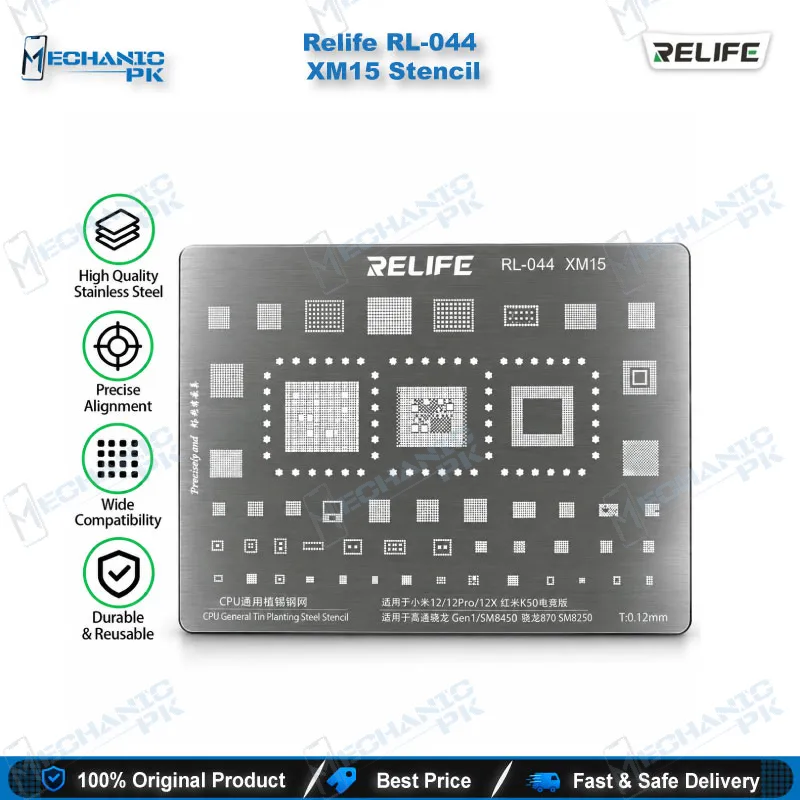
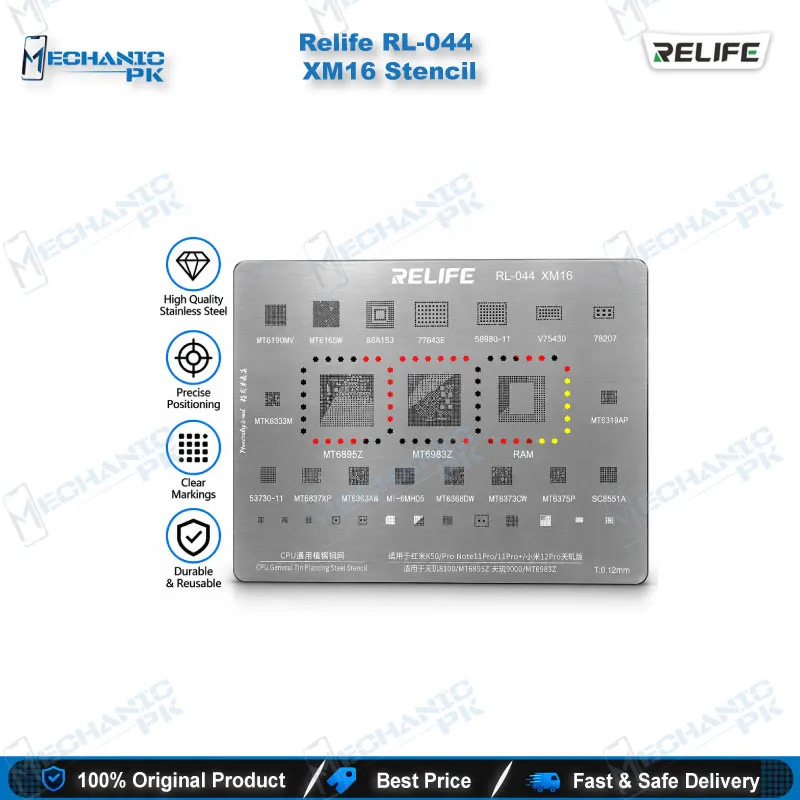
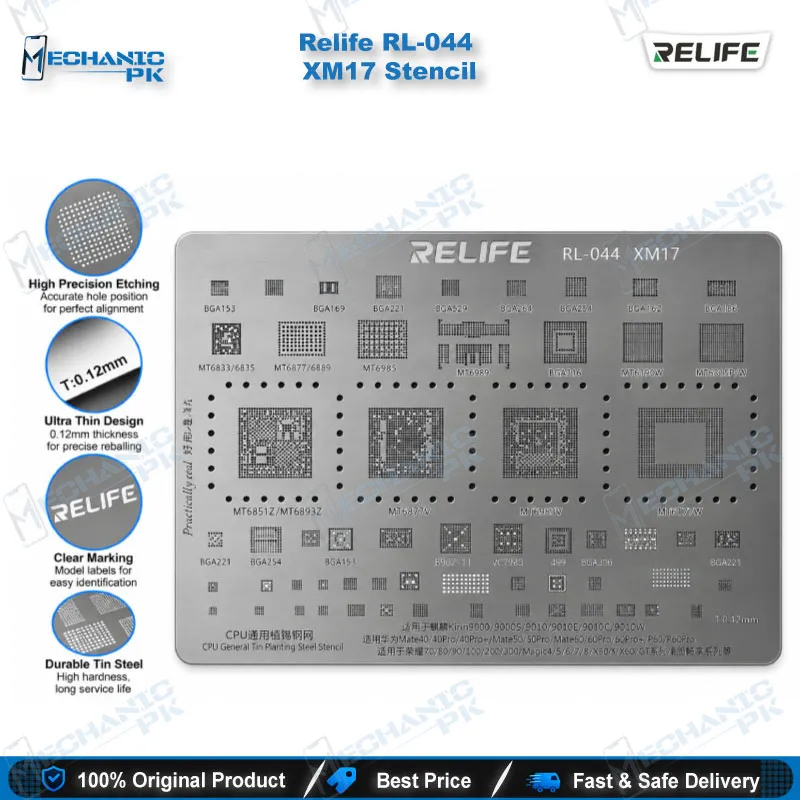
The pad works as one part of a complete rework bench. Pair it with a hot air station for chip removal, a soldering station for pad cleanup, and BGA stencils matched to your target chip. A PCB holder secures the board during removal, and a microscope lets you inspect pad condition and ball alignment before and after reflow. Reballing kits supply the solder balls and flux that work on top of this pad. After the chip returns to the board, test boxes and multimeters confirm the repair, and for storage chip jobs, eMMC programmers, UFS adapters and ISP pinout tools handle the read, write and reflash steps. If you outgrow a general pad and need a dedicated platform for specific CPU families, step up to a reballing platform from the same workflow cluster.
| Weight | 0.86 kg |
|---|
Key Features
- Magnetic silicone body holds the steel stencil in place
- Three chip slots for 0.4 mm, 0.5 mm and 0.8 mm ICs
- High-temperature resistant silicone
- Resists bubbling under hot air
- Anti-slip surface grips the work area
- Non-stick surface wipes clean of flux and solder residue
- Soft, flexible material
- Package includes 1 x tin planting pad
Specifications
| Brand | YCS |
|---|---|
| Model | ARC Pad |
| Category | Reballing Pads / Tin Planting Pads |
| Compatibility | Magnetic steel BGA reballing stencils; chip slots for 0.4 mm, 0.5 mm and 0.8 mm thick ICs |
| Technology | Magnetic stencil retention with heat-resistant silicone |
| Material | High-temperature silicone with magnets |
| Weight | 86 g |
Common Repair Uses
- Tin planting and reballing support on the repair bench.
- BGA reballing of mobile phone CPU chips
- Reballing NAND flash chips after removal
- Holding a chip steady during stencil alignment
- Keeping a steel stencil flat while applying solder paste
- Dropping and reflowing solder balls through a stencil
- Tin planting after IC change karna on a dead phone
- Rework on hardware fault boards with damaged IC joints
- Reballing on a stable, anti-slip surface during hot air work
Compatible Devices
- Universal pad, not tied to specific phone models. Compatibility depends on chip thickness (0.4 / 0.5 / 0.8 mm) and a magnetic steel stencil.
- Mobile phone motherboard CPU chips (BGA)
- NAND flash chips (BGA)
- General BGA ICs that match a 0.4 mm slot
- General BGA ICs that match a 0.5 mm slot
- General BGA ICs that match a 0.8 mm slot
- Steel mesh BGA reballing stencils
- Android and iPhone board-level BGA reballing jobs
FAQ
What is the product name?
What is the brand of this product?
What is the model of this product?
What is this product used for?
Which devices are compatible with this product?
Who should use this product?
Which chip thicknesses does the YCS ARC tin planting pad hold?
Does the pad hold the BGA stencil in place during reballing?
Related products