














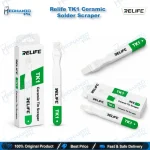
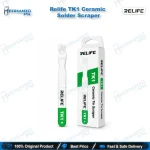
Relife TK1 Ceramic Solder Scraper – Non-Magnetic
₨ 800
Ceramic Scraper for Clean Pads
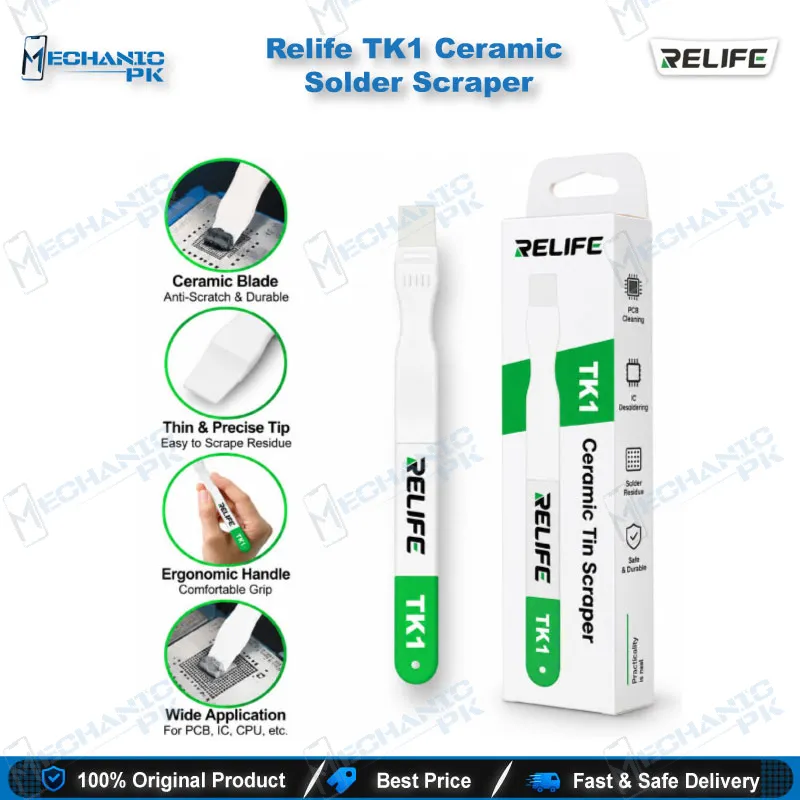
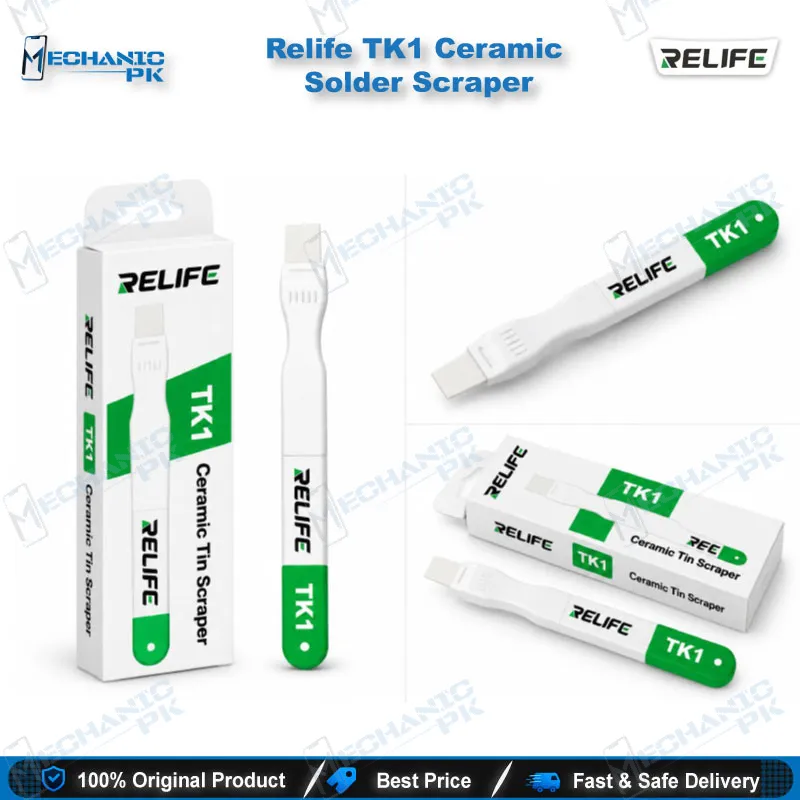
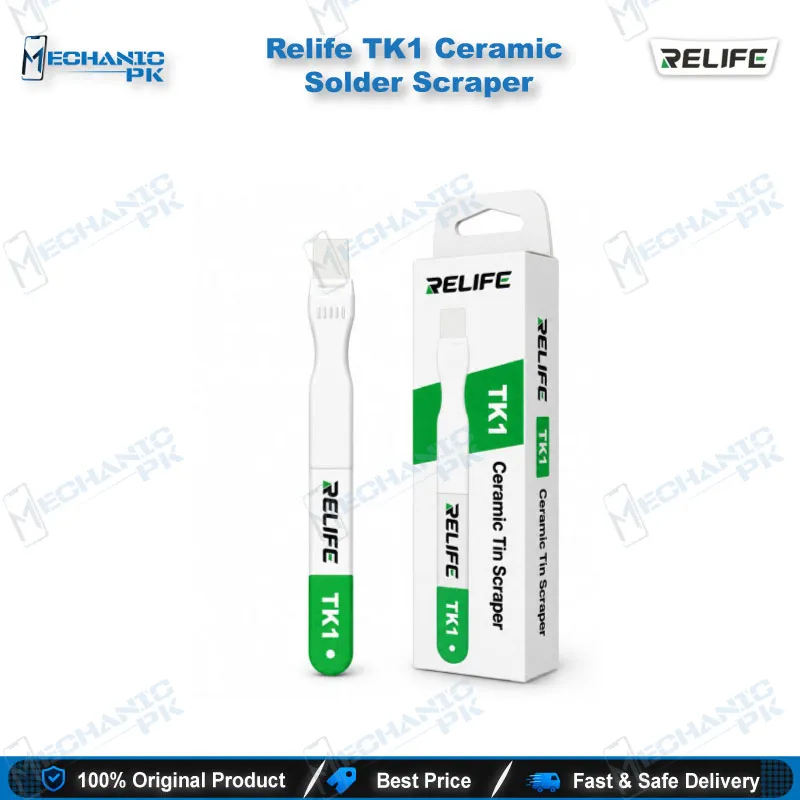
The Relife TK1 Ceramic Solder Scraper gives you a non-magnetic, anti-static ceramic blade for clean pad preparation on phone motherboards. Technicians use this ceramic solder scraper for mobile repair to level leftover solder, clear epoxy residue from CPU and NAND chips, and prep BGA pads before reballing. The high-temperature forged ceramic resists oxidation and wear, and the soft gel-like handle with a rounded tail keeps your grip steady during long bench sessions. At roughly 24 g, it fits any repair kit and suits Pakistani repair shops, service centers, and training labs that need a reliable pad-cleaning tool without risking copper traces.
In stock
Relife TK1 Ceramic Solder Scraper for Precision Pad Cleaning
The Relife TK1 is a ceramic solder scraper for mobile repair benches that need clean, scratch-free pads before reballing, reflow, or IC replacement. Relife forges the blade from high-temperature ceramic, so the tool stays non-magnetic and anti-static, two traits that matter when you work around CPU, NAND, and power ICs on a dense phone board. Mechanicpk stocks the TK1 for technicians who want a precise, repeatable pad-prep step instead of dragging a steel blade across copper. This listing explains what the ceramic blade does, where it fits in your rework sequence, and what to know before you order.
Key Technical Highlights of the TK1 Ceramic Blade
The TK1 blade uses high-grade ceramic that Relife thickens and hardens through high-temperature forging. That process gives the blade wear resistance, oxidation resistance, and heat resistance, so the working edge keeps its shape across repeated sessions near hot air. The ceramic body carries no magnetic charge, which means fine solder particles and loose debris do not cling to the blade while you scrape. The anti-static ceramic also keeps the tool safe around sensitive components. Relife adds a soft gel-like handle with a rounded tail, and the tool weighs roughly 24 g, so your wrist stays relaxed through a long run of boards. Compared with a steel scraper, a ceramic edge gives you a smoother contact surface, which lowers the chance of lifting or scoring the fine copper pads you need to protect. Ceramic also stays thermally neutral, which helps you clean pads quickly and evenly. Each package contains one ceramic scraper, and the compact body fits any repair kit or tool roll.
Where a Ceramic Solder Scraper for Mobile Repair Fits in Your Workflow
Every reball or chip replacement starts with pad condition. After your hot air station lifts a CPU, eMMC, or NAND chip, the board still carries leftover solder, and sometimes epoxy residue, across the pads. You level that residue with the TK1 before you apply fresh solder paste or fit a stencil from your reballing kit. The smooth ceramic surface slides across the pads and moves solder aside without the gouging risk that a hard metal blade brings to copper. Technicians also use the same scraper to spread solder paste when a job calls for it, and the smooth ceramic surface keeps your strokes consistent from the first pad to the last. Pair the TK1 with a microscope so you can confirm clean, flat pads, then check continuity with your multimeter before you place the chip. This sequence suits a dead phone that arrives with a hardware fault, a charging issue traced to a power IC, or a board that needs a memory chip swap after you finish ISP pinout work or eMMC programmer reads.
Handling and Care for Long Blade Life
Ceramic resists wear but breaks under side impact, so keep the TK1 away from hard bench edges and never use it as a pry tool. Scrape with light, even pressure and let the blade glide across the pad instead of forcing it. Hold your board steady in a PCB holder so both hands stay free to control the stroke. Wipe the blade clean after each pass, and store it in a drawer or tool tray where other tools cannot knock against the edge. Because the TK1 is a universal hand tool, it works on any brand of phone motherboard and does not tie you to one device family. If you run a repair shop, service center, or training lab in Pakistan, a ceramic solder scraper for mobile repair costs little and removes a common source of pad damage. Shops that handle high board volume often buy several units, so every bench keeps its own scraper beside the soldering station and hot air station.
| Weight | 0.24 kg |
|---|
Key Features
- Non-magnetic ceramic blade, so debris does not cling to the tool
- Anti-static construction for sensitive electronic components
- High-temperature forged ceramic with a thickened, hardened body
- Wear-resistant and oxidation-resistant working edge
- Heat-resistant ceramic that holds up near rework heat
- Smooth, even solder scraping with minimal effort
- Soft gel-like handle with a rounded tail for a comfortable grip
- Lightweight, compact body at roughly 24 g
Specifications
| Brand | Relife |
|---|---|
| Model | TK1 |
| Category | Soldering & Rework Accessories |
| Compatibility | Universal hand tool, not device-specific |
| Technology | Non-magnetic, anti-static ceramic, high-temperature forged |
| Material | High-grade ceramic blade with soft gel-like handle |
| Weight | Approx. 24 g |
| Package Includes | 1 x Ceramic Scraper |
Common Repair Uses
- Cleaning leftover solder from pads after chip removal
- Prepping BGA pads before reballing
- Removing epoxy glue residue from CPU and NAND chips
- Leveling excess solder on motherboard pads
- Spreading solder paste during rework
- Phone motherboard soldering and IC repair
- Pad cleanup before a memory chip swap
- Precision solder removal on small electronic components
Compatible Devices
- Universal, not device-specific. It works on the boards and chips below, regardless of phone brand.
- Android smartphone motherboards (all brands)
- iPhone motherboards
- BGA CPU chips
- NAND and eMMC memory chips
- Power, charging, and other precision ICs
- General PCB solder pads
- Precision electronic components
- Tablet and other small-device mainboards
FAQ
What is the product name?
What is the brand of this product?
What is the model of this product?
What is this product used for?
Which devices are compatible with this product?
Who should use this product?
Will the Relife TK1 ceramic blade scratch copper pads or traces on a phone board?
Can the Relife TK1 remove epoxy residue from CPU and NAND chips before reballing?
Related products