


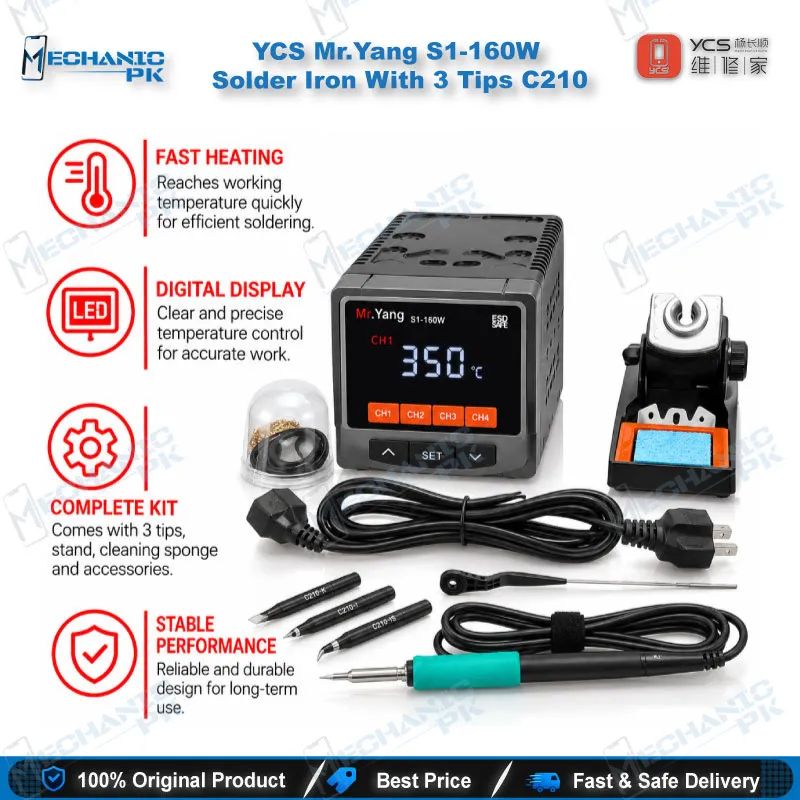












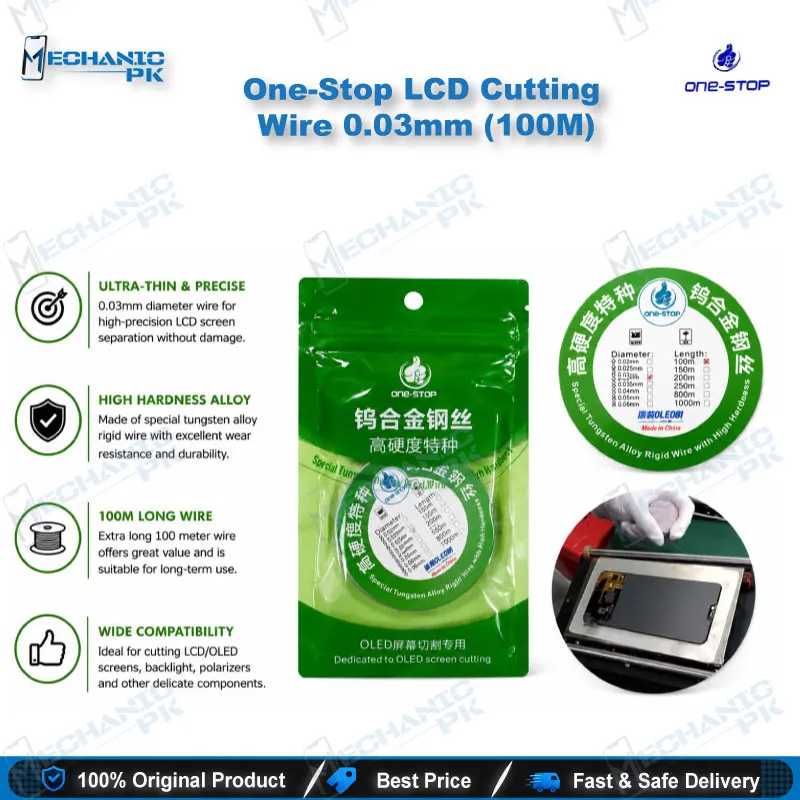
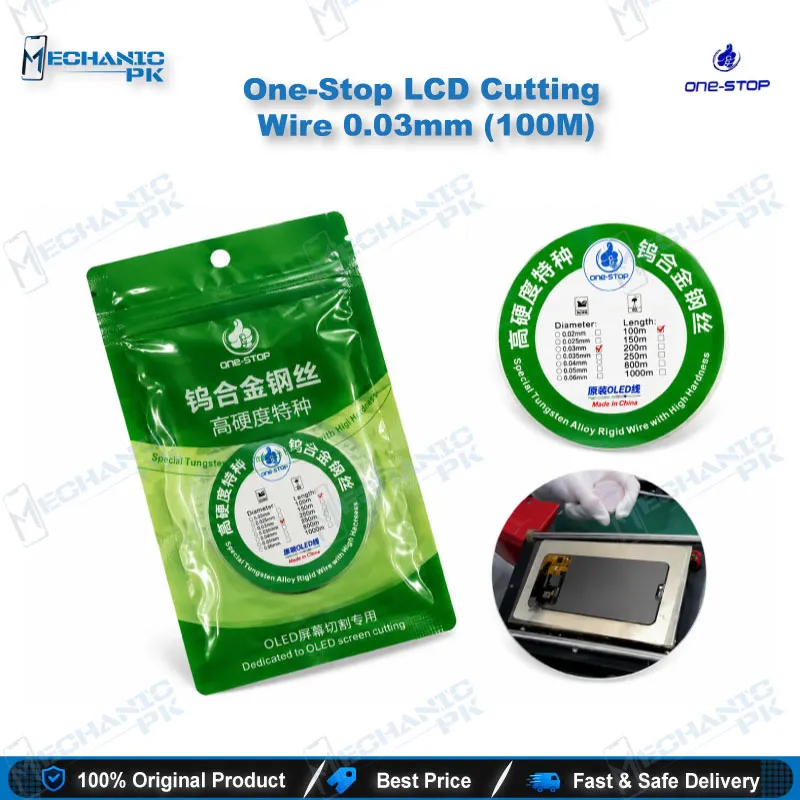
One-Stop LCD Cutting Wire 0.03mm (100M)
₨ 150
0.03mm LCD Cutting Wire 100M
This 0.03mm LCD cutting wire gives you a 100-meter spool of ultra-fine alloy steel wire for separating front glass from LCD and OLED displays. The thin diameter keeps the cut narrow, so you work on flat, curved and edge screens with less stress on the panel. One spool covers repeated separations on smartphones and tablets, which suits repair shops that handle cracked-glass jobs every day. Load it into your wire handles or separator setup, cut through the bonding layer, and lift the broken glass off the display. Add it to your screen refurbishment bench and keep a spare spool ready for busy weeks.
In stock
Precision Screen Separation with a 0.03mm LCD Cutting Wire
The 0.03mm LCD cutting wire from One-Stop puts 100 meters of ultra-fine alloy steel wire on your bench for splitting front glass from LCD and OLED assemblies. At 0.03mm, the wire slices through the adhesive layer between the glass and the display panel with a very narrow cut. That matters on thin edge and curved screens, where a thicker wire pushes harder on the panel and raises the risk of a display problem after separation. One spool serves smartphone and tablet repairs across the brands your customers carry in.
Wire Diameter and Cutting Behavior
Diameter decides how a cutting wire behaves in the bonding layer. Thicker wires in the 0.06mm to 0.08mm range suit flat glass, while 0.03mm gives you the finest cut for delicate assemblies. You pull the wire through the adhesive line, and the thin profile follows the gap between glass and panel instead of forcing it open. Keep the wire straight and clean before each pass. A kinked or dirty wire drags unevenly, so cut a fresh length when the line shows damage. The 100-meter length means you replace worn sections often without worrying about running out mid-week.
Where It Fits in the Screen Refurbishment Workflow
Screen separation sits at the start of the glass-replacement workflow. You heat the display on a hot air station or heating plate to soften the adhesive, cut the glass free with the wire, clean the leftover adhesive, and bond fresh glass. This wire handles the cutting step. Pair it with a PCB holder or screen fixture to keep the display steady, and use a microscope to inspect the panel edge after you lift the glass. Technicians who run edge and curved OLED jobs reach for the 0.03mm size first, since the fine diameter protects the panel edge during the pass. For board-level work on the same phone, the rest of your bench still applies: soldering stations, multimeters and reballing kits handle the hardware fault side while this wire handles the glass.
Choosing 0.03mm for Your Workshop
Stock this size when your shop sees cracked-glass jobs on thin and curved displays. You mount the wire on handles for hand cutting or load it into a separator machine setup, depending on your workflow. Shops that run refurbishment batches go through wire steadily, so a 100-meter spool keeps your cost per separation low. Keep a heavier wire in your drawer for flat, thick-glass jobs and use 0.03mm for the precise ones. That split gives you coverage across every screen that lands on your bench, from budget Android models to edge displays.
| Weight | 0.1 kg |
|---|
Key Features
- 0.03mm ultra-fine diameter for a narrow cut
- 100-meter spool for repeated separations
- Alloy steel wire construction
- Suits LCD and OLED screen separation
- Works on flat, curved and edge screens
- Fits smartphone and tablet repairs
- Loads into wire handles or separator setups
- Fits professional repair shops and refurbishment benches
Specifications
| Brand | One-Stop |
|---|---|
| Category | Screen Separation Tools / Mobile Repair Accessories |
| Compatibility | Universal — not device-specific |
| Supported Devices | Smartphone and tablet LCD and OLED screens |
| Material | Alloy steel |
| Wire Diameter | 0.03mm |
| Wire Length | 100 meters |
Common Repair Uses
- Separating front glass from the display panel in screen refurbishment and glass replacement
- Separating broken front glass from LCD panels
- Separating glass from OLED panels
- Cutting the bonding layer on edge screens
- Cutting the bonding layer on curved screens
- Tablet glass removal
- Screen refurbishment batches in repair workshops
- Hand cutting with wire handles
- Separator machine setups
Compatible Devices
- Universal — not device-specific; works on LCD and OLED display types
- Smartphone LCD screens
- Smartphone OLED screens
- Tablet LCD screens
- Tablet OLED screens
- Flat display screens
- Curved display screens
- Edge display screens
- Universal use across phone brands
FAQ
What is the product name?
What is the brand of this product?
What is the length and diameter of this product?
What is this product used for?
Which devices are compatible with this product?
Who should use this product?
Is 0.03mm cutting wire suitable for curved and edge screens?
Can this wire separate both LCD and OLED screens?
Related products