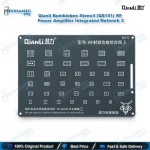
Qianli Bumblebee Stencil (QS151) RF Power Amplifier
₨ 799
QS151 RF PA Reballing Stencil
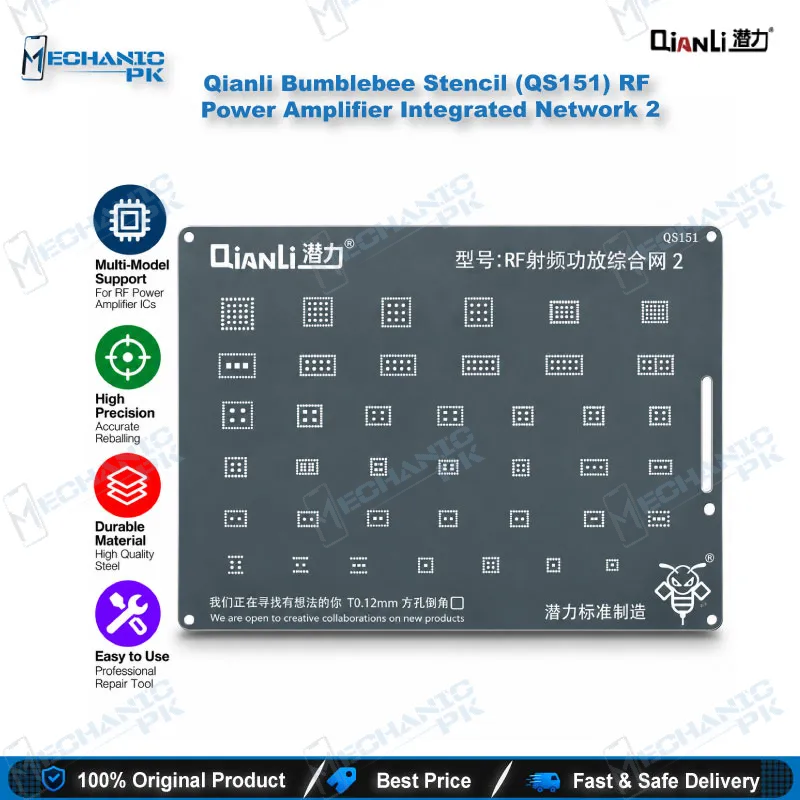
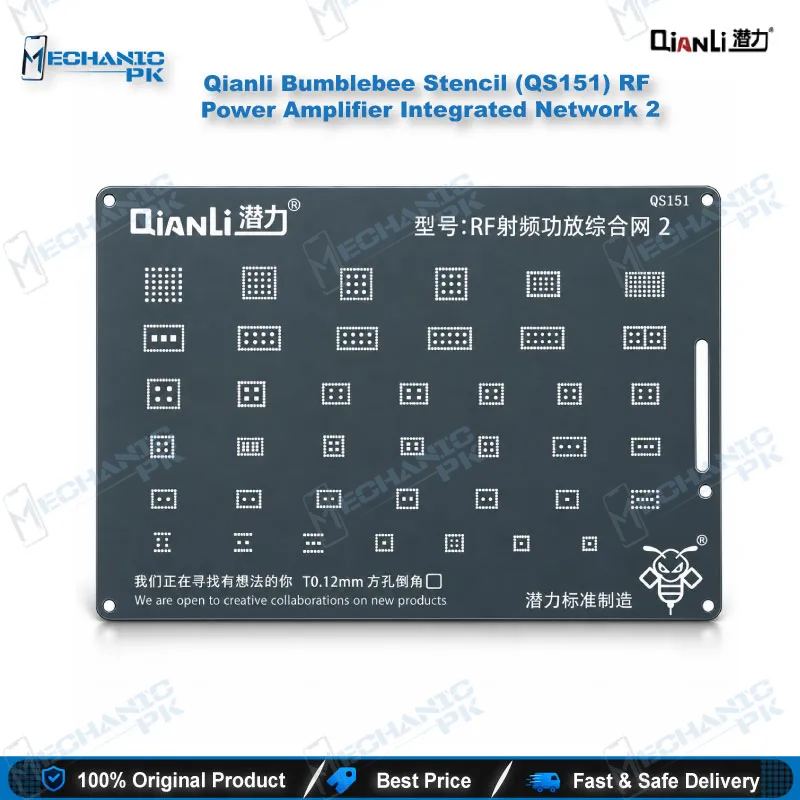
The Qianli Bumblebee Stencil (QS151) RF Power Amplifier Integrated Network 2 gives your bench a pattern-specific template for reballing RF power amplifier ICs in the network section of a mobile board. Qianli builds it in the Bumblebee series with square holes and round angles, so you can align the stencil and apply solder with control after you lift an IC with a hot air station. Pair it with a microscope, a PCB holder, and a reballing kit to restore the IC connection on dead phones and boards with a network issue. Confirm the footprint against your IC before you order.
In stock
Qianli QS151 RF Power Amplifier Stencil for Network Rework
The Qianli Bumblebee Stencil (QS151) RF Power Amplifier Integrated Network 2 targets one job: reballing RF power amplifier ICs in the network section of a mobile board. If you handle network issue complaints daily, a Qianli QS151 RF power amplifier stencil gives you a reusable template for the Integrated Network 2 footprint layout, so you stop improvising with a universal plate. Qianli places it in the Bumblebee series, the same line that covers its Qualcomm CPU, DDR, and hard disk network stencils, and it sits beside the QS147 RF Power Amplifier Integrated Network stencil in the same family. This page shows where the QS151 fits on your bench and how to confirm it before you buy.
Square Holes and Round Angles on the Bumblebee Series
Qianli builds the Bumblebee range around square holes with rounded angles. That aperture shape suits fine-pitch work, because rounded corners give solder paste or balls a cleaner seat in each opening. Your technique still decides the result: a steady stencil position, a thin even paste layer, and a clean pad surface do most of the work. The QS151 follows the same design language as the rest of the line, so technicians who already reball Qualcomm or MediaTek CPUs with Qianli templates recognise the handling immediately. Treat the stencil as a precision part. Wipe flux residue after every use, store it flat, and keep it away from the hot air nozzle so heat does not distort the plate.
Where the QS151 Fits in Your Network Section Repair Workflow
Start with diagnosis. A phone with no signal, a weak network bar, or a hardware fault in the RF section needs a multimeter and a microscope before you touch any IC. Once you confirm the RF power amplifier is the failed part, secure the board in a PCB holder, preheat, and lift the IC with a hot air station or a rework-capable soldering station. Clean the pads flat with wick and flux, then place the QS151 over the pad pattern and check alignment under the microscope. Apply paste or position balls through the apertures, reflow, and lift the stencil clear. Fit the reballed or replacement IC, reflow it, and test the board for network registration. The stencil only takes part in the reballing step, so keep your preheat and temperature discipline consistent across the whole PCB repair job.
Confirm the Footprint Before You Order
Qianli names this stencil by its RF Power Amplifier Integrated Network 2 pattern and does not publish a device-by-device model list for it. That makes footprint matching your responsibility. Measure the IC outline and pad layout on the board you plan to repair, compare them against the QS151 pattern, and order only when they agree. Keep a reference sheet that records each stencil number against the ICs it has fitted on your own bench, which turns trial and error into a lookup. If the footprint does not match, check the neighbouring Qianli QS147 stencil or a reballing kit with a universal plate before you commit. Complete the setup around the stencil from the Mechanicpk categories for reballing kits, hot air stations, soldering stations, microscopes, multimeters, and PCB holders.
| Weight | 0.1 kg |
|---|
Key Features
- Qianli Bumblebee series stencil, model QS151
- Dedicated RF Power Amplifier Integrated Network 2 pattern
- Square holes with round angles for controlled paste and ball placement
- Built for reballing RF power amplifier ICs in the network section
- Reusable stencil format for repeat rework jobs
- Sits in the same RF PA family as the Qianli QS147 stencil
- Works with hot air stations, soldering stations, and PCB holders
- Supports a microscope-guided alignment and reflow workflow
Specifications
| Brand Entity | Qianli (ToolPlus) |
|---|---|
| Product Entity | Qianli Bumblebee Stencil QS151, RF Power Amplifier Integrated Network 2 |
| Technology Entity | Bumblebee series square-hole, round-angle BGA stencil |
| Compatible Device Entities | Mobile boards with RF power amplifier ICs matching the Integrated Network 2 footprint |
| Repair Process Entity | RF power amplifier IC reballing, network section rework |
| Industry Entity | Mobile phone repair, PCB repair, BGA rework |
Common Repair Uses
- Reballing an RF power amplifier IC after lifting it from the board
- Network section rework on a phone with a network issue
- Restoring solder connections on a reused RF PA IC
- Preparing a replacement RF PA IC for fitting
- Repeat reballing jobs on matching boards in a repair workshop
- Reballing practice before a live network section repair
Compatible Devices
- Scope is footprint-based. Qianli publishes the RF Power Amplifier Integrated Network 2 pattern and no device-by-device model list.
- Mobile boards carrying RF power amplifier ICs that match the Integrated Network 2 footprint
- Network section PA ICs that need reballing after removal
- Boards you have confirmed by pad layout and IC outline before ordering
- Not a universal stencil: it does not replace CPU, DDR, or storage stencils
FAQ
What is the product name?
What is the brand of this product?
What is the model of this product?
What is this product used for?
Which devices are compatible with this product?
Who should use this product?
Does the QS151 stencil come with a list of supported phone models?
Can the QS151 stencil reball a CPU or eMMC chip?
Related products