














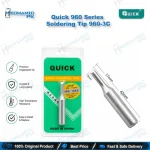
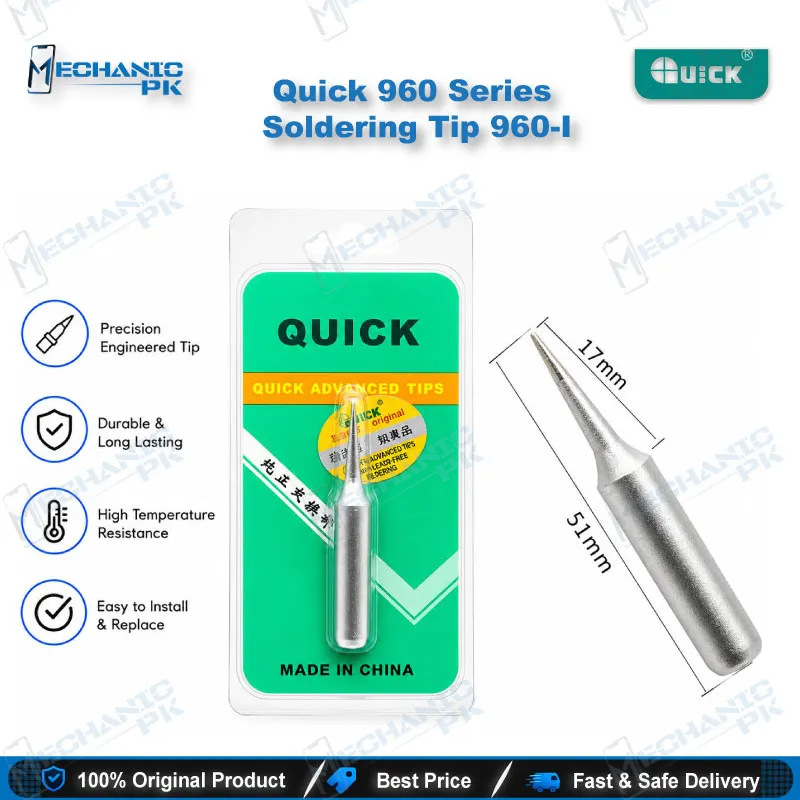
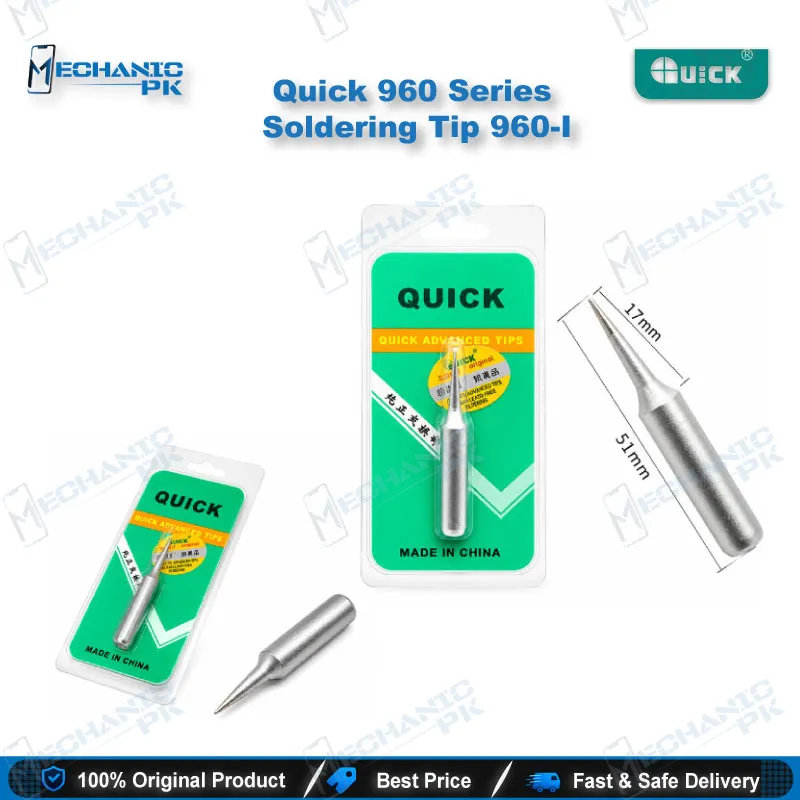
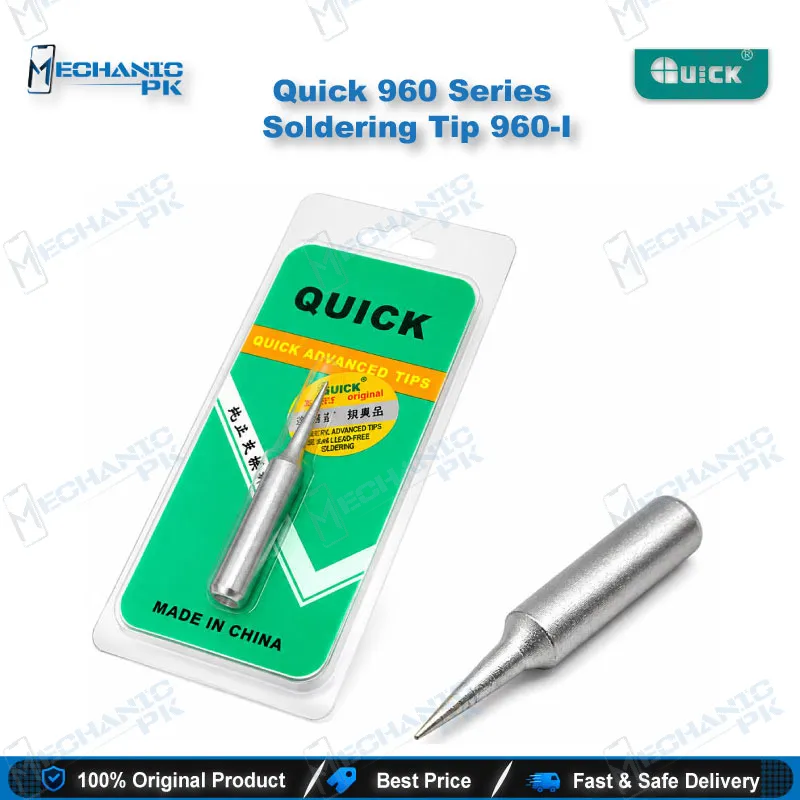
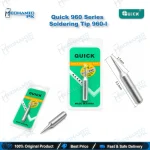
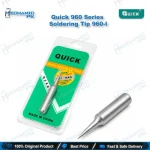
Quick 960-I Soldering Tip 0.2mm Needle for 960 Series
₨ 1
Quick 960-I Soldering Tip for Fine Work on Quick 960 Series Stations
The Quick 960-I soldering tip gives you a fine 0.2 mm needle-shaped working end for small, detailed joints. It fits Quick 960 series soldering stations, so you can swap it in without changing your iron. The copper core with an iron-plated outer layer carries heat well and helps the surface resist oxidation during long sessions. It handles both leaded and lead-free solder, which suits modern phone and microcontroller boards. Use it for lead soldering on sensors and microcontrollers, touch-up on fine pads, and precision repair on a crowded bench.
Out of stock
Quick 960-I Soldering Tip for Precision Repair Work
Fine soldering depends on the tip touching the joint at exactly the right point. The Quick 960-I soldering tip answers that need with a 0.2 mm needle-shaped working end that reaches narrow pads and tight lead spacing without spreading heat onto neighboring pins. Because it belongs to the Quick 960 series, you keep your existing station and handle and change only the part that touches the work. Technicians who handle dense phone boards, sensor leads, and microcontroller pins will find it a natural step up from wider tips when detail matters more than raw heat output. It rewards a steady hand and a clean, well-tinned tip, so the sections below cover workflow, compatibility, and the care that keeps this tip performing.
Where the 960-I Fits in Your Repair Workflow
Most fine soldering jobs follow the same sequence: you clean the pads, tin the tip, position the component, and then bring heat to the joint. The 960-I sits at the step where the tip meets the work, so its shape decides how accurately you can heat a single pin without disturbing the pins beside it. On microcontroller and sensor leads, the narrow end lets you heat one connection at a time and move on before the trace lifts from the board. Keep the tip clean and freshly tinned between joints, because a dull tip transfers heat slowly and pushes you to raise the station temperature, which increases the risk of damage. Pair the tip with a microscope and a flux pen, which together let you inspect each joint before you power the board back up. That combination turns a tight lead-out job into a repeatable routine rather than a trial-and-error session at the bench.
Compatibility and Lead-Free Solder Handling
Start compatibility with the station, because sellers list this tip for the Quick 960 series, and one listing also names the 3103, 3104, and TS1100 models. Listings describe fit at the series level, so confirm that the connection on your handle matches before you buy spares in bulk. The copper core with an iron-plated outer layer conducts heat efficiently and gives the working surface more resistance to oxidation than bare copper. The tip suits both leaded and lead-free solder, which covers most current phone and board work in a mixed repair shop. Lead-free alloys run hotter and oxidize the tip faster, so set the station temperature with that in mind and wipe the tip more often during a long session. Steady temperature control protects the iron plating and extends the working life of each tip you install.
Keeping the 0.2 mm Tip in Working Condition
A 0.2 mm tip loses its working life quickly when you overheat it or let oxide build up across the surface. Tin the tip with fresh solder before you switch the station off, because a thin solder coat seals the surface from air and slows oxidation during cooling. Clean the tip on a damp sponge or brass wool between joints, and avoid scraping it with hard tools, since those strip the iron plating and expose the copper underneath. Exposed copper wears faster and pits under repeated heating, so treat any visible plating damage as the signal to replace the tip. Store spare 960-I tips in a dry tray, so the working end stays protected from bench debris and moisture. A fresh tip costs far less than a lifted pad or a damaged board, so replacing a worn needle early saves you rework time.
| Weight | 0.9 kg |
|---|
Key Features
- 0.2 mm needle-shaped working end for fine detail
- Copper core with iron-plated outer layer
- Suitable for leaded and lead-free solder
- Iron plating helps resist corrosion and oxidation
- Fits Quick 960 series soldering stations
- Package includes one 960-I tip
Specifications
| Brand | Quick |
|---|---|
| Model | 960-I |
| Category | Soldering Iron Tips |
| Compatibility | Quick 960 series soldering stations |
| Material | Copper core with iron-plated outer layer |
Common Repair Uses
- Lead soldering on microcontroller and sensor pins
- Tinning and touch-up on fine-pitch pads
- Precision joints on small surface-mount components
- Heating single connections on dense phone boards
- Lead-free joint work on mixed repair benches
Compatible Devices
- Quick 960 series soldering stations
- Quick 3103 soldering station
- Quick 3104 soldering station
- Quick TS1100 soldering station
FAQ
What is the product name?
What is the brand of this product?
What is the model of this product?
What is this product used for?
Which devices are compatible with this product?
Who should use this product?
Can the Quick 960-I tip be used with lead-free solder?
Which Quick stations accept the 960-I tip?
Related products