














MECHANIC HK-936D Soldering Station | Digital Display
₨ 8,500
Digital Soldering Station for Mobile Repair
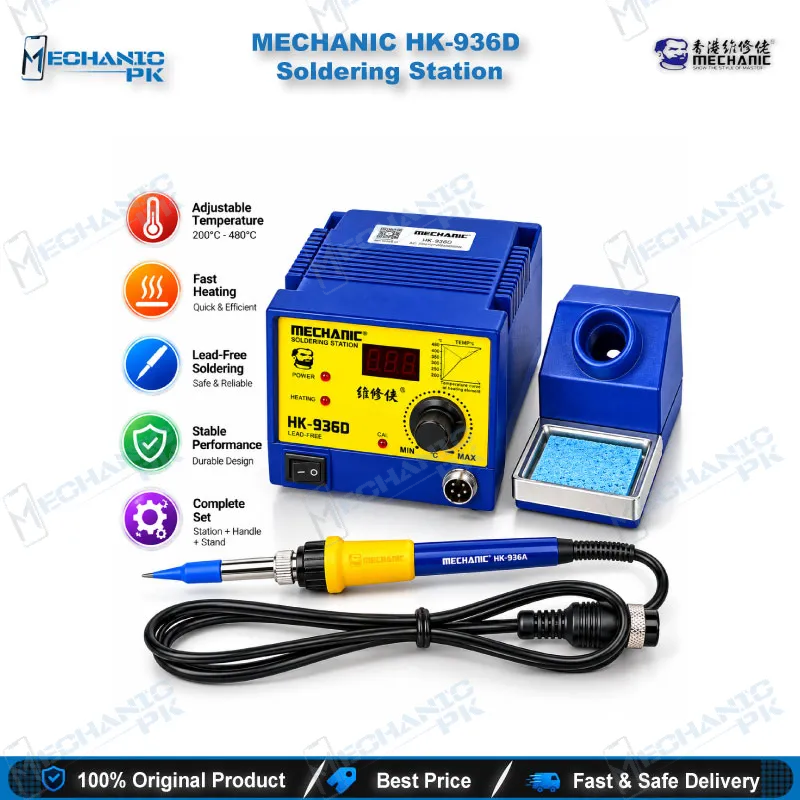
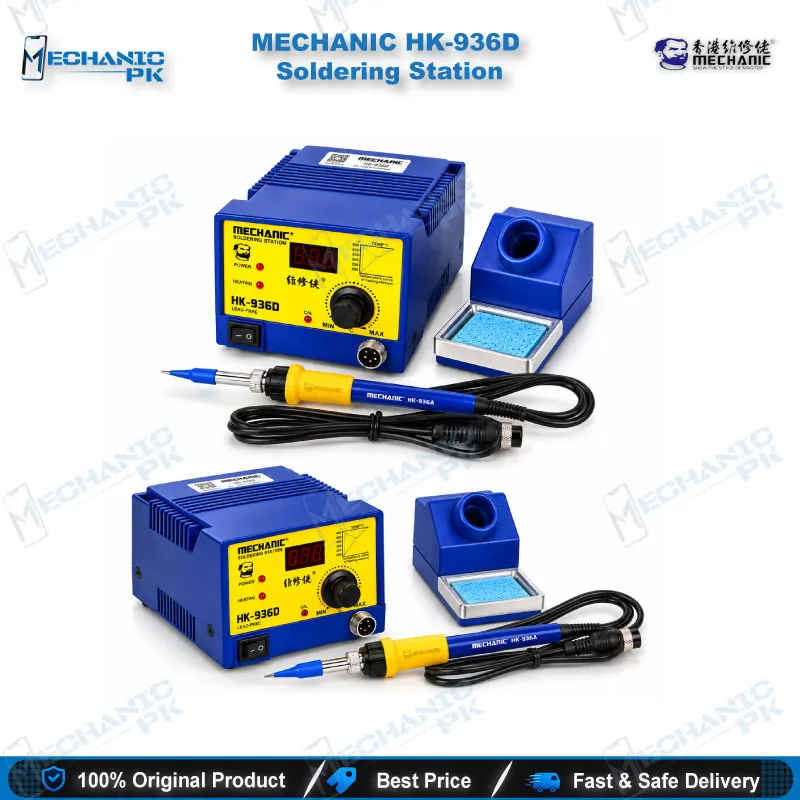
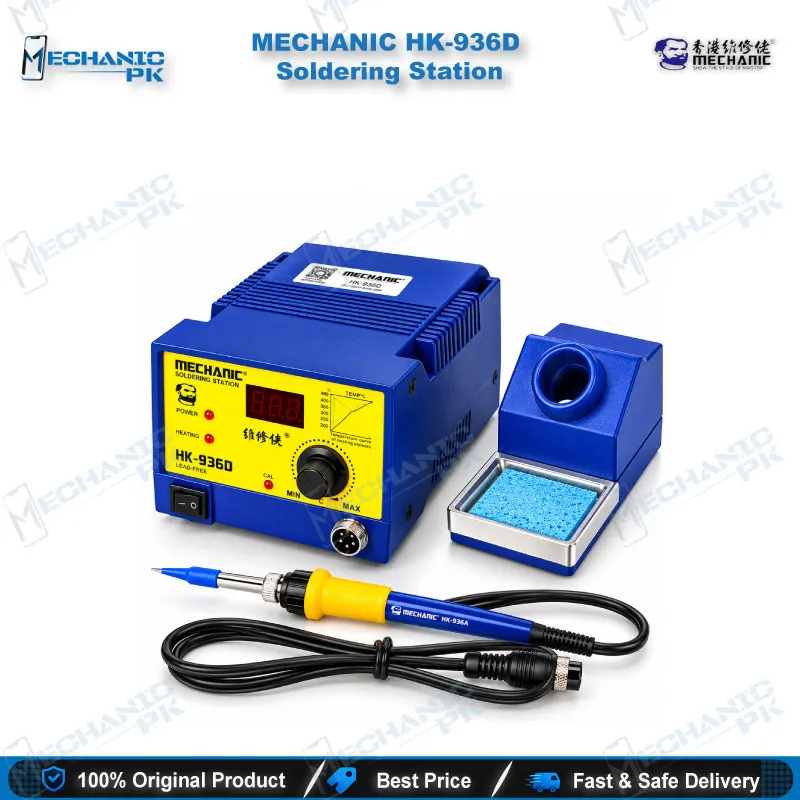
The MECHANIC HK-936D Soldering Station gives your repair bench a digital, temperature-controlled iron with a 200–480°C range and ±2°C stability. It runs on 220V and combines an anti-static design with an all-copper transformer, so the iron holds its set temperature through long board-level sessions. Mobile repair technicians use it for charging port work, battery connector replacement, pad repair, jumper wiring, and general SMD and through-hole soldering on phone logic boards. If you run a repair shop or service center in Pakistan, this HK-936D soldering station covers daily iron work and pairs with a hot air station for IC-level rework.
In stock
HK-936D Soldering Station: Precise Iron Control for Mobile Repair Benches
The MECHANIC HK-936D Soldering Station targets technicians who need a dependable temperature-controlled iron, not a fixed-wattage pencil. This HK-936D soldering station gives you a digital display, a 200–480°C adjustment range, and ±2°C temperature stability on a 220V supply. Those numbers matter on phone boards, where one overheated pad lifts copper and turns a simple charging port job into a trace repair. The unit suits a bench that handles dead phone cases, hardware fault diagnosis, and daily component replacement.
Temperature Control and Stability
You set the working temperature on the digital display, and the station holds it within ±2°C. That stability decides how consistently solder flows across a full shift. Lead-free solder melts at roughly 217–227°C, so the 200–480°C range covers lead-free work with headroom for heavy ground planes and large shield-frame pads. Low-melt leaded solder works at the bottom of the range, which protects fragile FPC connector pads and small passives. Drop the setpoint when you tin fine pads. Raise it when you drag solder across a battery connector ground. A fixed-temperature iron forces one compromise on every joint, while a controlled station lets you match heat to the joint and cuts lifted pads and burned flex cables. Test your settings against the alloy and flux on your own bench, because each combination behaves differently.
Build, Transformer and Anti-Static Design
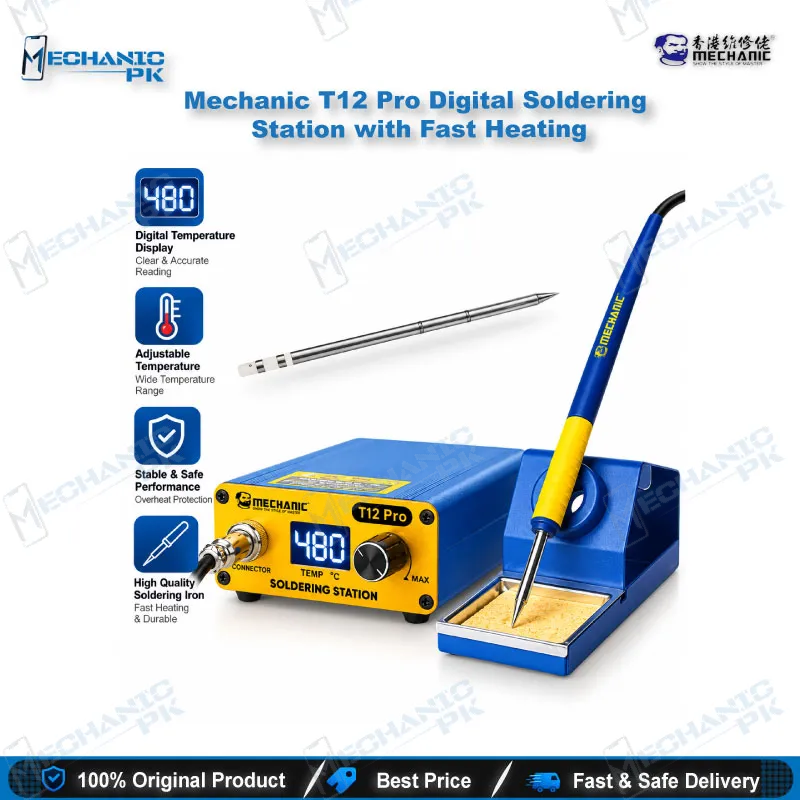
MECHANIC specifies an anti-static design, an all-copper transformer, and a solid housing for the HK-936D. A transformer-based supply steps mains voltage down for the iron, which supports steady heating when you solder joint after joint without waiting for recovery. The handle carries a silicone sleeve that keeps the grip light and slip-resistant over long shifts, and the housing uses open-hole heat dissipation to keep the internals cooler during extended use. The anti-static construction matters on boards that carry PMICs, charging ICs, and audio ICs, because static discharge damages those parts silently. You still wear an ESD strap and keep a grounded mat under the board, but the station itself adds no extra risk to the workflow.
Where It Fits in the Board-Level Repair Workflow
Most repairs that reach the soldering station start with a symptom: a charging issue, a display problem, a network issue, or a dead phone that draws no current on the bench power supply. You diagnose with a multimeter first, then reach for the iron to make the physical fix. Typical jobs include replacing a damaged charging port, resoldering a battery connector, rebuilding a lifted FPC pad with a jumper wire, and swapping SMD capacitors or resistors near a short. Technicians also solder fine wire leads to test points for ISP work on eMMC and UFS boards, where steady temperature keeps thin wires from tearing pads. The iron does not replace hot air. You remove shield cans, BGA chips, and CPU or eMMC packages with a hot air station and a reballing kit, then return to the iron to clean pads and tin the board.
Building a Complete Bench Around the HK-936D
Treat the HK-936D as one part of a workflow. Hold the board in a PCB holder, inspect joints under a microscope, and check continuity with a multimeter before and after every repair. For IC-level jobs, add a hot air station. For dead after flash and eMMC cases, add an eMMC programmer, a UFS adapter set, or an ISP pinout tool, and keep a test box on the bench for the software side of the repair. If your shop currently runs a fixed-temperature iron, this station gives you adjustable control at the same footprint of work. If you outgrow it, a higher-capacity soldering station or a full rework station is the natural next step.
Check the voltage before you buy. The HK-936D runs on 220V mains, which matches standard supply in Pakistan, so shops in Karachi, Lahore, and Islamabad plug it in without a converter. Stock it next to your other soldering stations so technicians can pick the right iron for each job.
| Weight | 2.0 kg |
|---|
Key Features
- Digital display with adjustable temperature setting
- 200–480°C temperature range
- ±2°C temperature stability
- Anti-static design
- All-copper transformer for stable power
- Quick-heating, constant-temperature design
- Open-hole heat dissipation housing
- Silicone handle sleeve for a light, slip-resistant grip
Specifications
| Brand | MECHANIC |
|---|---|
| Model | HK-936D |
| Category | Soldering Station |
| Compatibility | Universal — general-purpose soldering iron station, not device-specific |
| Technology | Digital temperature control with display, 200–480°C range, ±2°C temperature stability, anti-static design, all-copper transformer |
| Input Voltage | 220V |
Common Repair Uses
- Charging port replacement and pad repair
- Battery connector resoldering
- Jumper wire repair on lifted traces and pads
- SMD capacitor and resistor replacement
- Tinning pads before and after IC removal
- Cleaning solder residue from pads after hot air rework
- Soldering fine wires to ISP test points
- General through-hole and wire soldering on repair benches
Compatible Devices
- Universal — not device-specific; the station solders any board its temperature range and tip allow
- Android smartphone logic boards (all brands)
- iPhone logic boards
- Tablet motherboards
- Charging port and battery connector pads
- FPC connector pads on display and camera flex lines
- SMD capacitors, resistors, and inductors
- Through-hole components and wire leads
- ISP test-point wiring on eMMC and UFS boards
FAQ
What is the product name?
What is the brand of this product?
What is the model of this product?
What is this product used for?
Which devices are compatible with this product?
Who should use this product?
Can the HK-936D soldering station handle lead-free solder?
What temperature range and stability does the HK-936D offer?
Related products