














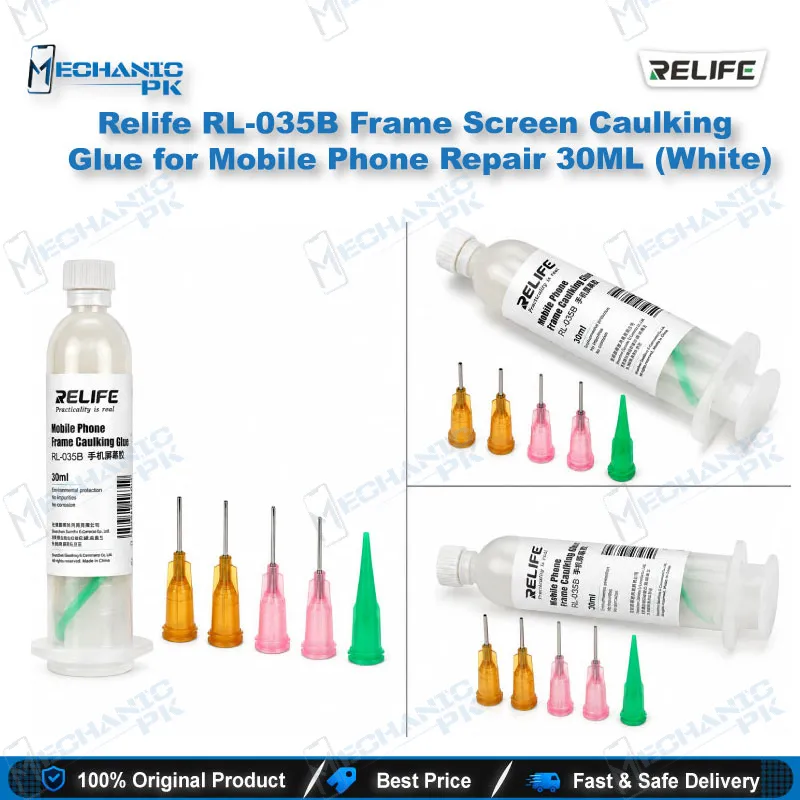
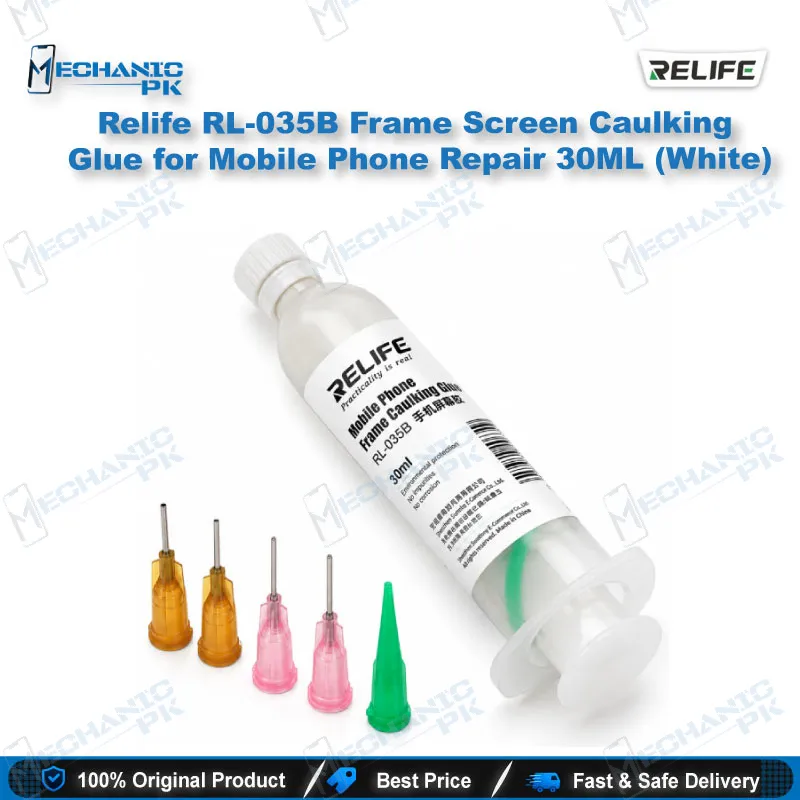
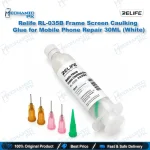
Relife RL-035B Frame Screen Caulking Glue 30ML
₨ 1
Relife RL-035B Frame Caulking Glue for Screen Border Gaps
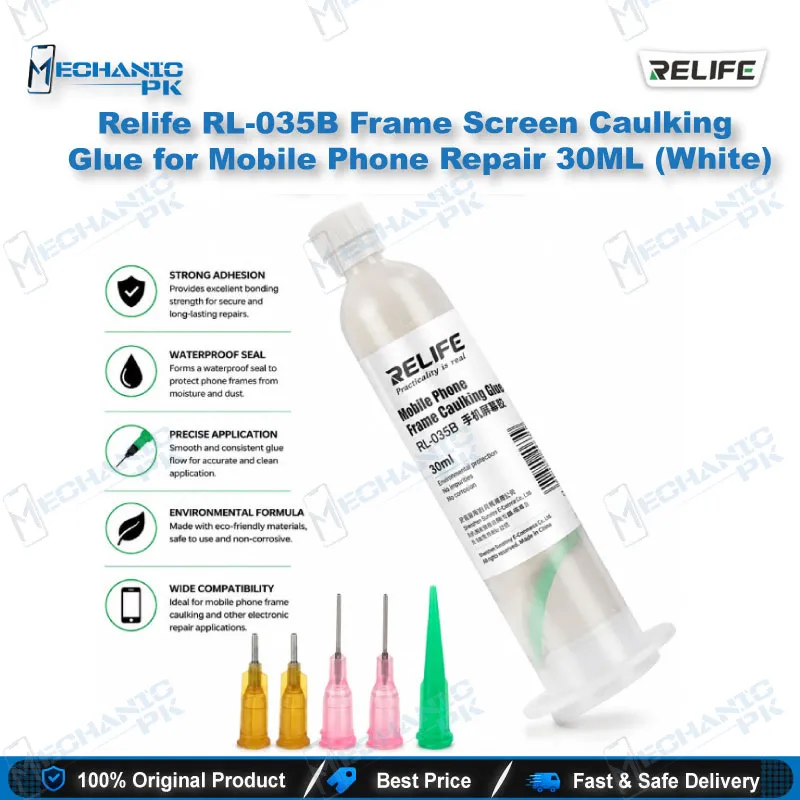
The Relife RL-035B is a 30ml frame caulking glue built for a job most technicians face every week: sealing the gap between a screen and its frame. When a display lifts, light leaks at the edge, or moisture gets under the border, this glue fills the seam and closes it. Apply a thin bead, wipe the excess, and let it cure. Once set, the bond turns rubbery and flexible instead of brittle. It suits the curved-screen edges common on premium phones as well as general border repairs, so it earns a permanent place on any frame-repair bench.
Out of stock
Frame Caulking Glue for Mobile Repair Work
Frame caulking glue for mobile repair solves a problem that appears on nearly every screen job: the border gap. When a display lifts, light bleeds through the edge, or moisture reaches the seam, the phone needs a sealant that closes the joint and stays flexible. The Relife RL-035B covers that job. It comes in a 30ml bottle and targets the screen-to-frame seam on mobile phones and tablets. At the bench, it belongs to the finishing stage of a repair, after the display sits in place and the alignment looks right. Keep it beside your alignment tools and cleaning supplies so you can reach for it the moment a border needs sealing again.
Where RL-035B Fits in the Screen and Frame Workflow
Every sealing step depends on the work that came before it. You remove the damaged display, clean away the old adhesive residue, inspect the frame for cracks, and confirm that the new panel sits flush. Only then does sealing make sense. Think of this glue as the layer that keeps dust, moisture and edge light out of the assembled phone. Most light-leakage complaints trace back to a border that was never closed properly after a display swap, so treating the seal as a required step rather than an optional extra protects both your repair quality and your return rate. Read the seller’s use notes before you apply the glue to a cracked frame, because a seam sealant and a structural bond are not the same job. Matching the product to the right stage keeps your results predictable across every model on your bench.
Application and Curing Steps
The seller documents a clear sequence for this glue, and following it keeps the seam even. Apply the adhesive around the gap in one continuous path so the bead covers the full border without breaks. Then remove the excess glue before it sets, because cleaning cured residue is far harder than wiping it while it is still soft. The bond reaches its initial cure in about 10 minutes. Hold the assembly under light pressure for roughly 20 minutes so the seam completes its set without shifting. Once cured, the material turns rubbery and elastic rather than hard and brittle, which helps it absorb the flex a phone experiences in a pocket. Work in a clean, dry area, and recap the nozzle between uses to keep the remaining glue usable for the next job. Before you hand the device back, inspect the seam under a bright light, because gaps and light leaks show up most clearly there.
Storage, Handling and Working Notes
Store the bottle sealed between 8 and 28 degrees Celsius, away from direct sunlight and other heat sources. These conditions protect the glue’s consistency from one job to the next and keep your bench stock predictable. The seller notes normal manual measurement tolerance on the listed volume, so treat 30ml as a reference figure and check the bottle you actually receive. Label the bottle with the date once opened, and keep it away from unrelated bench materials to avoid mix-ups. Good housekeeping matters here because a poorly cured bead on a customer’s frame usually leads to a comeback visit. Pair this sealant with fine applicator needles for curved edges where your kit supplies them, and keep a lint-free cloth close at hand. Before the first full repair, run a practice seal on a spare frame to build confidence in your timing. A technician who controls storage and cure time gets consistent seams across every screen job, and that consistency is what customers notice when their phone comes back.
| Weight | 0.7 kg |
|---|
Key Features
- 30ml bottle for border and seam repairs
- Waterproof seal that resists degumming, per seller
- Rubbery, elastic bond after curing
- Initial cure in about 10 minutes, with 20 minutes of pressure hold
- Non-corrosive formula, per seller
- Storage range of 8 to 28 degrees Celsius, sealed and away from sunlight
Specifications
| Brand | Relife |
|---|---|
| Model | RL-035B |
| Category | Mobile Repair Frame Caulking Glue |
| Compatibility | Universal, not device-specific |
| Supported Devices | Seller-listed curved-screen phones from Huawei (HW), Oppo (OP), Vivo (VI) and Xiaomi (MI) |
Common Repair Uses
- Sealing screen border gaps and frame seams after display work
- Sealing the screen border after a display replacement
- Closing light leakage at the screen edge
- Blocking dust and moisture entry at the frame seam
- Re-sealing curved-screen edges on HW, OP, VI and MI models
- Sealing a cracked phone frame edge, per the seller’s listed use
Compatible Devices
- Universal sealing for phone and tablet border gaps, with no device-specific fit
- Phone and tablet screen border gaps, universal across brands
- Curved-screen Huawei (HW), Oppo (OP), Vivo (VI) and Xiaomi (MI) models, per seller listing
- Android and iPhone frames with border gaps or screen light leakage
- Phone and tablet frame edges that need waterproof sealing
FAQ
What is the product name?
What is the brand of this product?
What is the model of this product?
What is this product used for?
Which devices are compatible with this product?
Who should use this product?
How long does RL-035B take to cure?
Does the glue stay flexible after it cures?
Related products