







































JCID V1SE Bus Detection Adaptor for RFFE and IIC
₨ 7,000
JCID Bus Detection Adaptor for RFFE and IIC Fault Tracing
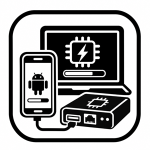
The JCID V1SE bus detection adaptor gives you a direct way to read RFFE and IIC signal lines on mobile phone motherboards. Built to connect with JCID V1SE and V1S Pro programmers, it helps you isolate the failure point on a dead board without guessing. Combine it with JC Drawing software to detect offline or pinpoint a faulty chip. A special sharp dual probe and six coaxial wires come in the box, so your bench is ready to test as soon as the adaptor arrives.
In stock
JCID Bus Detection Adaptor for Fast RFFE and IIC Fault Tracing
Many dead-phone and no-power boards hide their fault on a bus line long before they show it on a component. The JCID bus detection adaptor gives you a direct way to read RFFE and IIC signals on the motherboard, so you can see exactly where activity stops. Connected to a JCID V1SE or V1S Pro programmer, it turns guesswork into a sequence of measurable checks. For a technician who handles modern handsets, this adaptor shortens the path between a symptom and a suspect IC. It works as a diagnostic step rather than a flashing tool, so it sits at the start of the repair, before you lift or replace anything. Every bus check you run also builds a repeatable method you can apply to each board on your bench.
Where the Adaptor Fits in Your Repair Workflow
Start with the symptom and let it shape your first measurements. A board that does not power up, shows no network after repair, or fails after a flash often carries a fault on a shared bus line. Connect the adaptor to your programmer, place the probes on the test points you have identified, and read the bus response before you touch any component. A line that shows the expected activity clears one suspect and narrows the search. A dead or shorted line points you toward the device that drives it, and that device becomes your priority. This order keeps diagnosis separate from replacement, so you spend parts only where the evidence supports them. Log the readings for each board, because a consistent record helps you spot patterns across similar models and handle repeat faults faster. The adaptor earns its place early in the workflow and stays useful right through the final checks.
Dual RFFE and IIC Detection on a Single Adaptor
RFFE and IIC are different bus types, and modern handsets rely on both. This adaptor covers both functions, so you do not need a separate fixture for each line. The official specification lists it for mobile phone RFFE and IIC detection, which matches how many board-level faults appear on the bench. The special sharp dual probe helps you reach fine pads on crowded boards, while the six coaxial wires give you enough leads to link the adaptor to your test points. Keep each coaxial lead short and secured, so your probing stays stable from one reading to the next. Clean the contact points before you probe, since residue on the pads can change what a line appears to do. Consistent contact makes your readings easier to compare, and comparison is what turns a measurement into a diagnosis.
Offline Detection and Chip Location with JC Drawing
The adaptor supports offline detection and works with JC Drawing software to help locate a faulty chip. Offline detection gives you another route when the handset offers no clear response on its own. Matching your readings against the drawing data narrows the search to the component that drives a suspect line, which saves time on boards with many similar parts. The weekly JC Drawing card in the package supports this workflow and keeps the reference data close to your repair station. Use this approach on boards that resist standard checks, where a fixed sequence of measurements keeps your work organized from start to finish. Pair each finding with your schematic knowledge and multimeter readings before you lift any part. Treat every reading as one piece of the diagnosis, and confirm the final fault with a second check before you order a replacement.
| Weight | 0.15 kg |
|---|
Key Features
- Dual function covering RFFE and IIC detection
- Built for use with JCID V1SE and V1S Pro programmers
- Supports offline detection
- Locates faulty chips when matched with JC Drawing software
- Special sharp dual probe included
- Six coaxial wires included
- Weekly JC Drawing card included
Specifications
| Brand | JCID |
|---|---|
| Model | Bus Detection Adaptor |
| Category | JCID Programmer Adaptors |
| Compatibility | JCID V1SE and V1S Pro programmers |
| Supported Devices | Mobile phone RFFE and IIC bus lines |
| Technology | RFFE and IIC bus detection, offline detection with JC Drawing |
Common Repair Uses
- [Verified real-world workflows]
- Locating a dead or shorted RFFE line on a motherboard
- Checking IIC bus activity during no-power or dead-phone diagnosis
- Narrowing down a suspect IC before component replacement
- Running offline detection on a board that gives no clear response
- Matching bus readings with JC Drawing data to find the faulty chip
- Starting diagnosis on a board that shows a fault after a failed flash
- Training technicians on bus-level fault tracing
Compatible Devices
- [Verified scope: mobile phone RFFE and IIC bus lines, not device-specific]
- JCID V1SE programmer
- JCID V1S Pro programmer
- Mobile phone motherboards with RFFE bus lines
- Mobile phone motherboards with IIC bus lines
- Chip location workflow with JC Drawing software
FAQ
What is the product name?
What is the brand of this product?
What is the model of this product?
What is this product used for?
Which devices are compatible with this product?
Who should use this product?
Does the JCID V1SE bus detection adaptor support offline detection?
Does one JCID bus detection adaptor cover both RFFE and IIC lines?
Related products