



















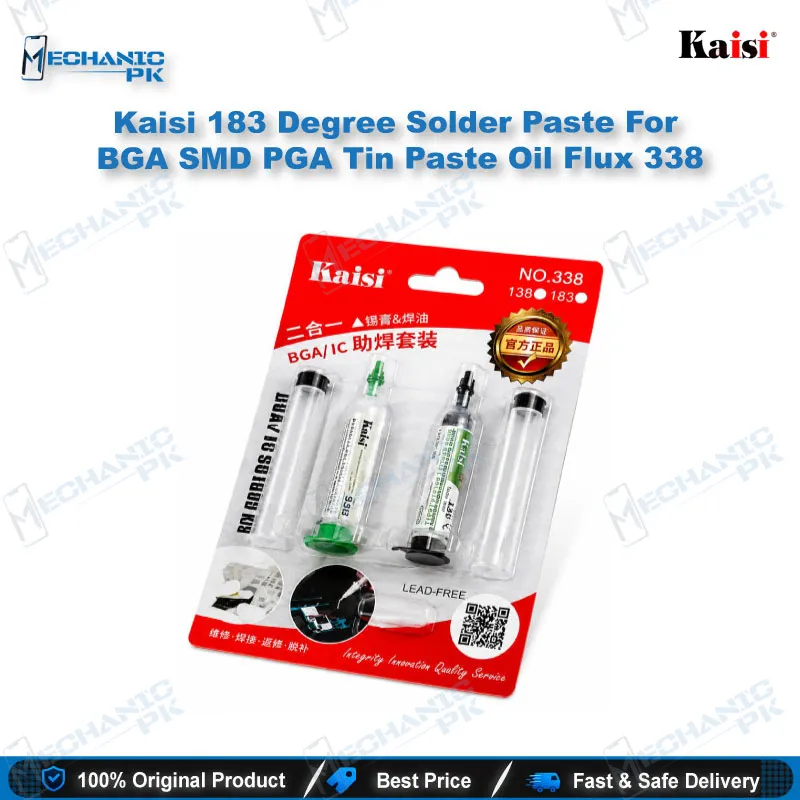
Kaisi 183 Degree Solder Paste for BGA SMD Repair
₨ 1
Low-Melt Tin Paste for BGA Rework
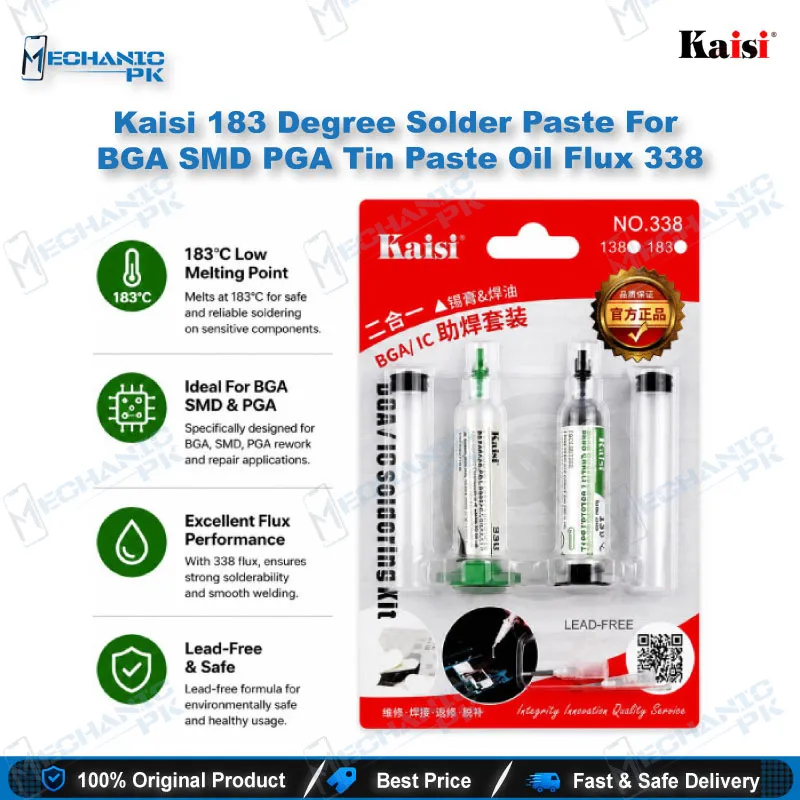
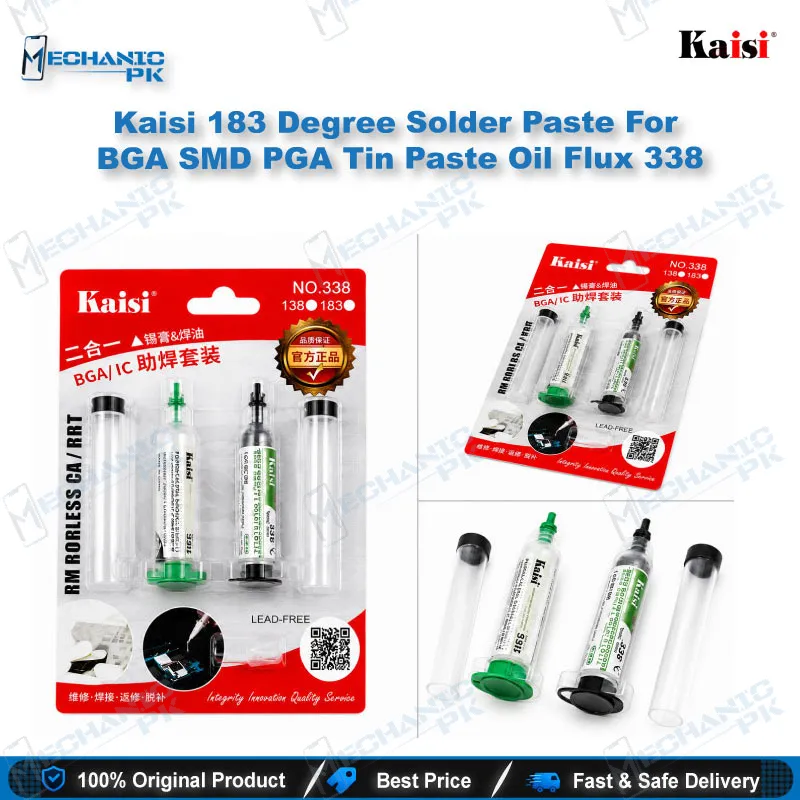
Kaisi 183 degree solder paste is a tin paste rated for a 183°C melting point, intended for BGA, SMD and PGA component work. It suits repair benches that handle reballing, IC replacement and surface-mount rework on phone and general PCB boards. Apply it with a stencil or a controlled method for consistent ball formation, and pair it with a hot air station calibrated to the paste’s melt point. Clean pads and proper storage keep joints reliable across repeat jobs, which makes this paste a practical choice for technicians who value predictable reflow.
Out of stock
Kaisi 183 Degree Solder Paste for BGA and SMD Rework
The Kaisi 183 degree solder paste is a tin paste rated for a 183°C melt, built for BGA, SMD and PGA rework on mobile and general PCB boards. That low melting point suits technicians who want to reflow components with less heat exposure than higher-temperature pastes require. Your results depend on paste placement, stencil alignment and a clean pad surface, so this paste works best inside a controlled bench process. The sections below cover where it fits in your repair flow, how the 183°C rating should guide your hot air settings, and how to handle it on a busy workshop bench.
Where This Paste Fits in Your Repair Workflow
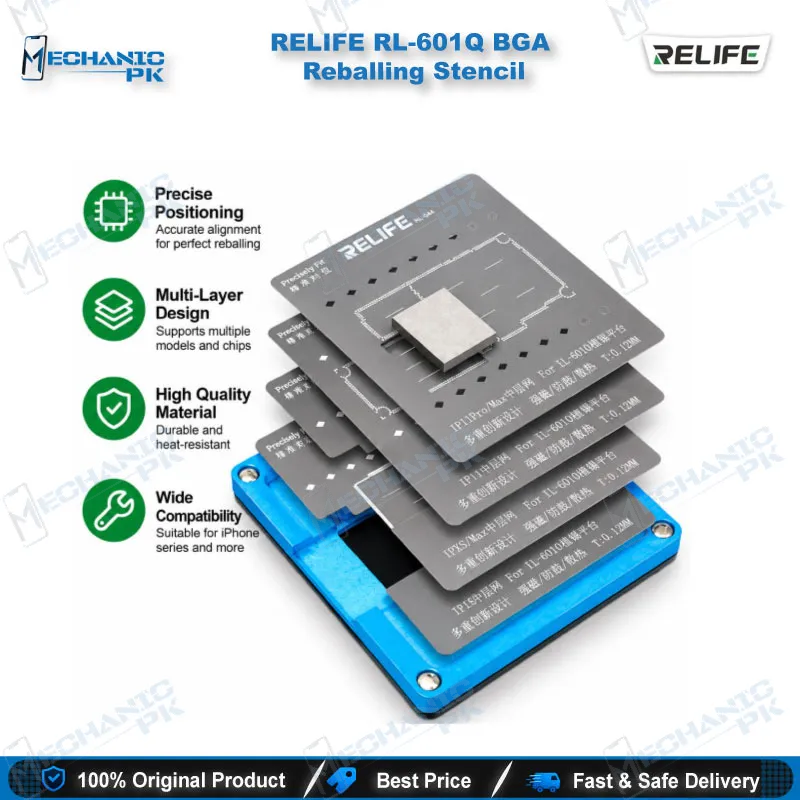
Most BGA jobs start with IC removal and pad cleaning. Once the old balls are gone and the pads are flat, you place a stencil over the chip, spread the paste, and reflow the balls back on. A BGA reballing solder paste like this one handles the material side, while reballing kits and stencil sets handle the mechanical side. Your bench still needs a steady PCB holder, a microscope for pad inspection, and a hot air station with a calibrated nozzle. Missing any of these steps makes paste choice matter far less than technique.
Pakistani repair shops often handle a mix of jobs in one day, from IC change karna on a dead phone to jumper lagana on a charging fault. Batch your reballing work by chip type so you do not change stencil and paste settings every few minutes. This keeps your results consistent and cuts the time lost to setup.
Melting Point and Heat Control
The 183°C rating gives you a fixed reference for your hot air profile. Set the preheat first, bring the board up gradually, and hold the chip area until the paste reaches its melt point. Stop heating as soon as the balls settle, then let the board cool at a steady rate. Overheating lifts pads and damages the laminate, especially on older phone boards that have already been through heat. Check your station’s temperature with a calibrated reference before you rely on its display.
If your board shows warping after heating, lower the preheat temperature and extend the hold time rather than pushing the nozzle harder. Consistent heating matters more than peak temperature on large BGA packages. Test the profile on a scrap board whenever you change nozzle size or board thickness, and note the paste batch and date in your records so you can trace any future joint issues back to the material.
Applying Paste and Handling on the Bench
Open the syringe only after the paste reaches room temperature, which prevents condensation from changing its consistency. Apply a thin, even layer across the stencil and remove the excess with a clean squeegee so each opening holds a consistent volume. Work with a fresh, lint-free cloth and keep the tip capped between uses. Store the paste in a cool, dry place away from direct sunlight. Clean residue from the stencil and board with a suitable flux remover once the job finishes, since leftover flux can attract moisture and corrode fine traces over time.
Keep one dedicated syringe for this paste so the bench stays organized and you avoid mixing it with other alloys. Experienced technicians also check the paste texture before each job. If it looks dry, crusted or separated, replace it instead of trying to thin it, because a degraded paste produces weak or uneven balls. Inspect each joint under a microscope after reflow to confirm the balls look clean and fully formed before the board goes back into service.
| Weight | 0.15 kg |
|---|
Key Features
- 183°C melting point for controlled reflow
- Tin paste form for BGA, SMD and PGA work
- Suited to BGA reballing and IC replacement workflows
- Works with hot air and reflow rework stations
- Fits a stencil-based BGA reballing process
- Suitable for mobile repair and general PCB rework
Specifications
| Brand | Kaisi |
|---|---|
| Category | Solder Paste |
| Technology | Tin paste with 183°C melting point |
| Compatibility | Universal, not device-specific (BGA, SMD and PGA component work) |
Common Repair Uses
- Reballing, IC replacement and surface-mount rework workflows on mobile and general PCB boards.
- BGA IC reballing on mobile motherboards
- Replacing failed BGA ICs during board repair
- SMD component soldering on phone boards
- PGA component rework on general boards
- Pad tinning before component placement
- Repairing lifted or weak SMD solder joints
- IC change work on dead phone boards
- Charging IC and jumper-area rework on phone boards
Compatible Devices
- Universal scope, not device-specific. Covers BGA, SMD and PGA component work on phone and general PCB boards.
- BGA chips on mobile motherboards (chipset family not verified)
- SMD components on phone PCBs
- PGA package components on general PC boards
- BGA reballing workflows across mixed chip types
- Surface-mount rework on general PCB boards
- Component replacement on phone boards
- Pad-level repair on BGA and SMD joints
- General PCB rework (device-specific compatibility not verified)
FAQ
What is the product name?
What is the brand of this product?
What is the model of this product?
What is this product used for?
Which devices are compatible with this product?
Who should use this product?
Can this paste be used for BGA reballing?
What melting point does this paste use?
Related products