















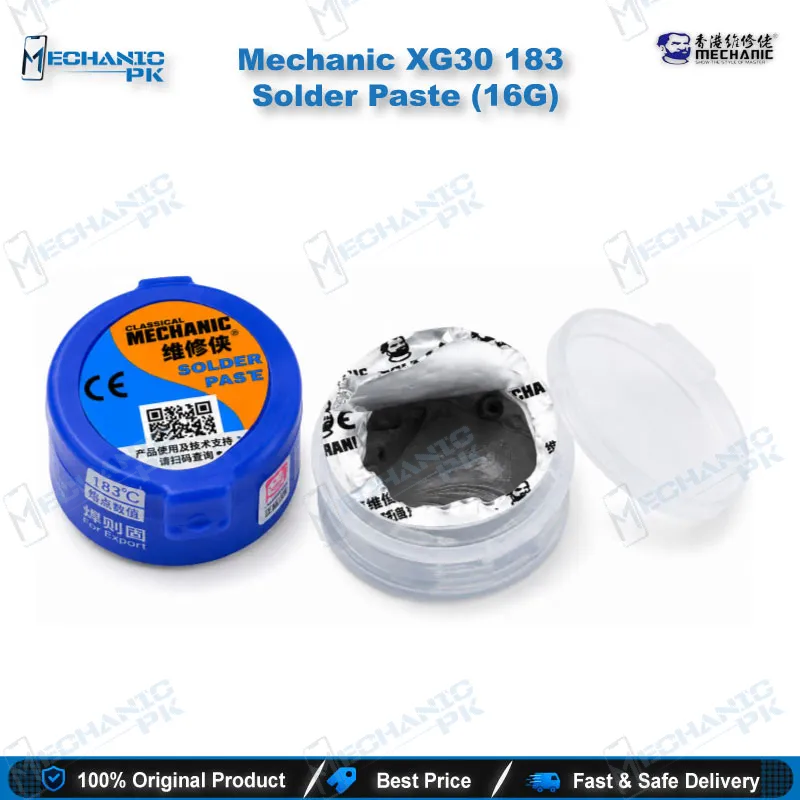
Mechanic XG30 183℃ Solder Paste (16G) – Sn63/Pb37 No-Clean
₨ 300
Sn63/Pb37 Leaded Paste for Low-Temperature Repair
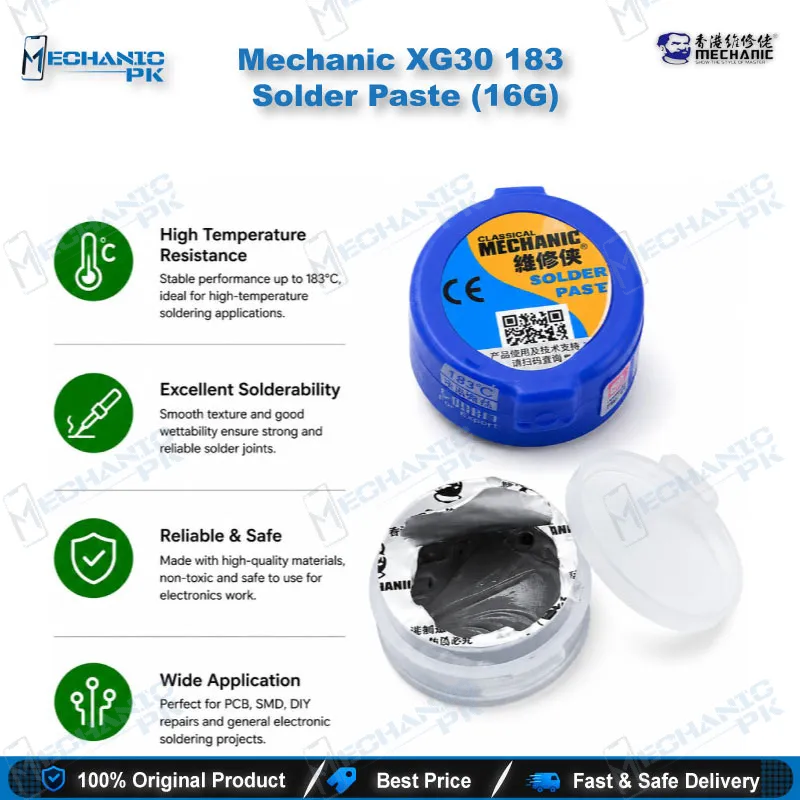
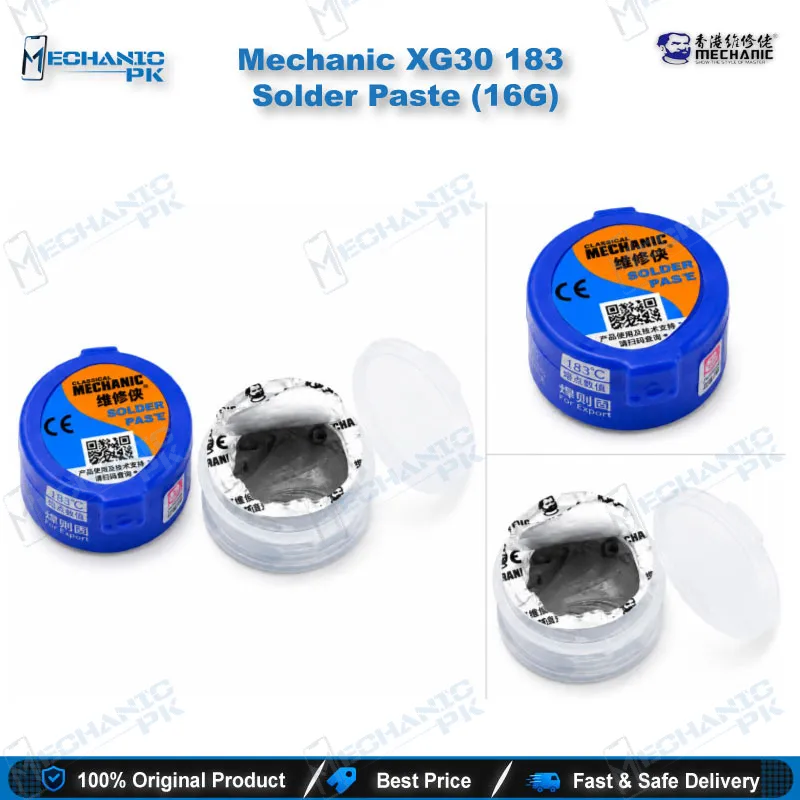
Mechanic XG30 183℃ Solder Paste (16G) is a Sn63/Pb37 leaded solder paste with a 183°C melting point, packed in a 16g unit for SMD joint work and board-level rework. Its no-clean flux means you skip washing the board after soldering on most jobs. The 25–38 µm particle size suits fine pads on compact boards, while the lower melting point helps protect heat-sensitive ICs and plastic connectors during repair. Pick it when your bench handles leaded solder joints and you want a predictable, low-temperature finish.
Out of stock
Sn63/Pb37 Solder Paste 183°C for Low-Temperature Repair
The Mechanic XG30 183℃ Solder Paste (16G) is a Sn63/Pb37 solder paste with a 183°C melting point, and that single figure defines where it fits on a repair bench. Technicians working on mobile phone boards, laptop motherboards and general SMD assemblies choose a 183°C paste when they need to solder at a lower temperature than lead-free alloys demand. That reduces thermal stress on nearby ICs, connectors and plastic housings. Within the wider repair workflow, this paste sits at the stage where a component is placed, heated and bonded to its pads, whether you are reflowing a replacement part, tacking a loose connector or rebuilding a damaged pad during PCB rework. Buyers searching for a leaded low-temperature solder paste in Pakistan usually need a consistent formulation that behaves predictably across repeated jobs, and this product addresses that requirement directly.
Technical Highlights and Bench Fit
The 16g quantity suits a working technician who runs a steady volume of jobs and does not want to tie up capital in a larger pack that goes unused before it dries out. A smaller pack also makes it easier to keep a fresh supply on the bench and rotate stock without waste. The particle size of 25–38 µm places it in a range that fits fine-pitch pads better than coarser pastes, while the reported viscosity of 50 Pa·S gives the paste enough body to hold its shape on a stencil or a tip without slumping across neighboring pads. Those two numbers matter most when you solder small passive components or work on a fine pad that sits close to a sensitive chip.
No-Clean Flux and Joint Quality
The no-clean flux is the feature that changes how you plan each repair. After soldering, the residue stays on the board, so you do not need to submerge the PCB in an ultrasonic bath or scrub it with isopropyl alcohol on most jobs. That saves time on a busy bench and avoids exposing sensitive components to solvents or moisture. The residue is acceptable only when the joint is sound and the flux has not been overheated. If a joint looks dull or grainy, clean the area and rework it rather than accepting a weak connection. Good practice still applies: clean the pads before applying the paste, set a suitable tip or hot air temperature, and avoid repeated heating of the same joint, because repeated heat cycles degrade both the pad and the solder.
Repair Workflow Fit and Buying Decision
This paste delivers the most value in board-level and component-level repair. Common uses include reballing BGA chips with stencil application, reflowing ICs with lifted pads, tinning wires and jumper points, and attaching small connectors such as charging ports or flex sockets. In each case, the 183°C melting point gives you a tighter thermal window than a lead-free paste, so you can complete the joint before neighboring components overheat. Pair the paste with a hot air station at moderate airflow for larger components, or with a fine chisel tip for small pads. Technicians who troubleshoot dead phones, charging issues and display problems often trace the fault back to a lifted or cracked joint, and a reliable low-temperature paste makes that repair more predictable. For buyers comparing options, the decision comes down to alloy, melting point and flux type. This product gives you a leaded Sn63/Pb37 alloy, a 183°C melting point and a no-clean flux in one 16g unit. If your repair line relies on lead-free joints or needs a higher melting temperature, a different alloy is the better match. Store the paste in its closed container, keep it away from heat and moisture, and check its consistency before each job so your results stay repeatable.
| Weight | 0.16 kg |
|---|
Key Features
- Sn63/Pb37 leaded alloy for low-temperature joints
- 183°C melting point
- No-clean flux, with washing not required on most joints
- Particle size of 25–38 µm for fine pad work
- Viscosity rated at 50 Pa·S for controlled application
- 16g net quantity for regular bench use
- Suited to SMD component reflow and connector attachment
- Lower thermal window to protect heat-sensitive parts
Specifications
| Brand Entity | Mechanic |
|---|---|
| Product Entity | Mechanic XG30 183℃ Solder Paste (16G) |
| Technology Entity | Sn63/Pb37 leaded solder alloy, no-clean flux |
| Compatible Device Entities | Universal, not device-specific |
| Repair Process Entity | SMD soldering, pad reflow, connector attachment, BGA reballing |
| Industry Entity | Mobile repair consumables, PCB rework, soldering consumables for Pakistan |
Common Repair Uses
- Reflowing lifted or cold SMD joints
- Attaching connectors such as charging ports and flex sockets
- Tinning wires and jumper points
- Reballing BGA chips with stencil application
- Rebuilding damaged pads during PCB rework
- Low-temperature repairs near heat-sensitive ICs
Compatible Devices
- Universal, not device-specific
- Leaded Sn63/Pb37 joints on compatible board pads
- Low-temperature SMD component reflow
- Fine-pad work at the 25–38 µm particle range
FAQ
What is the product name?
What is the brand of this product?
What is the model of this product?
What is this product used for?
Which devices are compatible with this product?
Who should use this product?
Is this solder paste lead-free?
Does this paste need cleaning after soldering?
Related products