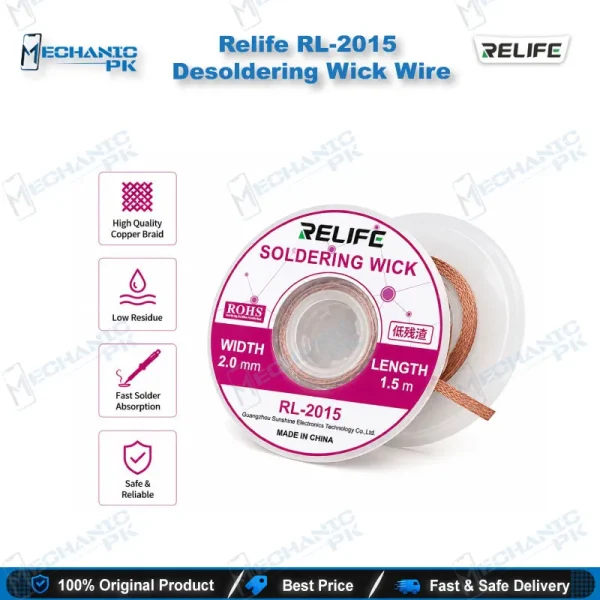















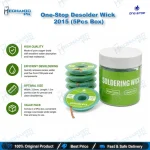
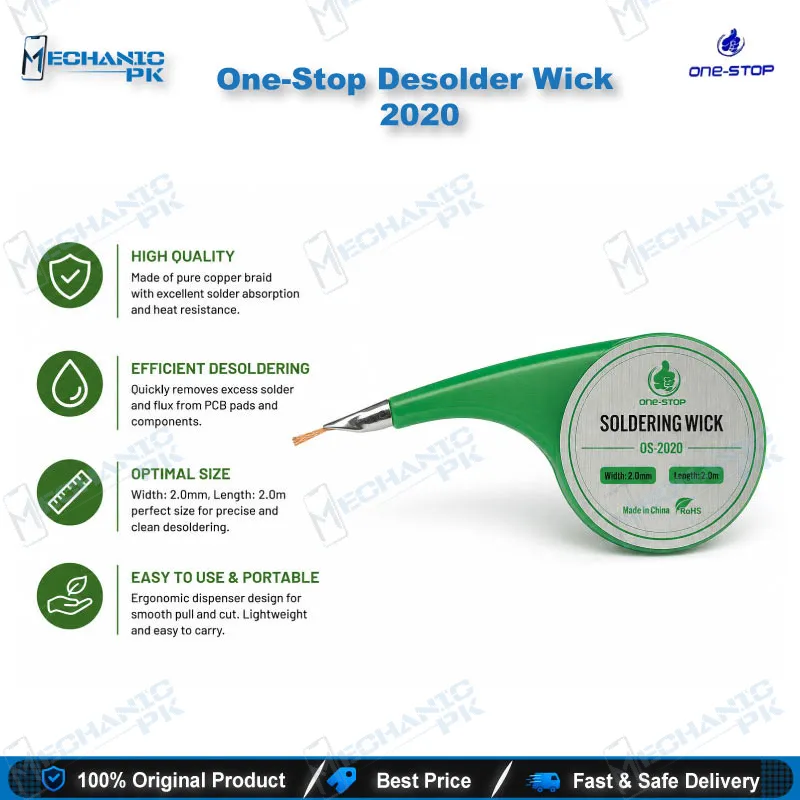
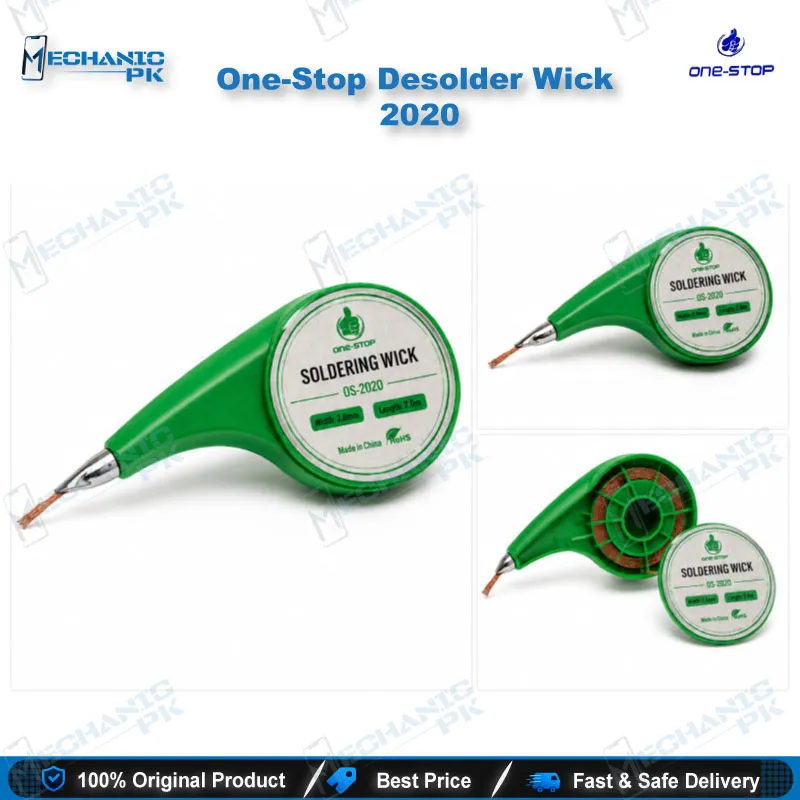
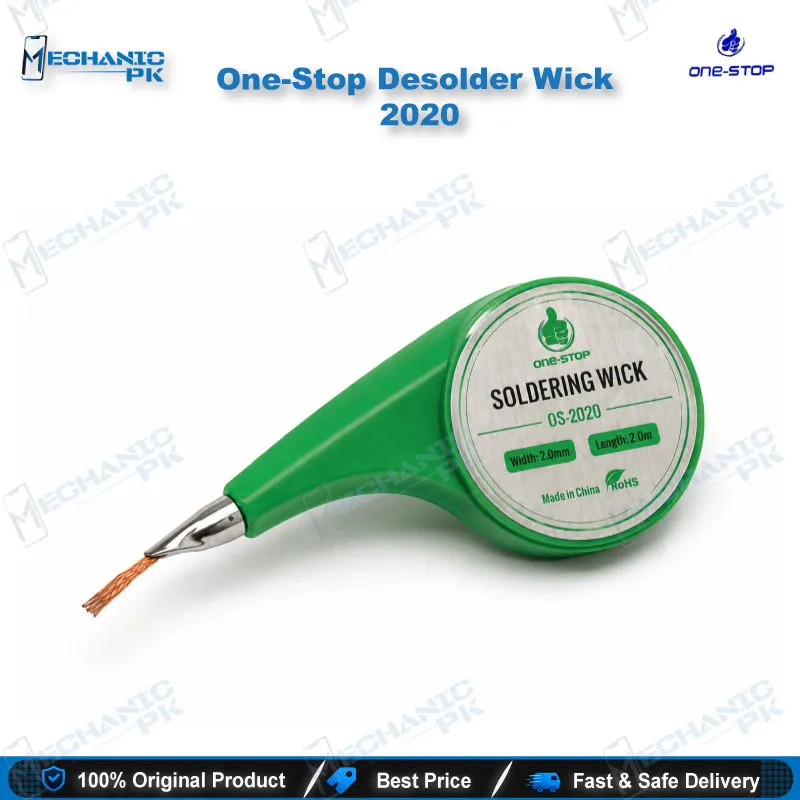
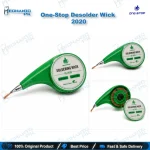
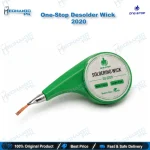
One-Stop Desolder Wick 2020 Desoldering Braid
₨ 699
Desoldering Wick for Mobile Repair
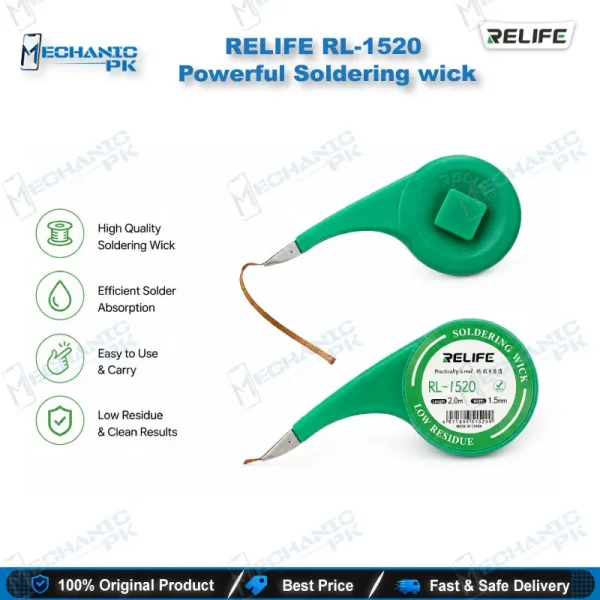
The One-Stop Desolder Wick 2020 is a braided desoldering wick for mobile repair benches that need clean pads after IC removal. Lay the braid on old solder, touch it with a hot iron tip, and capillary action pulls the molten solder off the board. You use it to level BGA pads before reballing, clear solder bridges near connectors, and tidy test points before you fit a jumper. Pair it with your soldering station, flux, and microscope to keep every PCB repair precise. Repair shops, service centers, and board-level technicians in Pakistan use this wick as a daily consumable.
In stock
Desoldering Wick for Mobile Repair: Clean Pads Before You Reflow
The One-Stop Desolder Wick 2020 gives you a braided desoldering wick for mobile repair jobs where a vacuum pump cannot reach. When you lift an IC, clear a solder bridge, or level a pad on a dead phone board, capillary action pulls molten solder into the braid and leaves a flat, shiny surface ready for tinning. You press the wick against the joint, touch it with a hot iron tip, and the braid carries the excess solder away from the pad. A technician who works at component level treats this consumable as a bench staple, because every rework starts with clean copper.
Where Desoldering Wick Fits in the Board-Level Workflow
After you remove a BGA IC with a hot air station, uneven solder mounds stay on every pad. A reballing stencil needs a flat footprint, so you drag the wick across the pads until the surface turns smooth and even. The same step applies when you do IC change karna on a power IC, charging IC, or audio codec: remove the old part, wick the pads, inspect the footprint under a microscope, then fit the new component. Jumper lagana jobs follow the same pattern, since the wick clears old solder from damaged tracks and test points before you bridge them with wire. Technicians who repair a dead phone after a fall or liquid damage use this routine on almost every board.
Handling Solder Bridges and Fine-Pitch Pads
A bridge between two pins on a connector often causes a charging issue, display problem, or network issue after a repair. Apply flux to the bridge, lay the wick over it, heat from the top, and lift the braid as soon as the solder flows into it. Cut off the used section each time, because a saturated braid stops absorbing. Narrow areas near flex connectors need a narrow working section, so trim the wick end at an angle to cut its thermal mass. Keep your iron tip clean and set the temperature for the alloy on the board. Lead-free boards need more heat than leaded ones, so adjust your station before you start and avoid dwelling on a pad long enough to lift it.
Building the Bench Around Your Wick
A desoldering wick performs best inside a complete rework setup. Match it with a temperature-controlled soldering station, a hot air station for component removal, quality flux, and a PCB holder that keeps the board steady while you work. A microscope lets you confirm that no solder residue remains between pads, and a multimeter lets you check continuity after cleaning, which helps you separate a true hardware fault from a leftover bridge. A reballing kit covers the next step once your pads are clean. Mobile repair shops and service centers in Pakistan stock wick in volume because every technician on the bench consumes it daily, from simple connector fixes to full motherboard rework.
| Weight | 0.1 kg |
|---|
Key Features
- Braided wick design that absorbs molten solder by capillary action
- Removes solder bridges without a vacuum pump
- Levels BGA pads before reballing
- Works with a standard soldering iron
- Suits fine-pitch pads when you trim the working end
- Leaves a clean surface ready for tinning
- Fits both component removal and pad prep jobs
- Consumable that suits daily workshop use
Specifications
| Brand | One-Stop |
|---|---|
| Model | 2020 |
| Category | Desoldering Wick / Soldering Accessories |
| Compatibility | Universal — not device-specific |
| Technology | Capillary-action braided wick for solder removal |
Common Repair Uses
- Solder removal and pad cleaning during board-level mobile repair
- BGA pad cleaning after IC removal
- Pad leveling before reballing
- Solder bridge removal near connectors
- IC change karna on power, charging, and audio ICs
- Cleaning test points before jumper lagana
- Charging port pad rework
- Removing excess solder after component replacement
- Prepping damaged tracks after liquid damage cleaning
Compatible Devices
- Universal — works on any PCB where solder removal is needed; not device-specific
- Android smartphone mainboards (Samsung, Oppo, Vivo, Infinix, Tecno)
- iPhone logic boards
- Tablet motherboards
- Smartwatch and wearable PCBs
- Charging port and sub-board PCBs
- Display flex connector pads
- BGA IC footprints on any chipset family
- General electronics repair boards
FAQ
What is the product name?
What is the brand of this product?
What is the model of this product?
What is this product used for?
Which devices are compatible with this product?
Who should use this product?
How do I use a desoldering wick to clean BGA pads after IC removal?
Can I use a desoldering wick on lead-free solder boards?
Related products