
















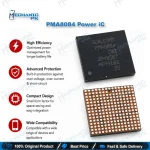
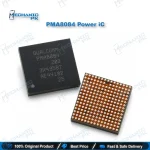
PMA8084 Power IC | Qualcomm PMIC for Phone Repair
₨ 300
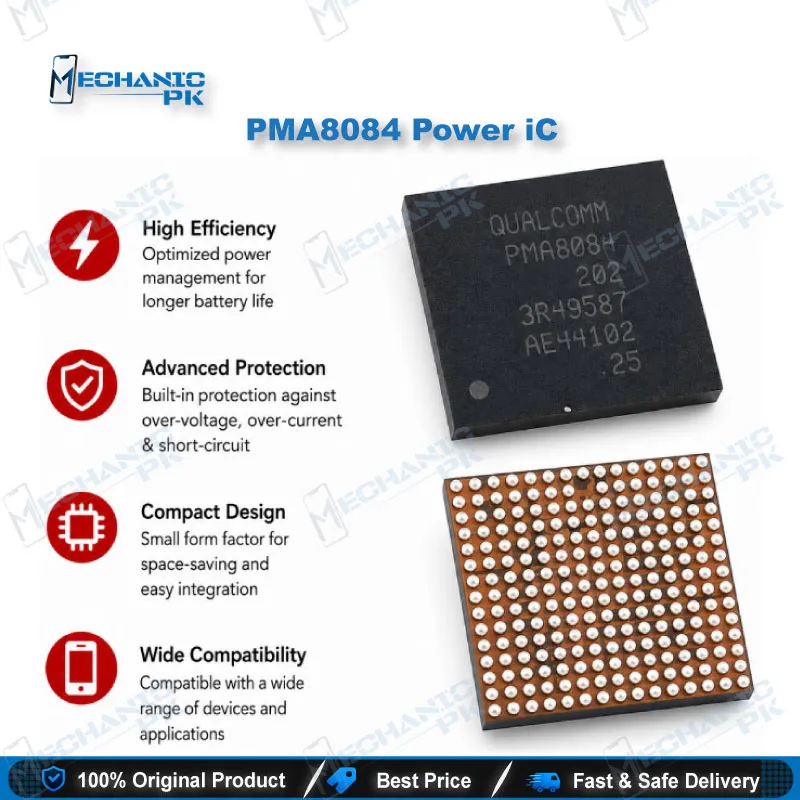
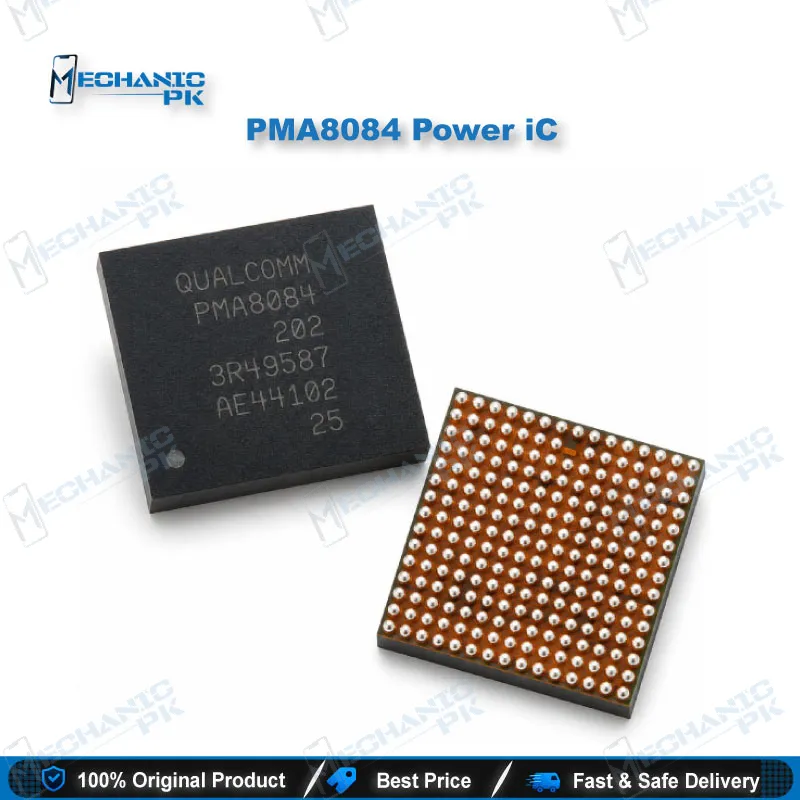
PMA8084 Power IC for Board-Level Repair
The PMA8084 is a Qualcomm power management IC for APQ8084 and MSM8974 platforms. It handles regulated rails, the real-time clock, the power key and GPIO lines over one SPMI bus. Technicians use it as a reference when diagnosing no-power, boot and rail faults on compatible boards. This listing helps you identify the part, understand its functional blocks, and confirm your rail measurements before you replace anything. Pair it with a multimeter, a microscope and a hot air station for clean, controlled board-level work.
PMA8084 Power IC: Function, Diagnosis and Board-Level Replacement
The PMA8084 power IC is a Qualcomm power management chip built for the APQ8084 and MSM8974 generation of Snapdragon platforms. It connects to the processor over the SPMI bus and supplies the regulated rails, real-time clock, power key and general-purpose I/O that a board needs to start. For a technician, this is a board-level component you test, trace and replace, not a plug-in accessory. The sections below explain what the chip covers, where it fits in a repair workflow, and how to approach it on the bench. Every feature below comes from verified platform references.
How the PMA8084 Connects to the Board
The PMA8084 does not operate as a single block. It uses the System Power Management Interface, known as SPMI, to exchange control data with the processor over one shared bus. Each function inside the chip occupies its own address region, so the part counts as a multi-function device rather than a simple regulator. On the bus, the chip identifies itself through a unique user ID. Platform references also show that two instances can share the same bus, each with a separate address, so a board with two power management chips needs both IDs checked during diagnosis. When you trace the SPMI lines, treat the bus as a shared path, since a fault on one line can affect every function that depends on it. Check the bus lines for continuity and shorts before you assume the chip itself has failed. This order of checks saves time and avoids replacing a good IC.
Functional Blocks You Check During Diagnosis
Verified platform references describe several functional blocks inside this chip. These include a real-time clock block, a power key block, a GPIO controller with 22 lines, a multi-purpose pin (MPP) block with 8 lines, and a temperature alarm. Each block answers to its own register range, so a fault in one often leaves the others working. When a handset will not power on, test these blocks in a structured order. Start with the power key and the real-time clock, since they show whether the chip responds on the bus at all. Next, check the GPIO and MPP lines that connect to charging, display and touch circuits on your specific board. Pin usage differs between devices, so confirm each line’s role against the schematic for the model in front of you before you condemn a line or the chip.
Regulator Rails and Board-Level Repair Decisions
The chip also provides regulator outputs that power the processor core, memory and peripheral rails. Platform bindings name several regulator supplies, which means a single missing rail can stop the entire startup sequence. Measure each rail with a multimeter and compare the readings with the reference values for that board. A rail that reads low or flat, while its input supply is healthy, points toward the PMIC or a shorted load. Before you lift the chip, confirm that the load on the faulty rail is not pulling it down, because a shorted capacitor or IC can look like a dead regulator. If the rails are absent and the inputs are present, replacement is the logical next step. Hot air stations, microscopes and reballing kits from the same catalog help you lift and reseat the package without damaging the pads. Measure, isolate, and only then replace.
| Weight | 0.1 kg |
|---|
Key Features
- Connects over the SPMI (System Power Management Interface) bus
- Multi-function design with separate register blocks per function
- Real-time clock (RTC) block
- Power key block
- GPIO controller with 22 lines
- Multi-purpose pin (MPP) block with 8 lines
- Temperature alarm function
- Multiple named regulator outputs
Specifications
| Brand | Qualcomm |
|---|---|
| Model | PMA8084 |
| Category | Power Management IC (PMIC) |
| Technology | SPMI (System Power Management Interface) bus |
| Compatibility | APQ8084 and MSM8974 platforms |
| Supported Devices | Samsung Galaxy S5 (klte) reference board in Linux kernel device trees |
Common Repair Uses
- Board-level power diagnosis and PMIC replacement on compatible platforms
- No-power and dead phone diagnosis by checking the power key and RTC response
- Regulator rail measurement and isolation of missing or low rails
- SPMI bus line continuity and short checks before chip replacement
- GPIO and MPP line tracing for charging and display circuit faults
- Board-level PMIC removal and reseating with hot air rework
Compatible Devices
- Chipset-family scope: Qualcomm APQ8084 and MSM8974 platform devices
- Qualcomm APQ8084 platform
- Qualcomm MSM8974 platform (Snapdragon 800 class)
- Samsung Galaxy S5 (klte) reference board
FAQ
What is the product name?
What is the brand of this product?
What is the model of this product?
What is this product used for?
Which devices are compatible with this product?
Who should use this product?
Does the PMA8084 connect over the SPMI bus?
How do I check whether a PMA8084 is faulty?
Related products