














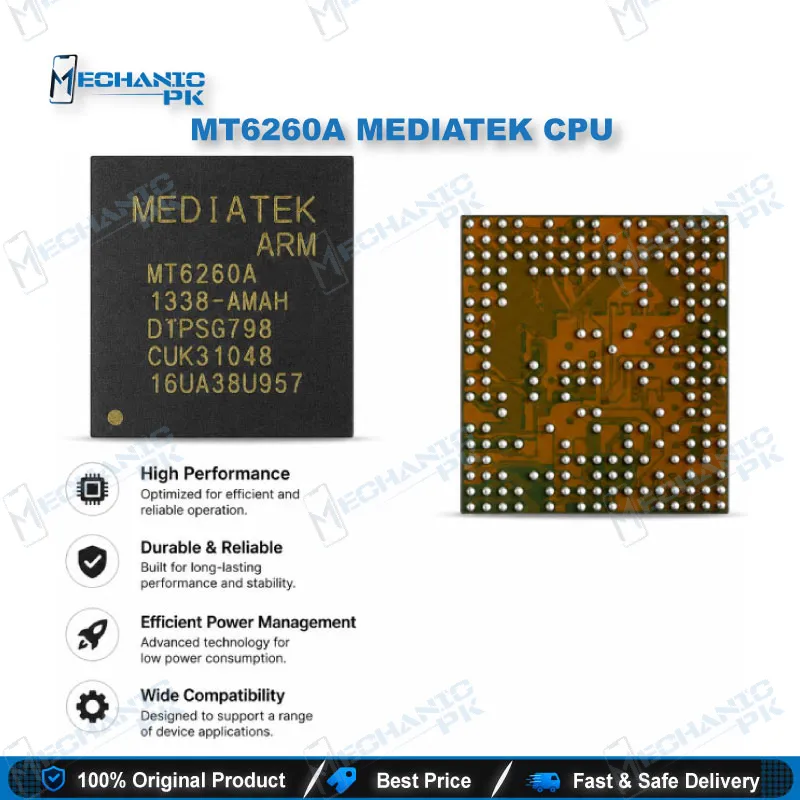
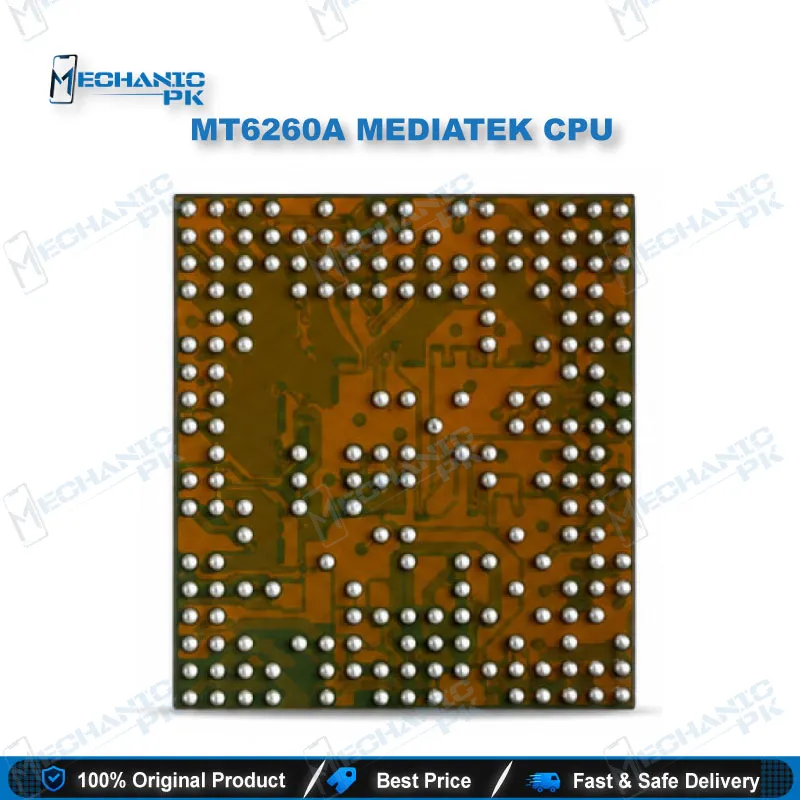
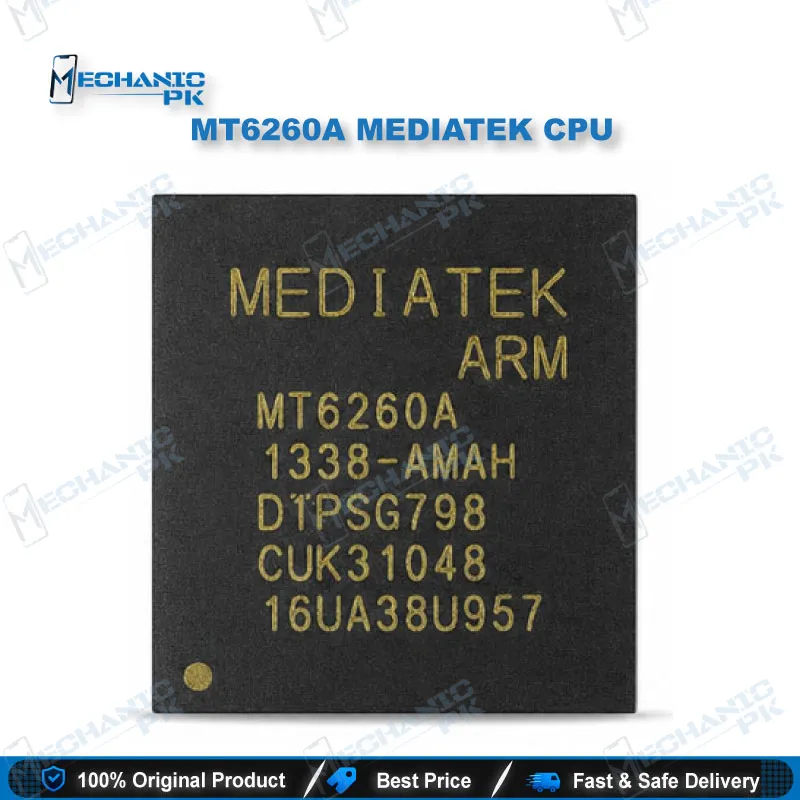
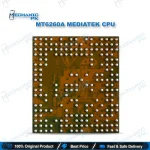
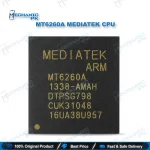
MT6260A MediaTek GSM/GPRS/EDGE-RX SOC Processor IC
₨ 350
MT6260A GSM GPRS SOC Chip for Feature Phone Repair
The MT6260A is a MediaTek single-chip GSM, GPRS and EDGE-RX processor. It combines an ARM7EJ-S microcontroller, a DSP subsystem, power management, and analog baseband with radio circuitry in one 199-ball TFBGA package. Technicians use it as the baseband core when they troubleshoot dead phones, boot loop issues, and network issues on MT6260-family boards. This page covers the verified architecture, package details, compatibility scope, and the workflow stages where the chip affects your repair bench.
MT6260A GSM GPRS SOC Chip: Architecture, Package and Repair Workflow
The MT6260A GSM GPRS SOC chip is a monolithic MediaTek processor that brings the cellular core of a feature phone onto a single device. It integrates a power management unit, analog baseband, and radio circuitry on a low-power CMOS process, so the board carries fewer discrete parts in the cellular path. Most MT6260-family handsets are entry-level devices, so the chip’s job is to keep voice, text, and basic data running on a limited power budget. For a repair bench, this integration means the chip sits at the center of most network faults and many software recovery jobs on the platform. Understanding where it fits helps you decide whether a dead phone needs a board-level check, a flash session, or a chip replacement.
Architecture of the MT6260A GSM GPRS SOC Chip: MCU and DSP Working Together
The MediaTek MT6260A pairs a 32-bit ARM7EJ-S RISC processor with a dedicated digital signal processor subsystem. The microcontroller side includes memory management and interrupt handling logic, and it runs the high-level GSM and EDGE protocol software. It also drives the user interface peripherals and the RF control interfaces that the phone depends on. The DSP side manages the low-level modem work, with its own memory, memory controller, and interrupt controller. The two subsystems exchange hardware and software information through a defined junction, which is why a fault in one half can look like a problem in the other. This design keeps the feature set focused on voice and data over GSM networks, so it does not add modern radio standards. When you diagnose a boot loop issue or a network issue, keep this division in mind before you condemn the whole chip.
Package, Pitch and Board-Level Replacement
The MT6260A comes in a TFBGA package measuring 8.6 by 9.6 millimeters, with 199 balls on a 0.5 millimeter pitch. That fine pitch leaves little margin for error during removal and placement, so a controlled hot air station, a magnifier, and fresh flux are standard requirements for the job. Before you order a replacement, read the part marking on the chip and confirm it reads MT6260A, because the MT6260 and MT6260A both appear in the same GSM/GPRS/EDGE-RX family listings and the exact revision matters for your firmware plan. Photograph the board’s surrounding components before you lift the chip, and check the pads for lifted copper afterward. Inspect the nearby decoupling capacitors too, since a damaged component close to the chip can mimic a failed IC. A careful IC change karna job takes patience, but it saves the board when the cellular section is the real fault.
Firmware Backup, Flash Recovery and Security Tasks
Software work on MT6260-family handsets usually begins with identifying the chip and backing up firmware from a known working phone of the same model. Service tools that support the MT6260 family handle flash mode operations, NVM read and write, and repair security on selected handsets, so confirm the tool version lists your chip before you connect the phone. If the phone never reaches flash mode, check the USB point and the power path before you blame the chip. Always match the firmware image to the exact model and hardware version, because a mismatched file is a common reason a phone turns into a dead after flash case. Save each backup with the model name, date, and chip marking so you can restore the right image later. Record every NVM or security change in your job notes, since a second visit often depends on that history.
| Weight | 0.1 kg |
|---|
Key Features
- GSM, GPRS and EDGE-RX baseband capability on a single chip
- 32-bit ARM7EJ-S RISC microcontroller with memory management and interrupt handling
- Dedicated DSP subsystem with its own memory and interrupt controller
- Integrated power management, analog baseband and radio circuitry
- GPRS/EDGE-RX Class 12 modem capability
- TFBGA 199-ball package, 8.6 x 9.6 mm, 0.5 mm pitch
- Low-power CMOS process design
- Defined MCU and DSP interface for shared hardware and software information
Specifications
| Brand | MediaTek |
|---|---|
| Model | MT6260A |
| Category | Mobile Phone Baseband Processor IC |
| Compatibility | MT6260-family feature phone boards (chipset-family scope) |
| Technology | GSM/GPRS/EDGE-RX SOC with 32-bit ARM7EJ-S MCU and DSP subsystem |
| Dimensions | 8.6 mm x 9.6 mm TFBGA package, 199 balls, 0.5 mm pitch |
Common Repair Uses
- Verified workflows where this chip is the focus of the job.
- Identifying the chip before you select a service tool or firmware image
- Backing up firmware from a working handset of the same model
- NVM read and write or repair security in flash mode, where the tool supports the model
- Replacing the baseband IC during board-level rework on a dead phone
- Diagnosing network issues that trace back to the cellular section of the board
Compatible Devices
- Verified scope is the MT6260 chipset family. This is not device-specific.
- MT6260-family feature phone boards that use the chip as the GSM/GPRS/EDGE baseband processor
- GSM, GPRS and EDGE-only handsets built on the MT6260 platform
- Board-level replacement on MT6260A baseband designs (verify part marking before ordering)
FAQ
What is the product name?
What is the brand of this product?
What is the model of this product?
What is this product used for?
Which devices are compatible with this product?
Who should use this product?
Is the MT6260A a 2G chip?
How do I confirm the chip is MT6260A and not MT6260?
Related products