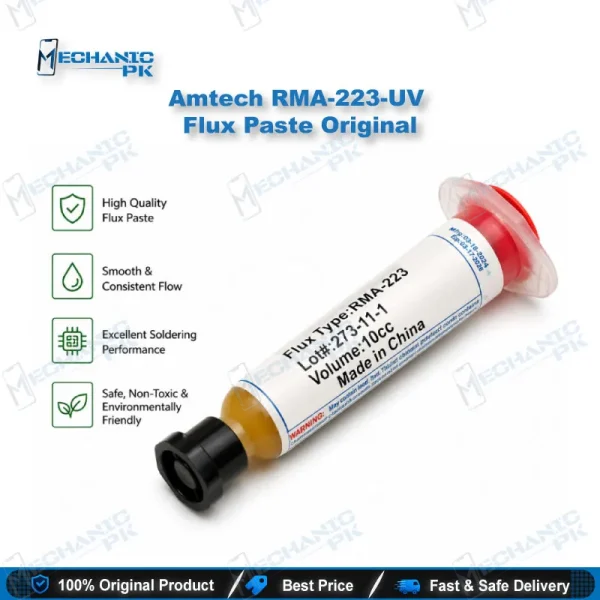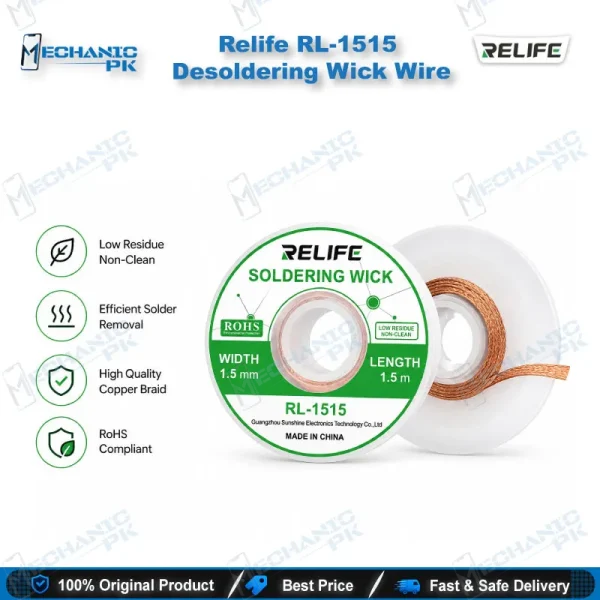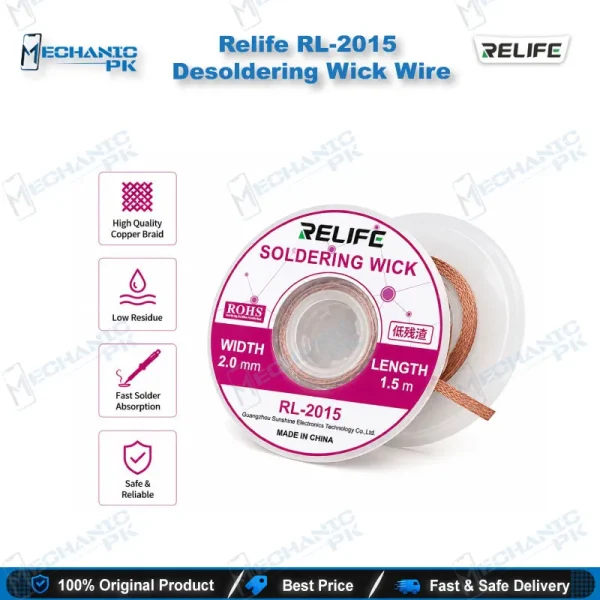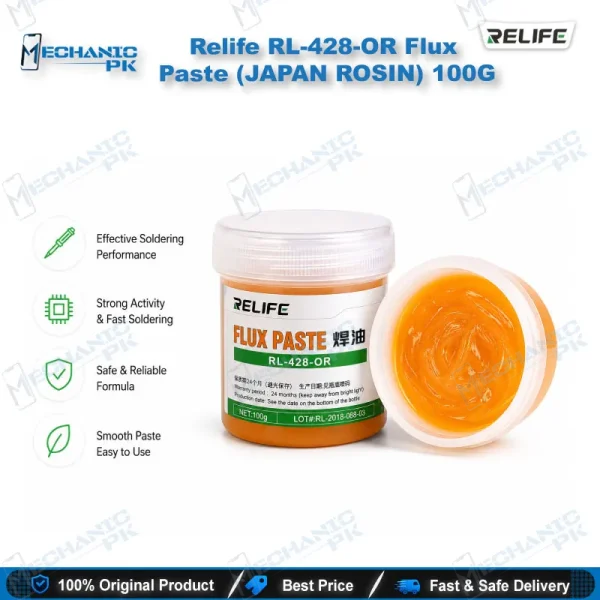



















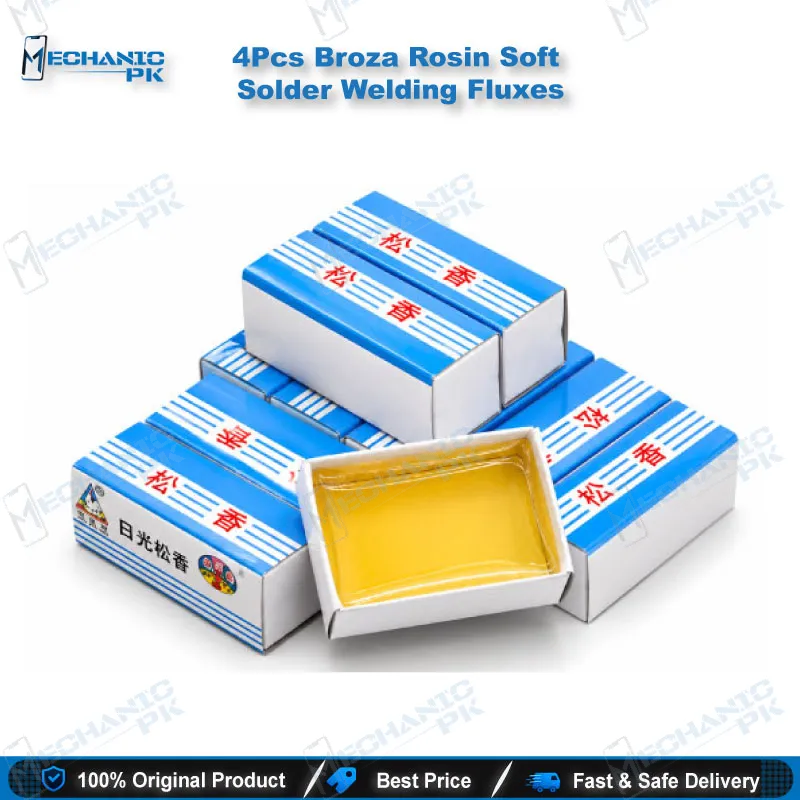


4 Pcs Rosin Soft Solder Welding Flux for Mobile Repair
₨ 100
Rosin Soldering Flux for Mobile Repair Workflows
This four-piece rosin flux set gives your repair bench a dependable flux for soft solder work on phone boards. Rosin cleans oxidation off pads and leads, and it helps solder wet and flow across joints. You get enough flux for tinning wires, reflowing pins, and cleaning up chip-level joints without reordering after every job. Choose this set when you run through flux during daily repairs and want a stock that lasts across several sessions.
In stock
Rosin Soldering Flux for Mobile Repair Benches
Every mobile repair bench needs a flux that prepares the joint before the solder arrives. Rosin soldering flux does that job on phone boards, sitting between the iron tip and the pad to strip oxide and keep the surface ready for wetting. This set puts four pieces of rosin flux on your bench so you can switch between tinning wires, reflowing legs, and touching up pads without running dry mid-repair. Use it wherever soft solder meets a board, from a single capacitor to a full chip-level reflow.
How Rosin Soldering Flux Protects the Joint
Oxide forms on copper and tin surfaces within minutes of exposure to air, and that layer blocks solder from bonding. Rosin soldering flux melts under heat and spreads across the pad, lifting the oxide so the solder can flow in. As a wetting agent, it lowers the surface tension that makes solder bead up on a dirty pad. You see the result on your bench: solder that forms a smooth fillet instead of balling on the trace. The residue it leaves also shields the joint from fresh oxidation while the board cools.
Where Rosin Soldering Flux Fits in Your Repair Workflow
Flux enters the process at joint preparation, after you have located the fault and before you bring solder to the pad. On a charging port or a microphone line, clean the pad, apply a small dab of rosin, then tin the lead before reflow. The same step prepares a broken trace for jumper repair, where you bridge the gap with thin wire and need a clean surface for the solder to grab. Keep flux on the pad only where you work, because excess flux spreads under nearby components and can trap moisture. Your diagnostic stage needs no flux, so keep the set clear of your probes and meter during fault finding.
Using Rosin Flux for PCB Repair and Soft Solder Work
Soft solder runs at lower temperatures than lead-free rework, which gives rosin a clear role. The flux stays active through the soldering window and keeps pads bright while you work along a row of pins. Apply flux to the pad rather than the iron tip when you want even coverage on fine-pitch legs. Keep the tip clean, because a dirty tip burns the rosin before it reaches the joint. This approach suits connector replacement, battery contact cleaning, and flex cable pad repair on compact devices.
Residue, Cleaning, and Bench Habits
Rosin residue cleans up with isopropyl alcohol and a soft brush, which keeps the board ready for final inspection. Wipe the joint after it cools, then check for bridges under magnification before you power the device. Store the pieces dry and sealed, because rosin picks up dust and loses tack in humid air. Replace any piece that turns dark and dry, since old rosin stops wetting pads well. A consistent routine at the bench means every board leaves with clean joints and predictable results.
| Weight | 0.3 kg |
|---|
Key Features
- Rosin-based flux that cleans oxidation from pads and leads
- Helps solder wet and flow into clean fillets
- Four-piece set for repeated repair sessions
- Suits common soft solder for chip-level work
- Residue shields joints from fresh oxidation
- Residue removable with isopropyl alcohol
- Suits PCB and SMT repair benches
- Supports jumper, connector, and pad repair workflows
Specifications
| Category | Soldering Flux |
|---|---|
| Material | Rosin |
| Technology | Rosin-based soldering flux |
| Compatibility | Universal, not device-specific |
| Supported Devices | Mobile phone boards and PCBs (general chip-level work) |
Common Repair Uses
- Tinning wire ends before jumper repairs
- Cleaning oxidized pads before replacing a charging port
- Reflowing legs on chip-level components
- Bridging broken traces with thin wire
- Replacing microphone and speaker connectors
- Cleaning battery contact pads
- Repairing flex cable pads
- Touch-up work on fine-pitch pins
Compatible Devices
- Universal, not device-specific. Scope is general chip-level and PCB work.
- Universal, not device-specific
- Mobile phone main boards (chip-level soldering)
- Mobile phone charging port PCBs
- Mobile phone speaker and microphone pads
- General PCB and SMT repair boards
- Copper and tinned wire joints
- Electrical and electronic repair boards
- Flex cable and connector pads
FAQ
What is the product name?
What is the brand of this product?
What is the model of this product?
What is this product used for?
Which devices are compatible with this product?
Who should use this product?
Does rosin flux need cleaning after soldering?
Can rosin flux be used for chip-level soft solder work?
Related products