
















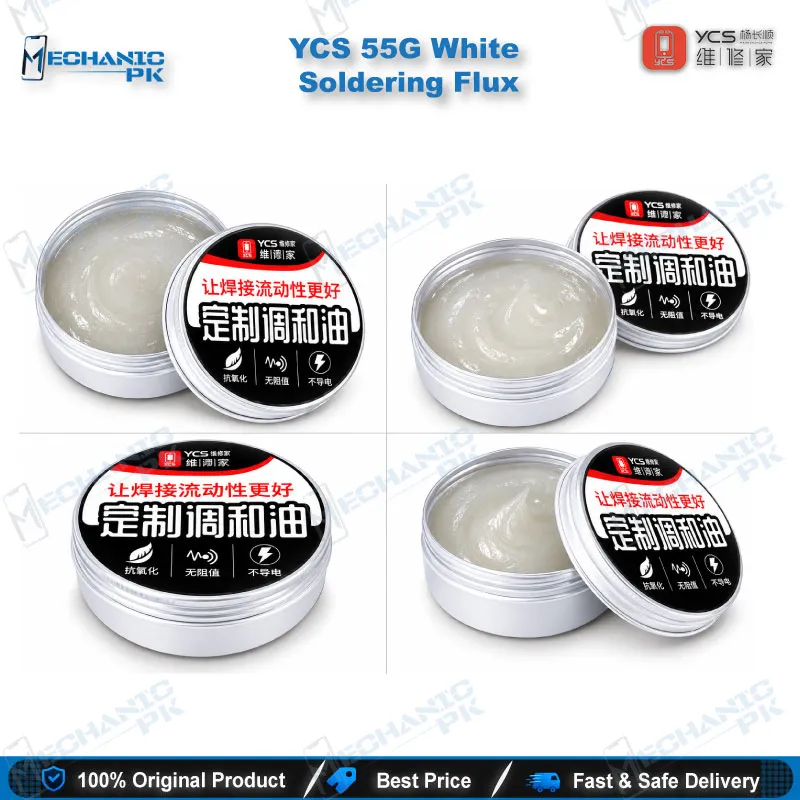
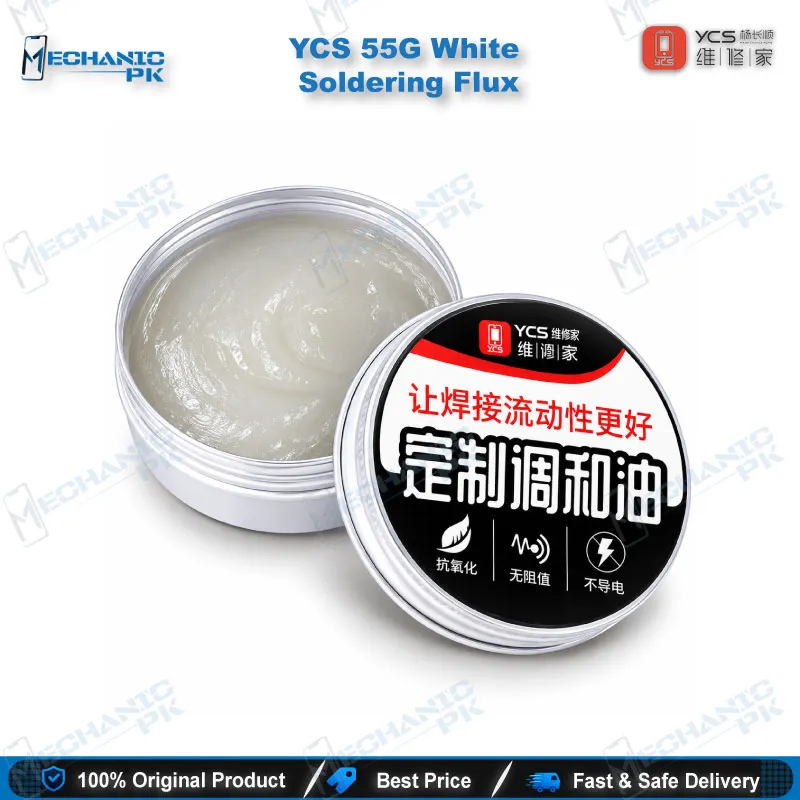
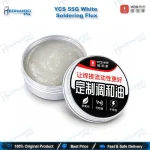
YCS 55G White Soldering Flux for Mobile PCB Repair
₨ 550
White Flux for Phone Board Repair
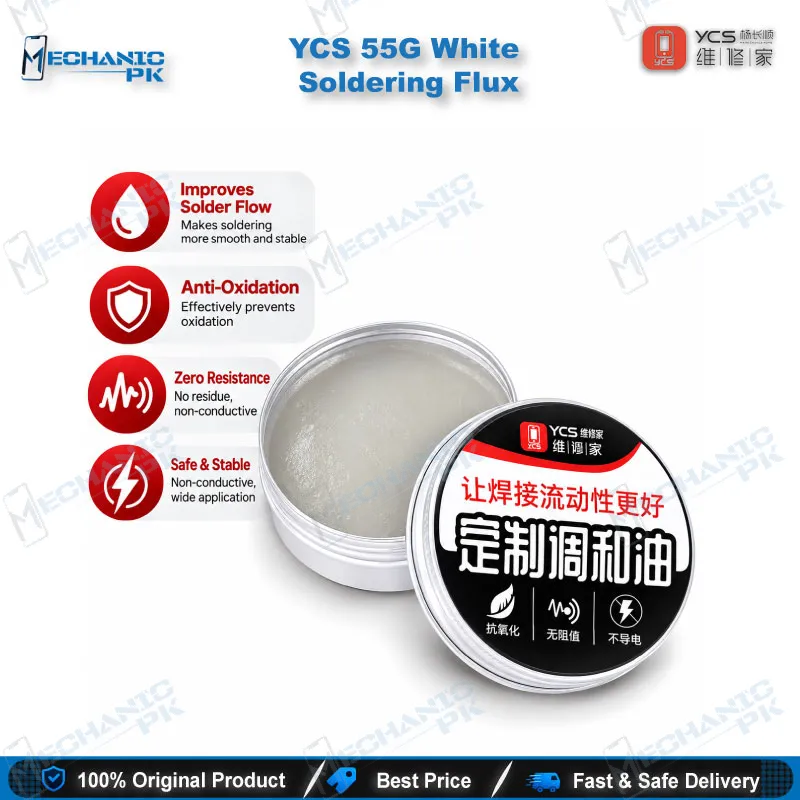
The YCS 55G White Soldering Flux gives your bench a dependable supply of soldering flux for mobile repair Pakistan technicians use on motherboard-level jobs. Apply a thin film on pads and component leads before your iron or hot air station touches the board, and solder wets the metal cleanly instead of balling up. You get 55 grams of white flux from YCS for IC change karna, BGA reballing, jumper lagana and pad cleanup on Android and iPhone boards. Mechanicpk lists it for technicians, repair shops and service centers that need consistent joints on charging, display and network fault repairs.
In stock
Soldering Flux for Mobile Repair Pakistan Workshops: YCS 55G White Flux
Every board-level job starts with a clean, wettable joint, and your soldering flux for mobile repair Pakistan workshops rely on decides whether that joint holds. The YCS 55G White Soldering Flux gives you 55 grams of white flux from YCS, a brand mobile repair benches already know for BGA, IC and PCB consumables. You apply it before the iron or hot air touches the pad, and it helps molten solder wet the metal instead of sitting on top of oxide. Mechanicpk lists it for technicians who run hardware fault repairs every day.
What Flux Does on a Phone Motherboard
Flux strips the oxide film from copper pads and component leads as the heat climbs, and it lowers the surface tension of molten solder so the alloy spreads and bonds. Without it, solder lands on oxidized metal and forms a cold joint that fails after a few drops or a few weeks of heat cycling. Phone pads measure fractions of a millimetre, so one weak joint can send a dead phone back to your counter with a charging issue or a hang on logo. Spread a thin film across the pads, then heat. A thin film works better than a thick blob, because excess flux boils, spits and pushes small SMD parts out of position.
Where It Fits in Your Repair Workflow
You reach for white soldering flux at four points on a typical job: IC change karna under hot air, BGA reballing, jumper lagana on lifted traces, and pad cleanup after you remove a connector. For an IC change, coat the pads and the chip edges, set your hot air station to the temperature your solder alloy needs, and lift the chip once the solder flows. For BGA reballing, brush flux over the cleaned chip, place the stencil from your reballing kit, and heat until the balls form. Hold the board in a PCB holder and work under a microscope, so you spot bridging before you power the phone. Check continuity with a multimeter afterward, then wipe the residue with isopropyl alcohol.
Pairing Flux With the Rest of Your Bench
Flux does its best work alongside the right gear. A temperature-controlled soldering station handles pad tinning and wire jumpers, while a hot air station lifts and seats ICs, CPUs and shields. When you reball an eMMC or UFS chip before reading it on an eMMC programmer or UFS adapter, flux decides whether the new balls bond evenly to the board. The same applies when you solder fine wires to ISP pinout points, where a test box or ISP pinout tool takes over the data side of the repair. Test any flux on a scrap board first, and match your solder wire or paste to your technique. The 55-gram size covers a busy week of bench work without forcing you to refill mid-job.
| Weight | 0.55 kg |
|---|
Key Features
- 55 g of white soldering flux from YCS
- Prepares pads and leads for clean solder wetting
- Suits BGA, IC, SMD and PCB-level phone repair
- Supports IC change karna and BGA reballing workflows
- Works with soldering irons and hot air stations
- Helps solder spread on tinned pads and jumper wires
- Compact size sits easily on a repair bench
- Fits technician, repair shop and service center use
Specifications
| Brand | YCS |
|---|---|
| Category | Soldering Flux |
| Compatibility | Universal, not device-specific (mobile phone PCB, BGA and SMD soldering work) |
| Supported Devices | Android and iPhone motherboards and other electronics PCBs |
| Technology | Soldering flux for PCB, BGA and SMD rework |
| Weight | 55 g (net quantity, as named in the product title) |
Common Repair Uses
- Preparing and tinning joints during board-level repair
- IC change karna with a hot air station
- BGA reballing of CPU, eMMC and UFS chips
- Jumper lagana on broken traces
- Pad tinning and cleanup after connector removal
- Charging port pad re-soldering for charging issue repairs
- ISP pinout wire soldering to test points
- Shield and small SMD component replacement
- Re-soldering lifted joints on hardware fault boards
Compatible Devices
- Universal scope — works at board level on any PCB you solder, not tied to one phone model
- Samsung motherboards
- Oppo and Vivo motherboards
- Infinix and Tecno motherboards
- iPhone logic boards
- Tablet and smartwatch boards
- BGA ICs and CPU chips
- eMMC and UFS memory chips
- Charging port and connector pads
FAQ
What is the product name?
What is the brand of this product?
What is the model of this product?
What is this product used for?
Which devices are compatible with this product?
Who should use this product?
Can I use this flux for BGA reballing on phone chips?
Do I need to clean the board after soldering with this flux?
Related products