















MECHANIC Aac-14 Tweezers Non-Magnetic Precision Tweezers
₨ 300
Non-Magnetic Precision Tweezers for IC Work
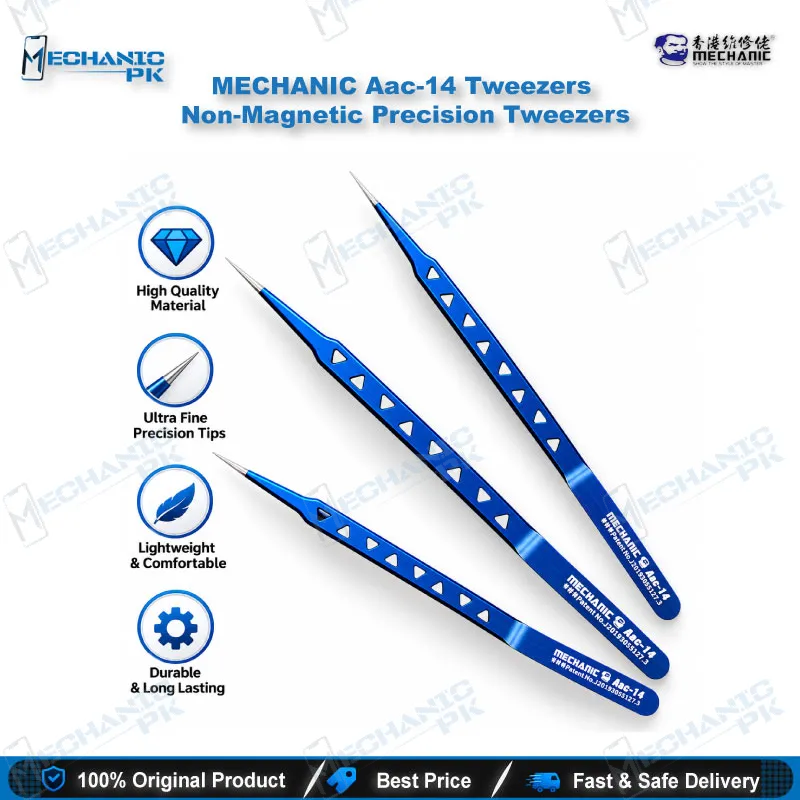
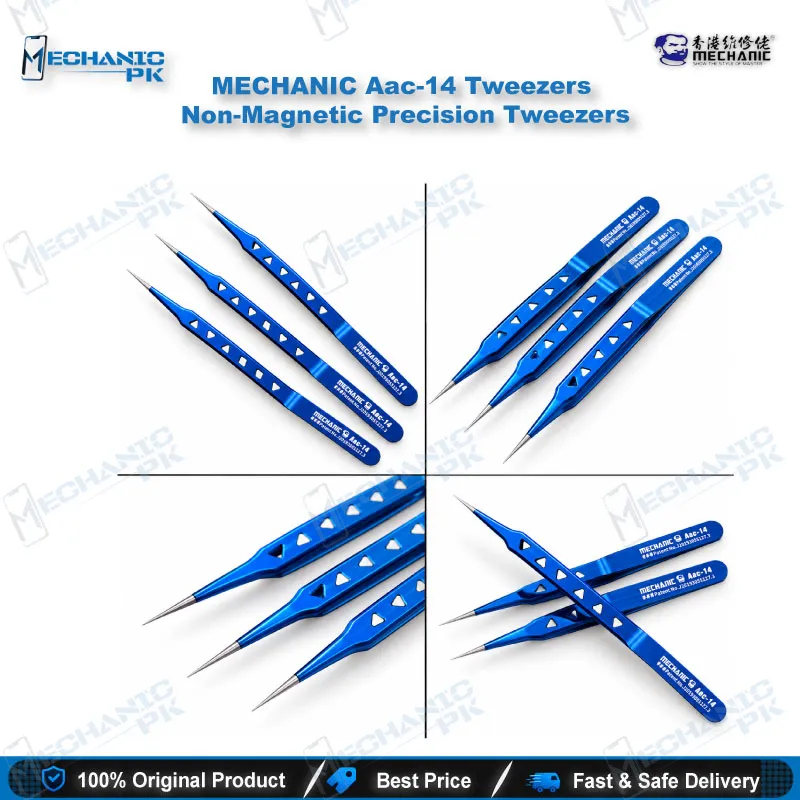
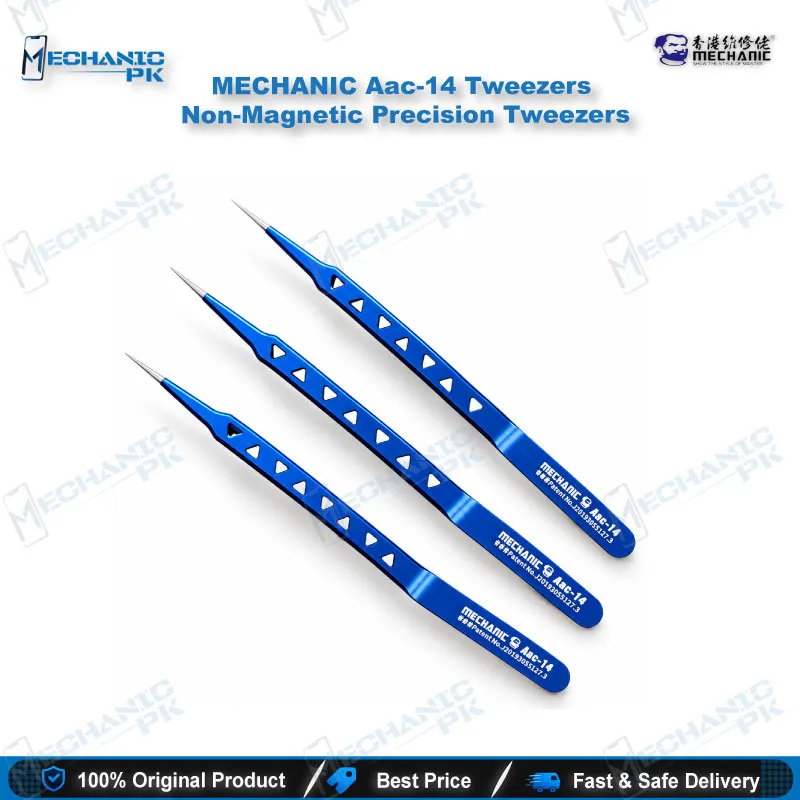
The MECHANIC Aac-14 Tweezers Non-Magnetic Precision Tweezers pair a hand-polished stainless steel body with an 8-hole hollow heat-dissipating structure and a stepped tip as thin as 0.25mm. The non-magnetic steel tests up to HRC 50, so the tips hold their shape when you position small, dense ICs, SMD components, and jumper wires under a microscope. At 160mm long and 22.5g, the blue body gives you a steady grip through long board-level sessions. Mechanicpk supplies the Aac-14 to repair shops and technicians across Pakistan who need dependable non-magnetic precision tweezers for mobile PCB work.
Out of stock
Non-Magnetic Precision Tweezers Built for Dense Mobile PCB Work
The MECHANIC Aac-14 Tweezers Non-Magnetic Precision Tweezers target technicians who place components on dense mobile boards and cannot afford a tip that slips, bends, or drags a part sideways. Mechanic classifies the Aac-14 as a Grade-A tool with an 8-hole hollow body, and that design answers three board-level demands at once: fine tip control, heat management near rework equipment, and zero magnetic pull on small parts. These non-magnetic precision tweezers give you a reliable hand tool for IC alignment, jumper work, and SMD handling on any phone mainboard.
How the 8-Hole Hollow Body Manages Heat
Eight precision holes run through the hollow body of the Aac-14, a layout that Mechanic protects under international patent ZL 2019 3 0396127.3. The openings cut the mass of the arms and give heat a path away from your fingertips when the tweezers work close to a hot air station or a soldering iron. The stainless steel resists corrosion and heat, and its grooved surface texture gives your fingers a non-slip hold during long sessions. The slim hollow structure keeps the weight at 22.5g, which reduces hand fatigue on reballing jobs and multi-IC repairs. Mechanic finishes the body in blue, so you find the Aac-14 quickly among a bench full of black and silver tools.
Tip Geometry and Steel Hardness for Small, Dense ICs
The tip follows a step structure that increases the clamping contact on small, dense ICs, so the part stays seated while you align it. Mechanic hand-polishes each tip to a thickness as thin as 0.25mm, fine enough to steer flying wire down to 0.008mm. The high-hardness stainless steel tests up to HRC 50, which keeps the tips from spreading or deforming after repeated clamping. Non-magnetic construction matters just as much at board level. A magnetized tweezer drags shield tabs, tiny screws, and loose passives toward the tip, and it can pull a capacitor out of position the moment you release it. The Aac-14 removes that problem, so a component stays where you place it. The lengthened, thickened 160mm body adds leverage and stability when you work under a microscope.
Where the Aac-14 Fits in Your Repair Workflow
Mechanic positions the Aac-14 for integrated circuit maintenance alongside microscope work, and that matches how technicians use it. During IC change karna jobs on Samsung, Oppo, Vivo, Infinix, or Tecno boards, you hold the replacement chip steady while the hot air station reflows the solder, then nudge it into alignment before the balls collapse. For a charging issue or a display problem, you place a jumper wire on a broken trace and keep it still while you solder. The same fine tip handles SMD capacitors, resistors, and diodes during hardware fault diagnosis.
The tweezers cover one stage of a longer repair chain. You prepare the board on a PCB holder, apply heat with your hot air station or soldering station, check continuity with a multimeter, and lift balls with a reballing kit. When a dead phone or a dead-after-flash case needs ISP access, the Aac-14 places and steadies the fine wires that connect your ISP pinout tool or eMMC programmer to the board. If you already own a basic pair, the Aac-14 works as the upgrade for dense-board precision, and Mechanicpk stocks matching microscopes, test boxes, and soldering equipment to complete the bench.
For shop owners, a precision tweezer is a tool every technician on your bench touches every day. A consistent Grade-A pair across your team keeps tip quality predictable, and the non-magnetic body suits trainees who still lose parts to magnetic pull. Training institutes that teach board-level repair follow the same logic: one dependable pair per student station keeps lessons on technique instead of tool problems.
| Weight | 0.22 kg |
|---|
Key Features
- 8-hole hollow heat-dissipating body, covered by international patent ZL 2019 3 0396127.3
- Non-magnetic stainless steel construction
- Hardness tested up to HRC 50 for tips that resist deformation
- Hand-polished tip as thin as 0.25mm
- Tip step structure that increases clamping contact on small, dense ICs
- Lengthened and thickened 160mm body for stable control under a microscope
- Grooved, non-slip surface texture
- Lightweight 22.5g blue body that limits hand fatigue
Specifications
| Brand | Mechanic |
|---|---|
| Model | Aac-14 |
| Category | Precision Tweezers |
| Compatibility | Universal hand tool, not device-specific; suited to small, dense ICs and SMD components |
| Technology | Grade-A 8-hole hollow heat-dissipating design with tip step structure; tip as thin as 0.25mm |
| Material | High-hardness non-magnetic stainless steel (hardness up to HRC 50) |
| Dimensions | Length 160mm |
| Weight | 22.5g |
Common Repair Uses
- Board-level handling and placement tasks under a microscope
- IC positioning during hot air reflow
- Handling small, dense ICs during IC change
- Placing jumper wires and flying wires on broken traces
- Placing and removing SMD capacitors, resistors, and diodes
- Charging issue repair around the charging port area
- Display problem repair on backlight and display circuit components
- Steadying fine ISP wires on dead phone and dead-after-flash recovery jobs
- Positioning parts near a hot air station or soldering iron
Compatible Devices
- Universal hand tool for any phone mainboard; no device-specific restriction
- Samsung Galaxy mainboards
- Oppo and Realme mainboards
- Vivo mainboards
- Infinix and Tecno mainboards
- Xiaomi and Redmi mainboards
- iPhone logic boards
- Qualcomm-based and MediaTek-based phone boards
- Other SMD-populated PCBs that need non-magnetic component handling
FAQ
What is the product name?
What is the brand of this product?
What is the model of this product?
What is this product used for?
Which devices are compatible with this product?
Who should use this product?
How thin is the Aac-14 tip, and can it handle jumper wire work?
Does the Aac-14 magnetize or pull small parts on a repair bench?
Related products