


















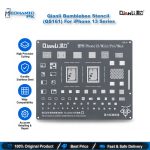
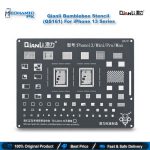
Qianli Bumblebee Stencil (QS161) For iPhone 13 Series
₨ 600
Qianli QS161 for iPhone 13 Logic Boards
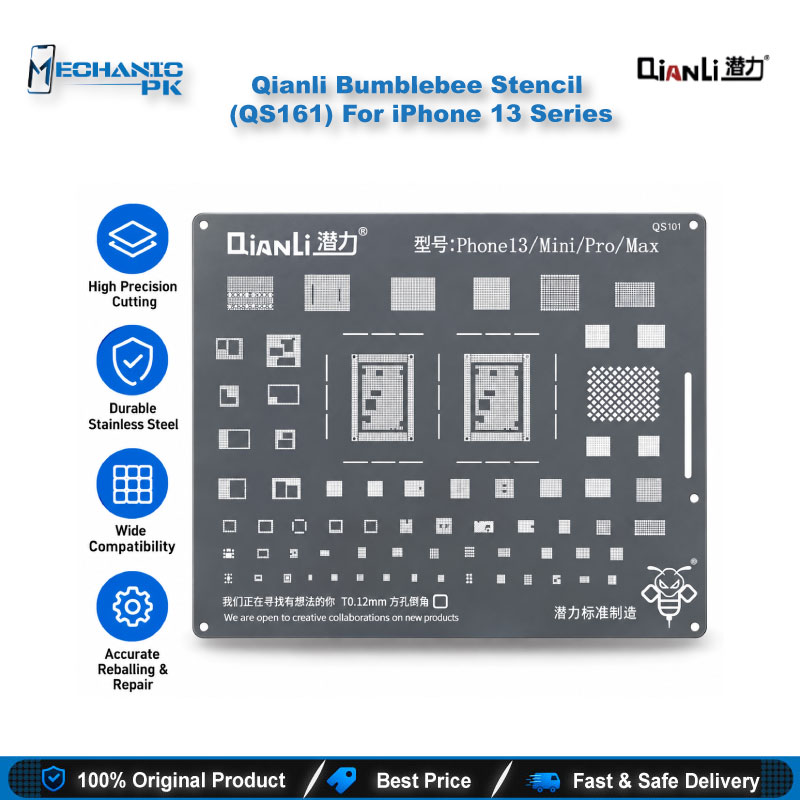
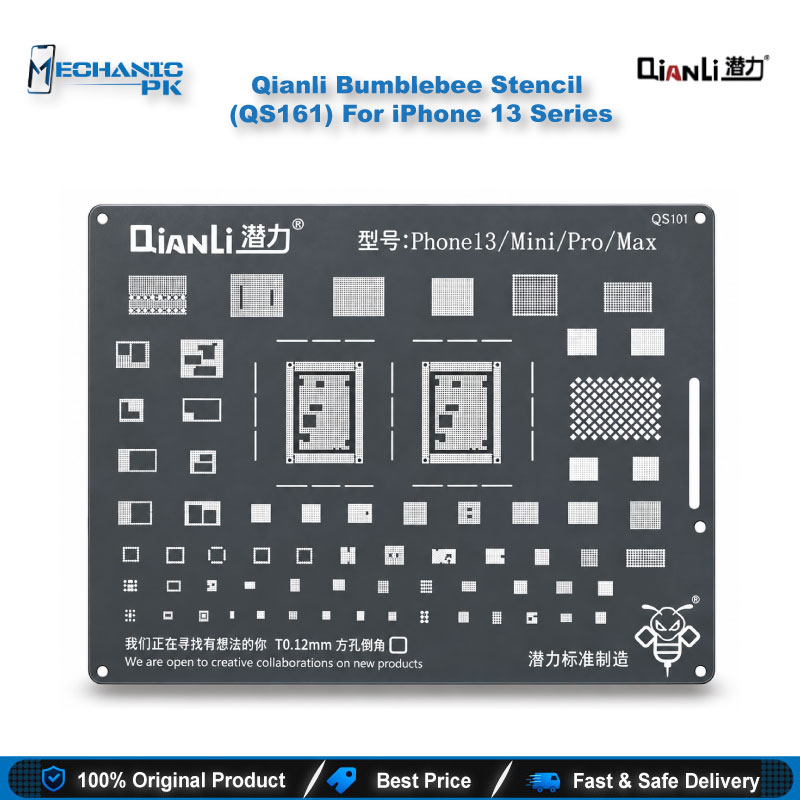
The Qianli Bumblebee Stencil (QS161) For iPhone 13 Series gives you a dedicated stencil for the iPhone 13, 13 mini, 13 Pro and 13 Pro Max. Qianli cuts square holes with rounded angles into a 0.12 mm plate, so tin balls form evenly when you plant them on a lifted or replaced BGA chip. One stencil covers the CPU, NAND, baseband and RAM positions on the iPhone 13 logic board. Technicians in Pakistan use it for dead phone, boot loop and hang on logo faults that trace back to weak BGA joints.
In stock
Qianli Bumblebee QS161: iPhone 13 Reballing Stencil for Logic Board Work
The Qianli Bumblebee Stencil (QS161) For iPhone 13 Series is an iPhone 13 reballing stencil made for one task: placing even tin balls on BGA chips from the iPhone 13, 13 mini, 13 Pro and 13 Pro Max logic boards. Qianli lists it as a single stencil for the whole iPhone 13 family, so one part serves four models on your bench. Mechanicpk stocks it for Pakistani repair shops that already run a hot air station, flux and solder paste and want a repeatable way to reball the CPU, NAND, baseband and RAM positions after chip removal. If your shop sees iPhone 13 boards with lifted joints, this stencil turns a rough freehand job into a controlled process.
Square-Hole Design and 0.12 mm Plate
This Qianli Bumblebee stencil uses square holes with rounded angles, the signature of the Bumblebee range. Square openings fill with solder paste evenly, which helps you form uniform tin balls when you heat the paste with your hot air station. The plate measures 0.12 mm thick, so every opening carries a controlled paste volume and ball height stays consistent across the chip. The stencil uses a 2D layout and carries high-temperature resistance, which matters when you run reflow on a dense Apple logic board. Because the stencil targets the iPhone 13 series, its hole pattern matches the chip footprint, so you check the fit under your microscope before you apply any paste. Keep your hot air airflow low and steady so the stencil stays put while the paste melts into balls. Check each opening for blockage before use, and clean the plate with flux remover after every job so residue never narrows the holes.
Where the QS161 Fits in Your iPhone 13 Repair Workflow
Reballing sits in the middle of a longer board repair process, and the QS161 only performs well when the steps around it go cleanly. Start with diagnosis. Use a multimeter to check the main rails for shorts, and use a microscope to inspect the board for lifted pads or liquid damage. Once you confirm a CPU, NAND, baseband or RAM fault, secure the logic board in a PCB holder and remove the chip with your hot air station. Clean the chip and the board pads with flux and desoldering wick, then place the QS161 over the surface you plan to reball. Align each opening under magnification, spread solder paste across the stencil, and heat it until the paste forms round balls. Let everything cool before you lift the stencil, check every ball, then set the chip back and reflow it. This sequence applies to dead phone, boot loop and hang on logo cases that trace back to broken BGA joints, and it keeps a hardware fault repair from turning into a second repair.
Choosing a Dedicated Stencil Over Universal Reballing Sheets
A dedicated iPhone 13 reballing stencil removes the guesswork that comes with universal reballing sheets. As an iPhone 13 BGA stencil, the QS161 targets the iPhone 13 series only, so confirm the model on your bench first: it does not replace the stencils for iPhone 12, iPhone 14 or older boards. If your workshop handles mixed iPhone generations, pair it with other Qianli Bumblebee stencils and a complete set of reballing kits so every model has the right footprint. Buyers comparing options should look at three things: the exact model coverage, the plate thickness and the stencil layout, because those decide whether the tin balls match the chip. Shops that want to move up from basic soldering can pair this stencil with a temperature-controlled soldering station, a stable hot air station and a good microscope. That combination gives you a full BGA rework setup for iPhone 13 logic boards. It suits repair shops, service centers and training institutes across Pakistan that want predictable results from every reball.
| Weight | 0.1 kg |
|---|
Key Features
- Dedicated Qianli Bumblebee stencil for the iPhone 13 series
- One stencil covers iPhone 13, 13 mini, 13 Pro and 13 Pro Max
- Square holes with rounded angles for even tin ball formation
- 0.12 mm plate thickness for controlled paste volume
- Covers CPU, NAND, baseband and RAM positions
- 2D stencil layout
- High-temperature resistance for hot air reflow work
- Precise positioning on the chip footprint
Specifications
| Brand | Qianli |
|---|---|
| Model | QS161 |
| Category | BGA Reballing Stencil (Soldering Tool) |
| Compatibility | iPhone 13 series |
| Supported Devices | iPhone 13, iPhone 13 mini, iPhone 13 Pro, iPhone 13 Pro Max |
| Technology | Bumblebee square-hole, round-angle 2D BGA stencil, 0.12 mm thickness |
Common Repair Uses
- CPU reballing on iPhone 13 series logic boards
- NAND reballing after chip replacement or reflow
- Baseband chip reballing
- RAM reballing
- Tin planting after chip removal with a hot air station
- Repair of dead phone faults caused by broken BGA joints
- Repair of boot loop and hang on logo faults tied to lifted chip joints
- Reballing chips that you reuse after a board-level hardware fault repair
Compatible Devices
- iPhone 13 series logic boards (dedicated to this series, not universal)
- iPhone 13
- iPhone 13 mini
- iPhone 13 Pro
- iPhone 13 Pro Max
FAQ
What is the product name?
What is the brand of this product?
What is the model of this product?
What is this product used for?
Which devices are compatible with this product?
Who should use this product?
Which chips can I reball with the QS161 stencil on an iPhone 13 board?
Can I use the QS161 stencil on iPhone 12 or iPhone 14 boards?
Related products