














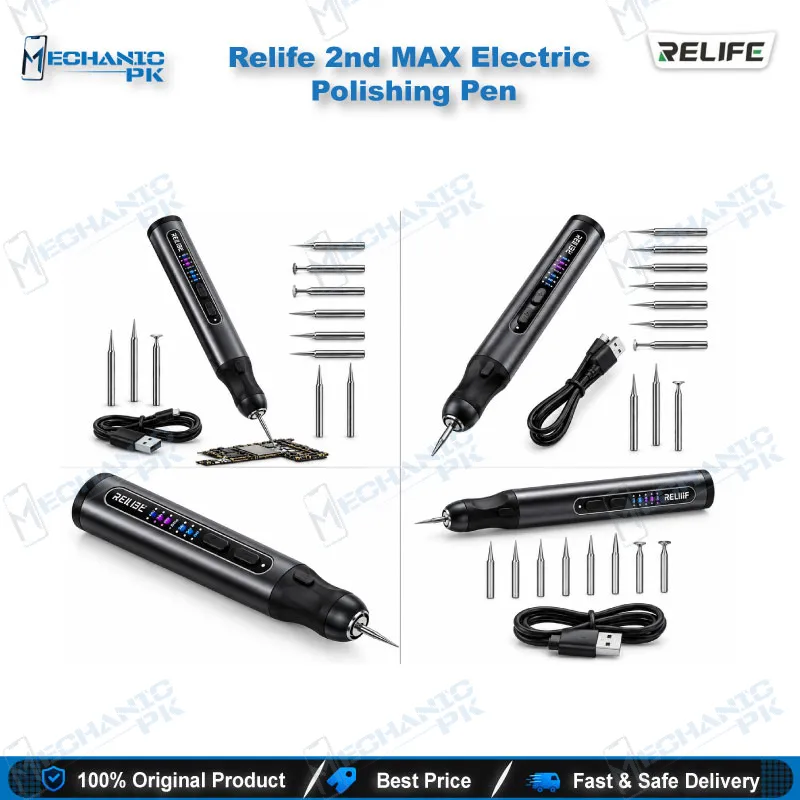
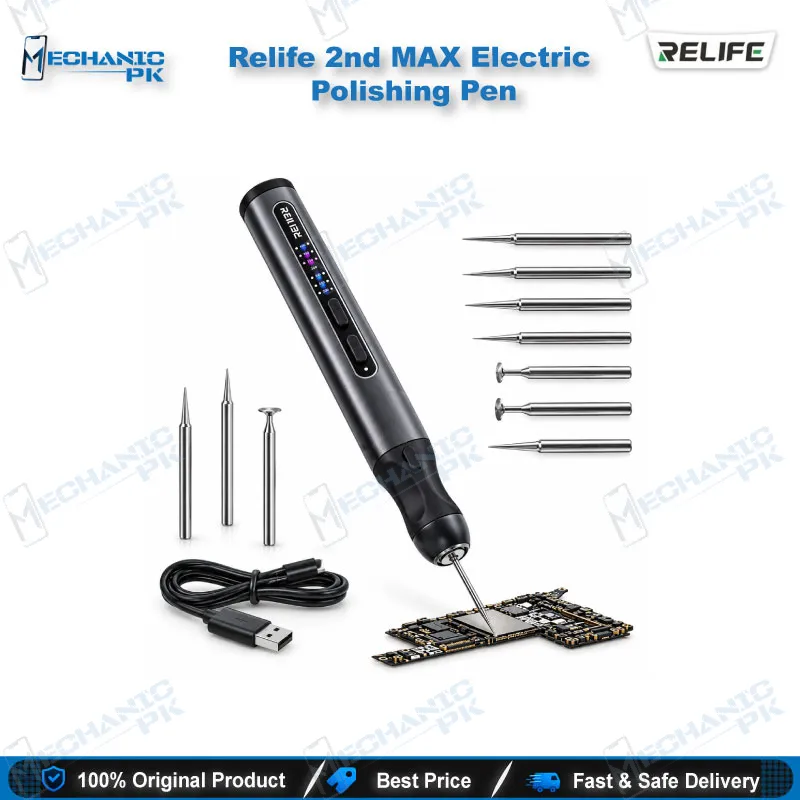
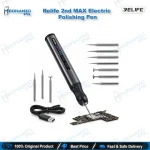
Relife 2nd MAX Electric Polishing Pen for Mobile Repair
₨ 3,800
Electric Polishing Pen for Mobile Repair
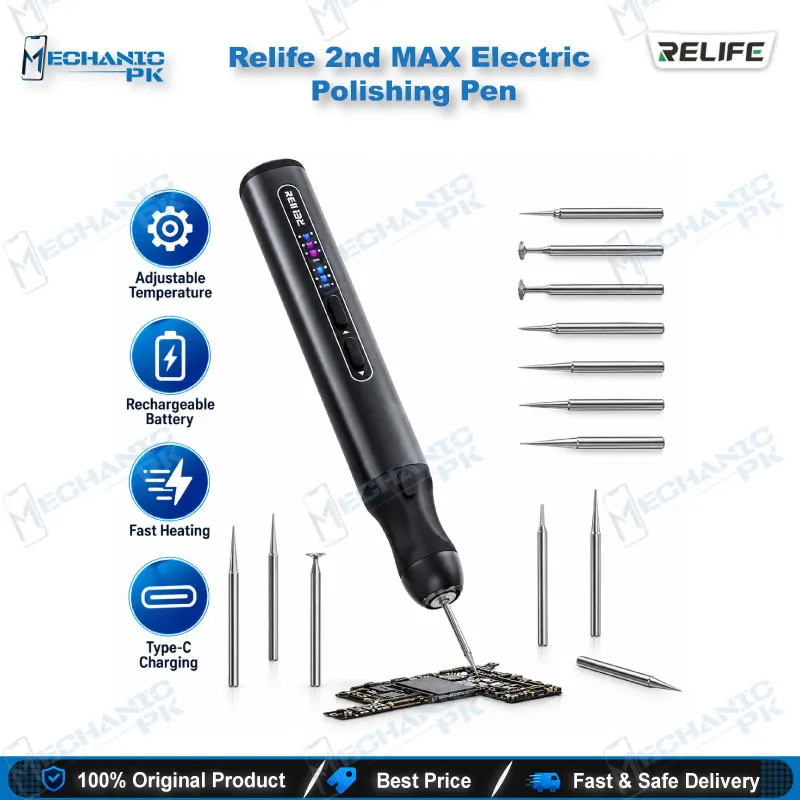
The Relife 2nd MAX is an electric polishing pen for mobile repair technicians who clean, grind and polish at board level. You hold it like a pencil, so you steer the grinding head at the scale of a single IC, pad or shield frame. Use it to clear glue and underfill after you lift a chip, strip rust from water-damaged boards, and prepare pads before reballing. Mechanicpk stocks the 2nd MAX for Pakistani workshops that run hot air, soldering and microscope benches. Add it to your bench and shorten the cleanup step between chip removal and reflow.
Relife 2nd MAX: Electric Polishing Pen for Mobile Repair Benches
The Relife 2nd MAX is an electric polishing pen for mobile repair work that sits between your hot air station and your microscope in a board-level workflow. Relife builds this pen for precision grinding, polishing and surface cleanup on phone motherboards. Mechanicpk stocks it for technicians who want a dedicated handheld rotary tool instead of improvising with a full-size rotary kit. You hold it like a pencil, so you control depth and angle at the scale of one IC or one pad.
Where the Polishing Pen Fits in a Board-Level Repair
Board-level jobs rarely end when the hot air station lifts a chip. After you pull a faulty eMMC, CPU or power IC, cured glue, underfill and burnt flux stay behind on the pads, and that residue blocks a clean reballing pass. A polishing pen removes it in controlled passes, so your Reballing Kits and Soldering Stations work on a clean surface. It also handles the rust and oxidation you find on a dead phone that took water damage, where a corroded pad or shield frame stops a charging issue repair from holding. For IC change karna jobs on tightly packed boards, the pen gives you a precision cleanup step that a blade alone handles poorly.
Handling and Bench Control
The Relife 2nd MAX uses a pen-style body, so the grinding head sits at your fingertips and small hand movements steer depth and angle. The electric drive turns the head, so you apply light pressure and let the head cut instead of forcing it. Clamp the board in a PCB Holder before you start, because a board that slides under a spinning head damages neighbouring components in seconds. Work under a Microscope when you grind close to small passives, and brush the dust off the board between passes. Wear eye protection, keep the pen clear of exposed battery cells, and confirm the grinding head seats firmly before you power on. Replace a worn head instead of pushing a dull one harder.
Why Technicians Add a Dedicated Polishing Pen
A polishing pen covers the mechanical cleanup that no soldering tool handles. You still need Hot Air Stations to lift and reflow ICs, and you still need a Multimeter to confirm continuity and check for shorts after you clean a pad. The pen fills the gap between those two steps. It also supports ISP Pinout Tools work: when you expose and clean ISP test points for an eMMC Programmer or a UFS Adapter, clean copper makes wire contact reliable. When a dead after flash phone lands on your bench and the fault points to hardware, the pen prepares the board, and Test Boxes and programmers take over the software side. Mechanicpk supplies each of these categories, so you build the full rework chain from one distributor and upgrade from basic cleanup to advanced equipment as your bench grows. Repair shop owners who run several benches get a tool that serves every technician handling a hardware fault.
| Weight | 0.15 kg |
|---|
Key Features
- Pen-style body for pencil-grip precision
- Electric rotary drive for controlled grinding and polishing
- Designed for board-level mobile repair
- One-hand operation at the bench
- Suits micro-scale work on ICs and pads
- Removes glue, rust and flux residue
- Works across all phone brands as a universal tool
- Relife brand, supplied by Mechanicpk Pakistan
Specifications
| Brand | Relife |
|---|---|
| Model | 2nd MAX |
| Category | Electric Polishing Pen |
| Compatibility | Universal hand tool — not device-specific |
| Technology | Electric rotary polishing and grinding |
Common Repair Uses
- Board-level cleanup, grinding and polishing during phone repair
- Clearing cured glue and underfill around CPU and eMMC after chip removal
- Cleaning pads before reballing
- Removing rust and oxidation from water-damaged boards
- Preparing ISP test points for wire contact
- Smoothing rough edges on frames and brackets
- Cleaning shield frame residue
- Polishing scratched metal surfaces
- Removing glue residue from board edges
Compatible Devices
- Universal — works on the motherboards, frames and shield cans of any phone brand; not device-specific
- Samsung motherboards
- Oppo motherboards
- Vivo motherboards
- Infinix motherboards
- Tecno motherboards
- Xiaomi motherboards
- Huawei motherboards
- iPhone logic boards
FAQ
What is the product name?
What is the brand of this product?
What is the model of this product?
What is this product used for?
Which devices are compatible with this product?
Who should use this product?
Can I use this polishing pen to remove glue around a CPU or eMMC after chip removal?
Is this polishing pen suitable for removing rust from water-damaged phone boards?
Related products